










When I first started trying to wrap my head around local SEO for small business stuff, I kinda wanted to throw my laptop out the window. Maybe literally. I had like twenty tabs open at once. One guy on YouTube was yelling about backlinks. Some lady on a blog kept saying “E-E-A-T” like I was supposed to know what that meant. And I’m over here, just wanting my tiny shop to show up when someone five minutes away types “near me” into Google.
Is that crazy? I don’t think that’s crazy.
Anyway, took me like two years of screwing things up before I figured out what actually works. And I’m not gonna lie, I’m still figuring things out. But these ten things? These are the ones that actually did something. Not the “just create great content bro” nonsense that every SEO guru types up while sipping a $9 coffee. The real stuff. The stuff that made my phone start ringing.
Pour yourself something. This is gonna be a minute.
1. My Google Business Profile Was a Disaster
For like the first 8 months of my business, my Google Business Profile was a mess. Like genuinely embarrassing. The photo I had up was blurry. My hours said I was open on a Tuesday when I definitely was not open on Tuesdays. And the reviews? I was just… not responding. At all.
One day my friend Priya, who runs this amazing little bakery down the street, looks at my profile and goes “wait… you didn’t even fill out your categories??” and I just kinda stared at her. Because no. I had not.
So here’s what I did. And this is gonna sound obvious but trust me, most people skip it. I filled out EVERYTHING. Like every box. Primary category, secondary ones, services, products, attributes, my hours (yes, including the holidays, which people forget about all the time), the whole thing. Started uploading photos like once a week. Wrote an actual description in my own words instead of trying to cram keywords in like I’m stuffing a turkey.
Six weeks later? Started showing up in the map pack. Like actually showing up. For searches I’d been totally invisible on before.
Honestly, if you only do one thing from this entire post, do this. Your Google Business Profile is probably THE most important local search ranking factor out there. And it doesn’t cost a penny. So like… why wouldn’t you?
2. Reviews. You Have to Ask. I Hated It Too.
I’m just gonna say it. Asking for reviews felt gross to me at first. Like I was begging or something. It’s weird. I’d rather do almost anything else.
But then I looked at my competition. And I noticed something. A lot of them? Not even that good! Like genuinely, their products weren’t better than mine. But they had 3x more reviews. And guess who was sitting pretty above me in search? Yep.
So I swallowed my pride. Started asking. Nothing fancy. Just something like “hey, if you liked today, a quick Google review would honestly mean a lot.” That’s it. I didn’t give discounts or anything (which btw, don’t do that, Google will actually punish you for incentivizing reviews, it’s against their rules).
But here’s where it gets good. The thing that most people totally miss. Respond. To. Every. Single. Review.
Every one. The gushy ones. The rude ones. The ones that make no sense (looking at you, person who gave me 3 stars for a product you never bought). I try to do it within a day. I use people’s names. And when someone’s mad? I don’t fight back. I just go “hey, I hear you, sorry that happened, can we talk offline?” Simple.
Google sees it. Customers see it. Everybody wins.
3. NAP Consistency (Sounds Boring, Actually Huge)
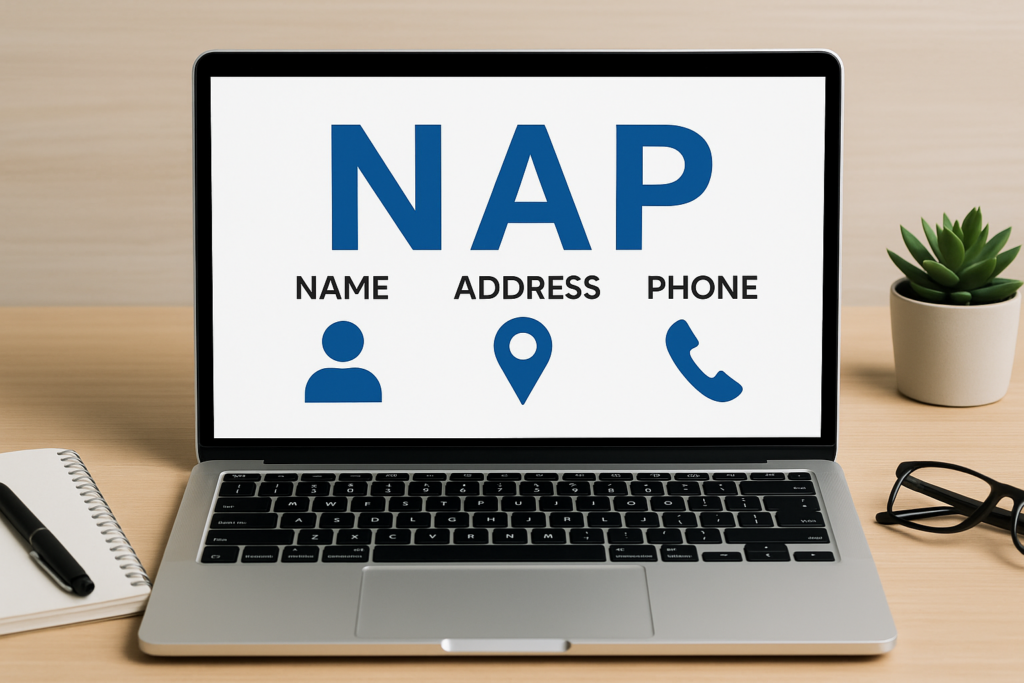
NAP = Name, Address, Phone. That’s it. Sounds like the most boring thing ever right?
Yeah I thought so too. And then I actually looked at my listings across the internet one day and I was like… oh no.
I had myself listed as:
- Joe’s Coffee Shop (on Google)
- Joes Coffee (on Yelp… no apostrophe??)
- Joe’s Coffee & Tea (on Facebook)
- Joe’s Cafe (on some random directory I don’t even remember signing up for, probably from 2017)
Google is smart but not THAT smart. When it sees four different versions of your business info scattered around, it’s basically like “uhh are these the same place? I dunno, let’s not rank any of them.” And that’s what was happening to me.
I spent a really really boring weekend fixing this. Like, painfully boring. Spreadsheet, coffee, my cat judging me from the couch. There are tools that help speed it up but honestly you can do it by hand if you’re patient. Make sure your name, your address (even “St.” vs “Street” matters, don’t ask me why), and your phone number are EXACTLY the same everywhere.
It’s not fun. It’s not sexy. But it’s a super basic local search ranking factor that you have to nail. Fix it once. Keep it tidy. Done.
4. Location Pages That Don’t Suck
If you serve more than one area (even if you’ve only got one physical spot), don’t do what I did. What I did was put “serving Smithtown, Jonesville, Riverside and Hillcrest” in my footer like that was gonna do anything. It did nothing. Literal nothing.
What actually works is making real pages. One for each area. But here’s the thing though, you can’t just copy paste the same page and swap out the city name. Google knows. Google always knows. It can smell that from a mile away.
You gotta actually write about the area. Mention stuff. Like the main park. Or that weird intersection everyone complains about. Projects you did there. Reviews from customers in that specific neighborhood. Maybe a little bit of history if you’re feeling fancy.
Yeah it’s a lot of work. I won’t pretend otherwise. But traffic from “[what I do] in [specific neighborhood]” searches? Those people are not browsing around for fun. They’re about to spend money. Big difference from general searches.
5. Local Content That’s Actually Useful
Okay this one. I screwed this up bad in the beginning.
I read all these small business local SEO tips articles that were like “write local content!” and in my head I was like “cool, got it, I’ll just cram the city name in everywhere.” So I wrote this thing called “Best Plumber in Springfield for Springfield Residents Living in Springfield” or something equally stupid. I’m cringing just typing it out.
Don’t do that. Please.
What actually works is writing stuff that real people in your town would actually wanna read. Local rules and permits. Guides to neighborhoods. That kind of thing. I wrote one post about how to prep your house for the absolutely insane weather we get here (it goes from 90 degrees to snowing in like 3 days sometimes, it’s wild) and that thing ranked for MONTHS. Brought in customers I would’ve never reached otherwise.
Wasn’t some clever keyword trick. Was just… useful? To people who live here? Wild concept I know.
6. Local Backlinks (Easier Than the Gurus Make It Sound)
Backlinks. Ugh. When people say “backlinks” small business owners kinda glaze over because it sounds like something only techy marketing people can do.
But local backlinks? Totally different ballgame. Way easier than people make it out to be.
Here’s what I did, and none of it required any special skills:
- Sponsored a local little league team. Got my logo on their site.
- Teamed up with the shop next door for a promo. They linked to me, I linked to them. Done.
- Joined the chamber of commerce. That’s an authority link right there.
- Pitched the local paper when I did something kinda newsworthy. Got a mention.
- Hosted a little neighborhood event. Got written up in like three newsletters.
Every single one of those is a local backlink. And they’re gold. Way more valuable than some random site halfway around the world. Because they’re local. From actual community sources. Tells Google “hey this business is a real part of this town.” Which, I am.
7. Schema Markup (Don’t Run Away, It’s Fine)
I’m gonna lose some of you on this one. Don’t leave!
I put this off for like a year because it sounded like coding. And I cannot code. Like at all. I once broke my website trying to add a Facebook pixel. It was a whole thing.
But schema markup is actually not that scary. Basically it’s just a way to tell Google specific things about your business in a format it really likes. Like “this is a business, it’s a [type], it’s at [address], it’s open at [these times].” Stuff like that.
You can literally Google “free LocalBusiness schema generator” and fill in a form and copy paste the code it gives you. If you use WordPress, plugins like Rank Math or Yoast basically do it for you. It’s not that deep.
Once I added it? Started getting those rich results in search. You know those listings that show little stars and hours and stuff? Yeah those. My click-through rate went up. Noticeably. For like 20 minutes of work.
8. Mobile First, Not “Mobile Friendly” (Big Difference)
Hoo boy. This one hurt my feelings.
I checked my analytics one day and like 82% of my traffic was on phones. And my site? Looked like it was made for a 2012 MacBook. Tiny buttons. Cramped text. You had to tap three times to find the phone number. THREE TIMES. On a phone. Where people are trying to call you.
I was basically turning customers away and didn’t even know it.
So I rebuilt the thing. Totally mobile-first this time, not just “mobile friendly” which is what I had before (which isn’t really a thing, like either it works on mobile or it doesn’t). Phone number at the top, tap-to-call. Address one click to open in maps. Speed became the thing I obsessed over. I compressed every image, ditched plugins I wasn’t really using, tested on my actual phone like a normal person instead of just resizing my browser window and calling it good.
Google’s local algorithm loves mobile-friendly sites because it knows local searches happen on phones. Like, someone’s standing on a corner going “I need this thing right now.” If your site takes 5 seconds to load, they’ve already clicked on your competitor. Maybe 6 seconds. They’re gone.
9. The Local SEO Checklist for Small Business Owners (Save This One)
Alright I said I’d keep this practical. Here’s the checklist I actually use now. If you’re starting out, do these in order, don’t try to do them all at once or you’ll burn out (ask me how I know):
- Claim your Google Business Profile and FILL IT ALL OUT
- Check NAP consistency everywhere you can find your business
- Set up some kinda system to ask for reviews (doesn’t matter what, just do it)
- Respond to all reviews within a day or two
- Actually test your site on a phone. Not a desktop. A real phone.
- Add LocalBusiness schema markup
- Build out location or service-area pages with REAL content
- Post on your Google Business Profile at least weekly
- Find 10 local backlink opportunities and go after them
- Track your rankings every month for the keywords you actually care about
Looks simple written out. It’s not quick though. Doing these well takes actual time. Don’t try to cram it into one weekend. Pick 2 or 3, nail those, then move on. That’s how it works.
10. Patience. Which Nobody Wants to Hear.
I saved this one for last cause honestly? Nobody wants to hear it. But local SEO isn’t something you flip on like a lightswitch. It’s a garden thing. You plant stuff. Water it. Wait.
When I first started I thought I’d see results in a month. Two tops. When month one passed with nothing? Freaked out. Tried something new. Month two, still nothing, panicked again, tried ANOTHER thing. I was like a hamster on a wheel. That much flip-flopping probably set me back more than if I’d just stuck with one approach and trusted it.
Local SEO compounds. That’s the word I use. You do the boring boring stuff for 3 months, 6 months, maybe 9 months. And then one day you just… notice. Phone’s ringing more. More people walking in. You’re showing up on map searches you never showed up on before. It sneaks up on you and then it hits you all at once.
The small businesses that win at local SEO aren’t the ones with huge budgets or fancy agencies. They’re just the ones that keep showing up. Keep doing the basics. And don’t give up when month two is kinda quiet.
Last Thoughts From Somebody Who Gets It
Look, if you’re a small business owner reading this and feeling like “this is a LOT” — I feel you. I was there. Sometimes I’m still there honestly.
But you don’t need to be some SEO nerd to win at local. You really don’t. You just need to care a little bit. Care about your Google Business Profile. Care about your customers enough to ask for (and respond to) reviews. Care about your neighborhood, actually be part of it, don’t just try to sell to it. Care about the person standing on the sidewalk at 8:47pm on a Tuesday trying to find somewhere close.
Do those things, be consistent about it, add in some human warmth, and the rankings? They’ll come. They did for me. And I’m not special. I’m just someone who finally stopped second-guessing and started actually doing the stuff.
You got this. Your business deserves to be found. Now go.