Category: Local SEO

  • Local SEO For Dentists: How To Outrank Your Competition On Local Search?

    Local SEO For Dentists: How To Outrank Your Competition On Local Search?

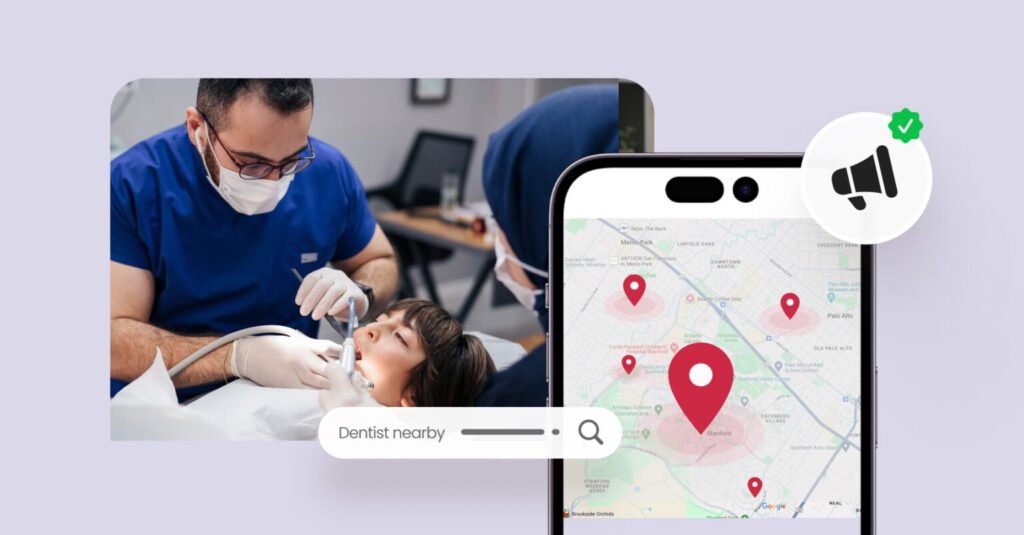
    When somebody types dentist near me on Google and your dental practice does not appear on the first page, you are losing out on business to those who do appear, who in the majority of instances are not doing anything special. These are just doing local SEO for dentists correctly. Just is this guide deconstructing what it takes to take the top-10 of local search, capture high-intent patients and grow your practice without relying entirely on the power of paid advertising.

    Why Local SEO Matters More Than Ever for Dental Practices?

    More than 80% of individuals who are looking to get a dentist on the internet do not go beyond the initial page of Google. A potential patient will indeed find themselves a local pack (a map with three dental practices displayed in the first place) when he or she types in emergency dentist in Ontario or teeth whitening near me into Google. When you want your practice to appear in that map pack and stay there, local SEO for dentists is the receiving plan that will have that job.

    Local SEO develops compounding authority, which unlike conventional advertising is not achieved through time. All of your optimized listings, all 5 star reviews and all of the location specific pages you make are 24/7, 24/7 that bring qualified leads to your practice at no cost per click.

    Note: A 40-60 percent increment in the overall number of bookings in the dental practice can be achieved in 6 months with a regular local SEO strategy. The time to do it before it is too late is still available – though time is running out with more clinics beginning to see the light on this.

    Claim and Optimize Google Business Profile

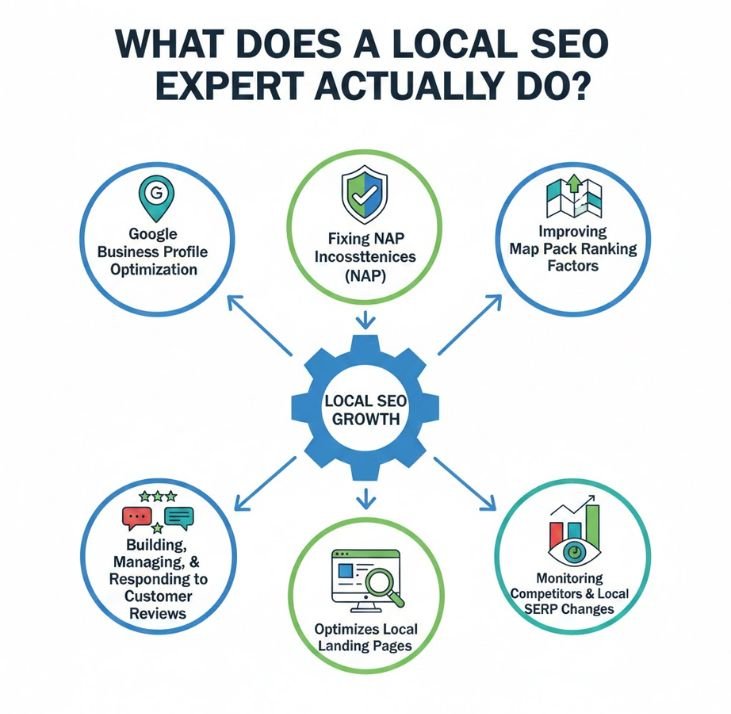
    The best dental clinic local SEO tool is your Google Business Profile (GBP). That is what fills the map pack, generates directions requests and brings up your phone number at the point that a patient needs to call. To maximise it, follow these steps:

    Do not forget to fill in all the required fields, such as your practice name, address, phone number (NAP), web address and business hours and service coverage. Select your main category to be Dentist and include secondary categories such as Cosmetic Dentist, pediatric dentist or emergency dental service based on your specializations. Post no less than 15-20 good quality photos of your clinic interior, exterior, staff and equipment. Photos involve much more direction requests and clicks on websites compared to no photo practices.

    Publish regular updates on GBP Posts — post patient tips, or seasonal deals and new offerings. This is a low input and high-effort profile action that Google rewards with increased visibility, so it will be a good local search optimization strategy to implement in dental clinics.

    NAP Consistency: The Foundation You Can’t Ignore

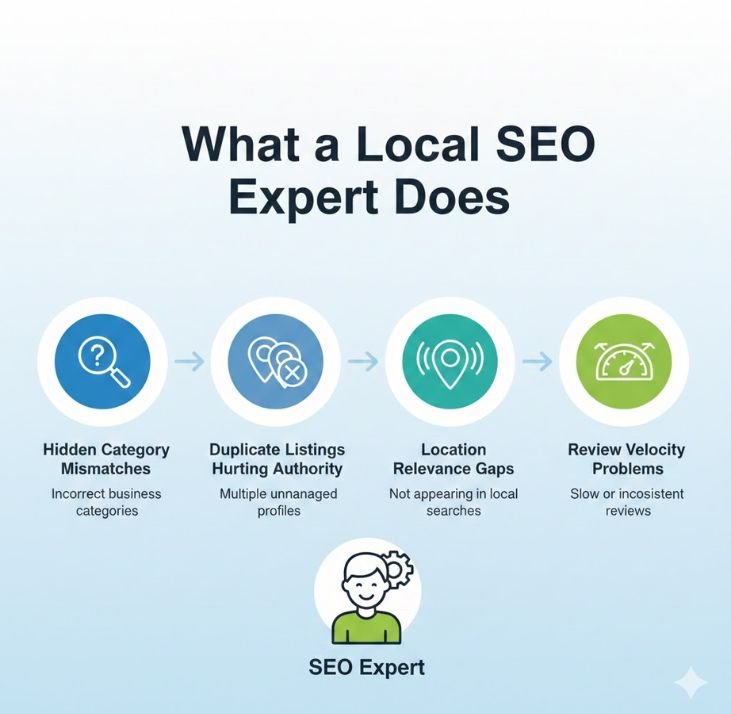
    NAP is an abbreviation of Name, Address and Phone Number. Differences between your practice listing on the web even seemingly minor ones such as St. vs. Street can cause inconsistency in search engine ranking and damage your local rankings. Check all the directories of your practice: Yelp, Healthgrades, Zocdoc, WebMD, and even the Yellow Pages. Your NAP should be the same all over, and should be the same as what is on your site.

    Also Read: 10 Key Local SEO Ranking Factors You Must Optimize in 2026

    Create Location-Specific Pages on your Website

    In order to serve more than one neighborhood or suburbs, create a specific page per neighborhood. A post with the title of Dentist in [Neighborhood Name] indicating locally relevant information tells Google where precisely you are and who you cater to. The content in each page must contain your target area name in a natural capacity, an incorporated Google map, testimonials relevant to the location and finally, it needs to have a call to action to reach out and schedule an appointment.

    This tactic is one of the most underutilized secrets in local SEO for dentists, particularly when it comes to multi-location practice. Although single-location clinics might have the advantages of developing neighborhood-focused content, long-tail searches might not be confined to a particular area.

    Local SEO Checklist for Dentists

    This local dentist SEO checklist can be used to audit your current position and find quick wins:

    Dental Clinic SEO Checklist:

    • Google Business Profile claimed and 100% complete
    • NAP available in 50+ directories and citations.
    • Website has location-specific landing pages
    • Schema markup (Local Business + Dentist) made.
    • Reviews proactively gathered and addressed online.
    • Mobile-optimised sites and less than 3 seconds to load.
    • Local keywords were incorporated into service pages in a natural manner.
    • Publications of least one post per week by GBP Posts.

    Online Reviews: Your Most Powerful Ranking Signal

    Google explicitly leverages review size, freshness, and sentiments as a ranking local search criteria. In the case of dental clinic local SEO, there will be no circumstance where you refuse to actively develop your review profile. They need to train employees at the front desk to request each happy customer to leave a review on Google at the exit. Use a follow up SMS or email message with the direct link to your GBP review webpage – the more simplistic the better the completion rate.

    This is also critical in responding to all the reviews, both positive and negative. It is a professional and caring response to a negative review which shows Google as well as potential patients that your practice is concerned and reliable. Do not overlook a 1 star review; respond gracefully and ask the patient to work through any problems outside the review.

    On-Page SEO for Your Dental Website

    The center of all your local SEO is your site. Location-based keywords should be applied to each service page (teeth whitening, dental implants, Invisalign, root canals, etc.). Title tags The name should be in the form: [Service] in [City] | [Practice Name]. The meta descriptions must be persuasive, patient oriented and must also have a call to action.

    Add Local Business and Dentist schema mark-ups to codes of your site. This organized information lets Google know precisely what you practice, where it is based, and what services you are offering, which gives you a significant advantage in local dentist SEO compared to those which have not adopted it.

    Mobile-friendliness and speed of a website are also essential. More than 65% of local dental searches occur on mobiles. When your site takes over three seconds to be loaded up on a smart phone, you are losing patient until they even start reading what you have to say.

    Content Marketing That Builds Local Authority

    Consistent, locally relevant, blog posts put your practice positioned as the dental authority in your area and provide Google with something to snack on. Write articles providing answers to questions your patients are really asking: How much do dental imparts cost in Ontario? What to do in a dental emergency or Best foods to have healthy teeth. This type of content leverages high-intent search queries and attracts readers that are already thinking about getting dental care – which is a central tenet of local SEO in the dental clinic industry.

    Final Thoughts

    Nobody needs to learn tricks to engage in local SEO for dentists, and it is not a matter of beating the algorithm, but rather doing the basics around the concept to consistently be doing it better than your competitors do. Through developing clean citations, claiming and optimizing your Google Business Profile, generating authentic patient reviews, and writing content that answers actual questions by actual patients in your location, you can achieve this.

    The first practices to appear during local search are not necessarily the top dentists in town, but merely the ones that put their foot in the online arena. With the proper local SEO approach to the dental clinic, your practice will be able to take those first positions and be able to maintain it and keep it. Begin with your dentist local SEO checklist and rectify low-hanging fruit, then proceed with the rest. The outcomes are multiplied as time goes on – and the traditions we begin to-day, are going to be the fashions of to-morrow local search.

  • Voice Search Optimization: The Complete Guide for 2026

    Voice Search Optimization: The Complete Guide for 2026

    “ Voice Search Optimization (VSO) is the process of optimizing your website and content to rank for spoken, conversational queries made through voice assistants like Google Assistant, Siri, and Alexa, helping your business appear in voice search results and answer-based queries.” 

    Let me tell you something that happened to my friend last winter. She was driving, hands on the wheel, and needed to find a pharmacy urgently that was still open at 8 pm. She can’t pull over and can’t take out her phone and type anything. She just said out loud…Hey Siri, find a pharmacy open near me right now! 

    And she got the answer without visit ga website, without scrolling Google results, or brainstorming.

    This is the power of voice searches, but the question is, how did that pharmacy actually get them suggested in voice searches? The answer is voice search optimization!

    In this blog, we’re gonna teach you how this voice search optimization works and how to make your websites come up in voice searches. 

    What actually happens when someone does a voice search

    The chain of events behind Voice Search “Hey Google.”

    When someone speaks a query into their phone or smart speaker, the device goes through a surprisingly complex series of steps in under a second. It captures the audio, converts it to text using speech recognition software, and determines what the person actually meant (not what they just said). It then fires that interpreted query at a search engine and either speaks the result aloud or displays it on the screen.

    That part, which figures out what they actually meant, is natural language processing or NLP; that’s where things get interesting from an optimization standpoint. Because voice assistants aren’t just matching keywords anymore. They are trying to understand intent. What’s good dentist near me and find dentists in my area are two different strings. 

    The implication for you: writing content that communicates intent clearly, not only repeating keywords, is more important for voice search than anywhere else in ranking.

    Why There’s Only One Answer (and That Changes Everything)

    Here’s the thing about voice search that makes it completely different from traditional search: on a regular Google results page, you’ve got 10 blue links on page one. Maybe you’re number 7. Someone might still click you. Your thumbnail might catch their eye. There’s at least a chance.

    Voice search doesn’t work like that. When someone asks a question out loud and gets a spoken answer, there is one answer. Just one. Either you’re it, or you’re not. The device doesn’t say, ‘here are the top five responses to your question.’ It picks something and reads it. Game over for everyone else.

    This winner-takes-all nature is why voice search optimization deserves its own dedicated attention rather than being lumped into ‘general SEO.’ The stakes per query are fundamentally higher.

    Featured Snippets: The Ticket In

    For Google voice searches in particular, the spoken answer almost always comes from the featured snippet — that boxed-off chunk of text that sometimes appears above all the regular search results. SEO people call this Position Zero. If you’ve ever typed a question into Google and gotten a direct text answer before you even scroll to the links, you’ve seen a featured snippet.

    Featured snippets come in a few shapes: a direct paragraph answer, a numbered list (very common for ‘how to’ queries), a bulleted list, or occasionally a table. For voice search, paragraph snippets are the most commonly read aloud. Which means if you want to be the voice, you need to write concise, direct, standalone answers to specific questions.

    More on how to do that in the content section. But remember this: winning the featured snippet for a query you care about is the single clearest path to being the voice search result for that query.

    Smart Speakers vs Your Phone: Two Different Beasts

    There are really two different voice search environments worth distinguishing, and they behave quite differently.

    •         On your phone — whether that’s Google Assistant or Siri — there’s usually a screen involved. The assistant speaks the answer, but also shows you something visual. Users are often in motion, doing something with their hands, and they’re asking locally-focused questions: ‘Is this place still open? How do I get there? What did people say about it?’

    •         On a smart speaker — your Amazon Echo, Google Nest, whatever’s sitting on your kitchen counter — there is no screen. None. The device speaks its answer, and that’s the entire experience. If you ask Alexa for the best recipe for banana bread, she’s going to read something out loud, and you either get what you need or you don’t.

    The smart speaker scenario is more unforgiving because there’s truly no fallback. On your phone, if the spoken answer isn’t perfect, you can look at the screen. On a speaker, what you hear is what you get. This makes clean, complete, spoken-friendly answers even more critical in that context.

    2. The Real Difference Between Typing and Talking

    Nobody Talks the Way They Type

    Think about the last time you Googled something on your laptop. You probably typed something clipped and abbreviated — ‘best hiking boots waterproof’ or ‘Paris flight deals October.’ That’s keyboard shorthand. We’ve all learned to speak fluent Google over the years of using it.

    Now think about the last time you asked your phone something out loud. You said something much closer to a real sentence. ‘What are the best waterproof hiking boots for wide feet?’ or ‘Can I still get cheap to Paris in October?’

    That difference — clipped keyword vs full conversational sentence — is the central challenge of voice search optimisation. Your content needs to be findable via both modes, but optimizing only for the typed version leaves a significant and growing chunk of search behavior completely unaddressed.

    And here’s the deeper issue: the typed-query style of SEO — find a keyword, repeat it strategically, build density — actively works against voice search performance. Voice search rewards content that sounds like a person explaining something to another person. Those are genuinely different things.

    Everything Is a Question

    If you look at the data on voice search queries, you’ll notice something immediately: a huge proportion of them are questions. Not keywords, not fragments — actual questions, with question words at the front. Who, what, where, when, why, how. ‘How long does it take to cook a brisket?”What’s the difference between a Roth IRA and a traditional IRA?”Where’s the closest Thai restaurant that’s still open?’

    This is actually great news for anyone who creates content, because questions have answers. And if you’ve already written the clearest, most direct answer to a question someone’s asking their phone, you have a real shot at being the thing their phone says back to them.

    The practical upshot: structuring your content around questions is one of the most high-leverage things you can do for voice search. Not vaguely — not just ‘answer questions somewhere in the piece’ — but literally using the question as a heading and putting the direct answer in the first sentence or two beneath it.

    Voice Searches Are Longer. Much Longer.

    The average typed search is around two or three words. The average voice search is six to ten words. That’s not a small difference — it’s a complete shift in search behavior that has real implications for keyword strategy.

    Short, high-competition head terms — ‘running shoes,” digital marketing,” tax advice’ — are not where voice search lives. Voice search lives in the long tail—specific, contextual, conversational phrases. And here’s the thing about long-tail keywords that often gets glossed over: they convert better, they’re less competitive, and there are so many of them that you can’t chase them one by one.

    Instead, you optimize for topics and conversational patterns. You write content that naturally covers the breadth of how people talk about a subject, rather than cramming a specific keyword into 15 positions on a page. The irony is that this approach also makes for better content. It’s a genuine win-win.

    ‘Near Me’ Is Basically a Reflex Now

    Local intent in voice search is enormous. Depending on which study you look at, somewhere between 40 and 60 percent of all voice searches have some local component — people looking for businesses nearby, asking about hours, wanting directions, checking if a place is still open. ‘Near me’ has become such a common voice search modifier that Google started treating it as almost a default signal even when people don’t say it explicitly.

    This means local SEO isn’t a niche concern anymore. Even if you think of your business as primarily online, if you have any physical presence, any service area, any local customers at all, local voice search optimization is one of the highest-ROI activities available to you. We’ll dig into exactly what that means in section five.

    3. Getting Your Technical House in Order

    Speed First, Everything Else Second

    If your website is slow, everything else in this guide is secondary. Voice search devices favor fast sources. Google has confirmed page speed as a ranking factor. And more practically, when someone asks a question out loud and expects an instant answer, a device isn’t going to route them to a site that takes four seconds to load. It’s going to find something faster.

    Aim for a Time to First Byte under 200ms. Full page load under two seconds. If you’re not there, use Google PageSpeed Insights and actually address what it flags — not just read the report and move on. Common fixes: compress images (this alone can cut load times dramatically), enable browser caching, use a CDN, and minimize JavaScript. These aren’t glamorous tasks. But slow sites lose voice search traffic before it even starts.

    If Your Site Isn’t Mobile-First, You’re Already Behind

    The overwhelming majority of voice searches happen on mobile devices. Not ‘a lot of’ — the majority. Google switched to mobile-first indexing, which means the mobile version of your site is what it’s evaluating. If your mobile experience is clunky, slow, or hard to navigate, you have a problem that no amount of keyword optimization will fix.

    Run Google’s Mobile-Friendly Test right now on your most important pages. If anything fails, prioritize fixing it above everything else. Voice search is mobile search. They are the same audience, asking the same questions, and they expect the same things: speed, clarity, and ease.

    Schema Markup: The Underused Superpower

    Schema markup is the most consistently underused technical SEO tool available, and it’s particularly powerful for voice search. The short version: schema is structured code you add to your pages that tells search engines — in explicit, machine-readable language — exactly what your content is about.

    Without a schema, a search engine looks at your page and makes its best guess about what it contains. With schema, you’re handing it a labeled map. ‘This is an FAQ. This question has this answer. This business is at this address, open these hours, with this phone number.’ That precision is exactly what voice search assistants need when they’re trying to extract a spoken answer from the web.

    The schema types that matter most for voice search:

    •         FAQ Schema — marks up your question-and-answer content so search engines can directly surface specific answers. One of the highest-value schema types you can implement.

    •         HowTo Schema — for step-by-step instructional content. If you write guides or tutorials, this is essential.

    •         LocalBusiness Schema — your address, phone number, hours, and service area in structured form. Critical for local voice search.

    •         Speakable Schema — developed specifically for voice search, this marks sections of content as being especially suited to being read aloud. Still relatively new but worth implementing.

    •         Review and Rating Schema — helps your content appear for ‘best X’ and ‘top-rated Y’ style queries.

    If you’re on WordPress, Yoast SEO or Rank Math handles a lot of this without requiring you to write code. For custom sites, Google’s Structured Data Markup Helper is a decent starting point. Either way, this is not optional if you’re serious about voice.

    Schema markup is how you stop making search engines guess. The clearer your signals, the more confidently a voice assistant can say ‘I found exactly what you’re looking for’ — and point to your content.

    HTTPS: Table Stakes

    If your site is still running on HTTP, switch to HTTPS. This is not a voice search-specific point — it’s basic SEO hygiene at this point, and Google has been treating it as a trust signal for years. An insecure site signals unreliability to both search engines and the users who eventually reach it. Get the SSL certificate. Move on.

    4. Writing Content That Voice Search Actually Wants

    Write Like a Human Explaining Something to Another Human

    This sounds so obvious that it feels almost insulting to say. But a huge amount of web content — including content on sites that should know better — is written in a register that no living person would use in actual speech. Passive voice everywhere. Sentences that start with ‘It is worth noting that.’ Jargon that signals expertise but communicates nothing. Corporate-speak that was written to impress a manager, not to help a reader.

    Voice search has zero patience for any of that. The assistant is going to read your content aloud to a real person. If it sounds weird when spoken, it fails. Full stop.

    Here’s a simple test: take a paragraph from your site and read it out loud slowly, as if you’re speaking to a friend. If you stumble over it, if it sounds stiff or unnatural, if you’d never actually say it that way — rewrite it. This test is more useful than any readability score.

    Short sentences. Active voice. First and second person. Specific language over vague language. ‘You’ll need a Phillips head screwdriver’ over ‘The appropriate tool should be obtained.’ Real words over impressive ones. The goal is clarity at conversational pace.

    Build Everything Around Questions

    Given that voice searches are so heavily question-based, building your content architecture around questions is one of the most effective structural decisions you can make. And I don’t just mean ‘include some FAQs somewhere on the page.’ What are the 10 most common questions someone interested in this topic would ask their phone? Then, make sure you answer every single one of them, directly and completely.

    The best tools for finding these questions:

    •         AnswerThePublic — puts in a keyword, spits out a visual map of every question people ask around it. Genuinely useful for content planning.

    •         Google’s ‘People Also Ask’ boxes — right there on the search results page, free, updated constantly. These are actual questions real people are asking.

    •         Reddit, Quora, and niche forums — where people ask questions in completely natural language, with no optimization intent whatsoever. Gold for voice search keyword research.

    •         Google Search Console — shows you what questions are already landing on your site with impressions, so you can see where you’re close but not quite ranking.

    Once you have your question list, use questions as subheadings. Literally. ‘How long does it take to get a passport?’ as an H2 or H3 header. Then answer it in the very first sentence underneath. Don’t build to the answer — lead with it, then expand. That structure is exactly what lets Google pull your first sentence as a featured snippet answer.

    The 30-Word Rule

    Research from Backlinko found that the average voice search result is about 29 words long. That’s two or three short sentences. This doesn’t mean your whole piece should be 30 words — it means that when you’re answering a specific question, your direct answer should be complete and accurate within roughly that length, before you go into detail.

    Think about it from the user’s perspective. Someone’s driving and asks their phone a question. They need an answer in the next 15 seconds before they reach their destination. If your content starts with a 200-word preamble before getting to the actual answer, you’re not being chosen. If it leads with a clean, direct, 25-word answer followed by supporting detail, you’re in the running.

    Inverted pyramid. Direct answer first. Context and depth second. Always.

    FAQ Pages Are Seriously Underrated

    A well-built FAQ page, properly structured and marked up with schema, can be one of the highest-performing assets on your entire site for voice search. One page. Dozens of potential featured snippets. Covering a huge range of question-based queries. Updated regularly as new questions emerge.

    The key to a FAQ page that actually performs:

    •         Write questions the way people actually ask them — not the sanitized, marketing-friendly version. ‘How much does it cost?’ not ‘What is your pricing structure?’

    •         Answer each question in the first 30 words, then give more detail if needed

    •         Use H2 or H3 tags for each question — don’t just bold them

    •         Mark it up with FAQ schema

    •         Update it when you see new questions coming in through search data or customer service

    •         Keep the tone conversational — not legal disclaimer language, not marketing fluff, just clear answers

    One more thing: a good FAQ page also reduces support burden. When your website answers the questions people are calling about, everyone wins.

    Long-Form Content Still Wins. The Trick Is Structure.

    There’s a myth floating around that voice search means short content. It doesn’t. Comprehensive, in-depth content still ranks better in general, which is the prerequisite for being chosen as a voice result. The difference is that well-structured long-form content, with clear question-based subheadings and direct opening sentences, will outperform thin content every time.

    Write a thorough piece. Just structure it so the direct answers are easy for both humans and machines to find.

    5. Local Voice Search: Where the Real Opportunity Lives

    Your Google Business Profile Is Your Most Important Voice Asset

    If you have a physical location, serve a local area, or have customers who visit you, your Google Business Profile (it used to be called Google My Business) is the single most impactful thing you can optimize for local voice search. Full stop. When someone says ‘find me a good plumber near me’ or ‘is the pharmacy on Oak Street still open,’ Google is pulling that answer from Business Profiles, not from your website content.

    The profile is free. Claiming it takes ten minutes. Optimizing it properly takes longer, but it’s absolutely worth doing. Here’s what to actually do:

    1.       Make sure your name, address, and phone number are completely accurate — exactly as they appear on your website

    2.      Choose every relevant business category, not just the primary one

    3.      Write a description that actually sounds like a human wrote it and answers common questions about what you do

    4.      Fill in your hours completely, including holiday hours — this directly feeds ‘are they open right now’ voice queries

    5.      Upload recent, real photos of your space, your work, your team

    6.      Use the Q&A feature to pre-answer the questions customers ask most often

    7.      Post updates regularly — Google notices when businesses are actively engaged with their profiles

    8.     Ask happy customers for reviews, and respond to every single review you get


    NAP Consistency: The Boring Thing That Matters a Lot

    NAP stands for Name, Address, Phone number — and search engines verify this information by cross-referencing it across dozens of sources on the web. Yelp, Yellow Pages, Foursquare, TripAdvisor, industry directories, your own website. When all match, it builds confidence. When they conflict — old phone number on one site, different address format somewhere else — it creates confusion that can genuinely hurt your local visibility.

    Audit your listings. Search your business  name and go through the results. Find the inconsistencies and fix them. Tools like Moz Local or BrightLocal can automate this if you have a lot of listings to manage. Boring work, meaningful impact.

    Making ‘Near Me’ Work For You

    ‘Near me’ has become such a reflexive voice search modifier that optimizing for it should be a specific goal, not an afterthought. A few practical ways to do it:

    •         Use your city, neighborhood, or region naturally and specifically in page titles, H1 tags, and the opening paragraph of location-relevant pages — not stuffed in awkwardly, but genuinely incorporated

    •         If you serve multiple geographic areas, create separate pages for each one — a ‘plumber in Nottingham’ page and a ‘plumber in Leicester’ page will each capture those local voice queries independently

    •         Embed a Google Map on your contact and location pages

    •         Build local links from genuinely local sources — regional news sites, local business associations, sponsorships of community events

    Reviews Are Doing More Work Than You Think

    When a voice assistant recommends a local business — ‘the highest-rated electrician near you is…’ — it’s working from review data. Volume, recency, average rating, and how frequently reviews are coming in. This means that getting a steady flow of real, positive reviews isn’t just a reputation management task. It’s actively driving voice search recommendations.

    Make it easy. Send follow-up emails with a direct link to your Google Business Profile review form. Ask in person at the point when a customer is clearly satisfied. Respond to every review — positive ones because it signals engagement, negative ones because it signals accountability. Neither ignoring reviews nor freaking out over bad ones is the right move. Steady, professional engagement is.

    6. Chasing the Featured Snippet

    How Google Decides What Gets Read Aloud

    Google doesn’t fully publish the rules for how featured snippets are selected. But years of research and observation have established some clear patterns. Pages that win snippets almost always already rank on the first page for the query in question — this means you have to earn general ranking first. They provide a direct, complete answer to a specific question within a clearly structured section of the page. They’re on domains that have earned overall trust and authority. And the answer is correctly formatted for the snippet type the query tends to generate.

    There’s no shortcut around the foundation: you need a well-structured page, real domain authority, and content that genuinely answers the question better than what’s currently in the snippet. But if you have those things, snippet optimization is less about gaming an algorithm and more about communicating clearly.

    Formatting That Actually Wins Snippets

    For paragraph snippets — the most common for voice search — the winning structure is almost always the same. Question as H2 or H3 heading. Direct, complete answer in a single paragraph immediately beneath the heading. 40 to 60 words. No preamble, no ‘great question, let’s explore this.’ Just the answer, clearly and completely, right away.

    For list snippets — common for ‘how to’ and ‘steps to’ queries — use properly formatted HTML ordered or unordered lists, not manually typed dashes. Keep list items parallel in structure and reasonably concise. Lists of 5 to 8 items perform particularly well.

    For table snippets — useful for comparison content and pricing information — use clean HTML table markup with proper headers. These are less common in voice search specifically, but worth getting right for screen-based snippet performance.

    You Don’t Have to Outrank Someone to Steal Their Snippet

    Here’s something that surprises a lot of people: you can win a featured snippet without being the top-ranked result for that query. Google is specifically looking for the best-formatted, most direct answer — not necessarily the highest-authority page. If the current snippet holder has a muddled, indirect answer buried in the middle of a paragraph, and you write a clean 35-word direct answer with proper structure, you may well take their position even if your page ranks third or fourth overall.

    This makes snippet optimization particularly valuable for newer or lower-authority sites. You can outcompete on structure and clarity, but you can’t yet compete on domain authority.

    Clarity is a competitive advantage. The site that gives the clearest, most direct answer wins the snippet — regardless of whether they have the biggest domain or the most backlinks. This is one of the few places in SEO where doing the work well genuinely beats spending the most money.

    7. Optimizing Across Different Voice Platforms

    Google Assistant: Your Standard SEO, But Sharper

    Google Assistant — the voice on Android phones and Google Nest devices — draws answers from Google Search. Which means all the SEO you already do feeds directly into Google Assistant results. Good rankings, strong featured snippets, solid schema markup, and an optimized Google Business Profile — all of that shows up directly in what Google Assistant says.

    One additional angle: Google’s Knowledge Graph. If your brand, organization, or the people behind it have a strong Google Knowledge Panel — meaning you show up with a sidebar of structured information on branded searches — that helps Google treat you as an authoritative entity and factors into voice results for informational queries about you.

    Amazon Alexa: A Whole Different World

    Alexa is a distinct ecosystem, and it’s easy to forget that it doesn’t run on Google. For web searches, Alexa primarily uses Bing. For local business queries, it relies on Yelp. For shopping, it defaults to Amazon’s product catalog. For general knowledge, it draws from Wikipedia and other structured knowledge bases.

    Practical implications: if Alexa visibility matters to you, maintain strong, complete listings on Bing Places and Yelp — these platforms are easy to neglect when you’re Google-focused, but they’re Alexa’s local data sources. If you’re an e-commerce seller, the Amazon Choice designation is the Alexa equivalent of a featured snippet, and earning it requires excellent reviews, strong sales performance, competitive pricing, and Prime eligibility.

    Apple Siri: Don’t Forget iPhone Users

    A significant chunk of voice search happens on iPhones, and Siri isn’t pulling from Google. For web queries, Siri uses Bing. For local results, it uses Yelp and Apple Maps. For Siri visibility, your Apple Maps listing — now managed through Apple Business Connect — matters a lot and is often completely ignored.

    iPhone users asking Siri for local recommendations are getting Apple Maps answers, not Google Maps answers. If you haven’t claimed and optimized your Apple Business Connect listing, a meaningful portion of your potential local audience is finding incomplete or inaccurate information about you when they ask Siri. That’s a fixable problem that takes about 20 minutes.

    Microsoft Cortana: The Enterprise Voice

    Cortana runs on Bing and is primarily used in Windows and Microsoft 365 environments. Its market share in consumer voice search is relatively small, but if your audience includes corporate users, government employees, or power Windows users, Bing SEO matters. The good news: strong Google SEO translates reasonably well to Bing performance, so you’re not starting from zero.

    8. Voice Search and Shopping: What E-Commerce Needs to Know

    Voice Commerce Is Growing Up

    Voice-driven shopping — asking your Echo to reorder paper towels, using Google Shopping to find deals by speaking rather than typing — has moved from novelty to a genuine commerce channel. It’s not replacing keyboard-driven e-commerce, but it’s adding a layer that smart retailers are already optimizing for.

    Voice commerce tends to cluster around specific behaviors: reordering familiar products, quick product discovery queries in casual moments (‘what are the best budget headphones around 50 dollars’), and local product availability queries (‘does the Apple Store near me have the new phone in stock’). Understanding where your products fit in these patterns shapes how you approach optimization.

    Winning Alexa’s Choice Badge

    For sellers on Amazon, the Alexa Choice designation is the voice commerce equivalent of the featured snippet. It’s the product Alexa recommends when someone asks for a category rather than a specific item — ‘Alexa, order some coffee pods’ or ‘Alexa, find me a Bluetooth speaker under 40 dollars.’

    Earning it requires strong sales velocity, excellent reviews (both average rating and total volume), competitive pricing, Prime eligibility, and a complete, well-optimized product listing. There’s no shortcut to the badge — it’s earned through consistent product and seller performance. But understanding that it exists and that it directly drives voice purchases is the first step.

    Product Content That Works for Voice

    For Google Shopping and web-based voice product queries, your product pages need structured data — Product schema with price, availability, and review information — and content that directly answers the questions shoppers ask before buying. ‘Is this waterproof?”Does this work with iPhone?”How long does the battery last?’ These questions appear constantly in voice product research queries, and if your product page answers them clearly, you’ve got a shot at being the spoken result.

    9. Measuring Whether Any of This Is Working

    The Honest Reality of Voice Search Tracking

    I’m going to be straight with you: measuring voice search traffic directly is genuinely hard right now. Google Analytics doesn’t have a ‘voice search’ segment. Voice queries that go through Google blend into organic traffic without a clear label. There’s no perfect way to say ‘X percent of my sessions this month came from someone talking to their phone.’

    What we have instead is a set of proxy metrics — things that are meaningfully correlated with voice search performance, even if they’re not direct measurements. Track these consistently, and you’ll have a clear picture of whether your optimization is moving in the right direction.

    Featured Snippet Ownership

    This is your clearest proxy for voice search visibility. Tools like SEMrush, Ahrefs, and Moz all show you which of your pages currently hold featured snippets. Track this number month over month. Growing snippet ownership — especially for question-based queries — is the strongest signal available that your voice search presence is improving.

    Question: Query Performance in Search Console

    Open Google Search Console. Go to the Performance report. Filter queries for question words: ‘how,”what,”where,”why,”when,”best,”near me.’ Look at impressions, clicks, and average position for these filtered queries over time. If these numbers are improving, your voice search optimization is working. If they’re flat, you know where to focus.

    Local Pack Tracking

    For local businesses, your appearance in the local pack — the map-based block that appears for local queries — is highly correlated with local voice search performance. Tools like BrightLocal, Whitespark, or Moz Local track this. If your local pack visibility is growing, your local voice search presence is almost certainly growing too.

    The Simple Gut Check

    Here’s an unglamorous but effective method: periodically ask your own phone the questions you’re trying to rank for. Use a device in a different location than your office, logged out of your accounts if possible. See what comes up if it’s you — great. If it’s a competitor — that’s your target. If it’s nobody particularly good — that’s an opportunity.

    10. Mistakes That Are Killing Your Voice Search Performance

    •         Slow site speed. Nothing else on this list matters if your site takes more than two or three seconds to load. Voice assistants don’t wait. Fix this before anything else.

    •         Mobile experience that was clearly built for desktop. Test your site on a real phone, not just the Chrome DevTools simulator. If it’s clunky, unreadable, or frustrating, so is your voice search presence.

    •         No schema markup. This one is genuinely common and genuinely costly. Structured data is the clearest way to communicate with search engines. Skipping it is like handing a search engine an unlabeled box and expecting it to know what’s inside.

    •         Writing for algorithms instead of people. The deep irony of voice search is that the more you optimize for how humans actually speak, the better you perform algorithmically. Keyword stuffing, passive constructions, corporate-speak — these hurt both your readers and your rankings.

    •         Ignoring the Google Business Profile. Especially for local businesses. Especially for ‘open now’ and ‘near me’ queries. This is the most direct lever you have for local voice search, and many businesses still treat it as an afterthought.

    •         Treating Alexa like it’s Google. It isn’t. It runs on Bing and Yelp. If you want Alexa visibility, you need Bing Places and Yelp optimization on your list.

    •         Forgetting Apple Business Connect. Siri users are a massive audience. Ignoring Apple Maps listing optimization means a huge segment of mobile voice searchers is finding either nothing or incorrect information about you.

    •         Setting it and forgetting it. Voice search is not a one-time project. Queries evolve, competitors improve, assistants get updated, and what worked six months ago might not be optimal today. Build in quarterly reviews.

    11. Where Voice Search Is Heading

    AI Search Changes the Game Again

    Here’s what’s genuinely interesting about the current moment: AI-powered search — Google’s AI Overviews, Bing Copilot, ChatGPT browsing — is shifting the game in ways that intersect directly with voice search. These systems don’t just pull a snippet from the web. They synthesize answers from multiple sources, reason across them, and generate a response. The spoken version of that is a more sophisticated, contextual answer than a traditional featured snippet.

    What this means for content creators: being one of the trusted, authoritative sources that AI systems draw from becomes increasingly important. Google’s E-E-A-T framework — Experience, Expertise, Authoritativeness, Trustworthiness — has become genuinely more important, not as an SEO checkbox but as a real signal that AI models use to evaluate source quality. Building genuine topical authority, demonstrating real experience, and earning citations from trusted sources is the long game for AI-era voice search.

    Voice Plus Vision: The Multimodal Future

    The next frontier isn’t just voice — it’s voice combined with visual context. Devices like Google’s smart displays, Amazon’s Echo Show, and increasingly capable AR devices are creating environments where voice queries get answered with both audio and visual content simultaneously. Optimizing content to work across both modes — engaging to read and clear to listen to — is where things are heading.

    This isn’t immediate for most businesses, but it’s worth knowing: the investment you make in voice-friendly content now will serve you in a multimodal future. Content that’s clear, direct, and well-structured translates across every format.

    Personalization Gets Deeper

    Voice assistants already know a lot about the people who use them. They know where you live, where you work, what you’ve ordered, and what you’ve asked before. This personalization is only going to deepen, which means the same query will increasingly return different answers for different users based on context and history.

    The implication: brand loyalty starts to matter in voice search in a new way. If someone has already interacted positively with your brand, asked for you by name, ordered from you, or followed you, the algorithm is more likely to surface you for them again. Building real customer relationships is itself a voice search strategy.

    Okay, So Where Do You Actually Start?

    Voice search optimization can feel like a lot. I’ve thrown eleven sections at you, and if you’re looking at this thinking ‘I can’t do all of this at once’ — you’re right, you can’t. Nobody does everything at once.

    Here’s how I’d actually prioritize if I were starting fresh:

    1. Fix your site speed and mobile experience first. Without these, nothing else lands.

    2. Claim and fill out your Google Business Profile. Then do Apple Business Connect and Bing Places. One afternoon, done.

    3. Add FAQ schema to your most important pages. If you have an FAQ section anywhere, mark it up.

    4. Pick your 10 most important question-based queries. Restructure or write content specifically around them, using the question as a heading and the direct answer in the first sentence.

    5. Track your featured snippet count in SEMrush or Ahrefs, and your question query performance in Search Console. You need a baseline.

    6. Review quarterly. See what’s working, find the gaps, keep going.

    That’s it. Not a hundred things — six things, done well and consistently. Voice search rewards the same qualities that have always separated good web content from bad: clarity, usefulness, technical soundness, and genuine respect for the person asking the question.

    The voice asking that question today might be your next customer. Make sure your site has something worth saying back.

    The businesses that win at voice search aren’t the ones with the biggest budgets or the cleverest tricks. They’re the ones who took the time actually to answer people’s questions — clearly, completely, and in language that sounds like a real human being wrote it. That’s always been the job. Voice search just made it more obvious.

    Voice search is a moving target — platforms evolve, assistants improve, and best practices shift. Revisit your approach regularly, stay curious about how real people are talking to their devices, and always come back to the same question: if someone asked this out loud, would my site have the best possible answer? If yes, you’re on the right track.

    What is voice search optimization in digital marketing?

    Voice search optimization in digital marketing is the process of optimizing your website content so it appears in results when users search using voice assistants like Google Assistant, Alexa, or Siri. It focuses on natural language, conversational queries, and question-based keywords.

    What does voice search optimization mean in SEO?

    Voice search optimization in SEO means structuring your content to match how people speak rather than type. It involves using long-tail keywords, answering direct questions, and improving website speed and mobile usability to align with voice-based queries.

    How does voice search optimization work?

    Voice search optimization works by targeting conversational phrases, optimizing for featured snippets, and using structured data. Search engines analyze spoken queries and deliver concise, relevant answers, so content must be clear, direct, and easy to understand.

    How to do voice search optimization for a website?

    To do voice search optimization for a website, focus on:
    Using natural, question-based keywords
    Optimizing for mobile and fast loading speed
    Creating FAQ sections
    Targeting local SEO queries
    Structuring content for featured snippets

    What are some voice search optimization examples?

    Voice search optimization examples include:
    Writing content that answers questions like “Where is the best café near me?”
    Optimizing for “near me” searches
    Adding FAQ sections
    Using schema markup for better search visibility

     What are the benefits of voice search optimization?

    The benefits of voice search optimization include improved visibility in search results, better user experience, higher chances of appearing in featured snippets, and increased local traffic from mobile and voice users.

    Why is voice search optimization important in 2026?

    Voice search optimization in 2026 is essential because more users rely on voice assistants for quick answers. Businesses that adapt to voice search trends gain a competitive edge in visibility, engagement, and conversions.

     What is the primary goal of voice search optimization for organizations?

    The primary goal of voice search optimization for organizations is to deliver quick, accurate, and conversational answers that match user intent, helping improve search rankings and user engagement.

    For digital marketers, what is the primary goal of voice search optimization?

    The primary goal of voice search optimization is to capture conversational search traffic and provide direct, relevant answers that increase visibility and drive conversions.

    How can voice search optimization benefit consumers?

    By providing faster, more accurate answers, hands-free convenience, and a smoother search experience across devices.

    What is Google voice search optimization?

    Google voice search optimization refers to optimizing content specifically for Google Assistant and voice-enabled searches on Google. It focuses on featured snippets, local SEO, and conversational keyword targeting.

    What is VSO (voice search optimization)?

    VSO, or voice search optimization, is a strategy used in SEO and marketing to optimize content for voice-based queries, making it easier for search engines to deliver spoken results to users.

    What is the importance of voice search optimization in marketing?

    The importance of voice search optimization in marketing lies in its ability to connect with users in real-time, improve accessibility, and capture a growing segment of voice-first search behavior.

    What is voice and visual search optimization?

    Voice and visual search optimization involves optimizing content for both spoken queries and image-based searches. This helps businesses stay visible across emerging search technologies and user behaviors.

    Are there voice search optimization services available?

    Yes, many agencies offer voice search optimization services, including keyword research, content restructuring, technical SEO improvements, and local optimization to help businesses rank for voice queries.

  • AI Tools for Technical SEO Audits

    AI Tools for Technical SEO Audits

    Technical SEO rarely fails because of strategy. It usually fails because issues remain hidden in large volumes of data. That is where best AI SEO tools for technical SEO audits have started changing the way professionals approach site analysis. Instead of manually checking crawl errors, indexing problems, or page speed issues, AI-powered systems now scan thousands of pages, identify patterns, and highlight the root causes much faster.

    For businesses running websites in Toronto, this shift has practical implications. Competitive markets mean that technical mistakes cost rankings quickly. AI-based auditing tools allow teams to detect structural problems early and prioritize fixes before they affect organic visibility.

    This article looks at how AI supports technical SEO audits, which tools provide real value, and how experienced professionals integrate them into real workflows

    Why Technical SEO Audits Matter More Than Ever

    Search engines have now become an extremely sensitive to technical signals. Few years back , websites could still rank with imperfect structures. Today, a slow loading page, crawl traps, and indexing confusion will quietly reduce the visibility of your page.

    A technical audit typically reviews several areas such as :

    • Crawlability

    • Indexing

    • Site structure

    • Internal linking

    • Page speed of the website

    • Structured data

    • Mobile performance

    Manually auditing these elements across hundreds or thousands of URLs can take days. AI helps compress that process dramatically.

    Instead of checking issues one by one, modern tools analyze site-wide patterns and highlight problems that humans might overlook.

    For example, AI can detect the following things :

    • Clusters of thin the pages

    • Duplicate templates causing the index dilution

    • Internal linking gaps

    • JavaScript rendering problems

    The result is not just faster analysis but better prioritization.

    What Makes AI Different From Traditional SEO Tools

    Traditional SEO tools already crawl websites. However, they mostly report raw data.

    AI-powered systems interpret that data.

    That difference matters.

    Rather than listing thousands of warnings, AI tools identify relationships between issues. For example:

    A crawl error might not matter individually. But if hundreds of similar pages fail because of the same template error, AI tools can flag that pattern instantly.

    This is where platforms focused on technical SEO automation have started gaining attention.

    They evaluate:

    • site architecture

    • rendering behaviour

    • internal link equity flow

    • semantic page similarity

    The output becomes more actionable.

    Instead of overwhelming reports, SEO teams receive prioritized insights.

    Key Capabilities of AI Tools for Technical SEO Audits

    AI-based audit tools are useful because they handle several technical areas simultaneously.

    Intelligent Crawl Analysis

    Crawlers used to simply list the broken links or the missing tags.

    Now, AI-driven crawlers analyze how pages interact across the site.

    They identify structural problems like:

    • orphan pages

    • excessive crawl depth

    • inefficient navigation paths

    This helps maintain a strong website crawlability audit process.

    Automated Indexation Monitoring

    Many sites unknowingly index unnecessary pages such as :

    • Filtered URLs

    • Parameter duplicates

    • Pagination variations

    AI tools helps in studying and analyze indexing behavior and then highlight pages that dilute ranking signals. This improves search engine indexing optimization without needing manual review of every URL.

    Internal Linking Pattern Detection

    Internal linking influences how search engines distribute authority across pages. AI models analyze link graphs to identify :

    • Pages receiving the weak internal support

    • Clusters with the excessive links in it.

    • Important pages that are buried deep in the structure.

    These insights strengthen the  internal linking strategy for SEO.

    Page Experience Diagnostics

    Google’s ranking systems rely heavily on user experience signals.

    AI tools combine multiple data points to evaluate:

    • page speed metrics

    • layout shifts

    • mobile rendering

    • server response times

    This helps maintain strong core web vitals optimization across large sites.

    Popular AI Tools Used for Technical SEO Audits

    Many platforms now integrate AI features, but only a few provide practical technical insights.

    Below are tools commonly used by professional SEO teams.

    Screaming Frog with AI integrations

    This crawler tool has been widely used by the people for years. With AI integrations and automation scripts, it can now:

    • categorize page templates

    • detect duplicate content patterns

    • identify rendering problems

    It remains valuable for detailed site structure analysis.

    JetOctopus

    JetOctopus focuses on large-scale technical analysis.

    It combines crawl data with server logs and uses AI to identify crawl waste. This makes it highly effective for improving search engine crawl budget optimization.

    Sitebulb

    Sitebulb presents audit data visually.

    AI-driven hints help explain why certain technical issues matter. This makes it useful for diagnosing technical SEO performance issues.

    Surfer AI Audit Features

    Although widely known for content optimization, Surfer’s AI analysis also detects structural issues affecting rankings.

    It helps identify pages with semantic SEO relevance gaps.

    How SEO Professionals Actually Use AI in Technical Audits

    The biggest misconception is that AI replaces SEO expertise.

    In practice, experienced professionals use AI as a diagnostic assistant

    A typical workflow usually looks like this :

    1. Crawl the entire site using an AI-enabled crawler
    2. Identify structural anomalies and template errors
    3. Validate findings using log data
    4. Prioritize fixes based on impact on rankings
    5. Monitor changes after implementation

    AI seems to speeds up step one and step two significantly . But decision-making still depends on the human understanding of search behavior.

    Real Example: Fixing Hidden Crawl Problems

    A mid-sized e-commerce website once experienced a gradual drop in their rankings. Manual checks showed that there is no obvious errors.

    But an AI crawler detected a pattern : thousands of category filter pages were being crawled and indexed.

    These URLs consumed crawl budget and diluted internal link equity.

    After blocking the parameters and restructuring navigation, indexing stabilized and rankings recovered within weeks.

    Without AI detection, the issue would have taken far longer to identify.

    Local SEO and Technical Audits

    Technical SEO becomes even more important for location focused businesses.

    A service provider operating in Hamilton must have to ensure that the search engines correctly understand the service pages, location signals and structured data.

    AI audit tools help detect:

    • incorrect schema markup

    • duplicate local landing pages

    • inconsistent NAP references

    This improves local search visibility optimization.

    The Role of AI in Future SEO Audits

    Search engines are now increasingly relying on the machine learning systems.

    SEO tools are adapting in the same direction. In the near future, AI auditing tools will likely to be :

    • Simulating search engine crawling behavior

    • Predicting ranking impact of technical changes

    • Recommending architecture improvements in the website automatically.

    Businesses competing in Ontario markets may have to rely heavily on these predictive insights to stay ahead in the game.

    Limitations of AI in Technical SEO

    Despite their advantages, AI tools are not perfect.

    They may:

    • misinterpret JavaScript frameworks

    • misclassify page templates

    • flag non-critical issues as urgent

    This is why experienced SEO professionals still review audit findings manually.

    AI improves efficiency. It does not replace expertise.

    Practical Tips When Using AI Tools for Technical SEO Audits

    Professionals who get the most value from these tools follow a few practical habits.

    First, never rely on a single crawler. Different tools reveal different technical patterns.

    Secondly it combines crawl analysis with a real user data .

    Third is that it validates the issues using  a server logs whenever its  possible.

    Finally, always evaluate whether a technical fix will actually influence rankings. Not every issue matters equally.

    The strongest technical SEO strategy focuses on impact, not just fixing warnings.

    Conclusion

    Technical SEO has always required careful investigation. What has changed is the scale of modern websites and the complexity of search engine algorithms.

    AI tools for technical SEO audits make it possible to analyze large websites quickly and detect patterns that would otherwise remain hidden. They assist with crawl analysis, indexing diagnostics, internal linking insights, and performance monitoring.

    However, tools alone do not produce results. The real advantage comes when AI insights are combined with experienced SEO judgment and structured workflows.

    For businesses competing in search results across Canada, maintaining a technically healthy website is no longer optional. It is part of staying visible in increasingly competitive search landscapes.

    FAQs

    What are AI tools for technical SEO audits?

    AI tools for technical SEO audits are software platforms that analyze websites using machine learning. They scan pages, identify crawl issues, detect indexing problems, and highlight structural weaknesses that affect search rankings.

    How do AI tools help improve technical SEO?

    AI tools analyze large amounts of site data very quickly. They are quick to identify patterns such as duplicate pages, weak internal linking, or crawl budget waste, allowing SEO professionals to prioritize fixes more effectively.

    Are AI SEO audit tools better than traditional SEO tools?

    AI tools are not necessarily better, but they provide deeper analysis. Traditional tools mainly report data, while AI systems interpret patterns and highlight the most impactful issues.

    Which AI tools are commonly used for technical SEO audits?

    Some commonly used tools include Screaming Frog, JetOctopus, Sitebulb, and Surfer AI. These platforms help analyze crawlability, site structure, indexing signals, and performance metrics.

    Do AI tools replace SEO experts?

    No. AI tools assist with data analysis, but SEO professionals still interpret the findings and decide which optimizations will improve rankings.

  • SEO for Perplexity: How Visibility Works When Answers Replace Rankings

    SEO for Perplexity: How Visibility Works When Answers Replace Rankings

    Perplexity doesn’t behave like Google. It doesn’t reward pages for technical polish.
    It doesn’t care who published the most content. Perplexity answers questions.

    That single difference changes how visibility works, how trust is assigned, and why many “well-ranked” sites never appear inside its responses.

    This guide explains SEO for Perplexity from first principles-without hacks, hype, or borrowed Google logic. We’ll look at how Perplexity selects sources, why some brands appear repeatedly, and what actually influences inclusion when the result is an answer, not a list.

    What Makes Perplexity Different From Search Engines

    Person typing a search query on laptop illustrating SEO for Perplexity and AI answer-based search.

    Traditional search engines rank documents.

    Perplexity builds explanations.

    When a user asks a question, Perplexity doesn’t try to find the “best page.” It tries to construct a reliable, readable answer, then backs that answer with sources that feel credible and stable.

    That difference matters.

    A page can rank on Google because it matches a keyword well.
    A source appears in Perplexity because it helps explain something accurately.

    Those are very different selection criteria.

    How Perplexity Chooses Sources

    Perplexity doesn’t crawl the web in real time the way Google does. Instead, it relies on a combination of:

    • Known, indexed web content
    • Previously learned language patterns
    • Source reliability signals
    • Clarity and completeness of explanations

    When deciding whether to cite or reference a source, Perplexity implicitly asks:

    • Does this source explain the topic cleanly?
    • Is the information consistent with other trusted material?
    • Does the source reduce uncertainty for the reader?
    • Is the tone factual rather than promotional?

    Pages that exist only to “rank” rarely pass this test.

    Why Keyword Optimization Alone Fails in Perplexity

    Keyword research concept with search bar and digital marketing icons above a smartphone and laptop workspace.

    Perplexity does not scan for keyword density.

    It does not reward repetition.

    It does not elevate content because a term appears in headings.

    Keywords still matter-but only as natural language markers, not as ranking levers.

    What Perplexity responds to instead is conceptual coverage.

    A strong page for Perplexity:

    • Defines the topic clearly
    • Explains why it matters
    • Addresses common misunderstandings
    • Covers edge cases and limitations
    • Uses terminology naturally, not strategically

    If your page reads like it was written to satisfy an algorithm, it becomes less useful to Perplexity, not more.

    Entity Trust Is the Foundation of Perplexity SEO

    Digital handshake in a network sphere symbolizing entity trust and brand authority for AI search and SEO.

    Perplexity doesn’t just evaluate pages.
    It evaluates who is speaking.

    This is where entity trust enters the picture.

    An entity can be:

    • A company
    • A product
    • A person
    • A publication
    • A clearly defined brand

    Perplexity prefers sources that behave like stable entities, not rotating content factories.

    Entity trust forms when:

    • The same name appears repeatedly in the same context
    • Information stays consistent over time
    • The source explains topics rather than markets itself
    • Third-party references align with how the entity presents itself

    If your brand’s voice, positioning, or expertise shifts frequently, Perplexity has no reliable mental model of where to place you.

    And if the model is uncertain, it simply excludes you.

    Why Tone Matters More Than You Think

    Perplexity avoids sources that introduce bias or pressure.

    That means content filled with:

    • exaggerated claims
    • self-congratulation
    • aggressive persuasion
    • vague superiority language

    is less likely to appear.

    Not because it’s “bad,” but because it complicates the answer.

    Perplexity favors writing that sounds like:

    • an informed professional explaining something
    • a neutral guide walking through tradeoffs
    • a practitioner clarifying decisions

    The calmer and more grounded the tone, the more usable the content becomes inside an answer.

    Structure Signals Intelligence, Not SEO

    Clear structure helps Perplexity understand how ideas relate.

    Effective content for Perplexity usually follows a logical flow:

    • Define the problem
    • Explain how it works
    • Compare options or outcomes
    • Address risks or limitations
    • Summarize practical implications

    Headings matter, but not for keyword placement.

    They matter because they map how reasoning progresses.

    A page with a clean structure is easier for Perplexity to reference, quote, and cite without distortion.

    Why Perplexity Prefers Fewer, Better Sources

    Unlike Google, Perplexity does not benefit from listing many options.

    Its goal is confidence, not coverage.

    That means:

    • One strong, clear source often beats five average ones
    • Depth beats breadth
    • Explanation beats enumeration

    If your content helps Perplexity answer a question fully, there’s no incentive to include alternatives.

    This is why some brands appear repeatedly across queries-even when competitors exist.

    Citations vs Mentions: What Actually Matters

    Being linked is not the same as being useful.

    Perplexity doesn’t “reward” backlinks. It absorbs language and patterns from trusted material.

    What matters more than links is how your content is used:

    • Are you referenced as an example?
    • Are your explanations paraphrased?
    • Are your definitions reused?

    When your language becomes reusable, your visibility compounds.

    The Role of Freshness in Perplexity SEO

    Freshness matters-but not in the way marketers expect.

    Perplexity doesn’t chase daily updates.
    It prefers timeless clarity with accurate framing.

    A well-written article from last year that explains fundamentals cleanly can outperform a new article filled with trends and speculation.

    Updates help when:

    • facts change
    • regulations shift
    • tools evolve

    But rewriting content constantly without improving clarity does nothing.

    Stability builds trust.

    How Perplexity Interprets Expertise

    Expertise is not declared.
    It’s inferred.

    Perplexity notices when content:

    • anticipates reader confusion
    • explains tradeoffs honestly
    • avoids absolute claims
    • acknowledges uncertainty where it exists

    These are signals of real understanding.

    Ironically, trying to sound authoritative often reduces perceived expertise.

    Common Mistakes That Block Visibility in Perplexity

    Many brands fail to appear in Perplexity not because they lack authority, but because they create friction.

    Common issues include:

    • Pages written for SEO tools, not readers
    • Over-optimized headings
    • Promotional framing disguised as education
    • Shallow coverage stretched into long articles
    • Constant repositioning of expertise

    From Perplexity’s perspective, unclear content is a risk.

    And risk is avoided.

    What SEO for Perplexity Actually Looks Like in Practice

    Effective Perplexity-focused SEO is quieter than traditional SEO.

    It involves:

    • Publishing fewer, deeper pieces
    • Writing as if explaining to a thoughtful peer
    • Choosing clarity over cleverness
    • Maintaining consistent positioning over time
    • Letting your expertise show through explanation, not claims

    This is not fast.

    But it compounds.

    Measuring Success Without Rankings

    Perplexity does not provide ranking reports.

    So success looks different.

    Signs you’re doing it right include:

    • Your brand appearing in AI-generated answers
    • Your content being cited consistently across related queries
    • Users mentioning that AI tools reference you
    • Increased brand recall even without traffic spikes

    Visibility becomes ambient rather than measurable.

    And that’s the shift.

    The Quiet Advantage of Perplexity SEO

    Perplexity rewards understanding.

    Not tactics.
    Not volume.
    Not noise.

    Brands that succeed don’t try to “optimize for Perplexity.”

    They focus on making sense.

    They explain their domain well enough that an AI feels safe using their words to explain it to someone else.

    That’s the bar.

    And once you cross it, visibility becomes a side effect, not a chase.

    Final Thought

    SEO for Perplexity isn’t about ranking higher.

    It’s about being worth repeating.

    If your content helps someone think clearly, Perplexity will remember you.

    And in a world where answers replace searches, that memory is everything.

    FAQs

    1. Does traditional SEO still matter for Perplexity?

    Yes, but only as a foundation. Technical SEO and crawlable pages help Perplexity access your content, but they don’t guarantee visibility. Clear explanations and consistent expertise matter far more than classic ranking tactics.

    2. Can a small or newer brand appear in Perplexity answers?

    Absolutely. Perplexity favors clarity and usefulness over brand size. Smaller brands that explain a topic well, stay consistent, and avoid promotional language can appear just as often as larger, well-known sites.

    3. Does Perplexity prioritize authoritative domains like .edu or major publishers?

    Not automatically. While trusted publications appear frequently, Perplexity still evaluates how well a source explains the specific question. A focused, well-written guide can outperform a broad, high-authority domain if it reduces uncertainty better.

    4. How long does it take to gain visibility in Perplexity?

    There’s no fixed timeline. Visibility grows as your content becomes familiar and reusable within AI-generated explanations. This usually happens gradually, through consistent clarity and repeated association with the same topics.

    5. Should content be written differently for Perplexity than for Google?

    The best approach works for both: write for humans first. Avoid keyword-heavy structures and focus on explaining ideas cleanly. Content that helps a reader understand a topic naturally fits how Perplexity builds answers.

  • How LLMs Work Internally: Architecture, Training Process, and Business Applications in 2026

    How LLMs Work Internally: Architecture, Training Process, and Business Applications in 2026

    Artificial intelligence has been shifted from acting like an experimental to becoming essential digital infrastructure. To truly understand their impact, businesses must first understand how LLMs work internally.

    Large Language Models are not any magic systems that are generating instant answers, they are complex neural architectures trained on enormous datasets to predict, interpret, and generate language with high contextual accuracy.

    In 2026, organizations across Toronto and broader Canada are now integrating LLMs into marketing automation , in search optimization even in healthcare documentation and financial analysis. But before implementing them, leaders need clarity on what happens behind the interface.

    This pillar guide explains the internal mechanics of Large Language Models, their architecture, training lifecycle, reasoning processes, deployment models, and why understanding their structure is critical for responsible AI adoption.

    Understanding the Core of Large Language Models

     Core of Large Language Models
    Core of Large Language Models

    At their foundation, Large Language Models are deep learning systems built using neural networks. These networks attempt to simulate how patterns in human language relate to one another.

    An LLM does not “know” facts the way humans do. Instead, it calculates probabilities. When you type a sentence, the model predicts the most statistically relevant next word based on patterns learned during training.

    That prediction process happens at scale — across billions (sometimes trillions) of parameters.

    The Transformer Architecture: The Engine Behind Modern LLMs

    Nearly all advanced language models in 2026 rely on transformer architecture. This innovation fundamentally changed AI performance.

    Why Transformers Matter

    Traditional models processed text sequentially. Transformers analyze the relationships between all the words simultaneously using the attention mechanisms.

    This allows:

    • Deep contextual understanding
    • Long-form coherence
    • Semantic precision
    • Improved reasoning over extended text

    Self-Attention Mechanism Explained

    Self-attention helps the model determine which words in a sentence are most important relative to others.

    For example:

    In the sentence:

    “The startup in Toronto secured funding because it showed rapid growth.”

    The word “it” refers to “startup.” Self-attention identifies that relationship instantly.

    Without attention mechanisms, maintaining long-range context would be nearly impossible.

    Tokenization: How LLMs Read Language

    Before text is processed, it must be broken down into smaller pieces called tokens.

    Tokens can be:

    • Whole words
    • Sub-words
    • Characters

    For example:

    “Artificial Intelligence” might become:

    • Artificial
    • Intelligence

    Or even smaller segments depending on the tokenizer.

    Tokenization allows the model to:

    • Handle multiple languages
    • Manage unknown words
    • Improve computational efficiency

    This process is foundational to how LLMs work internally because prediction happens token by token.

    Pretraining Phase: Learning From Massive Data

    Pretraining is the most computationally intensive stage.

    Data Sources Used

    LLMs are trained on diverse data such as:

    • Books
    • Academic research
    • Websites
    • Code repositories
    • Publicly available articles

    The goal during pretraining is simple:

    Predict the next token in a sequence.

    By repeating this process billions of times, the model learns and understand the grammar, structure, tone, reasoning patterns, and contextual relationships.

    Why Scale Matters

    The larger the dataset and parameter count, the more nuanced the model becomes. However, scale also increases:

    • Infrastructure costs
    • Energy consumption
    • Hardware requirements

    This is why many companies in Ontario and Toronto rely on cloud providers rather than building foundational models from scratch.

    Fine-Tuning and Alignment

    After pretraining, models are not yet ready for enterprise use.

    Fine-tuning adapts them to specific tasks.

    Types of Fine-Tuning

    1. Domain-specific training (healthcare, finance, legal)
    2. Instruction tuning
    3. Reinforcement Learning with a Human Feedback (RLHF)

    RLHF actually improves the response quality by incorporating human preferences.

    This step reduces hallucinations and aligns outputs with business requirements.

    Organizations across Canada adopting AI solutions increasingly invest in custom fine-tuning to ensure compliance with Canadian data protection standards.

    Model Parameters: What Do Billions of Parameters Mean?

    Parameters are the internal weights that influences how input transforms into an output.

    Think of parameters as an adjustable dials inside a neural network. During training, these dials are optimized to minimize prediction errors.

    More parameters generally mean:

    • Better contextual understanding
    • More nuanced generation
    • Higher computational demand

    However, 2026 trends show that efficiency is now more important than size. Smaller, optimized models are becoming competitive alternatives.

    Inference: What Happens When You Ask a Question?

    Once trained, the model enters inference mode.

    When a user inputs text:

    1. The text is tokenized
    2. Tokens are converted into numerical embeddings
    3. The transformer layers process relationships
    4. The model predicts the most likely next token
    5. The process repeats until completion

    This happens within a fraction of seconds. Behind the scenes, probability distributions determine each word.

    Embeddings: Representing Meaning Numerically

    Embeddings convert language into high-dimensional vectors.

    Words with a similar meanings appear closer together in vector space.

    For example:

    “Doctor” and “Physician” will have closely aligned embeddings.

    Embeddings power:

    • Semantic search
    • Recommendation engines
    • AI-driven marketing targeting
    • Conversational search systems

    Businesses in Hamilton’s growing tech ecosystem increasingly use embeddings for intelligent data retrieval.

    Memory and Context Windows

    Modern LLMs can process the extended context windows, which means they can remember earlier parts of a conversation.

    Context windows determine how much text the model can consider at once.

    Longer context windows improve:

    • Legal document summarization
    • Research analysis
    • Multi-step reasoning

    For enterprise users in Toronto and Ontario, this capability is critical for document-heavy workflows.

    Multimodal Expansion

    Large Language Models (LLMs) are evolving beyond just processing text. Multimodal systems can handle different types of data , such as :

    • Images
    • Audio
    • Video
    • Text simultaneously

    This expansion also allows to :

    • Medical imaging interpretation
    • Visual search
    • AI-powered tutoring platforms
    • Voice-enabled enterprise systems

    Across Canada’s AI innovation hubs, multimodal AI is one of the fastest-growing sectors.

    Deployment Models: Cloud vs On-Premise

    Understanding how LLMs work internally also requires understanding deployment.

    Cloud-Based APIs

    Pros:

    • Lower infrastructure cost
    • Faster implementation
    • Scalability

    Cons:

    • Data control limitations

    On-Premise LLMs

    Pros:

    • Higher security
    • Regulatory compliance
    • Full customization

    Cons:

    • Requires very higher infrastructure investment

    Canadian enterprises operating under strict privacy regulations often like to prefer hybrid models.

    Security and Data Governance

    Internal architecture influences security decisions.

    Key considerations:

    • Data encryption
    • Model isolation
    • Access control
    • Monitoring outputs

    Businesses that are implementing AI adoption strategies in Canada must ensure compliance with evolving AI governance frameworks.

    Why Understanding Internal Mechanics Matters for SEO

    Search engines are increasingly influenced by language models.

    LLMs impact:

    • Conversational search
    • Featured snippet generation
    • Semantic ranking
    • Answer engine optimization

    Brands in Toronto investing in digital marketing AI services are restructuring content to answer intent-based queries rather than targeting isolated keywords.

    Real-World Applications Across Canadian Markets

    Healthcare (Ontario)

    Hospitals use LLM-powered documentation systems to summarize patient records.

    Finance (Toronto)

    Banks are deploying language models for the analysis of compliance documents and automate client communication.

    Education (Hamilton)

    Adaptive tutoring platforms now integrating personalize learning pathways using AI-driven content generation.

    Marketing (Across Canada)

    Agencies are using LLMs to generate:

    • Content briefs
    • Email sequences
    • SEO outlines
    • Market research summaries

    Few Limitations of LLMs are as follows :

    Limitations of LLMs
    Limitations of LLMs

    Despite their capabilities, LLMs are not flawless.

    1. Hallucinations
    2. Bias in training data
    3. High computational requirements
    4. Data privacy risks

    Understanding how LLMs work internally helps organizations design mitigation strategies.

    Efficiency Trends in 2026

    Emerging improvements include:

    • Parameter-efficient fine-tuning
    • Retrieval-augmented generation (RAG)
    • Smaller specialized models
    • Energy-efficient training

    Canada’s AI ecosystem is actively investing in responsible scaling practices.

    The Strategic Advantage of Internal Knowledge

    Businesses that understand internal architecture can:

    • Choose the right model size
    • Reduce deployment risk
    • Optimize integration costs
    • Improve compliance readiness

    Instead of blindly adopting AI technology, well informed organizations create scalable frameworks.

    The Future of Internal LLM Development

    Looking ahead:

    • Models will become more explainable
    • Factual grounding will improve
    • Industry-specific micro-models will dominate
    • Real-time personalization will become standard

    Ontario’s innovation clusters are driving enterprise AI transformation through research partnerships and startup incubators.

    Conclusion

    How LLMs work internally is no longer an option for forward-thinking organizations . From transformer architecture and tokenization to embeddings and fine-tuning, each layer plays a role in shaping output quality, reliability, and scalability.

    Those who understand the technicality of Large Language Models will deploy them more strategically, securely and profitably.

    As AI becomes foundational digital infrastructure, the competitive edge will belong to companies that combine technological literacy with practical application.

    How do LLMs actually work behind the scenes?

    Large Language Models work by breaking your text into a smaller units known as tokens and then predicting the most likely next word based on patterns they learned during training. Internally, they use transformer architecture and attention mechanisms to understand context and generate accurate responses.

    What happens inside an LLM when I ask it a question?

    When you ask a question, the model converts your words into numerical representations, analyzes relationships between them, and predicts a response token by token. This process happens in milliseconds using billions of trained parameters.

    Are LLMs thinking like humans when they generate answers?

    No, LLMs do not think or understand the way humans do. They can calculate the probabilities based upon the patterns present in data. While their responses may sound intelligent, they are generated through statistical prediction rather than true comprehension.

    Why are transformer models important for LLMs?

    Transformers allow LLMs to analyze entire sentences at once instead of processing word by word. This actually help them to understand long-form context, relationships between words and help in maintaining coherence in detailed responses.

    How do businesses in Canada use LLMs internally?

    Companies across Toronto, Hamilton, and Ontario use LLMs to automate customer service, summarize documents, generate marketing content, and enhance search visibility . Many organizations are now customizing the models for industry-specific tasks while ensuring data security compliance.

    What is fine-tuning in Large Language Models?

    Fine-tuning is the process of training a prebuilt language model on specialized data so it performs better in specific industries like healthcare, finance, or legal services . It improves the accuracy, safety, and also aligns with business goals.

    Are LLMs secure enough for handling sensitive business data?

    Security depends on the deployment. Cloud-based APIs are offering scalability, while on-premise or hybrid models are providing stronger data control . Businesses that are handling sensitive data often implement strict governance and compliance frameworks.

    How will LLMs evolve in the next few years?

    Future of LLMs is expected to become more even more efficient, accurate and better at reasoning. We’ll also see growth in multimodal capabilities, real-time personalization, and smaller industry-specific models across Canada’s expanding AI ecosystem.

  • How to Track Traffic from Google AI Overview 2026 : What to Measure When Clicks Stop Telling the Truth

    How to Track Traffic from Google AI Overview 2026 : What to Measure When Clicks Stop Telling the Truth

    For years, traffic tracking followed a simple rule. If rankings improved, clicks followed. If clicks dropped, something went wrong. That relationship no longer holds. Google AI Overview Traffic Tracking has changed how performance is measured, because visibility now happens before the click — and sometimes without it entirely.

    Since AI-generated summaries have began appearing at the top of the search results , many sites have noticed a strange pattern. Impressions rise. Average position looks stable. Clicks fall. Nothing appears broken, yet performance feels different.

    This is not a reporting bug. It is a measurement problem.

    Learning that how will you track the traffic from Google AI Overview means accepting that visibility now happens before the click, and sometimes without it entirely.

    Why AI Overview Traffic Is Hard to See

    AI Overview does not send traffic in a clean, trackable way.

    When content is used inside an AI summary, users may:

    • Read the answer and leave
    • Search again using a branded query
    • Click a different result later
    • Convert through a different channel

    None of these behaviors show up as a single, obvious metric.

    This is why many teams believe they are “losing traffic” when, in reality, they are losing direct attribution.

    What AI Overview Traffic Actually Looks Like

    AI Overview creates delayed and assisted journeys.

    A user might read a summary today and search your brand next week or even convert a month later. Traditional analytics struggles to connect those dots.

    This is why tracking AI Overview organic traffic signals requires looking beyond sessions and pageviews.

    1. Start With Search Impressions, Not Clicks

    Clicks are no longer the leading indicator they used to be.

    Impressions tell you whether your content is being surfaced at all. When impressions rise while clicks fall, it often means your page is being referenced rather than visited.

    This pattern is common after optimization for Google AI Overview traffic tracking, especially on informational pages.

    A sudden impression increase is usually a positive signal, not a warning sign.

    2. Watch Query-Level Changes in Search Console

    Google Search Console is the most reliable and trust worthy source for AI Overview traffic visibility signals.

    Focus on:

    • Queries with rising impressions
    • Stable or improving average positions
    • Declining CTR without ranking drops

    These combinations often indicate AI summary exposure.

    Pages affected by AI Overview visibility tracking usually show this pattern first.

    3. Branded Search Growth Is a Delayed Signal

    AI Overview often introduces users to brands without sending immediate traffic.

    The result shows up later as branded searches.

    If brand queries increase while direct organic traffic stagnates, AI Overview exposure is often the reason.

    This is one of the clearest indirect indicators used by teams offering AI Overview SEO services in Toronto, where competitive visibility makes brand recall critical.

    4. Engagement Quality Matters More Than Volume

    When users click after seeing an AI summary, they behave differently.

    They spend more time on the page. They scroll deeper. They convert with fewer interactions.

    This shows up as:

    • Higher engagement time
    • Lower bounce rates
    • Stronger assisted conversions

    Tracking AI Overview traffic quality metrics gives a more accurate picture than raw session counts.

    5. Assisted Conversions Reveal the Hidden Impact

    AI Overview often plays a supporting role rather than a closing one.

    Users may first encounter your brand through an AI summary, then return later via direct, referral, or paid channels.

    Assisted conversion reports help uncover this influence.

    This is especially relevant for firms providing AI SERP consulting in Canada, where long decision cycles are common.

    6. Compare Page Groups, Not Individual Pages

    AI Overview impact is easier to detect at the group level.

    Compare:

    • Informational pages vs service pages
    • Pre-AI content vs updated content
    • Topic clusters vs standalone posts

    Pages optimized for tracking AI Overview traffic often show improvement collectively rather than individually.

    7. Look for CTR Drops Without Ranking Loss

    This pattern often confuses many marketing teams. When rankings remain steady but CTR drops sharply, it is usually a sign that AI Overviews are intercepting clicks.

    This does not necessarily mean the page is underperforming; rather, it indicates that the search results page itself has changed.

    Understanding this distinction helps prevent unnecessary content rewrites and panic-driven optimization decisions, allowing teams to respond strategically instead of reactively.

    8. Monitor Scroll Depth and Return Visits

    AI Overview users who click tend to be intentional. They scroll more. They return later. They explore related pages. These behaviors indicate trust, even when session counts are lower.

    For teams optimizing Google AI Overview SEO solutions in Ontario, these signals often replace traditional traffic KPIs.

    9. Local Visibility Needs Separate Tracking

    Local searches behave differently. AI Overview may summarize information, but users still click when proximity matters.

    Tracking local performance separately helps isolate true losses from normal AI behavior.

    Agencies working as a generative search optimization agency in Hamilton often segment local and non-local data to avoid misinterpretation.

    10. Stop Treating AI Overview Like a Traffic Channel

    AI Overview is not a channel. It is a visibility layer.

    Trying to measure it like organic search from ten years ago leads to incorrect conclusions.

    The goal shifts from:

    • How many clicks did this page get?
    • How often did this content influence discovery?

    That mindset change makes tracking clearer.

    Common Tracking Mistakes to Avoid

    Several errors appear repeatedly when teams try to measure AI Overview impact:

    • Judging performance by traffic alone
    • Ignoring branded search growth
    • Treating CTR drops as failures
    • Over-optimizing pages that are already visible

    These mistakes usually come from outdated reporting habits.

    What Tracking Success Looks Like Now

    Success is quieter than before.

    It shows up as:

    • Stable impressions during algorithm changes
    • Gradual brand query growth
    • Higher-quality conversions
    • Stronger performance across content clusters

    Traffic still matters, but it is no longer the only proof of value.

    Final Perspective

    AI Overview changed how users discover information, not whether content matters. Tracking traffic now requires patience and better interpretation, not more dashboards.

    When measurement aligns with how search actually works today, performance becomes easier to explain and defend.

    Clicks may come later. Influence happens earlier.

    Why are clicks decreasing even when rankings stay stable?

    When AI Overview appears above organic listings, users often read the summary without clicking. Rankings may remain unchanged, but click-through rates drop because the answer is partially delivered before the user visits the page.

    How can I tell if AI Overview is affecting my traffic?

     Look for rising impressions combined with stable rankings and declining CTR in Search Console. This pattern often indicates your content is being surfaced or referenced in AI summaries without generating proportional clicks.

    Are impressions more important than clicks now?

    For AI Overview visibility, impressions act as a leading indicator. They show whether your content is being displayed. Clicks still matter, but impressions reveal exposure that may not result in immediate traffic.

    How does AI Overview influence branded search growth?

    Users may discover your brand in an AI summary and return later through branded searches. An increase in brand query volume often signals indirect exposure, even if direct organic sessions appear unchanged.

    What metrics better reflect AI Overview performance?

    Engagement time, scroll depth, assisted conversions, and return visits provide clearer insight than session volume alone. These indicators show whether users who click are more intentional and more likely to convert.

    Why is assisted conversion tracking important now?

    AI Overview often influences early discovery rather than final action. Assisted conversion reports help identify whether users first encountered your brand through search before converting via another channel later.

    Should local and informational traffic be measured separately?

    Yes. Informational searches are more affected by AI summaries, while local intent still drives direct clicks. Segmenting these categories prevents misinterpreting natural AI behavior as performance decline.

    Is AI Overview a new traffic channel?

    No. AI Overview is a visibility layer within search, not a standalone channel. It influences discovery and brand awareness, often before measurable clicks occur, requiring a shift in how success is evaluated.

  • AI Overview Ranking Factors: 12 Signals That Decide Which Content Gets Used

    AI Overview Ranking Factors: 12 Signals That Decide Which Content Gets Used

    Many site owners usually assumes that if a page ranks well organically, it should automatically appear inside AI-generated summaries. That assumption does not hold up in practice. Understanding AI Overview Ranking Factors makes it clear that traditional rankings alone do not determine whether content gets selected for AI-generated summaries.

    AI Overview does not “rank” pages in the traditional sense. It selects information. That distinction changes everything.

    Some pages with average rankings are frequently referenced. Others sitting in top positions are ignored. The difference is not luck, and it is not freshness alone. It comes down to how clearly a page communicates meaning and usefulness when read by a machine.

    Understanding AI Overview ranking factors requires letting go of position-based thinking and focusing on selection-based logic.

    How AI Overview Chooses the Content

    AI Overview Chooses the Content

    AI Overview works on the basis of scanning, interpreting and compressing information from multiple sources. The goal is not to reward pages. It is to answer questions accurately and safely.

    That means the system favors content that:

    • Explains rather than promotes
    • Stays within its knowledge limits
    • Aligns closely with user intent
    • It can be summarized without any such distortion

    This explains why some well-optimized pages never appear, while others quietly become regular references.

    1. Intent Alignment Comes Before Everything Else

    If a page does not clearly match the intent behind a query, it will not be used, regardless of how well it ranks.

    AI Overview is especially sensitive to mismatches. A page that mixes informational and transactional intent often gets skipped because it introduces ambiguity.

    Pages that perform well usually answer one clear question thoroughly.

    This is one of the most overlooked Google AI Overview ranking factors, yet it is often the deciding one.

    2. Topical Focus Beats Broad Coverage

    AI Overview favors depth over breadth.

    Pages that try to cover multiple loosely related ideas tend to lose relevance during content extraction. Focused pages are easier to interpret and safer to summarize.

    This is why topic-specific resources consistently outperform general overviews when targeting how to rank in AI Overview.

    3. Clarity of Explanation Matters More Than Expertise Signals

    Credentials still matter, but AI Overview prioritizes clarity first.

    A complex explanation written in simple language performs better than a technically impressive explanation that is hard to parse. This is not about dumbing content down. It is about removing unnecessary friction.

    Pages that explain concepts step by step are easier to extract and reuse.

    4. Neutral Tone Is a Ranking Advantage

    Promotional language introduces bias. AI Overview actively avoids bias where possible.

    Pages that overstate benefits, make aggressive claims, or sound like sales copy are less likely to be referenced.

    This is why informational pages often outperform landing pages for AI Overview SEO ranking factors, even when both are technically optimized.

    5. Structural Signals Help AI Understand Priority

    Signals Help AI Understand Priority

    Headings, subheadings and paragraph structure are not cosmetic.

    They signal hierarchy. They tell the system what matters most.

    Clear H2 and H3 sections that align directly with user questions improve extractability. Vague or creative headings do not.

    This is one of the simplest adjustments that improves eligibility without changing the core content.

    6. Early Answers Increase Selection Probability

    AI Overview tends to pull the answers that appear early on a page.

    If the main explanation is buried under a long introduction, it is less likely to be used. Pages that answer the question directly, then expand, perform better.

    This pattern shows up consistently across content optimized for Google AI Overview ranking signals.

    7. Supporting Context Strengthens Trust

    AI Overview rarely pulls out single sentence answers without surrounding with the context of it .

    Pages that explains the implications  limitations  or exceptions are safer to summarize because they reduce the risk of misinterpretation.

    This is especially important in sensitive industries where nuance matters.

    8. Consistency Across the Site Influences Selection

    AI Overview do not evaluate the pages in the isolation.

    Sites that consistently publish clear and focused content on the related topics build a stronger contextual profile overall. Over time, this increases the likelihood that individual pages are used .

    This pattern is common among the firms that are offering AI Overview optimization services in Toronto, where sustained topical coverage creates cumulative trust.

    9. Engagement Signals Act as a Secondary Filter

    User behavior still matters now a days but in an indirect manner. Pages with high bounce rates and low engagement are less likely to be reused, even if they are ranking well overall . AI systems can interpret poor engagement as a signal that the content may not fully satisfy its intent.

    This is not about the optimization for the metrics. It is mostly about writing content that people will actually read.

    10. Local Relevance Applies When Intent Is Geographic

    AI Overview does consider location, but only when it actually makes sense .

    Local relevance improves the selection when the query has a regional context in it . Forced location signals are usually ignored.

    Content that naturally reflects regional expertise performs better, as seen with providers offering Google AI Overview SEO solutions in Ontario, where regional nuance influences interpretation.

    11. Freshness Helps, but Only When It Adds its Value

    Newer content can be favored in its own way , but the freshness alone does not guarantee its inclusion.

    Updates that clarify any such explanations, remove outdated references, or improve structure have more impact than cosmetic refreshes.

    AI Overview prefers content that reflects current understanding without changing core meaning unnecessarily.

    12. Source Reliability Is Evaluated Quietly

    AI Overview does not publicly score the trust but patterns around the content suggest its weighs source consistency, topical history and clarity over time.

    Pages from sites with erratic content quality are used less often than pages from sites that stay consistent.

    This is why long-term visibility matters more than short-term wins.

    Common Misconceptions About AI Overview Rankings

    Several assumptions can cause unnecessary confusions :

    • High rankings guarantee inclusion
    • More keywords improve selection
    • Promotional content performs better
    • Longer pages are always safer

    None of these consistently hold true.

    AI Overview rewards usefulness, not effort.

    How Ranking Factors Change Content Strategy

    Once ranking is no longer the only goal, content priorities shift.

    Pages needs to:

    • Explain before persuation
    • Focus before expanding ahead
    • Clarify before optimizing the overall content

    Agencies acting as a generative search optimization agency in Hamilton often restructure content around these principles rather than chasing new keywords.

    Measuring Success Beyond Rankings

    AI Overview visibility do not always shows up in standard reports .

    Better indicators include:

    • Impression growth
    • Brand mentions
    • Engagement quality
    • Assisted conversions

    For teams delivering AI SERP consulting in Canada, these signals now guide optimization decisions more reliably than rank tracking alone.

    Final Thoughts :

    AI Overview rankings are not about just about beating the competitors. It is about being usable and helpful at the same time .

    Pages that communicate clearly along with staying honest about limitations, and respect user intent are easier for AI systems to trust. That trust results in selection.

    The rules are quieter now, but they are more consistent. Those who adapt early gain lasting visibility.

     What are AI Overview ranking factors?

    AI Overview ranking factors are signals that determine which content gets selected for AI-generated summaries. Instead of ranking pages by position, the system evaluates clarity, intent alignment, neutrality, structure, and usefulness before extracting information.

     Does ranking 1 guarantee the appearance in AI Overview?

    Honesty it does not. High organic rankings do not automatically result in selectionof your content by Google AI . AI Overview chooses content based on extractability, clarity, and intent alignment rather than traditional position-based authority signals alone.

    Why intent alignment is important for AI Overview?

    AI Overview prioritizes pages that match a single, clear user intent. If a page mixes informational and transactional goals, it introduces ambiguity, reducing the likelihood of being selected for summary inclusion.

    How does the tone influences the AI Overview selection?

    Neutral explanation driven content actually performs better than the promotional language used in the content . AI Overview avoids bias where possible, making balanced and informative pages more likely to be referenced than sales-focused or exaggerated content.

    How do structural elements impact AI Overview ranking?

    Clear headings with a very logical hierarchy and well-organized paragraphs overall improves extractability of shared content. Structural signals usually helps the AI to understand the content priority hence making it easier to interpret and safely summarize key information.

    Do engagement signals influence AI Overview selection?

    Indirectly, yes. Poor engagement such as high bounce rates may signal that content does not satisfy intent. Pages that users read and interact with are more likely to be considered reliable and reusable.

     How should content strategy change for AI Overview?

    Content that is added should prioritize in explaining before actually persuading . hence focusing before expanding and clarifying before optimizing. Success is measured through visibility, usage frequency, and engagement quality rather than rankings alone.

  • Is Hiring a Local SEO Expert Worth It?

    Is Hiring a Local SEO Expert Worth It?

    According to one research posted on Backlinko in the year 2024, 42% of searchers click on Google map pack results for local queries.

    This clearly shows that if that a business should have its presence in the Google Map Packs.

    Today, local visibility matters more than ever as mobile searches, voice search, and map-based results continue to dominate how customers find local businesses.

    Local SEO is easy to understand but without proper knowledge it could lead to negative results. 

    This is where hiring a local seo expert matters the most.

    We’ll break down what a local SEO expert actually does, when it’s worth the investment, and how to tell the difference between help and hype.

    But let’s first directly answer the question!

    Is Hiring a Local SEO Expert Worth It?

    Yes, hiring a local seo expert is worth every penny for most businesses that depend on local customers to generate leads or foot traffic

    Also Read: Local SEO Helps Small Businesses

    Local search results are highly competitive, and small mistakes, like inconsistent business information or poor Google Business Profile optimization, can significantly reduce visibility. 

    A local SEO expert understands how ranking factors like proximity (distance of business from searcher), relevance, reviews, and citations work together to influence map pack and local search results. 

    Instead of guessing or relying on outdated tactics, you get a focused strategy designed to drive calls, directions, and inquiries from people actively searching for your services

    What Does a Local SEO Expert Actually Do?

    A Local SEO Expert doesn’t just “optimize keywords.”

    Their primary role is to help Google clearly understand three critical things about your business:

    a. What your business does
    b. Where it operates
    c. Why it should be trusted over nearby competitors

    To accomplish this, a local SEO expert focuses on strengthening the signals Google relies on to rank businesses in local search results.

    Key Responsibilities Include:

    a. Deep Google Business Profile optimization to improve visibility in Maps and the local pack
    b. Fixing NAP inconsistencies (name, address, phone number) across directories and citations
    c. Improving local map pack ranking factors, such as proximity, relevance, and prominence
    d. Building, managing, and responding to customer reviews to boost trust and engagement
    e. Optimizing local landing pages for location-based keywords and conversions
    f. Monitoring competitors and local SERP changes to adjust strategy proactively

    nfographic showing how a local SEO expert grows businesses via Google profiles, NAP fixes, and landing page updates.

    Unlike traditional SEO, a good local SEO specialist spends more time correcting and reinforcing trust signals than producing large volumes of content. 

    In local search, accuracy, consistency, and authority outperform content volume every time.

    When Doing Local SEO Yourself Starts to Break Down

    DIY local SEO often works in the beginning. You optimize your Google Business Profile, add a few citations, and start seeing some traction. 

    But over time, many business owners discover that progress comes to a halt, and that’s usually when hiring a local SEO expert starts to make sense.

    Most small businesses hit a wall when:

    a. Rankings stop improving
    b. Competitors begin outranking them in Google Maps
    c. Customer reviews slow down or stop entirely
    d. Visibility drops after a Google algorithm update

    At this stage, the issue is rarely just one thing. It’s usually a combination of hidden problems, such as:

    a. Choosing the wrong primary business category
    b. Inconsistent or outdated citations across directories
    c. Weak engagement signals (clicks, calls, direction requests)
    d. Listings that are over-optimized or not optimized enough

    These problems aren’t always obvious unless you’ve encountered them before. 

    That’s why bringing in professional help isn’t about lack of ability, it’s about avoiding the high cost of learning through lost leads, missed calls, and declining visibility.

    What a Local SEO Expert Does Better Than DIY

    1. They See What You Don’t

    An experienced local SEO expert can spot issues in minutes that take business owners months to identify.

    Things like:

    a. Hidden category mismatches
    b. Duplicate listings hurting authority
    c. Location relevance gaps
    d. Review velocity problems

    Diagram showing an expert resolving hidden category mismatches, duplicate listings, and review velocity problems.

    These aren’t obvious unless you work in local SEO every day.

    2. They Protect You From Costly Mistakes

    Local SEO penalties don’t always look like penalties.

    Sometimes rankings just… disappear.

    A local SEO expert with real experience knows what not to do:

    a. No spammy location pages
    b. No fake reviews
    c. No keyword stuffing in business names

    Avoiding mistakes is often more valuable than chasing growth.

    3. They Save Time (More Than You Think)

    Local SEO isn’t a one-time setup. It requires:

    a. Regular updates
    b. Monitoring
    c. Adjustments

    For business owners, that usually falls to the bottom of the list.

    Hiring a local SEO expert gives you back time, while keeping your visibility growing in the background.

    Freelance vs Agency: What Actually Works?

    Both can work. The key is experience, not the label.

    A strong freelance local SEO expert can be just as effective as an agency, sometimes more- if they:

    a. Specialize in local SEO
    b. Work with limited clients
    c. Stay hands-on

    On the agency side, teams like Adsagenz stand out because they focus on results, not templates.

    Adsagenz is known for having one of the best local SEO experts who understands Google Maps behavior, not just textbook SEO.

    Their approach focuses on real local signals; profile activity, review strategy, and long-term ranking stability.

    That combination matters more than flashy reports.

    Is Hiring a Local SEO Expert Worth the Cost?

    Here’s the simplest way to think about it:

    If one new customer covers your monthly SEO cost, it’s worth it.

    Local SEO compounds. One improvement leads to:

    a. More visibility
    b. More calls
    c. More walk-ins
    d. More reviews

    That flywheel is hard to build alone, especially in competitive areas.

    For businesses serious about growth, hiring a local SEO expert isn’t an expense, it’s infrastructure.

    How to Choose the Right Local SEO Expert

    Before you hire anyone, ask:

    a. Do they specialize in local SEO specifically?
    b. Can they explain map pack ranking factors clearly?
    c. Do they talk about signals, not tricks?
    d. Are they transparent about timelines?

    Avoid anyone who guarantees #1 rankings. Good local SEO professionals don’t promise shortcuts. They build systems.

    Conclusion

    Hiring a local SEO expert isn’t about doing less, it’s about doing it right. 

    If local visibility matters to your business, and for most businesses, it does, expert help often pays for itself faster than expected. 

    You don’t need hype or shortcuts; you need accuracy, consistency, and experience. 

    When local SEO is done properly, your customers find you before they ever find your competitors.

    FAQs

    1. Is hiring a local SEO expert worth it for small businesses?

    Yes, especially once competition increases. Experts help avoid mistakes and improve rankings faster.

    2. What’s the difference between a local SEO consultant and specialist?

    A consultant usually advises strategy, while a specialist handles execution. Many professionals do both.

    3. Can a freelance local SEO expert be effective?

    Absolutely, if they have real experience and focus on local SEO only.

    4. How long does it take to see results with a local SEO expert?

    Most businesses see movement within 6–12 weeks, depending on competition and consistency.

    5. Why choose Adsagenz for local SEO?

    Adsagenz combines hands-on expertise with a deep understanding of Google Maps ranking behavior, making them a strong choice for sustainable local growth.

  • 10 Key Local SEO Ranking Factors You Must Optimize in 2026

    10 Key Local SEO Ranking Factors You Must Optimize in 2026

    Local SEO is changing-but not in the way most people think.

    It’s not about chasing hacks or gaming Google Maps. It’s about sending the right signals consistently.

    In 2026, Google’s local algorithm is less forgiving.

    Local SEO helps businesses that look real, active, and genuinely useful to local customers.

    If you’re not showing up in the Map Pack, it’s usually not one big mistake.

    It’s a lot of small things you didn’t optimize.

    And those small things add up.

    This guide breaks down the local SEO ranking factors that actually matter in 2026.

    Not theory. Not outdated checklists. Just the local SEO signals Google is clearly rewarding right now.

    How Google Decides Local Rankings in 2026

    Here are 5 clear points explaining how Google decides local rankings in 2026, based on current trends and Google’s guidance:

    1. Relevance (Intent Matching

    Google prioritizes how well a business matches the user’s search intent.

    This includes optimized Google Business Profile (GBP) categories, services, descriptions, and on-site content aligned with local keywords and user needs.

    2. Proximity (User Location Awareness)

    Distance between the searcher and the business remains a major factor.

    In 2026, Google uses more precise real-time location signals (mobile GPS, movement patterns) to surface the most nearby and convenient options.

    3. Prominence (Brand Authority & Trust)

    Businesses with strong brand presence rank higher. This includes:

    a. High-quality reviews and ratings
    b. Review velocity and sentiment analysis
    c. Mentions across the web (citations, press, directories)
    d. Local backlinks and brand searches

    A brand authority and trust infographic focusing on "Prominence," broken down into four quadrants: high-quality reviews, review velocity/sentiment, mentions across the web (citations), and local backlinks.

    4. User Engagement Signals

    Google evaluates how users interact with listings:

    a. Clicks, calls, direction requests
    b. Photo views and uploads
    c. Q&A activity and profile completeness

    Consistent engagement signals indicate real-world popularity.

    5. AI & Experience-Based Signals

    In 2026, Google heavily uses AI to assess real customer experiences:

    a. Review content quality (not just star ratings)
    b. Spam detection and fake review filtering
    c. Behavioral patterns showing repeat visits or long-term satisfaction

    In short: Google ranks local businesses based on who is most relevant, closest, trusted, engaged with, and proven to deliver good experiences.

    Core Local SEO Ranking Factors You Must Optimize

    Let’s break these down in a way that actually makes sense.

    1. Google Business Profile (GBP) Optimization

    Having a Google Business Profile is among the most important local SEO ranking factors.

    What to optimize:

    a. Accurate business name (no keyword stuffing)
    b. Correct primary & secondary categories
    c. Complete business description with local keywords
    d. Accurate hours, services, products
    e. Regular Google Posts
    f. Upload high-quality photos & videos
    g. Enable and optimize Q&A

    An infographic outlining the 7 steps of Google Business Profile (GBP) optimization, including accurate categories, complete descriptions, correct services, regular posts, high-quality photos, Q&A engagement, and increasing visibility.

    Tip: Choose the most specific primary category, it carries the most weight.

    2. NAP Consistency (Name, Address, Phone)

    Google needs confidence that your business information is trustworthy and consistent.

    Where consistency matters:

    a. Google Business Profile
    b. Website (footer + contact page)
    c. Local citations (Yelp, Apple Maps, Bing, etc.)
    d. Data aggregators

    Even small differences (Suite vs. #, abbreviations) can hurt rankings.

    3. Reviews (Quantity, Quality, Velocity)

    Reviews are among the most prominent local seo ranking factors and conversion drivers.

    What Google looks at:

    a. Number of reviews
    b. Average star rating
    c. Frequency (new reviews over time)
    d. Review responses (especially from owner)
    e. Keywords mentioned naturally in reviews

    Always respond to reviews; positive and negative.

    A screenshot of the Google Business Profile for Adsagenz, showing a 5.0-star rating with 19 reviews. A 5-star review from Laraib Iqbal highlights "real results" and "fast communication," followed by a professional response from the owner.

    4. Local Proximity

    Google gives weightage to distance of business from the searcher.  Making it one of important local SEO ranking factors.

    What you can do:

    a. Optimize for service-area keywords
    b. Create location-specific pages
    c. Ensure correct pin placement on maps

    You can’t fake local proximity; don’t try.

    5. On-Page Local SEO Signals

    Your website still plays a huge role as on-page signals from your website is among the major local seo ranking factors.

    Must-have optimizations:

    a. City + service keywords in Title tags, H1/H2 headers, Meta descriptions
    b. Dedicated location pages
    c. Embedded Google Map
    d. Local schema markup
    e. Clear NAP on site

    Example:

    a. “Emergency Plumber in Austin, TX”

    NOT just “Emergency Plumbing Services”

    6. Local Citations & Directories

    Citations help validate business legitimacy.

    Priority platforms:

    a. Google, Apple Maps, Bing Places
    b. Yelp, Facebook
    c. Industry-specific directories
    d. Local chambers of commerce

    7. Local Backlinks

    Links from local and relevant sources are powerful.

    High-impact local link sources:

    a. Local news sites
    b. Sponsorships & events
    c. Local blogs
    d. Community organizations
    e. Business associations

    A few strong local links beat dozens of generic ones.

    8. Behavioral Signals (User Engagement)

    Google monitors how users interact with your listing.

    Signals that matter:

    a. Clicks from search results
    b. Direction requests
    c. Phone calls
    d. Website visits
    e. Dwell time

    Strong reviews + accurate info = better engagement.

    9. Spam-Free Environment

    Google rewards clean markets.

    Ways this impacts you:

    a. Competitors using fake listings may outrank you
    b. Reporting spam via Google Maps can improve your position
    c. Keyword-stuffed business names skew rankings

    Spam fighting is a legitimate local SEO strategy.

    10. Trust & Authority Signals

    Google favors established, credible businesses.

    Trust boosters:

    a. Business age
    b. BBB or professional certifications
    c. Consistent branding
    d. Press mentions
    e. Verified licenses (where applicable)

    A circular diagram showcasing five key trust and authority signals for businesses: business age, consistent branding, verified licenses, press mentions (like Forbes and Bloomberg), and BBB certifications.

    A Simple Local Search Ranking Checklist

    If you want a practical way to think about optimization, use this checklist:

    a. Google Business Profile fully completed
    b. Correct primary category selected
    c. Regular photo updates
    d. Consistent NAP across directories
    e. Ongoing review generation and responses
    f. Website optimized for local intent
    g. Mobile speed and usability checked

    You don’t need to do everything at once. You need to do the basics consistently.

    That’s what wins local SEO in 2026.

    Conclusion

    Local SEO in 2026 isn’t about chasing hacks, it’s about sending the right signals.

    a. Does your business look active?
    b. Does it feel credible and consistent?
    c. Are real customers choosing and engaging with it?

    When the answer is yes, rankings follow naturally.

    At Adsagenz, the focus is on fundamentals that last: accurate listings, ongoing engagement, and genuine customer feedback. Staying visible means staying reliable, responsive, and relevant.

    You don’t need to outsmart Google, You simply make it easy for Google and for people to trust your business.

    FAQs

    1. What are the most important local SEO ranking factors in 2026?

    Google Business Profile optimization, reviews, proximity, NAP consistency, and user engagement are the strongest local SEO ranking factors.

    2. Do reviews affect Google Maps rankings?

    Yes. Reviews impact both trust and visibility, making them a major map pack ranking factor.

    3. How important is a website for local SEO?

    Your website supports local rankings by reinforcing location, relevance, and trust signals.

    4. Can small businesses compete in local SEO?

    Absolutely. Consistency and engagement often beat large brands with neglected listings.

    5. How often should I update my Google Business Profile?

    At least monthly. Photos, posts, and review responses signal activity to Google.

  • How Local SEO Helps Small Businesses Dominate Google Maps?

    How Local SEO Helps Small Businesses Dominate Google Maps?

    Local SEO isn’t a nice-to-have for small businesses anymore, it’s essential. 

    Local SEO helps small businesses get discovered at the exact moment customers are searching nearby. 

    If your business doesn’t appear in Google Maps or local search results, you’re effectively invisible. 

    People won’t dig through pages of listings or spend time comparing options. 

    They’ll choose the business that shows up first, and they’ll decide quickly.

    Google reports that 76% of users who search for a local business visit one within 24 hours, and nearly 28% of those searches lead to a purchase. 

    Local SEO shortens the gap between intent and action, putting your business in front of customers who are ready to call, visit, or buy. 

    It also builds trust with Google, increasing your visibility where it matters most; local search results and Maps.

    This guide explains how local SEO helps small businesses.

    No buzzwords. No fluff. Just clear, practical strategies to help you win Google Maps and local search.

    Why Local SEO Matters for Small Businesses?

    Local SEO focuses on one thing: visibility at the moment of intent.

    When someone searches “near me” or includes a city name, Google prioritizes businesses that are relevant, trusted, and geographically close. 

    If your local search optimization is weak, you won’t appear, even if your service is better.

    Small businesses don’t have the luxury of wasting traffic.

    Every missed local search is a missed customer walking into a competitor’s store instead.

    This is where Local SEO helps small businesses level the playing field. 

    You don’t need massive budgets or national authority.

    You need strong local signals that tell Google your business deserves to rank.

    That’s why more SMBs are shifting marketing budgets toward local SEO services for small business growth, rather than broad, expensive campaigns.

    Local SEO also builds trust. 

    Customers rely heavily on Google Maps listings, photos, reviews, and proximity when choosing where to go.

    If you’re not present- or look unreliable- you’re out of the decision.

    How Local SEO Supports Google Maps Rankings

    Google Maps rankings are driven by three core factors:

    a. Relevance – how well your business matches the search
    b. Distance – proximity to the searcher
    c. Prominence – authority, reviews, and online signals

    A diagram explaining the three core pillars of Local SEO that lead to increased Google Maps rankings: Relevance (matching the search query), Distance (proximity to the searcher), and Prominence (business authority, reviews, and online signals). An arrow at the bottom points toward a search bar result for "Top Local Business."

    Local SEO strengthens all three.

    Optimizing your website, Google Business Profile, and local citations helps Google understand exactly what you do, where you operate, and why you’re trustworthy.

    When those signals align, your business appears in the Map Pack- the top three listings that capture the majority of clicks.

    Local SEO doesn’t just bring traffic. It brings high-intent traffic.

    Next, we’ll break down the local SEO strategies that actually move your business up the map.

    Local SEO Best Practices that helps Small Businesses

    The following local SEO tips for SMBs focus on consistency, clarity, and credibility- three things Google rewards heavily in local search.

    1. Optimize Your Google Business Profile

    Your Google Business Profile (GBP) is the most important asset for local search optimization.

    If it’s incomplete, outdated, or poorly optimized, your chances of ranking in Google Maps drop significantly.

    Start with the basics:

    a. Accurate business name, address, and phone number

    b. Correct primary and secondary categories

    c. Clear business description using local keywords

    d. Updated hours and service areas

    A flow chart titled "Optimize Your Google Business Profile" with four colored icons. The steps include: using an accurate business name, address, and phone number; choosing the correct primary and secondary categories; writing a clear business description with local keywords; and keeping hours and service areas updated.

    Photos matter more than most businesses realize.

    Listings with high-quality images receive more clicks, more calls, and higher engagement.

    Regular updates also signal activity to Google.

    Think of your GBP as your digital storefront.

    If it looks neglected, customers assume the business is too.

    2. Focus on Local Keywords That Convert

    Small business local search optimization works best when it targets intent-driven keywords, not broad terms.

    Instead of chasing national phrases, focus on:

    a. “local seo for small businesses”

    b. “affordable local seo near me”

    c. “best [service] in [city]”

    Use these keywords naturally in:

    a. Page titles and meta descriptions

    b. Service pages

    c. Google Business Profile descriptions

    d. FAQs and location-based content

    This helps Google connect your business to local intent while keeping your content relevant and readable.

    The goal isn’t traffic volume. It’s local relevance.

    3. Build Consistent Local Citations

    Citations are online mentions of your business name, address, and phone number (NAP).

    Google uses them to verify legitimacy.

    Inconsistent listings confuse search engines and weaken trust signals.

    Make sure your business details match exactly across:

    a. Google

    b. Yelp

    c. Bing Places

    d. Apple Maps

    e. Industry-specific directories

    Strong citations reinforce location authority and help long-term local SEO growth, especially for small businesses competing in crowded markets, making a Local SEO Expert essential.

    4. Generate and Manage Reviews Strategically

    Reviews are one of the strongest ranking and conversion factors in local SEO.

    They influence:

    a. Google Maps visibility

    b. Click-through rates

    c. Customer trust

    Encourage satisfied customers to leave reviews consistently, not all at once.

    Respond to every review- positive or negative- professionally and promptly.

    This small practice in your local seo helps small businesses to a large extent

    Businesses with recent, authentic reviews tend to rank higher and convert faster.

    A graphic showing the impact of reviews on local pack rankings.

    Reviews don’t just help SEO.

    They close the sale before a customer ever calls you.

    5. Optimize Your Website for Local Search

    Your website still plays a critical role in local SEO strategy for small businesses.

    Make sure it includes:

    a. Location-specific landing pages

    b. Embedded Google Maps

    c. Local schema markup

    d. Clear contact information on every page

    An infographic titled "Tips to Optimize Website for Local Search" featuring four key steps: 1. Location-Specific Landing Pages (dedicated pages for service areas), 2. Embedded Google Maps (interactive maps showing business locations), 3. Local Schema Markup (structured data for search engines), and 4. Clear Contact Information (NAP - Name, Address, Phone on all pages).

    Mobile optimization is essential.

    Most local searches happen on phones, and slow or confusing mobile sites lose customers instantly.

    A fast, locally optimized site strengthens your Google Maps presence and improves conversion rates at the same time.

    6. Use Affordable Local SEO Strategies That Scale

    Local SEO doesn’t require massive budgets to be effective.

    Affordable local SEO focuses on:

    a. High-impact optimizations

    b. Consistent updates

    c. Data-driven improvements

    Many small businesses outperform larger competitors simply by being more accurate, more active, and more locally relevant.

    This is how local SEO helps small businesses to deliver one of the highest ROIs in digital marketing.

    Track Performance and Improve Continuously

    Local SEO is not a one-time setup. It’s an ongoing process.

    Track key metrics like:

    a. Google Maps impressions

    b. Calls and direction requests

    c. Website visits from local searches

    d. Review growth and ratings

    Use Google Business Profile Insights and Google Search Console to identify what’s working and where improvements are needed.

    Small refinements, like updating photos, adding FAQs, or improving response times- can lead to noticeable ranking gains.

    Conclusion

    Local SEO helps small businesses win where it matters most: nearby customers ready to act.

    When your business appears in Google Maps, you’re no longer chasing leads.

    You’re capturing them at the exact moment of intent.

    1. Focus on accuracy.
    2. Build trust through reviews.
    3. Optimize for location, not volume.
    4. And never stop improving.

    Every update you make strengthens your local presence.

    Every signal you refine moves you closer to the top of the map- and closer to customers who are already looking for you.

    At Adsagenz, we focus on making sure your business appears in Google Maps so you’re no longer chasing leads, you’re capturing them at the exact moment of intent.

    FAQs

    1. What is local SEO for small businesses?

    Local SEO helps small businesses appear in local search results and Google Maps when nearby customers search for products or services. It focuses on location relevance, trust signals, and visibility.

    2. How does local SEO help Google Maps rankings?

    Local SEO improves relevance, distance signals, and prominence. Optimized Google Business Profiles, reviews, citations, and local content all contribute to higher map rankings.

    3. Is local SEO affordable for small businesses?

    Yes. Affordable local SEO strategies focus on high-impact actions like profile optimization, reviews, and citations, making it cost-effective for SMBs.

    4. How long does local SEO take to work?

    Most small businesses see noticeable improvements within 2–3 months, depending on competition and consistency.

    5. Do I need local SEO services for small business growth?

    While some tasks can be handled in-house, professional local SEO services help avoid errors, save time, and accelerate results- especially in competitive areas.