











“ Voice Search Optimization (VSO) is the process of optimizing your website and content to rank for spoken, conversational queries made through voice assistants like Google Assistant, Siri, and Alexa, helping your business appear in voice search results and answer-based queries.”
Let me tell you something that happened to my friend last winter. She was driving, hands on the wheel, and needed to find a pharmacy urgently that was still open at 8 pm. She can’t pull over and can’t take out her phone and type anything. She just said out loud…Hey Siri, find a pharmacy open near me right now!
And she got the answer without visit ga website, without scrolling Google results, or brainstorming.
This is the power of voice searches, but the question is, how did that pharmacy actually get them suggested in voice searches? The answer is voice search optimization!
In this blog, we’re gonna teach you how this voice search optimization works and how to make your websites come up in voice searches.
What actually happens when someone does a voice search
The chain of events behind Voice Search “Hey Google.”
When someone speaks a query into their phone or smart speaker, the device goes through a surprisingly complex series of steps in under a second. It captures the audio, converts it to text using speech recognition software, and determines what the person actually meant (not what they just said). It then fires that interpreted query at a search engine and either speaks the result aloud or displays it on the screen.
That part, which figures out what they actually meant, is natural language processing or NLP; that’s where things get interesting from an optimization standpoint. Because voice assistants aren’t just matching keywords anymore. They are trying to understand intent. What’s good dentist near me and find dentists in my area are two different strings.
The implication for you: writing content that communicates intent clearly, not only repeating keywords, is more important for voice search than anywhere else in ranking.
Why There’s Only One Answer (and That Changes Everything)
Here’s the thing about voice search that makes it completely different from traditional search: on a regular Google results page, you’ve got 10 blue links on page one. Maybe you’re number 7. Someone might still click you. Your thumbnail might catch their eye. There’s at least a chance.
Voice search doesn’t work like that. When someone asks a question out loud and gets a spoken answer, there is one answer. Just one. Either you’re it, or you’re not. The device doesn’t say, ‘here are the top five responses to your question.’ It picks something and reads it. Game over for everyone else.
This winner-takes-all nature is why voice search optimization deserves its own dedicated attention rather than being lumped into ‘general SEO.’ The stakes per query are fundamentally higher.
Featured Snippets: The Ticket In
For Google voice searches in particular, the spoken answer almost always comes from the featured snippet — that boxed-off chunk of text that sometimes appears above all the regular search results. SEO people call this Position Zero. If you’ve ever typed a question into Google and gotten a direct text answer before you even scroll to the links, you’ve seen a featured snippet.
Featured snippets come in a few shapes: a direct paragraph answer, a numbered list (very common for ‘how to’ queries), a bulleted list, or occasionally a table. For voice search, paragraph snippets are the most commonly read aloud. Which means if you want to be the voice, you need to write concise, direct, standalone answers to specific questions.
More on how to do that in the content section. But remember this: winning the featured snippet for a query you care about is the single clearest path to being the voice search result for that query.
Smart Speakers vs Your Phone: Two Different Beasts
There are really two different voice search environments worth distinguishing, and they behave quite differently.
• On your phone — whether that’s Google Assistant or Siri — there’s usually a screen involved. The assistant speaks the answer, but also shows you something visual. Users are often in motion, doing something with their hands, and they’re asking locally-focused questions: ‘Is this place still open? How do I get there? What did people say about it?’
• On a smart speaker — your Amazon Echo, Google Nest, whatever’s sitting on your kitchen counter — there is no screen. None. The device speaks its answer, and that’s the entire experience. If you ask Alexa for the best recipe for banana bread, she’s going to read something out loud, and you either get what you need or you don’t.
The smart speaker scenario is more unforgiving because there’s truly no fallback. On your phone, if the spoken answer isn’t perfect, you can look at the screen. On a speaker, what you hear is what you get. This makes clean, complete, spoken-friendly answers even more critical in that context.
2. The Real Difference Between Typing and Talking
Nobody Talks the Way They Type
Think about the last time you Googled something on your laptop. You probably typed something clipped and abbreviated — ‘best hiking boots waterproof’ or ‘Paris flight deals October.’ That’s keyboard shorthand. We’ve all learned to speak fluent Google over the years of using it.
Now think about the last time you asked your phone something out loud. You said something much closer to a real sentence. ‘What are the best waterproof hiking boots for wide feet?’ or ‘Can I still get cheap to Paris in October?’
That difference — clipped keyword vs full conversational sentence — is the central challenge of voice search optimisation. Your content needs to be findable via both modes, but optimizing only for the typed version leaves a significant and growing chunk of search behavior completely unaddressed.
And here’s the deeper issue: the typed-query style of SEO — find a keyword, repeat it strategically, build density — actively works against voice search performance. Voice search rewards content that sounds like a person explaining something to another person. Those are genuinely different things.
Everything Is a Question
If you look at the data on voice search queries, you’ll notice something immediately: a huge proportion of them are questions. Not keywords, not fragments — actual questions, with question words at the front. Who, what, where, when, why, how. ‘How long does it take to cook a brisket?”What’s the difference between a Roth IRA and a traditional IRA?”Where’s the closest Thai restaurant that’s still open?’
This is actually great news for anyone who creates content, because questions have answers. And if you’ve already written the clearest, most direct answer to a question someone’s asking their phone, you have a real shot at being the thing their phone says back to them.
The practical upshot: structuring your content around questions is one of the most high-leverage things you can do for voice search. Not vaguely — not just ‘answer questions somewhere in the piece’ — but literally using the question as a heading and putting the direct answer in the first sentence or two beneath it.
Voice Searches Are Longer. Much Longer.
The average typed search is around two or three words. The average voice search is six to ten words. That’s not a small difference — it’s a complete shift in search behavior that has real implications for keyword strategy.
Short, high-competition head terms — ‘running shoes,” digital marketing,” tax advice’ — are not where voice search lives. Voice search lives in the long tail—specific, contextual, conversational phrases. And here’s the thing about long-tail keywords that often gets glossed over: they convert better, they’re less competitive, and there are so many of them that you can’t chase them one by one.
Instead, you optimize for topics and conversational patterns. You write content that naturally covers the breadth of how people talk about a subject, rather than cramming a specific keyword into 15 positions on a page. The irony is that this approach also makes for better content. It’s a genuine win-win.
‘Near Me’ Is Basically a Reflex Now
Local intent in voice search is enormous. Depending on which study you look at, somewhere between 40 and 60 percent of all voice searches have some local component — people looking for businesses nearby, asking about hours, wanting directions, checking if a place is still open. ‘Near me’ has become such a common voice search modifier that Google started treating it as almost a default signal even when people don’t say it explicitly.
This means local SEO isn’t a niche concern anymore. Even if you think of your business as primarily online, if you have any physical presence, any service area, any local customers at all, local voice search optimization is one of the highest-ROI activities available to you. We’ll dig into exactly what that means in section five.
3. Getting Your Technical House in Order
Speed First, Everything Else Second
If your website is slow, everything else in this guide is secondary. Voice search devices favor fast sources. Google has confirmed page speed as a ranking factor. And more practically, when someone asks a question out loud and expects an instant answer, a device isn’t going to route them to a site that takes four seconds to load. It’s going to find something faster.
Aim for a Time to First Byte under 200ms. Full page load under two seconds. If you’re not there, use Google PageSpeed Insights and actually address what it flags — not just read the report and move on. Common fixes: compress images (this alone can cut load times dramatically), enable browser caching, use a CDN, and minimize JavaScript. These aren’t glamorous tasks. But slow sites lose voice search traffic before it even starts.
If Your Site Isn’t Mobile-First, You’re Already Behind
The overwhelming majority of voice searches happen on mobile devices. Not ‘a lot of’ — the majority. Google switched to mobile-first indexing, which means the mobile version of your site is what it’s evaluating. If your mobile experience is clunky, slow, or hard to navigate, you have a problem that no amount of keyword optimization will fix.
Run Google’s Mobile-Friendly Test right now on your most important pages. If anything fails, prioritize fixing it above everything else. Voice search is mobile search. They are the same audience, asking the same questions, and they expect the same things: speed, clarity, and ease.
Schema Markup: The Underused Superpower
Schema markup is the most consistently underused technical SEO tool available, and it’s particularly powerful for voice search. The short version: schema is structured code you add to your pages that tells search engines — in explicit, machine-readable language — exactly what your content is about.
Without a schema, a search engine looks at your page and makes its best guess about what it contains. With schema, you’re handing it a labeled map. ‘This is an FAQ. This question has this answer. This business is at this address, open these hours, with this phone number.’ That precision is exactly what voice search assistants need when they’re trying to extract a spoken answer from the web.
The schema types that matter most for voice search:
• FAQ Schema — marks up your question-and-answer content so search engines can directly surface specific answers. One of the highest-value schema types you can implement.
• HowTo Schema — for step-by-step instructional content. If you write guides or tutorials, this is essential.
• LocalBusiness Schema — your address, phone number, hours, and service area in structured form. Critical for local voice search.
• Speakable Schema — developed specifically for voice search, this marks sections of content as being especially suited to being read aloud. Still relatively new but worth implementing.
• Review and Rating Schema — helps your content appear for ‘best X’ and ‘top-rated Y’ style queries.
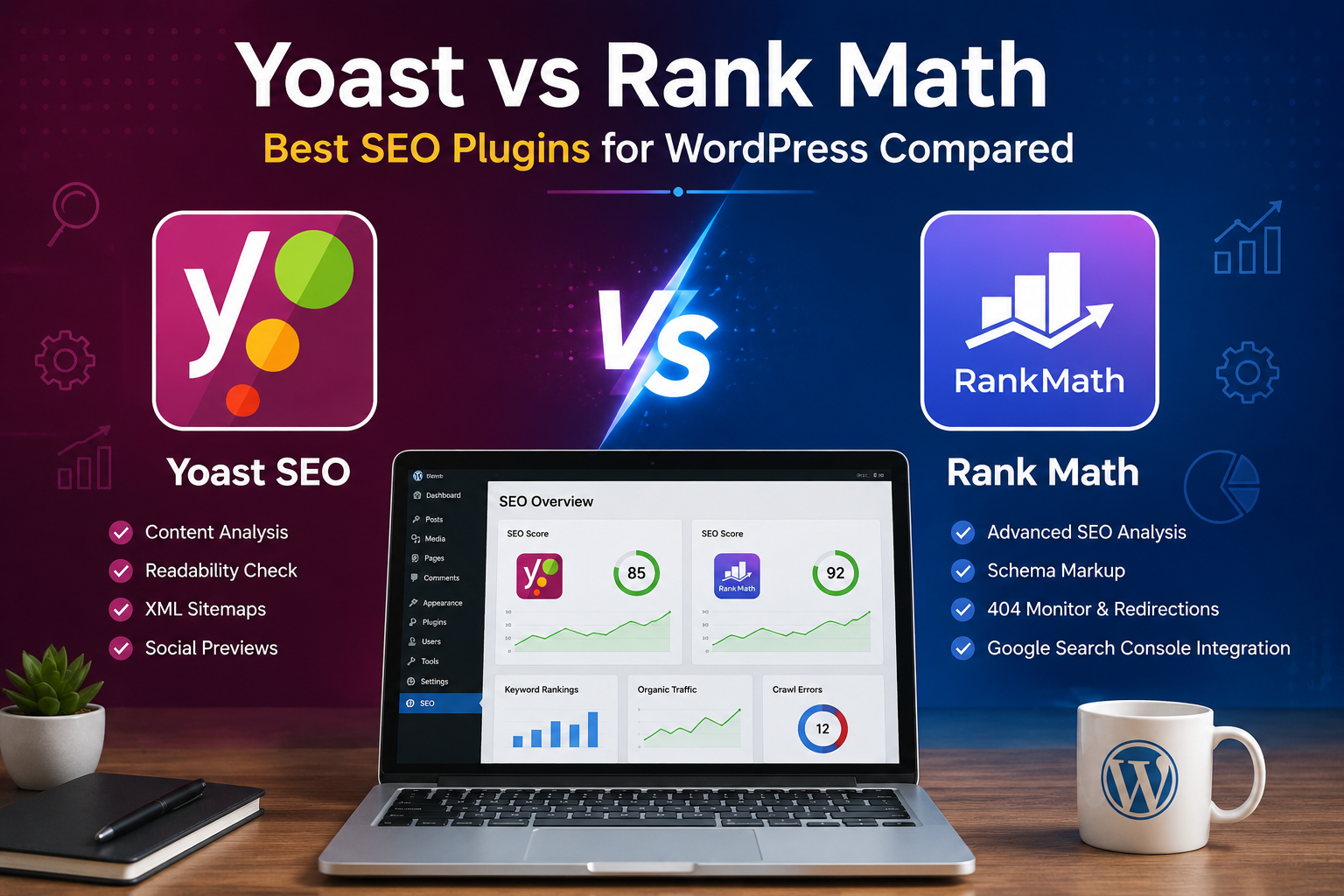
If you’re on WordPress, Yoast SEO or Rank Math handles a lot of this without requiring you to write code. For custom sites, Google’s Structured Data Markup Helper is a decent starting point. Either way, this is not optional if you’re serious about voice.
Schema markup is how you stop making search engines guess. The clearer your signals, the more confidently a voice assistant can say ‘I found exactly what you’re looking for’ — and point to your content.
HTTPS: Table Stakes
If your site is still running on HTTP, switch to HTTPS. This is not a voice search-specific point — it’s basic SEO hygiene at this point, and Google has been treating it as a trust signal for years. An insecure site signals unreliability to both search engines and the users who eventually reach it. Get the SSL certificate. Move on.
4. Writing Content That Voice Search Actually Wants
Write Like a Human Explaining Something to Another Human
This sounds so obvious that it feels almost insulting to say. But a huge amount of web content — including content on sites that should know better — is written in a register that no living person would use in actual speech. Passive voice everywhere. Sentences that start with ‘It is worth noting that.’ Jargon that signals expertise but communicates nothing. Corporate-speak that was written to impress a manager, not to help a reader.
Voice search has zero patience for any of that. The assistant is going to read your content aloud to a real person. If it sounds weird when spoken, it fails. Full stop.
Here’s a simple test: take a paragraph from your site and read it out loud slowly, as if you’re speaking to a friend. If you stumble over it, if it sounds stiff or unnatural, if you’d never actually say it that way — rewrite it. This test is more useful than any readability score.
Short sentences. Active voice. First and second person. Specific language over vague language. ‘You’ll need a Phillips head screwdriver’ over ‘The appropriate tool should be obtained.’ Real words over impressive ones. The goal is clarity at conversational pace.
Build Everything Around Questions
Given that voice searches are so heavily question-based, building your content architecture around questions is one of the most effective structural decisions you can make. And I don’t just mean ‘include some FAQs somewhere on the page.’ What are the 10 most common questions someone interested in this topic would ask their phone? Then, make sure you answer every single one of them, directly and completely.
The best tools for finding these questions:
• AnswerThePublic — puts in a keyword, spits out a visual map of every question people ask around it. Genuinely useful for content planning.
• Google’s ‘People Also Ask’ boxes — right there on the search results page, free, updated constantly. These are actual questions real people are asking.
• Reddit, Quora, and niche forums — where people ask questions in completely natural language, with no optimization intent whatsoever. Gold for voice search keyword research.
• Google Search Console — shows you what questions are already landing on your site with impressions, so you can see where you’re close but not quite ranking.
Once you have your question list, use questions as subheadings. Literally. ‘How long does it take to get a passport?’ as an H2 or H3 header. Then answer it in the very first sentence underneath. Don’t build to the answer — lead with it, then expand. That structure is exactly what lets Google pull your first sentence as a featured snippet answer.
The 30-Word Rule
Research from Backlinko found that the average voice search result is about 29 words long. That’s two or three short sentences. This doesn’t mean your whole piece should be 30 words — it means that when you’re answering a specific question, your direct answer should be complete and accurate within roughly that length, before you go into detail.
Think about it from the user’s perspective. Someone’s driving and asks their phone a question. They need an answer in the next 15 seconds before they reach their destination. If your content starts with a 200-word preamble before getting to the actual answer, you’re not being chosen. If it leads with a clean, direct, 25-word answer followed by supporting detail, you’re in the running.
Inverted pyramid. Direct answer first. Context and depth second. Always.
FAQ Pages Are Seriously Underrated
A well-built FAQ page, properly structured and marked up with schema, can be one of the highest-performing assets on your entire site for voice search. One page. Dozens of potential featured snippets. Covering a huge range of question-based queries. Updated regularly as new questions emerge.
The key to a FAQ page that actually performs:
• Write questions the way people actually ask them — not the sanitized, marketing-friendly version. ‘How much does it cost?’ not ‘What is your pricing structure?’
• Answer each question in the first 30 words, then give more detail if needed
• Use H2 or H3 tags for each question — don’t just bold them
• Mark it up with FAQ schema
• Update it when you see new questions coming in through search data or customer service
• Keep the tone conversational — not legal disclaimer language, not marketing fluff, just clear answers
One more thing: a good FAQ page also reduces support burden. When your website answers the questions people are calling about, everyone wins.
Long-Form Content Still Wins. The Trick Is Structure.
There’s a myth floating around that voice search means short content. It doesn’t. Comprehensive, in-depth content still ranks better in general, which is the prerequisite for being chosen as a voice result. The difference is that well-structured long-form content, with clear question-based subheadings and direct opening sentences, will outperform thin content every time.
Write a thorough piece. Just structure it so the direct answers are easy for both humans and machines to find.
5. Local Voice Search: Where the Real Opportunity Lives
Your Google Business Profile Is Your Most Important Voice Asset
If you have a physical location, serve a local area, or have customers who visit you, your Google Business Profile (it used to be called Google My Business) is the single most impactful thing you can optimize for local voice search. Full stop. When someone says ‘find me a good plumber near me’ or ‘is the pharmacy on Oak Street still open,’ Google is pulling that answer from Business Profiles, not from your website content.
The profile is free. Claiming it takes ten minutes. Optimizing it properly takes longer, but it’s absolutely worth doing. Here’s what to actually do:
1. Make sure your name, address, and phone number are completely accurate — exactly as they appear on your website
2. Choose every relevant business category, not just the primary one
3. Write a description that actually sounds like a human wrote it and answers common questions about what you do
4. Fill in your hours completely, including holiday hours — this directly feeds ‘are they open right now’ voice queries
5. Upload recent, real photos of your space, your work, your team
6. Use the Q&A feature to pre-answer the questions customers ask most often
7. Post updates regularly — Google notices when businesses are actively engaged with their profiles
8. Ask happy customers for reviews, and respond to every single review you get
NAP Consistency: The Boring Thing That Matters a Lot
NAP stands for Name, Address, Phone number — and search engines verify this information by cross-referencing it across dozens of sources on the web. Yelp, Yellow Pages, Foursquare, TripAdvisor, industry directories, your own website. When all match, it builds confidence. When they conflict — old phone number on one site, different address format somewhere else — it creates confusion that can genuinely hurt your local visibility.
Audit your listings. Search your business name and go through the results. Find the inconsistencies and fix them. Tools like Moz Local or BrightLocal can automate this if you have a lot of listings to manage. Boring work, meaningful impact.
Making ‘Near Me’ Work For You
‘Near me’ has become such a reflexive voice search modifier that optimizing for it should be a specific goal, not an afterthought. A few practical ways to do it:
• Use your city, neighborhood, or region naturally and specifically in page titles, H1 tags, and the opening paragraph of location-relevant pages — not stuffed in awkwardly, but genuinely incorporated
• If you serve multiple geographic areas, create separate pages for each one — a ‘plumber in Nottingham’ page and a ‘plumber in Leicester’ page will each capture those local voice queries independently
• Embed a Google Map on your contact and location pages
• Build local links from genuinely local sources — regional news sites, local business associations, sponsorships of community events
Reviews Are Doing More Work Than You Think
When a voice assistant recommends a local business — ‘the highest-rated electrician near you is…’ — it’s working from review data. Volume, recency, average rating, and how frequently reviews are coming in. This means that getting a steady flow of real, positive reviews isn’t just a reputation management task. It’s actively driving voice search recommendations.
Make it easy. Send follow-up emails with a direct link to your Google Business Profile review form. Ask in person at the point when a customer is clearly satisfied. Respond to every review — positive ones because it signals engagement, negative ones because it signals accountability. Neither ignoring reviews nor freaking out over bad ones is the right move. Steady, professional engagement is.
6. Chasing the Featured Snippet
How Google Decides What Gets Read Aloud
Google doesn’t fully publish the rules for how featured snippets are selected. But years of research and observation have established some clear patterns. Pages that win snippets almost always already rank on the first page for the query in question — this means you have to earn general ranking first. They provide a direct, complete answer to a specific question within a clearly structured section of the page. They’re on domains that have earned overall trust and authority. And the answer is correctly formatted for the snippet type the query tends to generate.
There’s no shortcut around the foundation: you need a well-structured page, real domain authority, and content that genuinely answers the question better than what’s currently in the snippet. But if you have those things, snippet optimization is less about gaming an algorithm and more about communicating clearly.
Formatting That Actually Wins Snippets
For paragraph snippets — the most common for voice search — the winning structure is almost always the same. Question as H2 or H3 heading. Direct, complete answer in a single paragraph immediately beneath the heading. 40 to 60 words. No preamble, no ‘great question, let’s explore this.’ Just the answer, clearly and completely, right away.
For list snippets — common for ‘how to’ and ‘steps to’ queries — use properly formatted HTML ordered or unordered lists, not manually typed dashes. Keep list items parallel in structure and reasonably concise. Lists of 5 to 8 items perform particularly well.
For table snippets — useful for comparison content and pricing information — use clean HTML table markup with proper headers. These are less common in voice search specifically, but worth getting right for screen-based snippet performance.
You Don’t Have to Outrank Someone to Steal Their Snippet
Here’s something that surprises a lot of people: you can win a featured snippet without being the top-ranked result for that query. Google is specifically looking for the best-formatted, most direct answer — not necessarily the highest-authority page. If the current snippet holder has a muddled, indirect answer buried in the middle of a paragraph, and you write a clean 35-word direct answer with proper structure, you may well take their position even if your page ranks third or fourth overall.
This makes snippet optimization particularly valuable for newer or lower-authority sites. You can outcompete on structure and clarity, but you can’t yet compete on domain authority.
Clarity is a competitive advantage. The site that gives the clearest, most direct answer wins the snippet — regardless of whether they have the biggest domain or the most backlinks. This is one of the few places in SEO where doing the work well genuinely beats spending the most money.
7. Optimizing Across Different Voice Platforms
Google Assistant: Your Standard SEO, But Sharper
Google Assistant — the voice on Android phones and Google Nest devices — draws answers from Google Search. Which means all the SEO you already do feeds directly into Google Assistant results. Good rankings, strong featured snippets, solid schema markup, and an optimized Google Business Profile — all of that shows up directly in what Google Assistant says.
One additional angle: Google’s Knowledge Graph. If your brand, organization, or the people behind it have a strong Google Knowledge Panel — meaning you show up with a sidebar of structured information on branded searches — that helps Google treat you as an authoritative entity and factors into voice results for informational queries about you.
Amazon Alexa: A Whole Different World
Alexa is a distinct ecosystem, and it’s easy to forget that it doesn’t run on Google. For web searches, Alexa primarily uses Bing. For local business queries, it relies on Yelp. For shopping, it defaults to Amazon’s product catalog. For general knowledge, it draws from Wikipedia and other structured knowledge bases.
Practical implications: if Alexa visibility matters to you, maintain strong, complete listings on Bing Places and Yelp — these platforms are easy to neglect when you’re Google-focused, but they’re Alexa’s local data sources. If you’re an e-commerce seller, the Amazon Choice designation is the Alexa equivalent of a featured snippet, and earning it requires excellent reviews, strong sales performance, competitive pricing, and Prime eligibility.
Apple Siri: Don’t Forget iPhone Users
A significant chunk of voice search happens on iPhones, and Siri isn’t pulling from Google. For web queries, Siri uses Bing. For local results, it uses Yelp and Apple Maps. For Siri visibility, your Apple Maps listing — now managed through Apple Business Connect — matters a lot and is often completely ignored.
iPhone users asking Siri for local recommendations are getting Apple Maps answers, not Google Maps answers. If you haven’t claimed and optimized your Apple Business Connect listing, a meaningful portion of your potential local audience is finding incomplete or inaccurate information about you when they ask Siri. That’s a fixable problem that takes about 20 minutes.
Microsoft Cortana: The Enterprise Voice
Cortana runs on Bing and is primarily used in Windows and Microsoft 365 environments. Its market share in consumer voice search is relatively small, but if your audience includes corporate users, government employees, or power Windows users, Bing SEO matters. The good news: strong Google SEO translates reasonably well to Bing performance, so you’re not starting from zero.
8. Voice Search and Shopping: What E-Commerce Needs to Know
Voice Commerce Is Growing Up
Voice-driven shopping — asking your Echo to reorder paper towels, using Google Shopping to find deals by speaking rather than typing — has moved from novelty to a genuine commerce channel. It’s not replacing keyboard-driven e-commerce, but it’s adding a layer that smart retailers are already optimizing for.
Voice commerce tends to cluster around specific behaviors: reordering familiar products, quick product discovery queries in casual moments (‘what are the best budget headphones around 50 dollars’), and local product availability queries (‘does the Apple Store near me have the new phone in stock’). Understanding where your products fit in these patterns shapes how you approach optimization.
Winning Alexa’s Choice Badge
For sellers on Amazon, the Alexa Choice designation is the voice commerce equivalent of the featured snippet. It’s the product Alexa recommends when someone asks for a category rather than a specific item — ‘Alexa, order some coffee pods’ or ‘Alexa, find me a Bluetooth speaker under 40 dollars.’
Earning it requires strong sales velocity, excellent reviews (both average rating and total volume), competitive pricing, Prime eligibility, and a complete, well-optimized product listing. There’s no shortcut to the badge — it’s earned through consistent product and seller performance. But understanding that it exists and that it directly drives voice purchases is the first step.
Product Content That Works for Voice
For Google Shopping and web-based voice product queries, your product pages need structured data — Product schema with price, availability, and review information — and content that directly answers the questions shoppers ask before buying. ‘Is this waterproof?”Does this work with iPhone?”How long does the battery last?’ These questions appear constantly in voice product research queries, and if your product page answers them clearly, you’ve got a shot at being the spoken result.
9. Measuring Whether Any of This Is Working
The Honest Reality of Voice Search Tracking
I’m going to be straight with you: measuring voice search traffic directly is genuinely hard right now. Google Analytics doesn’t have a ‘voice search’ segment. Voice queries that go through Google blend into organic traffic without a clear label. There’s no perfect way to say ‘X percent of my sessions this month came from someone talking to their phone.’
What we have instead is a set of proxy metrics — things that are meaningfully correlated with voice search performance, even if they’re not direct measurements. Track these consistently, and you’ll have a clear picture of whether your optimization is moving in the right direction.
Featured Snippet Ownership
This is your clearest proxy for voice search visibility. Tools like SEMrush, Ahrefs, and Moz all show you which of your pages currently hold featured snippets. Track this number month over month. Growing snippet ownership — especially for question-based queries — is the strongest signal available that your voice search presence is improving.
Question: Query Performance in Search Console
Open Google Search Console. Go to the Performance report. Filter queries for question words: ‘how,”what,”where,”why,”when,”best,”near me.’ Look at impressions, clicks, and average position for these filtered queries over time. If these numbers are improving, your voice search optimization is working. If they’re flat, you know where to focus.
Local Pack Tracking
For local businesses, your appearance in the local pack — the map-based block that appears for local queries — is highly correlated with local voice search performance. Tools like BrightLocal, Whitespark, or Moz Local track this. If your local pack visibility is growing, your local voice search presence is almost certainly growing too.
The Simple Gut Check
Here’s an unglamorous but effective method: periodically ask your own phone the questions you’re trying to rank for. Use a device in a different location than your office, logged out of your accounts if possible. See what comes up if it’s you — great. If it’s a competitor — that’s your target. If it’s nobody particularly good — that’s an opportunity.
10. Mistakes That Are Killing Your Voice Search Performance
• Slow site speed. Nothing else on this list matters if your site takes more than two or three seconds to load. Voice assistants don’t wait. Fix this before anything else.
• Mobile experience that was clearly built for desktop. Test your site on a real phone, not just the Chrome DevTools simulator. If it’s clunky, unreadable, or frustrating, so is your voice search presence.
• No schema markup. This one is genuinely common and genuinely costly. Structured data is the clearest way to communicate with search engines. Skipping it is like handing a search engine an unlabeled box and expecting it to know what’s inside.
• Writing for algorithms instead of people. The deep irony of voice search is that the more you optimize for how humans actually speak, the better you perform algorithmically. Keyword stuffing, passive constructions, corporate-speak — these hurt both your readers and your rankings.
• Ignoring the Google Business Profile. Especially for local businesses. Especially for ‘open now’ and ‘near me’ queries. This is the most direct lever you have for local voice search, and many businesses still treat it as an afterthought.
• Treating Alexa like it’s Google. It isn’t. It runs on Bing and Yelp. If you want Alexa visibility, you need Bing Places and Yelp optimization on your list.
• Forgetting Apple Business Connect. Siri users are a massive audience. Ignoring Apple Maps listing optimization means a huge segment of mobile voice searchers is finding either nothing or incorrect information about you.
• Setting it and forgetting it. Voice search is not a one-time project. Queries evolve, competitors improve, assistants get updated, and what worked six months ago might not be optimal today. Build in quarterly reviews.
11. Where Voice Search Is Heading
AI Search Changes the Game Again
Here’s what’s genuinely interesting about the current moment: AI-powered search — Google’s AI Overviews, Bing Copilot, ChatGPT browsing — is shifting the game in ways that intersect directly with voice search. These systems don’t just pull a snippet from the web. They synthesize answers from multiple sources, reason across them, and generate a response. The spoken version of that is a more sophisticated, contextual answer than a traditional featured snippet.
What this means for content creators: being one of the trusted, authoritative sources that AI systems draw from becomes increasingly important. Google’s E-E-A-T framework — Experience, Expertise, Authoritativeness, Trustworthiness — has become genuinely more important, not as an SEO checkbox but as a real signal that AI models use to evaluate source quality. Building genuine topical authority, demonstrating real experience, and earning citations from trusted sources is the long game for AI-era voice search.
Voice Plus Vision: The Multimodal Future
The next frontier isn’t just voice — it’s voice combined with visual context. Devices like Google’s smart displays, Amazon’s Echo Show, and increasingly capable AR devices are creating environments where voice queries get answered with both audio and visual content simultaneously. Optimizing content to work across both modes — engaging to read and clear to listen to — is where things are heading.
This isn’t immediate for most businesses, but it’s worth knowing: the investment you make in voice-friendly content now will serve you in a multimodal future. Content that’s clear, direct, and well-structured translates across every format.
Personalization Gets Deeper
Voice assistants already know a lot about the people who use them. They know where you live, where you work, what you’ve ordered, and what you’ve asked before. This personalization is only going to deepen, which means the same query will increasingly return different answers for different users based on context and history.
The implication: brand loyalty starts to matter in voice search in a new way. If someone has already interacted positively with your brand, asked for you by name, ordered from you, or followed you, the algorithm is more likely to surface you for them again. Building real customer relationships is itself a voice search strategy.
Okay, So Where Do You Actually Start?
Voice search optimization can feel like a lot. I’ve thrown eleven sections at you, and if you’re looking at this thinking ‘I can’t do all of this at once’ — you’re right, you can’t. Nobody does everything at once.
Here’s how I’d actually prioritize if I were starting fresh:
1. Fix your site speed and mobile experience first. Without these, nothing else lands.
2. Claim and fill out your Google Business Profile. Then do Apple Business Connect and Bing Places. One afternoon, done.
3. Add FAQ schema to your most important pages. If you have an FAQ section anywhere, mark it up.
4. Pick your 10 most important question-based queries. Restructure or write content specifically around them, using the question as a heading and the direct answer in the first sentence.
5. Track your featured snippet count in SEMrush or Ahrefs, and your question query performance in Search Console. You need a baseline.
6. Review quarterly. See what’s working, find the gaps, keep going.
That’s it. Not a hundred things — six things, done well and consistently. Voice search rewards the same qualities that have always separated good web content from bad: clarity, usefulness, technical soundness, and genuine respect for the person asking the question.
The voice asking that question today might be your next customer. Make sure your site has something worth saying back.
The businesses that win at voice search aren’t the ones with the biggest budgets or the cleverest tricks. They’re the ones who took the time actually to answer people’s questions — clearly, completely, and in language that sounds like a real human being wrote it. That’s always been the job. Voice search just made it more obvious.
Voice search is a moving target — platforms evolve, assistants improve, and best practices shift. Revisit your approach regularly, stay curious about how real people are talking to their devices, and always come back to the same question: if someone asked this out loud, would my site have the best possible answer? If yes, you’re on the right track.
What is voice search optimization in digital marketing?
Voice search optimization in digital marketing is the process of optimizing your website content so it appears in results when users search using voice assistants like Google Assistant, Alexa, or Siri. It focuses on natural language, conversational queries, and question-based keywords.
What does voice search optimization mean in SEO?
Voice search optimization in SEO means structuring your content to match how people speak rather than type. It involves using long-tail keywords, answering direct questions, and improving website speed and mobile usability to align with voice-based queries.
How does voice search optimization work?
Voice search optimization works by targeting conversational phrases, optimizing for featured snippets, and using structured data. Search engines analyze spoken queries and deliver concise, relevant answers, so content must be clear, direct, and easy to understand.
How to do voice search optimization for a website?
To do voice search optimization for a website, focus on:
Using natural, question-based keywords
Optimizing for mobile and fast loading speed
Creating FAQ sections
Targeting local SEO queries
Structuring content for featured snippets
What are some voice search optimization examples?
Voice search optimization examples include:
Writing content that answers questions like “Where is the best café near me?”
Optimizing for “near me” searches
Adding FAQ sections
Using schema markup for better search visibility
What are the benefits of voice search optimization?
The benefits of voice search optimization include improved visibility in search results, better user experience, higher chances of appearing in featured snippets, and increased local traffic from mobile and voice users.
Why is voice search optimization important in 2026?
Voice search optimization in 2026 is essential because more users rely on voice assistants for quick answers. Businesses that adapt to voice search trends gain a competitive edge in visibility, engagement, and conversions.
What is the primary goal of voice search optimization for organizations?
The primary goal of voice search optimization for organizations is to deliver quick, accurate, and conversational answers that match user intent, helping improve search rankings and user engagement.
For digital marketers, what is the primary goal of voice search optimization?
The primary goal of voice search optimization is to capture conversational search traffic and provide direct, relevant answers that increase visibility and drive conversions.
How can voice search optimization benefit consumers?
By providing faster, more accurate answers, hands-free convenience, and a smoother search experience across devices.
What is Google voice search optimization?
Google voice search optimization refers to optimizing content specifically for Google Assistant and voice-enabled searches on Google. It focuses on featured snippets, local SEO, and conversational keyword targeting.
What is VSO (voice search optimization)?
VSO, or voice search optimization, is a strategy used in SEO and marketing to optimize content for voice-based queries, making it easier for search engines to deliver spoken results to users.
What is the importance of voice search optimization in marketing?
The importance of voice search optimization in marketing lies in its ability to connect with users in real-time, improve accessibility, and capture a growing segment of voice-first search behavior.
What is voice and visual search optimization?
Voice and visual search optimization involves optimizing content for both spoken queries and image-based searches. This helps businesses stay visible across emerging search technologies and user behaviors.
Are there voice search optimization services available?
Yes, many agencies offer voice search optimization services, including keyword research, content restructuring, technical SEO improvements, and local optimization to help businesses rank for voice queries.