







You open a website. It loads slowly. You leave.
That’s pretty much the story of the modern web. People give a site about three seconds before they click away. Google watches this too. Slow sites get pushed down in search results. Fast ones go up.
So how do you build a fast site? Most owners try plugins, fancy themes, and speed tools. Some of that helps a little. But the real fix is deeper.
The fastest WordPress sites are not built from store-bought themes. They are built on purpose, from the ground up. This is where custom WordPress website development comes in. And it changes things in ways you might not expect.
Let me walk you through why.
What Does “Custom” Really Mean?
First, let’s get this out of the way. A lot of people hear “custom WordPress site” and think it just means a unique design. That’s not the full picture.
Many agencies buy a theme, change some colors, swap the logo, and call it custom. It isn’t. That’s just a paint job on the same car everyone else is driving.
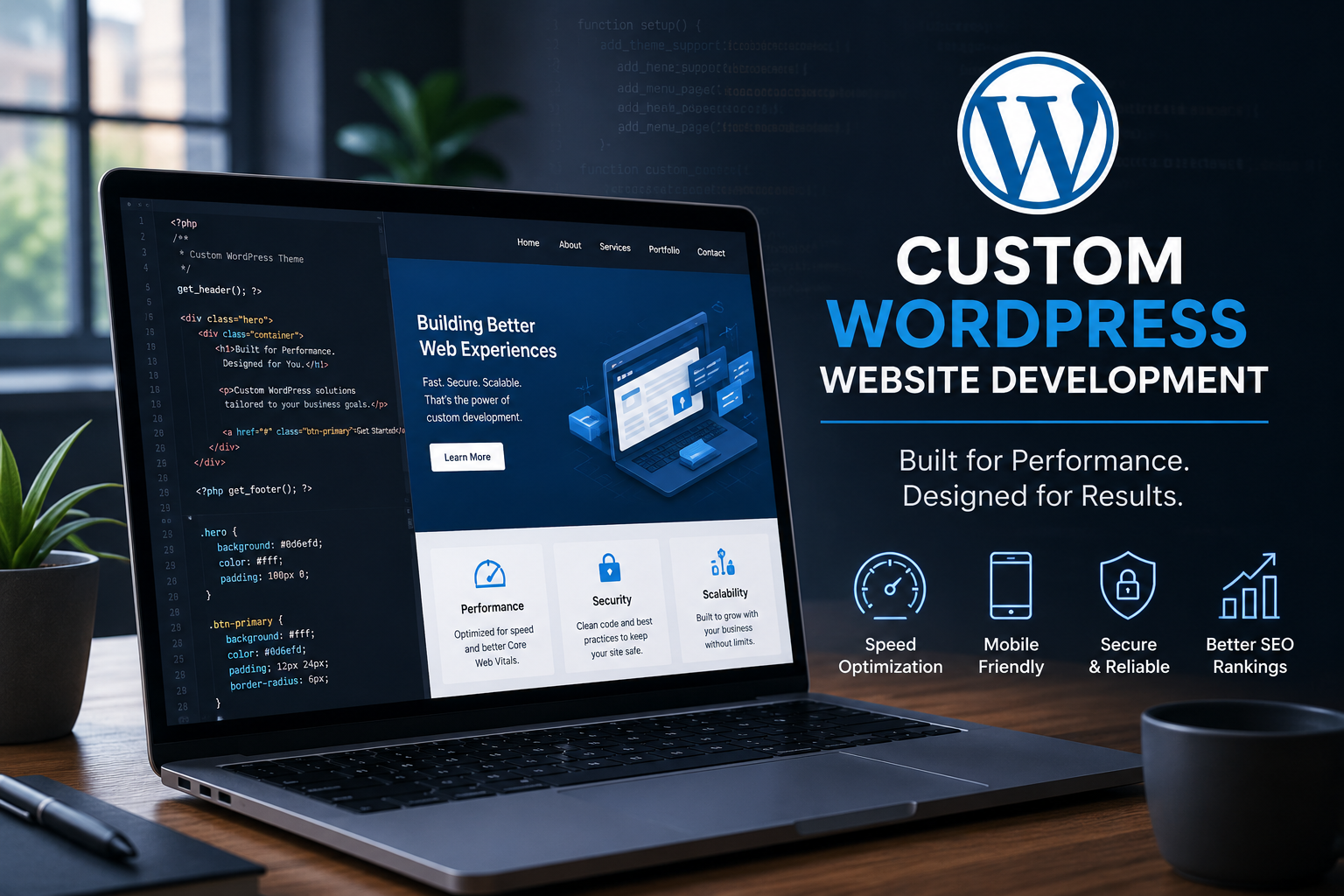
Real wordpress custom development is different. A developer writes the code for your site. They build only what you need. Nothing extra. No fancy sliders you won’t use. No hidden scripts loading fonts you didn’t pick.
Think of it like getting a suit tailored. You can buy one off the rack, but it might be tight in the shoulders and loose at the waist. A tailor makes one that fits just you. Your site should fit your business the same way.
Clean Code Just Loads Faster
Ready-made themes are built to sell to many people. To do that, they pack in tons of features. Sliders. Page builders. Pop-up tools. Contact forms. Blog layouts. The list goes on.
Here’s the problem. Most of that code still runs on your site, even if you don’t use those parts.
Imagine moving into a house that has ten kitchens. You only use one. But you still pay to heat, clean, and light all ten. That’s what a bloated theme does to your site.
A custom site only has what you actually use. The code is small. The files are light. Pages load fast.
I’ve seen sites go from loading in 4 seconds to under 1 second just by ditching a popular theme. Same pictures. Same words. Same hosting. The only thing that changed was the code underneath.
Google sees this too. It uses speed as a ranking signal. Faster site, better rank. Simple as that.
Too Many Plugins Will Kill Your Site

Open the back-end of most WordPress sites and you’ll see 30 or 40 plugins running. One for forms. One for SEO. One for backups. One for sharing. One for pop-ups. And on and on.
Each plugin adds extra code to every page. Many of them load their stuff even on pages that don’t need it. Why is your contact form plugin running on your blog posts? It just is. That’s how these things work.
With proper web development WordPress work, a good developer replaces many plugins with small bits of custom code. Need a contact form? Write one. Need a way to show team members? Build it right into the theme.
This does three big things for you. Your site runs faster because there’s less junk to load. It stays safer because fewer plugins mean fewer weak spots for hackers. And it breaks less often, because you’re not waiting for 30 different people to keep their plugins updated.
You stop playing plugin roulette every week.
Faster Behind-the-Scenes Work
Here’s something most people never think about. Every time someone visits your site, WordPress talks to a database. It pulls up the post, the menu, the sidebar, your settings, the comments. Dozens of little chats happen in the blink of an eye.
Bad themes and bad plugins make too many chats. Or they ask the same thing over and over. It’s like a waiter who goes back to the kitchen ten times to get one order.
A custom build fixes this. The developer writes smart code that asks for everything in one trip. The database responds faster. The page shows up faster. The visitor is happy.
On a busy site, this can shave off hundreds of milliseconds. That might not sound like much. But it adds up to real money.
Must Read: How Website Performance Impacts SEO and Conversions?
Pictures Done Properly
Images are the biggest thing on most web pages. They are also where most sites mess up.
Lots of sites upload huge photos straight from the camera. Think 4000 pixels wide. Then they show these giant images to someone on a phone with a tiny screen. The phone has to download the whole thing anyway. It wastes time and data.
Custom wordpress website development handles this the right way. Pictures get shrunk to the right size before they load. Newer formats like WebP are used, which are way smaller than old JPEGs. Images below the fold don’t load until you scroll near them.
Most sites bolt on a plugin to try to fix this. It kind of works. Kind of. A custom setup builds this into the theme from day one. It just works, all the time, with no extra fuss.
Fixing image problems alone can cut a full second off your load time. That’s huge.
Caching and Hosting Stop Fighting
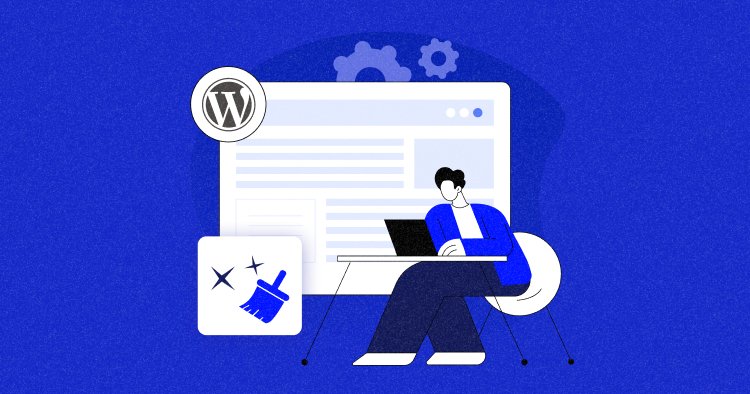
Caching sounds techy, but it’s simple. It’s just your site saving a ready-made copy of each page. When someone visits, the copy is served right away instead of being built from scratch.
The problem? Most WordPress sites have caching that fights with other caching. One plugin clears the cache. Another builds it. A third says the first one is wrong. Meanwhile, your visitors see old stuff or broken pages.
When your WordPress website development is custom, caching is planned from the start. It all works together. You get fresh pages when you need them and cached ones when you want speed.
The same goes for your server. A custom site can be tuned to work with the exact hosting you have. You pick the right PHP version. You set things up to match your traffic. Your hosting bill goes further because the site uses power smartly.
Mobile Is the Real Test
Most people browse on their phones now. Google knows this. It now ranks sites based on how they work on mobile, not desktop.
Google also has three big speed rules it cares about. They measure how fast your main content shows up, how fast your page reacts to taps, and how much stuff jumps around while loading. If your site fails these tests, your rankings drop.
Store-bought themes struggle here. They try to do too much. They shift around as ads and widgets pop in. They load huge fonts and scripts that kill phone performance.
Custom sites can be built phone-first. Fonts load smart. Layouts stay still while loading. Buttons respond the second you tap them. It feels clean and quick, the way good apps feel.
I’ve seen custom sites score in the 90s on Google’s speed tests while their old theme-based versions were stuck in the 40s.
Why Any of This Matters for Your Money
All this tech talk only matters if it changes real-world results. Good news. It does.
Amazon found that every 100 milliseconds of delay cost them 1% in sales. Walmart saw sales go up by 2% for every second they cut off load time. Pinterest cut wait times and got 15% more signups.
You’re probably not Amazon. But the same rules apply to small and medium businesses too. A local shop that cuts its load time from 5 seconds down to 1.5 can often double their phone calls in a month. An online store that fixes its speed often climbs in Google slowly but steadily over months.
Fast sites rank better. They convert better. They cost less to run. They waste less of your time. That’s the whole pitch.
Is This Worth It for Every Site?
Let me be straight with you. Not always.
If you run a hobby blog with 50 readers a month, a free theme is fine. If you’re just starting out and don’t know if your idea will even take off, spend your money somewhere else first.
But if your website is how you make money, or it’s the face of your brand, or you want to beat your competitors in Google, the math shifts fast. Every slow page loses you a sale. Every low ranking is a customer your rival gets instead.
Custom WordPress work is not about showing off. It’s about building something that actually works for you instead of against you.
Wrapping Up
Speed is not just one more feature you add to a website. It’s the ground the whole thing stands on.
You can put a beautiful design on a slow site. Visitors will still leave. Google will still push you down. Your team will still spend Saturdays fixing plugin crashes.
A custom build flips this. You start with speed and solid code. Then the design, content, and marketing all sit on top of something that actually works.
If your site is slow and you’ve tried every speed plugin out there, the plugins probably aren’t the real issue. The base is. Fix the base, and everything else starts to work the way you hoped it would from the start.