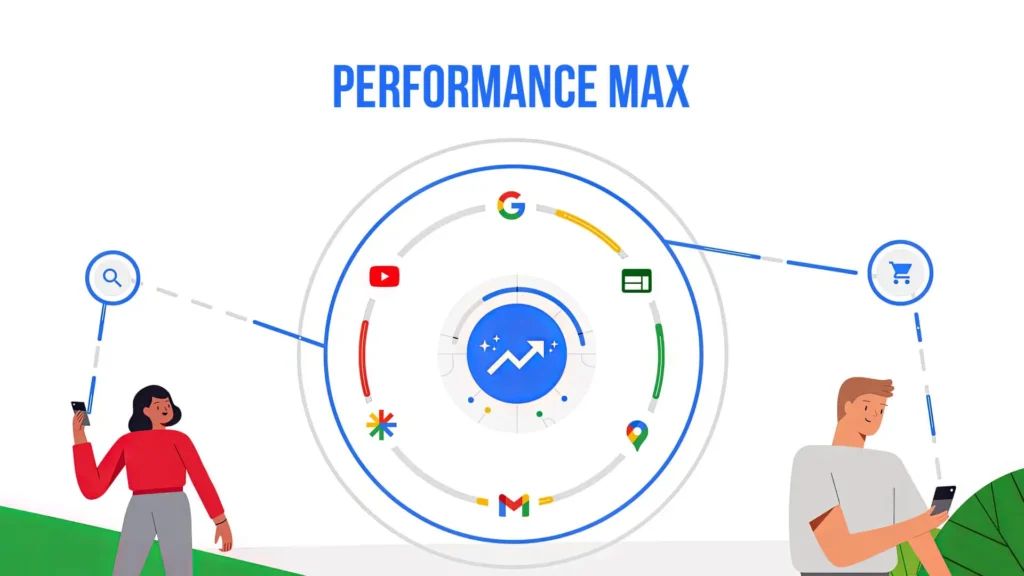











Legal business is among the most competitive areas of advertising online. Being present when and where they need them most; whether it’s after they have been hit or during a divorce, or even when they are facing a court case is all. And that is where PPC for law firms makes a difference.
The pay per click system can be used to ensure that law firms display at the head of the search results immediately and this means that your practice will be visible to high intentions prospects as soon as they require legal assistance. To conduct profitable legal PPC advertisements, however, one needs to do more than merely establish a budget and select several keywords. You will exhaust your ad money in no time without a clear strategy.
In this guide, we’ll walk you through seven proven strategies to make PPC for law firms work harder for your practice.
The Importance of PPC in Law Firms
It is best to be aware in advance as to why paid advertisements based on law firms achieve such high returns. Unlike SEO where it may take months to bear fruits, PPC makes your firm appear top of Google as soon as it is activated. Legal keywords also possess some of the most commercial interest of any business, someone who searches personal injury lawyer near me is willing to call.
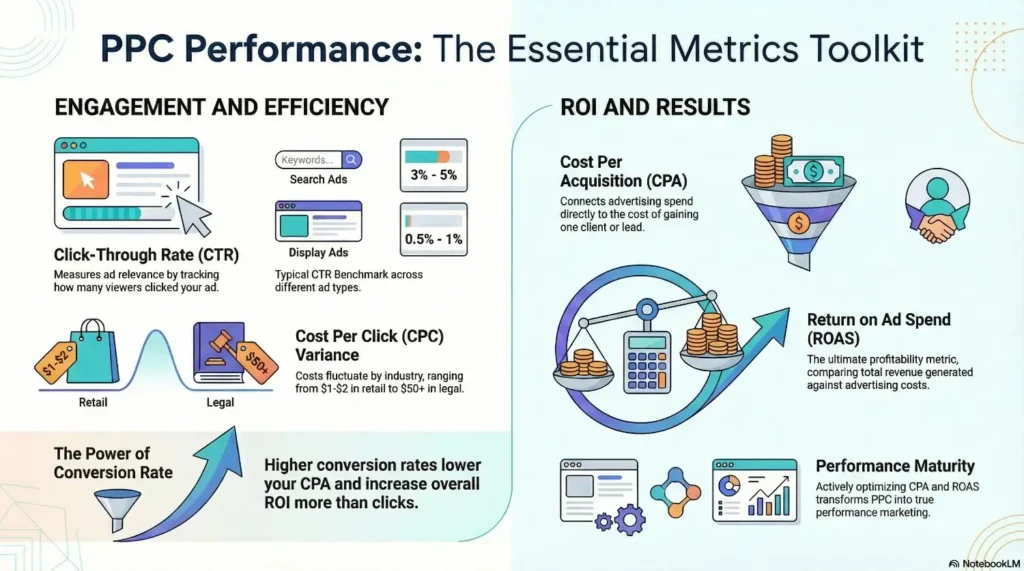
Legal stays one of the highest three costly PPC niches according to industry data, and some keywords themselves might cost ultimately 50-200-dollars per click. That is exactly the reason that the success relies on strategy rather than spending.
7 Proven PPC Strategies for Law Firms
The successful operation of PPC in law firms requires more than the expenditure in Google Ads. It involves smart hiring of key words, good ad creatives, landing page optimization and making of decisions that are based on data. No matter which stage you are in and whether you are beginning or enhancing performance, the seven strategies mentioned therein are useful in reducing expenses and acquiring more qualified clients.
1. Target High-Intent, Practice-Specific Keywords
Targeting such broad, general terms was one of the largest mistakes that lawyers make in using PPC. Rather, target high-intent, keywords within the practice area that enable signaling that a prospect is ready to hire.
Some examples of high-intent keywords are:
emergency DUI lawyer [city]
personal injury lawyer free consultation
divorce lawyer near me
workers compensation attorney [city]
These long-tail key-words are cheaper, not as competitive, and are more attracted to users who are further ahead in the decision-making process. Consider Google Keyword Planner or other tools (like SEMrush) to determine the best opportunities in your particular area of practice.
2. Use Negative Keywords to Eliminate Wasted Spend
The most designed law firm PPC services campaign will also run money even when you are not aggressively weed out unwanted traffic. Negative keywords inform Google that you do not want to appear in.
To give an example, a personal injury firm would desire to avoid the terms such as:
“law school”
“DIY legal forms”
“paralegal jobs”
“legal aid free”
One of the top-ROI moves in legal PPC management is to audit your search terms report regularly and falsely negate your search terms. It lowers cost-per- click directly as well as your overall conversion rate.
3. Optimize Your Landing Pages for Conversions
To generate traffic is half the battle. The location you direct that traffic to is equally important. One of the pitfalls of legal PPC advertising is redirecting users to a generic homepage rather than a specific conversion oriented landing page.
On your landing site you need to have:
A clear, benefit-driven headline (e.g., “Injured in an Accident? Get a Free Case Review Today”)
A salient phone number and contact form at the top of the fold
Trust indicators such as bar credits, client reviews and case outcomes
One, straightforward CTA
The idea is to eliminate the friction and ensure a prospect makes the next-step a painless one. Any 1-2 percent change in conversion rate can greatly lower your cost per lead.
4. Take advantage of Google Local Service Ads (LSAs)
In addition to the typical Google Ads, PPC for law firms has branched over to Local Service Ads – a potent ad type when your firm is placed at the top of the search results with a Google Screened badge.
LSAs are a pay-per-lead platform as opposed to a pay-per-clicks platform which may actually be less expensive in some practice groups such as family law, estate planning, and even criminal defense. The Google Screened verification creates instant trust to potential clients. LSAs and normal search campaigns make a presence over the whole top of a search results page.
5. Implement Smart Bid Strategies and Dayparting
Budgeting is essential with paid advertisements to law firms, as your cost-per-Click is even in triple digits. Smart bidding and dayparting are two methods that can be used to increase efficiency instantly.
Smart bidding leverages machine learning to optimize your bids based on other signals, such as device, location, time of day and audience behavior — conversions instead of clicks.
Dayparting refers to the idea of scheduling your advertising to be done only during the times of the day when your prospective clients will make the best purchases. In the case of many law firms, this translates into placing ads in large amounts during the business hours, and in the mornings of the work days while reducing the ad placements in the late and late night hours when the conversion rate is low.
Collectively, these measures make sure that your budget is used in the most desirable locations and timely moments.
Majority of the individuals seeking an attorney do not call the first attorney firm they see. They investigate, compare, and visit again. Remarketing, which is display or search ads to individuals who have been on your site but in the process of making that decision, is a great approach to remain top-of-mind during that decision.
PPC among lawyers is particularly effective when remarketing campaigns:
Create a reminder about your free consultation offer to visitors
Emphasize favorable client reviews or outcome of the cases
Place profile attorney ads that develop familiarity and trust
Remarketing audiences will generally be converted at a far greater rate and at a lower cost than cold traffic and are a critical part of any mature law firm PPC mix.
7. Track Everything with Proper Conversion Tracking
One can not manage improvement in something he or she does not measure. Most companies that run PPC for law firms campaigns do not install the entire conversion tracking such that they cannot tell which keywords, advertising, or even campaigns are actually generating cases.
Your conversion tracking should at least capture:
Telephone calls (both advertisement and your site)
Form submissions
Live chat initiations
Applications such as Google Tag Manager, CallRail and Google Ads conversion tracking collaborate to provide complete insight on the working components. In both cases, a good budget allocation can be made with the correct information; you could allocate more budget to the campaigns that are performing well and reduce spending on any activity that is not yielding qualified leads.
Final Thoughts
PPC for law firms is not a set-it-and-forget-it channel. It does demand continuous fine-tuning, intelligent money management, and a comprehension of the target client. The above seven strategies; high-intent targeting of keywords, negative targeting of keywords, conversion-driven landing page and full attribution provides the basis of a lucrative legal PPC program.
Managing the campaigns internally or utilizing professional PPC services of the law firm, the trick is to consider every click as investment and every data point as an opportunity to enhance it. When properly executed, legal PPC advertising can be the most reliable and repeatable increase in new client acquisition into your firm.
Businesses working with a digital marketing agency in toronto are already beginning to rethink how advertising works in an AI-first world. The shift isn’t gradual anymore it’s happening fast, and platforms like ChatGPT are at the center of it.
Over the past few years, user behavior has changed significantly. Instead of just typing short keywords into search engines, people are now asking for the full questions, comparing options and also making decisions through conversations with the AI. In response to this shift, ChatGPT has started introducing advertising in such a way that feels native to how users interact with the platform.
For businesses, this opens up a new kind of opportunity. Instead of interrupting users, ads can now appear exactly when someone is actively thinking about a problem or looking for a solution.
What Are ChatGPT Ads?
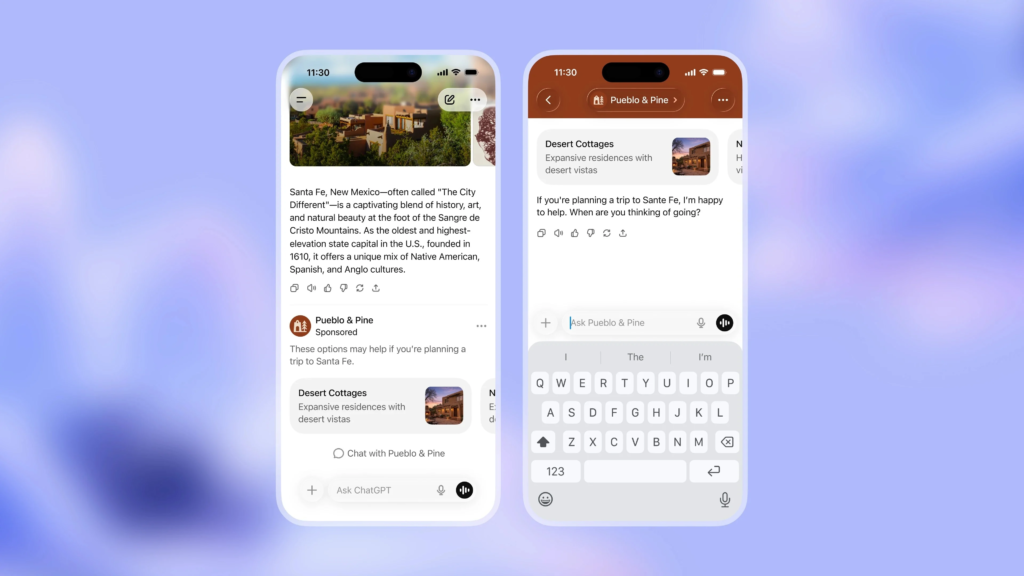
ChatGPT ads are sponsored placements that appear within the conversational interface, typically just below the AI’s response. They are designed to match the context of what a user is asking/want rather than relying only on the keywords or browsing history of the user.
What is ChatGPT Advertising?
ChatGPT advertising is a form of AI-driven advertising where sponsored content is shown based on the intent and context of a user’s conversation inside ChatGPT.
This is what makes it fundamentally different from traditional formats. In most digital channels, ads compete for attention. Here, they are placed within an ongoing interaction. That changes how users perceive them.
Instead of being intrusive, these ads feel more like suggestions—appearing at the exact moment someone is already exploring a topic.
Why OpenAI Introduced Ads in ChatGPT
The introduction of ads is not surprising when you look at the scale of AI usage today. Running large language models requires significant infrastructure, and offering free access to millions of users comes with real costs.
Advertising provides a way to support that ecosystem without restricting access. It also creates a new revenue stream that can fund further development.
At the same time, it positions ChatGPT as more than just an assistant. It becomes part of the broader advertising landscape, competing with search and social platforms.
How ChatGPT Advertising Works
At its core, ChatGPT advertising is built around context.
How does ChatGPT advertising work?
ChatGPT advertising works by analyzing what a user is asking and placing relevant sponsored content below the response, without influencing the answer itself.
When someone asks a question—say about buying property, choosing software, or finding a service—the system identifies the intent behind that query. Based on that, a relevant ad can appear underneath.
What’s important here is that the ad doesn’t shape the AI’s response. It sits separately, clearly labeled, and is selected because it fits the topic being discussed.
This approach is closer to intent-based targeting than traditional audience targeting. It relies less on who the user is and more on what they are trying to solve in that moment.
Who Sees Ads in ChatGPT?
Not every user will see ads, at least for now. The rollout is still controlled and limited.
Ads are primarily shown to users on free or entry-level plans, while those on paid subscriptions such as Plus, Pro, or Enterprise typically have an ad-free experience.
There are also basic conditions around age and region, since the feature is still being tested in selected markets. As the platform expands, this is likely to change.
Privacy & Data Safety in ChatGPT Ads
One of the biggest concerns around any advertising platform is how user data is handled. ChatGPT takes a different approach compared to many traditional platforms.
Do ChatGPT ads use personal data?
No, ChatGPT ads do not rely on sharing personal conversations with advertisers. Targeting is based on general context rather than individual identity.
This means advertisers are not accessing private chats. Instead, they are working with aggregated signals—essentially understanding what category of topic is being discussed.
For users, this creates a more privacy-conscious environment. For businesses, it means learning to rely on relevance and messaging rather than heavy tracking.
Benefits of ChatGPT Advertising for Businesses
The biggest advantage of ChatGPT advertising is timing. Businesses are reaching users when they are actively thinking, not passively scrolling.
When someone asks a question inside ChatGPT, they are already in a decision-making mindset. That makes the interaction more valuable than many traditional impressions.
There is also a clear advantage for early adopters. Because the platform is still new, competition is lower, and there is more room to experiment without high costs.
Another important factor is engagement. Ads placed within a conversation tend to feel more natural, which can lead to better interaction compared to formats that interrupt the user experience.
ChatGPT Ads vs Google Ads vs Meta Ads
Each platform still serves a different purpose, but the differences are becoming more interesting.
Google Ads are built around keywords. They work well when users know what they are searching for. Meta Ads, on the other hand, rely on interests and behavior, often appearing when users are not actively looking for something.
ChatGPT sits somewhere in between, but leans closer to intent. It captures users who are exploring, comparing, and asking questions in real time.
This ability to understand full conversations gives it an edge in situations where traditional keyword targeting falls short.
How Businesses Can Prepare for ChatGPT Ads
Even if full access to ChatGPT ads is still limited, the preparation can start now. The first step is to rethink how messaging is written. Traditional ad copy often focuses on short, punchy lines.
In a conversational environment, that approach feels out of place. Messaging needs to sound more natural, more helpful, and more aligned with how people actually ask questions.
Content strategy also plays a role. Businesses that already create useful, question-based content will have an advantage. This is where alignment with SEO becomes important.
If you’re already investing in structured content, this connects directly with broader strategies like ai marketing agency ontario positioning and long-term organic visibility.
At the same time, paid strategies will evolve. Businesses familiar with performance-driven campaigns—especially those working with a PPC marketing agency toronto—will find it easier to adapt once AI ad platforms become more accessible.
Use Cases: Where ChatGPT Advertising Works Best
Some industries are naturally better suited for this format.
In real estate, for example, users often ask detailed questions before making decisions. This creates an ideal environment for ads that appear during that research phase.
Local businesses can also benefit, especially when users are looking for recommendations or comparing options nearby.
SaaS companies and service providers have another advantage. Their customers tend to evaluate multiple options, and ChatGPT becomes a space where those comparisons happen naturally.
Agencies, particularly those evolving into a performance marketing agency toronto model, can use this as an opportunity to offer new capabilities to clients.
Future of AI Advertising
AI advertising is still in its early stages, but the direction is clear.
We are now moving towards a model where the conversations don’t just inform decisions—they complete them. Booking a service, purchasing a product, or comparing options could all happen within a single interaction.
This will likely change how businesses think about the entire funnel. Instead of separating awareness, consideration, and conversion, everything may happen in one continuous experience.
For agencies transitioning into a marketing agency toronto ecosystem focused on AI, this shift is not just an opportunity—it’s a necessity.
Conclusion
ChatGPT advertising is not just another channel to test. It represents a broader shift in how the users interact with information and how businesses will connect with them.
This move from keywords to conversations change the rules completely. It rewards more relevance, clarity, and timing over volume and visibility alone.
Businesses that start adapting now—whether through content, messaging, or strategy—will be in a stronger position as the platform evolves.
The early stages of any advertising platform tend to offer the greatest advantage. ChatGPT is no different. The difference is that this time, the change is not just about a new platform—it’s about a new way of thinking.
FAQs
Can businesses run ads on ChatGPT right now?
ChatGPT ads are currently in a limited testing phase and not yet fully available worldwide.
How are ChatGPT ads different from Google Ads?
They rely on the conversational context instead of catching keywords, which allows for a deeper intent targeting.
Do ChatGPT ads use my personal data?
No, they are based on general context rather than personal conversations or identity.
Will ChatGPT ads be available globally soon?
A wider rollout is expected, although the exact timelines have not been officially confirmed.
How can businesses prepare for ChatGPT advertising?
By focusing on conversational content, improving messaging, and aligning with AI-driven strategies.
Are ChatGPT ads better than Meta ads?
ChatGPT have a different purpose which is focusing more on intent rather than discovery.
Which industries benefit the most from ChatGPT ads?
Real estate, SaaS, local services, and consulting-based businesses tend to benefit the most.
Is AI advertising the future of digital marketing?
Yes, it is becoming a central part of how businesses reach and convert users in an AI-driven environment.
A client selling high-end home gym equipment was frustrated with their Meta ads. Traffic campaigns brought visitors, but conversion rates sucked. Lead form ads generated contacts, but most never responded. The traditional funnel wasn’t working.
Out of desperation, I suggested testing click-to-WhatsApp campaigns. To try something different.
First month: 2.7x ROAS. Second month: 3.4x ROAS. Third month: 4.1x ROAS and climbing.
Same product. Same target audience. Same ad creative. The only difference? Instead of sending people to a website or lead form, we sent them straight to a WhatsApp conversation.
That was eight months ago. Since then, I’ve tested WhatsApp ads across 15 different clients in different industries. The pattern is consistent and shocking: click-to-WhatsApp campaigns consistently outperform traditional campaigns by 2-3x on ROI.
Here’s what I’ve learned about why this works and how to actually do it right.
What Are Click-to-WhatsApp Ads Anyway?
Quick explanation for anyone who hasn’t seen these yet.
Click-to-WhatsApp ads are Meta ads (Facebook and Instagram) where the call-to-action button opens a WhatsApp conversation instead of taking people to a website or form. When someone clicks, it launches WhatsApp and starts a chat with your business automatically.
You can pre-fill an opening message so the conversation starts smoothly. Something like “Hi, I’m interested in learning more about [product].” The person has to tap send, and boom—they’re chatting with your business.
From there, you can respond manually, use automated chatbot flows, or combine both.
That’s it. Simple concept. Massive results.
Why WhatsApp Ads Work So Much Better
There are five reasons these campaigns outperform traditional approaches.
1. The Friction Basically Disappears
Traditional funnel: See ad → Click through → Land on website → Browse around → Maybe fill out contact form → Wait for response → Email back and forth → Eventually schedule call → Maybe buy.
Each step loses people. Your ad gets 1,000 clicks, 50 people fill out the form, 20 respond to your email, 8 schedule a call, and 2 actually buy.
WhatsApp funnel: See ad → Click → Start conversation → Answer a few questions → Buy.
The friction vanishes. No website to load. No form to fill out. No waiting for email responses. Just an immediate back-and-forth conversation.
One furniture company I work with saw its conversion rate jump from 1.8% (website traffic) to 7.3% (WhatsApp conversations). Same traffic source. Same product. People convert way better when you remove all the friction.
2. Real-Time Conversation Closes Deals
Here’s what I’ve noticed: When someone clicks a WhatsApp ad, they’re in buying mode right now. Not “I’ll think about it and maybe email later” mode.
They click because they want answers immediately. If you or your automated flow can respond within 2-3 minutes, you’re having a real-time conversation with a hot prospect.
That immediacy is gold. You can answer objections instantly. Handle questions on the spot. Provide exactly the information they need to make a decision.
A real estate agent I work with tested this with property listings. Website clicks converted at 0.8%—people would browse, maybe fill out a form, conversation would drag on for days. WhatsApp clicks converted at 4.2% because she could answer questions immediately, send additional photos, and schedule viewings right in the chat.
Speed matters way more than most marketers realize.
3. People Actually Read WhatsApp Messages
Email open rates for cold leads hover around 20-30% if you’re lucky. Most marketing emails go straight to spam or get ignored.
WhatsApp messages get read. Like, actually read. Open rates are 98%+. Response rates are 40-60% even for business messages.
Why? Because WhatsApp is where people have real conversations. It’s personal. When a message comes in, they check it. They don’t treat it like junk mail.
This means your follow-up actually gets seen. You send a product photo, a discount code, a case study—people open it and engage with it.
One supplement company switched from email follow-up to WhatsApp. Same abandoned cart messaging, just different channel. Email recovery rate: 8%. WhatsApp recovery rate: 31%. Almost 4x improvement just by changing where the message appeared.
4. The Conversation Builds Trust
Websites feel impersonal. Forms feel like data collection. WhatsApp feels like talking to a real person (even when it’s automated).
That psychological difference matters enormously for considered purchases or higher-ticket items.
Someone shopping for a $3,000 mattress doesn’t want to fill out a form and wait. They want to ask questions. Is this good for back pain? What’s the return policy? Can I get it in a custom size?
WhatsApp lets them ask those questions naturally. Your responses (manual or automated) build rapport and trust in a way that FAQ pages never can.
I worked with a B2B SaaS company selling $500/month software. Website demo request form converted at 2.1%. WhatsApp conversation converted at 6.7%. The ability to have a real dialogue before committing to a demo call made people way more comfortable moving forward.
5. The Data Quality Is Insane
This one surprised me at first.
Lead forms generate quantity—lots of submissions. But quality is questionable. People fill out forms with fake info, typos, or to “see what happens.” Then they ghost when you try to follow up.
WhatsApp leads are different. If someone clicks and starts a WhatsApp conversation, they’re giving you their actual phone number. It’s verified through WhatsApp. You can see if they’ve read your messages. You know it’s a real person, not a bot or fake submission.
The conversion-to-sale rate is dramatically higher because these are genuinely interested people who took a real action to engage, not someone who quickly filled out a form and immediately forgot about it.
One lead gen agency compared 1,000 form leads vs 1,000 WhatsApp leads. Form leads closed at 3.2%. WhatsApp leads closed at 11.8%. The qualification difference was massive.
Real Performance Numbers
Let me show you actual campaign data from different industries.
Home Services (HVAC Installation):
Website traffic campaign: $18 cost per lead, 4% conversion to sale, $450 customer acquisition cost
WhatsApp campaign: $22 cost per lead, 14% conversion to sale, $157 customer acquisition cost
ROI improvement: 2.9x
E-commerce (Fashion Accessories):
Traditional ad to website: 1.9% conversion rate, $31 cost per purchase, 2.1x ROAS
Click-to-WhatsApp: 6.2% conversion rate, $19 cost per purchase, 4.3x ROAS
ROI improvement: 2.0x
B2B Services (Accounting Firm):
Lead form ads: $89 cost per lead, 6% close rate, $1,483 customer acquisition cost
WhatsApp ads: $76 cost per lead, 19% close rate, $400 customer acquisition cost
The pattern holds across industries. WhatsApp consistently delivers 2-4x better ROI than traditional approaches.
When WhatsApp Ads Work Best
Not every business is a perfect fit. Here’s when it works brilliantly:
High-ticket purchases ($500+): People have questions and concerns before spending serious money. WhatsApp lets them get answers comfortably.
Considered purchases with research phase: Mattresses, furniture, home services, B2B software. Anything where the buyer needs information and reassurance.
Service-based businesses: Real estate, consulting, coaching, home services, legal, and medical. The conversation builds trust before committing.
Custom or complex products: Anything requiring customization, sizing questions, or technical specifications benefits from real-time Q&A.
International audiences: WhatsApp is huge in Latin America, India, Southeast Asia, the Middle East, and Europe. If your market is outside the US, WhatsApp is their primary messaging app.
Local businesses: Restaurants taking reservations, salons booking appointments, and local retail driving foot traffic. WhatsApp makes coordination easy.
When it doesn’t work as well:
Impulse purchases under $20: People want to click and buy. Adding a conversation step might create unnecessary friction for cheap impulse items.
Purely informational businesses: If you’re not selling anything and want traffic for ad revenue, traditional website clicks make more sense.
US-only audiences under 25: Younger Americans don’t use WhatsApp as much. They prefer Instagram DMs or iMessage. (Though this is changing.)
Download WhatsApp Business (free app). Set up your business profile with a proper name, description, hours, and address if relevant.
Connect it to Facebook Business Manager. This links your WhatsApp number to your ad account.
Step 2: Create the Ad Campaign
In Meta Ads Manager, choose “Messages” as your campaign objective. Select WhatsApp as the messaging app.
Choose your audience targeting just like any other Meta ad campaign.
For creative, simple, direct ads work best. No need for anything fancy. Clear value proposition, simple visual, strong CTA.
Step 3: Write Your Pre-Filled Message
This is the message that auto-populates when someone clicks your ad. Make it natural and specific:
Bad: “Hello.” Good: “Hi! I’m interested in learning more about your memory foam mattresses. Do you have any in stock?”
The pre-filled message should make it easy for them to tap send without having to think about what to write.
Step 4: Set Up Your Response System
You’ve got three options:
Manual responses: You or your team replies to every message personally. Works great for small volume or very high-ticket sales where personalization matters.
Automated chatbot: Use WhatsApp Business API to create automated flows that answer common questions, qualify leads, collect information, and hand off to humans when needed.
Hybrid approach: Bot handles initial questions and qualification, human takes over for closing. This is what most successful campaigns use.
Step 5: Have a Follow-Up System
The conversation shouldn’t end after the first exchange. Build a system for following up:
The next day, check in if they didn’t buy
Send additional product info, reviews, or case studies
Offer limited-time discounts for people on the fence
Re-engage people who went cold after 1-2 weeks
WhatsApp’s high read rates make follow-up way more effective than email.
The Creative That Works
After testing hundreds of ads, here’s what performs:
Keep it simple. Fancy production doesn’t help. Clear, straightforward ads that explain the value and make it obvious what happens when they click.
Show a person. Ads with a real human face (founder, team member, customer) outperform stock photos or product shots alone. People want to talk to people.
Address the objection upfront. “Not sure which size? Message us, and we’ll help you choose. “Questions about installation? Chat with us now.”
Make the CTA crystal clear. “Message us on WhatsApp” or “Chat with us now” performs better than generic “Learn More.”
Use video when possible. Short 15-30 second videos explaining the product and inviting conversation outperform static images by 30-40% in my testing.
One furniture store ran two identical campaigns. Ad A: Product photo with “Shop Now” CTA to website. Ad B: Short video of the owner saying, “Hey, I’m Mike. Got questions about this sofa? Message me on WhatsApp, and I’ll help you out.”
Ad B got 3.2x better ROI: same product, same audience, same budget. The personal invitation to chat made all the difference.
Common Mistakes to Avoid
I’ve watched enough people screw this up to spot the patterns.
Slow response times. If someone messages at 2 pm and you respond at 10 am the next day, you’ve lost them. They’ve moved on. Response within 5 minutes gets 8x higher conversion than response after 24 hours.
Being too salesy too fast. Don’t immediately hit them with “Buy now for 20% off!” Answer their questions first. Build rapport. Then offer the sale.
Ignoring the automated tools. Unless you’re selling super high-ticket items with low volume, you need automation. You can’t manually respond to 50-100 messages per day sustainably.
Not having a qualification process. Some people who click aren’t serious buyers. Build a quick qualification into your flow. “What’s your budget range?” or “When are you looking to purchase?” Early qualification saves time.
Letting conversations go cold. If someone doesn’t respond immediately, follow up after a few hours. The next day. Then in a week. Persistence matters, but don’t be annoying about it.
Not tracking properly. Set up proper conversion tracking so you know which ads drive WhatsApp conversations that actually convert to sales. Conversations without purchases don’t count.
One client was celebrating 500 WhatsApp conversations from their ads. I asked how many actually bought. They didn’t know. After tracking properly, turns out only 47 were purchased. The campaign wasn’t as successful as they thought. Tracking matters.
The Automation Sweet Spot
Here’s what works for automated flows without being annoying:
Message 1 (Immediate): “Thanks for reaching out! I’d love to help. Quick question—are you looking for [Product A] or [Product B]?”
Message 2 (Based on response): “Great choice! Most people want to know about [common question 1] and [common question 2]. Which would you like to know about first?”
Message 3: Answer their question with useful info, then: “Want to see some photos of our recent installations?” or “Should I send you our full pricing?”
Message 4: Share requested info, then: “Any other questions I can answer? Or would you like to place an order?”
Hand-off to human: “You know what, let me connect you with Sarah from our team. She can give you more personalized help. She’ll message you within the next few minutes.”
The key is making the automation feel conversational, not like clicking through a menu—natural back-and-forth, not robotic.
International Opportunity
If you sell internationally, WhatsApp ads are even more powerful.
In the US, WhatsApp adoption is around 25%. In Brazil, it’s 96%. India, 84%. Mexico, 91%. Most of Europe, 70-90%.
Outside the US, WhatsApp isn’t just a messaging app—it’s THE way people communicate. Personal messages, business conversations, customer service, everything happens on WhatsApp.
One e-commerce company selling to Latin America tried website traffic campaigns first. Conversion rate: 1.1%. Switched to click-to-WhatsApp campaigns targeting the same countries—conversion rate: 8.7%.
Same products. Same prices. Same ad creative. Just met people who already communicate.
If you sell internationally and you’re not using WhatsApp ads, you’re leaving massive money on the table.
The Future of This
WhatsApp ads are still relatively new. Meta introduced them in 2020, but they didn’t hit mainstream until 2023-2024.
Right now, they’re underpriced. Not many businesses use them. Competition is low. CPMs are cheaper than traditional campaign types.
That won’t last. As more marketers figure out the ROI, costs will rise. The early mover advantage is real.
I’m also seeing Meta expand WhatsApp features rapidly. Payment integration is coming. Better automation tools. Catalog browsing inside WhatsApp. It’s becoming a full commerce platform.
The businesses building WhatsApp marketing systems now will dominate as these features roll out.
What I’m Telling Every Client
If you sell anything over $100 with any complexity or consideration, you should be testing WhatsApp ads.
Start small. Run $20-30/day for a month. Build a simple automated flow or respond manually. See what the ROI looks like compared to your traditional campaigns.
Most will see 2-3x improvement. Some will see even more. A few might find it doesn’t work for their specific business. But you won’t know until you test.
The setup takes 3-4 hours total. The potential upside is transforming your entire customer acquisition model.
We’re in the early days of conversational commerce. The brands that figure out WhatsApp marketing now will dominate their categories over the next 3-5 years.
The ones who wait will be playing catch-up, competing in a more expensive, more crowded market.
Your choice. But the data doesn’t lie—WhatsApp ads are printing money for businesses that do them right.
1. What are click-to-WhatsApp ads and how do they work?
Click-to-WhatsApp ads are Meta ads that open a WhatsApp chat instead of sending users to a website or form. When someone clicks the ad, it instantly starts a conversation with your business, often with a pre-filled message, allowing real-time interaction and faster conversions.
2. Why do WhatsApp ads give better ROI than traditional Meta ads?
WhatsApp ads deliver higher ROI because they remove friction and enable instant conversations with potential buyers. Instead of multiple steps like landing pages and forms, users directly chat with the business, leading to higher engagement, better lead quality, and faster decision-making.
3. How much better do WhatsApp ads perform compared to website or lead form ads?
WhatsApp ads typically perform 2–3x better in ROI compared to traditional website or lead form campaigns. Across industries, they show higher conversion rates, better lead-to-sale ratios, and lower acquisition costs due to real-time interaction and higher intent users.
4. What kind of businesses should use WhatsApp ads?
Businesses selling high-ticket, complex, or service-based products benefit the most from WhatsApp ads. Industries like real estate, home services, consulting, healthcare, and e-commerce with higher-value products see strong results because customers need conversations before purchasing.
5. How fast should I respond to WhatsApp leads for best results?
You should respond to WhatsApp leads within 2–5 minutes to maximize conversions. Quick responses create real-time engagement with high-intent users, while delayed replies drastically reduce the chances of closing the sale.
6. Do WhatsApp ads generate better quality leads than forms?
Yes, WhatsApp ads generate higher-quality leads because users initiate real conversations using verified phone numbers. Unlike form submissions that may contain fake or low-intent data, WhatsApp leads are more genuine and have a significantly higher conversion-to-sale rate.
7. How can I optimize my WhatsApp ads for higher conversions?
To optimize WhatsApp ads, use simple creatives, clear CTAs, fast responses, and conversational automation flows. Focus on making it easy for users to start chatting, answer their questions quickly, and guide them naturally toward a purchase instead of pushing hard sales immediately.
Your Facebook pixel is missing about a third of your conversions, maybe more.
I know because I’ve checked this on 23 different e-commerce accounts over the past year. Every single one showed the same problem: Facebook’s dashboard reported way fewer purchases than what actually happened in Shopify. We’re talking 25-40% gaps between what Facebook saw and what really occurred.
The worst one? A cosmetics brand spending $18K/month. Facebook showed 847 purchases. Their actual number was 1,293. They were making decisions based on completely wrong data.
Then we set up the Conversion API properly. Within three weeks, Facebook was catching 92% of actual conversions instead of 65%. Their campaigns hadn’t changed. The products were the same. They just stopped flying blind.
iOS 14.5 Broke Everything (And It’s Not Getting Better)
April 2021. Apple released iOS 14.5 and gave users a simple choice: let apps track you, or don’t. About 75-80% of people chose “don’t.”
That single update destroyed browser-based tracking. The Facebook pixel relies on cookies. Safari blocks third-party cookies. iOS limits how long cookies can even exist. Add in browser extensions blocking trackers, people clearing cookies regularly, and you’ve got a system that barely works.
Before this update, the pixel caught 90-95 % of conversions. Now? You’re lucky to hit 70%. And that’s on a good day with favorable traffic.
Facebook’s algorithm needs conversion data to work. When it only sees 60% of what’s actually happening, it makes terrible decisions. It thinks your winning ads are losers. It scales the wrong campaigns. It finds the wrong audiences.
What Conversion API Actually Does
Conversion API sends purchase data straight from your server to Facebook. No browser involved. No cookies needed. Can’t be blocked.
Here’s how it’s different:
Normal pixel tracking goes like this: someone clicks your ad, lands on your site, the pixel loads in their browser, tries to fire, gets blocked by their settings half the time, and maybe Facebook gets the data.
CAPI works differently: someone makes a purchase, your server records it, and your server sends that data directly to Facebook’s servers. Done. The user’s browser settings don’t matter. Ad blockers can’t touch it. Safari’s restrictions are irrelevant.
You run both together. Facebook deduplicates the data so nothing gets counted twice. You get way more accurate tracking.
The Numbers Don’t Lie
Meta claims CAPI improves conversion tracking by about 13%. That’s their conservative official number.
Real world? Much bigger.
Shopify published data from Q1 2024 showing merchants with CAPI saw 23% more tracked conversions. Their ROAS numbers jumped 18%. CPA dropped 15%.
My own testing shows similar stuff:
28% more conversions tracked on average
22% better attribution accuracy
19% improvement in reported ROAS
One client sold skincare products. Before CAPI, Facebook reported a 2.1x return. After CAPI, the same campaigns showed 2.9x. Nothing changed except the tracking accuracy.
Another one sold phone accessories. They were about to kill their Facebook ads because the numbers looked terrible. We implemented CAPI first to get accurate data before shutting everything down. The ads were actually profitable. The tracking was just broken.
Platform Integrations vs Custom Setup
You’ve got three ways to do this:
Just use what’s built into your platform. Shopify has CAPI integration in the settings. WooCommerce has plugins. Most major platforms added this in 2022-2023. Turn it on, connect your Facebook account, and you’re done in 10 minutes.
The downside? You’ll get a 7/10 on event quality. It works, but it’s basic.
Pay for a tool that does it better. Companies like Elevar and Littledata sit between your store and Facebook. They clean up your data, add missing parameters, and send everything properly formatted. Costs $50-300/month, depending on your order volume.
This gets you to 9/10 event quality. Worth it if you’re spending more than $5K/month on ads.
Build it yourself with developers. Full control. Perfect data. Also expensive and time-consuming. Only makes sense if you’re spending $50K+ monthly or have really specific tracking needs.
Most people should start with option one or two. Custom builds are overkill for 90% of businesses.
Event Match Quality Matters More Than You Think
Facebook grades your CAPI setup with something called Event Match Quality. It’s a 0-10 score.
Below 6? You’re barely getting any benefit. Your data is incomplete.
6-7? Decent. It’s working, but could be better.
8-10? This is where performance really jumps. Meta’s data shows campaigns with scores above 8 see about 20% more attributed conversions and 12% lower CPA compared to campaigns with scores under 6.
Check yours in Events Manager. If it’s below 7, you need to send more customer data with each event.
What helps the score:
Email addresses (hashed properly)
Phone numbers (also hashed)
Names, cities, zip codes
The fbp and fbc parameters
Accurate timestamps
Proper event deduplication
I audited 15 client setups last quarter. Eleven of them had scores between 5.5 and 6.8. After fixes, most got to 8.2-8.7. Performance improved across the board.
The Mistakes Everyone Makes
Counting events twice. Your pixel fires a purchase event. Your server sends the same purchase via CAPI. Facebook counts both unless you use matching event_id values. This inflates your numbers and confuses the algorithm.
Screwing up the hashing. Facebook needs email and phone numbers hashed with SHA-256 before you send them. Send them unhashed, and match rates drop by 50%+, plus you’re violating privacy policies.
Missing the click ID. The fbc parameter tells Facebook which ad click led to this conversion. Without it, attribution falls apart. Tons of implementations miss this.
Sending everything hours later. Some people batch CAPI events and send them once daily. That delays the data too much. Events should hit Facebook within a few seconds of actually happening.
Only sending email when you have more. If you’ve got someone’s email, phone, name, city, and zip, send all of it. Each additional parameter improves match rates. Sending just an email when you have five data points cuts your match rate in half.
One client was sending CAPI events, but with the wrong URL parameter on everything. They put their homepage URL on all events instead of the actual page where each event occurred. Fixing just that one field improved their Event Match Quality from 6.1 to 7.8.
How to Actually Test This
Don’t assume it’s working. Verify.
Go to Events Manager, find Test Events, then purchase on your own site. You should see both a browser event (from the pixel) and a server event (from CAPI) show up. They should have the same event_id.
If only one appears, something’s broken.
Check different scenarios too:
Buy something on your iPhone with tracking turned off
Use Safari in private browsing
Install an ad blocker and test
Try different browsers
CAPI should catch all of these, even when the pixel fails.
Also, compare your platform’s actual orders to what Facebook reports. If Facebook shows 1,000 purchases and your store shows 1,450, you’ve got a 31% attribution gap. With proper CAPI, that gap should drop under 15%.
What Changed After Implementation
I set up CAPI for an apparel company in March. Here’s their before and after:
January-February (pixel only):
Facebook reported: 1,847 purchases
Shopify showed: 2,531 purchases
Gap: 27%
Reported ROAS: 2.3x
CPA: $41
March-April (pixel + CAPI):
Facebook reported: 2,398 purchases
Shopify showed: 2,584 purchases
Gap: 7%
Reported ROAS: 2.9x
CPA: $33
Same ad spend. Same budget. Just accurate tracking. The algorithm could finally see what was working and optimize properly.
Their best part? They’d been planning to cut their Facebook budget because the numbers looked bad. CAPI showed them the ads were actually their most profitable channel.
First-Party Data Collection
CAPI only works if you’re collecting customer data to send. You need emails, phone numbers, and addresses.
Ways to get it:
Make email mandatory at checkout. Don’t allow guest checkout without at least capturing an email address.
Offer account creation perks. “Create an account and get 10% off your first order” works. People with accounts spend 3x more lifetime value anyway.
Email popups. Yeah, everyone hates them. They also convert 2-4% of visitors. A 15% discount offer gets emails.
Quizzes. Interactive product finders or style quizzes collect emails and preferences. These work especially well for personalized products.
Post-purchase surveys. After someone buys, ask for their phone number in exchange for entry to a monthly giveaway.
Loyalty programs. Points and rewards in exchange for email and phone. Customers give you the data willingly.
Average e-commerce sites get emails from 3-5 % of visitors. Good ones get 8-12%. That difference compounds over time into thousands more conversions tracked and customers you can retarget.
Different Platforms, Different Approaches
Shopify: Easiest setup. Native CAPI in your settings. Takes 10 minutes. You’ll get about 6.5-7.5 event quality with the native version. Want better? Install Elevar or Littledata for 8+ scores.
WooCommerce: Need a plugin. PixelYourSite works well. Conversios is another good option. Setup takes 30-45 minutes. Quality depends on how well you configure it.
Custom platforms: You’ll need a developer. More work, more control. Can hit perfect 10.0 scores if implemented properly.
Subscription/SaaS: CAPI works for subscriptions, too. Track trial starts, subscription activations, upgrades, and renewals. Same benefits apply.
The Attribution Mess
CAPI makes Facebook’s attribution more accurate. It doesn’t solve the multi-touch attribution problem, though.
Real customer journey looks like this:
Sees your Facebook ad, doesn’t click
Google your brand name later
Visits the site, browses, leaves
Gets a retargeting email
Clicks a Facebook retargeting ad
Makes a purchase
Which channel deserves credit?
Facebook says the retargeting ad uses last-click attribution. Google Analytics might say the organic search. Your email platform claims the email drove it. Your Shopify dashboard shows a sale with no channel attribution.
They’re all partially right and partially wrong.
CAPI improves Facebook’s version of the story. But it’s still Facebook’s perspective. Use multiple data sources. Watch Facebook ROAS, Google Analytics numbers, and platform-level sales together. Optimize based on the full picture, not just one platform’s claims.
Privacy Stuff You Can’t Ignore
You’re sending customer data to Facebook. Legal requirements apply.
GDPR in Europe: You need explicit consent. Your cookie banner has to mention CAPI data sharing. Many European businesses only send CAPI data for users who consented.
CCPA in California: Users must be able to opt out. Disclose CAPI in your privacy policy.
General best practices:
Hash all personal info before sending
Mention CAPI in your privacy policy
Provide opt-out options
Only send the necessary data
Most platforms handle this automatically. Custom implementations need manual privacy setup.
Lead Gen Businesses Need This Too
Not just e-commerce. If you run a lead gen business, CAPI helps even more.
Track events like:
Form submissions
Phone calls initiated
Appointments scheduled
Quote requests
Trial signups
Same benefits apply: better attribution, more accurate CPA, improved optimization, and higher match rates.
Lead gen actually suffers worse pixel tracking than e-commerce because conversions happen offline (phone calls) or through third-party tools (Calendly, Typeform, etc.). CAPI bridges that gap.
Industry Performance Differences
Some industries see bigger improvements than others.
Fashion, beauty, supplements: Usually see 20-30%+ attribution increases. Short sales cycles, mobile-heavy traffic, impulse purchases. Perfect for CAPI benefits.
B2B SaaS, professional services, courses: Middle ground. 15-20% improvements. Longer consideration, but still trackable.
High-ticket items, complex B2B, long sales cycles: Smaller improvements, 10-15 %. The attribution window is so long that even perfect tracking can’t capture everything.
Mobile-heavy industries benefit most because that’s where iOS tracking restrictions hit hardest.
Test It Properly
Don’t just implement and hope. Test the impact.
Weeks 1-2: Measure your baseline. Record the gap between Facebook’s reported conversions and your actual conversions. Document your current ROAS and CPA.
Weeks 3-4: Implement CAPI. Verify both pixel and server events fire correctly. Don’t change any campaigns yet.
Weeks 5-8: Compare the data. How much did the attribution gap shrink? What happened to ROAS and CPA? Did the algorithm start optimizing better?
Week 9+: Optimize based on the improved data.
One supplement company I worked with was skeptical. We documented everything. After CAPI, their attribution gap dropped from 32% to 9%. Their campaigns showed 24% better ROAS. The algorithm found better audiences because it finally had accurate data to learn from.
Advanced Tactics Worth Trying
Send accurate purchase values. Don’t just fire a conversion event. Send the actual order value. The algorithm optimizes for value, not just conversion volume.
Add custom parameters. Pass product categories, customer lifetime value predictions, or whether someone’s a first-time buyer. Facebook can optimize for high-value customers specifically.
Enrich data before sending. Tools like Segment let you pull in CRM data and add it to CAPI events before they go to Facebook. More data means better matching.
Combine online and offline conversions. Phone orders, in-store purchases, subscription renewals. Send all conversion types to the same pixel. Facebook sees the complete picture.
What This Costs
Platform integrations: Free, built into Shopify/WooCommerce/etc.
Partner tools: $50-300/month based on order volume. Elevar starts at $50-Littledata around $80. Segment gets pricier at $120+.
Custom development:
One-time developer cost: $1,500-5,000
Server hosting: $10-50/month
Ongoing maintenance: minimal
For most businesses, partner tools make the most sense. You get better data quality than native integrations, and it costs way less than custom development.
Just Do It Already
If you’re running Facebook ads without CAPI, you’re wasting money. The pixel alone misses 25-40% of conversions on average.
Implementation takes 30 minutes if you use your platform’s native integration. Maybe 2 hours if you go with a partner tool.
Results typically show up within 2-3 weeks:
20-30% more conversions actually tracked
15-25% improvement in ROAS
10-20% reduction in CPA
Start with whatever’s easiest. Shopify users, turn on the native CAPI in settings. WooCommerce users, install a plugin. Custom platform users, hire a developer or use a partner tool.
Test everything. Verify events fire on all devices and browsers. Check your Event Match Quality score. Aim for 8.0 or higher.
Real Talk About the Learning Curve
Look, implementing CAPI isn’t particularly hard, but there’s a learning curve if you want to do it right.
The native platform integrations are genuinely simple. Click a few buttons, connect your account, and done. My mom could do it. But getting optimal results means understanding event matching, proper deduplication, and parameter formatting.
I’ve watched businesses flip the CAPI switch and think they’re done. Three months later, they check their Event Match Quality score, and it’s sitting at 5.2. They’re getting minimal benefit because the implementation is sloppy.
Spend an hour learning this stuff properly. Read Facebook’s documentation. Watch a couple of YouTube tutorials. Check your setup with their Test Events tool. The difference between a lazy implementation and a good one is 10-15% in performance.
When CAPI Actually Hurts Performance
Yeah, it can happen. Rare, but possible.
If you implement CAPI incorrectly and start sending duplicate events without proper deduplication, Facebook counts everything twice. Your conversion numbers spike, the algorithm thinks everything’s amazing, and it scales aggressively into unprofitable territory.
I saw this happen to a furniture company. They set up CAPI, forgot to match event_ids between pixel and server events, and Facebook started recording double conversions. The algorithm went wild, spending increased 3x in two weeks, and they burned through their margin before anyone noticed.
Also, if your first-party data is garbage, sending more of it doesn’t help. Bad email formatting, incorrect phone numbers, and made-up addresses that people enter at checkout-all of this reduces match rates and can actually make attribution worse.
Clean your data first. Then implement CAPI.
The Competitive Advantage Nobody Talks About
Most of your competitors aren’t using CAPI yet.
Seriously. Despite it being available since 2020, adoption is still under 40% for small to mid-size e-commerce businesses. Bigger companies have it figured out. Smaller ones are still relying on pixel-only tracking.
This creates an actual competitive advantage. Your campaigns optimize better because you have better data. You can bid more aggressively because you know your real ROAS. You find profitable audiences faster because the algorithm isn’t working blind.
In auctions where you’re competing against other advertisers for the same customer, better data means better performance. You win more auctions at lower costs because your campaigns are objectively performing better from Facebook’s perspective.
I’ve had clients scale from $5K/month to $20K/month after implementing CAPI, while their competitors stayed flat, same products, same market, same ads. The difference was tracking accuracy, leading to better algorithmic optimization.
The Businesses Winning with Facebook Ads Right Now
Here’s what I’ve noticed across 40+ accounts I’ve worked with or consulted on:
The ones crushing it all have a few things in common. They’re not doing anything magical with targeting or creative (though good creative obviously helps). They’ve just got the infrastructure right.
They have CAPI implemented properly with Event Match Quality scores above 8. They’re collecting first-party data aggressively, emails from 6-10% of site visitors instead of 2-3%. They’ve got their attribution dialed in across multiple sources. They understand the data isn’t perfect, but it’s way better than guessing.
Meanwhile, the businesses struggling with Facebook ads are still running pixel-only tracking, making decisions based on incomplete data, and blaming “iOS updates” for their poor performance. iOS updates didn’t kill Facebook advertising. They just exposed businesses that weren’t tracking properly.
Fix your tracking first. Everything else gets way easier after that.
The businesses that figure this out in 2025 will scale. The ones that don’t will keep complaining that “Facebook ads don’t work anymore,” while their competitors quietly print money with the same platform.
1. What is Facebook Conversion API and why is it important?
Facebook Conversion API is a server-side tracking tool that sends conversion data directly to Meta, bypassing browser limitations. It improves tracking accuracy by capturing data that pixels miss due to iOS restrictions, ad blockers, and cookie limitations.
2. Why is my Facebook pixel not tracking all conversions?
Your Facebook pixel is missing conversions because modern privacy updates block browser-based tracking. iOS updates, cookie restrictions, and ad blockers prevent pixels from firing properly, causing 25–40% data loss in many cases.
3. How much improvement can Conversion API bring to my ad performance?
Conversion API can improve tracked conversions by 20–30% and increase ROAS significantly. Better tracking gives Meta more accurate data, allowing the algorithm to optimize campaigns more effectively and reduce CPA.
4. Should I use Facebook pixel and Conversion API together?
Yes, you should use both pixel and Conversion API together for the best tracking results. Running both ensures maximum data capture, and Meta automatically deduplicates events to avoid double counting.
5. What is Event Match Quality and why does it matter?
Event Match Quality is a score that measures how well your data matches users to conversions in Meta. Higher scores (8–10) lead to better attribution, improved optimization, and lower cost per acquisition compared to low-quality data setups.
6. How can I improve my Conversion API tracking setup?
You can improve Conversion API by sending more accurate first-party data like email, phone number, and location. Proper hashing, correct event deduplication, and including parameters like fbp and fbc significantly boost tracking accuracy and performance.
7. Do I need Conversion API for lead generation businesses too?
Yes, Conversion API is even more important for lead generation businesses with offline or delayed conversions. It helps track events like calls, form submissions, and appointments, giving better attribution and improving campaign optimization.
If you’ve ever wondered why the same Google Ad budget produces wildly different results from one week to the next, or why a competitor with a smaller budget somehow keeps outranking you, the answer is almost certainly hiding inside Google’s AI systems.
Google Ads is no longer the platform most advertisers think it is. It hasn’t been for a while. What began as a manual auction, highest bidder wins, more or less, has evolved into one of the most sophisticated AI-driven systems in digital advertising. Every time someone types a query into Google, hundreds of machine learning models fire simultaneously to decide which ads show, in what order, at what cost, and to whom.
Most advertisers are working with a surface-level understanding of how that works. And that gap, between what you think is happening and what’s actually happening, is precisely where budget gets wasted, and opportunities get missed.
This guide pulls back the curtain. We’re going to walk through how Google’s AI influences ad ranking, how Smart Bidding actually makes decisions, what drives ad selection in 2026, and what you, as an advertiser, need to understand to work with these systems rather than against them.
The Ad Auction: What’s Actually Happening in Real Time
It’s Not a Simple Highest-Bidder-Wins System
Let’s start with a misconception that costs advertisers real money every day: the belief that Google Ads works like a traditional auction where the biggest budget automatically wins.
It doesn’t. It never really did, but it especially doesn’t now.
Every single time a user submits a search query, Google runs a real-time auction that happens in milliseconds. Every eligible advertiser targeting that query enters the auction, and Google evaluates each one based on a combination of factors, not just how much they’re willing to pay.
The output of that evaluation is called Ad Rank, and it’s Ad Rank, not raw bid amount, that determines whether your ad shows and where it appears.
What Ad Rank Actually Measures
Ad Rank is calculated in real time for every auction. The core formula combines your bid, your Quality Score, and the expected impact of your ad extensions, but that’s a simplified version of what’s really happening.
In practice, Google’s machine learning is processing over 200 contextual signals simultaneously to create what researchers describe as a unique “context fingerprint” for each search. Google’s machine learning now processes over 200 contextual signals in real-time, creating a unique “context fingerprint” for each search, which is why manual bid adjustments are becoming less effective compared to Smart Bidding strategies that can react to all these signals automatically.
These signals include the user’s physical location, the device they’re on, the time of day, their recent search behavior, the specific phrasing of their query, and dozens of contextual factors that no human could realistically incorporate into a manual bidding decision.
The Six Pillars of Ad Rank
Six main factors determine how ads appear in the auction: bid amount, ad quality, ad rank thresholds, competitiveness of the auction, context of the search, and the expected impact of ad extensions and formats.
Each of these is worth unpacking:
Bid Amount is your ceiling, the maximum you’re willing to pay per click. But it’s just a starting point, not a finishing line.
Ad Quality is where most of the AI work happens. Google evaluates how likely your ad is to be clicked (expected CTR), how closely it matches the user’s intent (ad relevance), and how useful and relevant your landing page is to someone who actually clicks (landing page experience).
Ad Rank Thresholds are minimum quality requirements. Even if you bid aggressively, your ad won’t appear in certain positions if it doesn’t meet a baseline quality standard for that placement.
Auction Competitiveness means the landscape shifts with every query. A highly competitive query will drive your required Ad Rank higher simply because everyone else is bidding more aggressively.
Search Context is perhaps the most nuanced factor. The same keyword typed at 2 pm on a mobile phone by someone in a commercial district carries a very different context than the same keyword typed at 10 pm on a desktop at home.
Ad Extensions, sitelinks, callouts, structured snippets, call extensions, add utility to your ad and directly influence Ad Rank calculation. Extensions that are likely to help the user perform better.
Quality Score: The Diagnostic That Shapes Everything
What Quality Score Is (And What It Isn’t)
Quality Score is one of the most discussed and most misunderstood metrics in Google Ads. Here’s what Google itself says about it: Quality Score is not an input in the ad auction. It’s a diagnostic tool to identify how ads that show for certain keywords affect the user experience. Quality Score is calculated based on the combined performance of three components: Expected clickthrough rate (CTR), Ad relevance, and Landing page experience.
This distinction matters enormously. Quality Score isn’t a number Google plugs directly into the auction formula; it’s a visible indicator that reflects the underlying quality factors that do influence the auction. Think of it as a dashboard warning light rather than the engine itself.
The actual quality calculations used at auction time are far more granular and happen in real time. Since Ad Rank is recalculated each time your ad is eligible to appear, your ad position can fluctuate each time. This makes auction-time quality more granular than a 1-10 number; it depends on several other factors, which fluctuate constantly and are different for every single search.
Why Quality Score Still Matters Deeply
Even though Quality Score isn’t a direct auction input, the underlying factors it reflects are absolutely central to performance.
The fundamental principle holds: highly relevant ads connected to high-quality landing pages cost less and rank better. In 2025, user experience and page transparency wield more weight than ever in these calculations.
The practical implication is straightforward: a high Quality Score is evidence that you’re doing the things that make Google’s AI view your ads favorably, writing relevant copy, building useful landing pages, and earning clicks from users who actually found what they needed.
A higher Quality Score means better ad placements and lower costs per click. It’s a key factor in determining Ad Rank, which decides whether your ad shows and where it appears on the search results page.
In a competitive auction, a Quality Score advantage can mean you outrank a competitor who’s bidding more than you, and you pay less for every click in the process. That’s not a minor edge. Over a year of advertising spend, it can represent tens of thousands of dollars in efficiency.
The Three Components, Explained Plainly
Expected CTR is Google’s prediction, based on historical data, of how likely users are to click your ad when it shows for a given keyword. It’s not just your historical CTR; Google normalizes for ad position and other factors to isolate actual ad quality.
Ad Relevance measures how closely your ad copy matches the intent behind a search query. If someone searches “project management software for remote teams” and your ad talks about project management tools generally, that’s a relevance gap Google will penalize.
Landing Page Experience evaluates whether someone who clicks your ad actually finds what they expected. A fast-loading, relevant, easy-to-navigate page that delivers on the ad’s promise gets rewarded. A slow, generic, or misleading page gets punished, and that punishment flows directly into your costs and visibility.
Smart Bidding: Where AI Takes the Wheel
What Smart Bidding Actually Does
Smart Bidding is Google’s suite of automated bidding strategies powered by machine learning. It includes Target CPA (Cost Per Acquisition), Target ROAS (Return on Ad Spend), Maximize Conversions, and Maximize Conversion Value.
Here’s what makes Smart Bidding genuinely different from manual bidding: while a human can maybe factor in five or ten variables when setting a bid, Google’s machine learning algorithms are processing hundreds of real-time signals for every single auction. Automated bidding strategies rely on machine learning to adjust bids in real time, helping you focus on specific goals such as maximizing conversions or achieving a target cost per acquisition. A major advantage is the ability to respond instantly to changes in user behavior. Google can raise bids when it detects a higher likelihood of conversion, and lower bids when the chance of conversion decreases.
That responsiveness, raising bids at exactly the right moment, pulling back when the signal isn’t there, is genuinely impossible to replicate with manual bidding at any meaningful scale.
The Strategies and When to Use Each
Target CPA is ideal when you have a specific cost-per-acquisition goal and enough conversion data for the system to learn from. The algorithm sets bids to meet your CPA target across the campaign, accepting some variation in individual auction bids to optimize the overall result.
Target ROAS is designed for advertisers with varying product margins or a clear revenue-per-conversion goal. The system allocates budget toward queries where it predicts higher-value conversions, which makes accurate conversion value tracking non-negotiable.
Maximize Conversions tells Google to get you the most conversions possible within your budget, without a specific cost constraint. It’s often used to accelerate the learning phase before switching to Target CPA.
Maximize Conversion Value optimizes for total conversion value rather than volume, useful when different conversion types have meaningfully different business values.
Smart Bidding Exploration: The New Frontier
One of the most significant recent developments in Smart Bidding is the introduction of Smart Bidding Exploration. Smart Bidding Exploration AI explores new search categories that align with your goals. Campaigns using this feature see 18% more unique converting query categories and 19% more conversions on average.
The way it works is subtle but powerful. You set an acceptable ROAS range, say, your target is 400%, and you’ll accept as low as 300% temporarily. Google then uses the 20% of budget you’ve implicitly freed up to probe queries and audiences your campaign hasn’t previously captured. If it finds high-performing new territory, it expands there. If it doesn’t, it retreats.
This is genuinely new behavior. Traditional bidding was defensive, optimizing within known parameters. Smart Bidding Exploration is offensive, actively searching for profitable territory you didn’t know existed.
What Smart Bidding Needs to Work
This is where a lot of advertisers stumble. Smart Bidding isn’t magic; it’s machine learning. And machine learning is only as good as the data it learns from.
The most common mistake is giving Smart Bidding the wrong optimization target. Traditional ROAS optimization has a fatal flaw: it treats all revenue equally. A $100 sale of a product with 20% margin gets the same algorithmic weight as a $100 sale with 60% margin.
If you’re feeding Google conversion data that doesn’t reflect true business value, treating a newsletter signup the same as a purchase, or ignoring differences in product margin, the algorithm will optimize toward the wrong outcomes. It’ll look fine on paper. Your ROAS number will seem reasonable. And your actual business results will quietly underperform.
The solution is to assign accurate conversion values that reflect real business impact, not just event tracking. When the AI knows what success actually looks like, it becomes dramatically more effective at finding it.
Ad Selection and Responsive Search Ads: AI Assembles Your Ads
How Responsive Search Ads Work
Most active Google Ads campaigns today use Responsive Search Ads (RSAs) , and most advertisers don’t fully understand how much AI is involved in what actually gets shown to any given user.
When you create an RSA, you provide up to 15 headlines and 4 descriptions. You’re not creating a single ad; you’re creating an asset library. Google’s machine learning then tests thousands of combinations to determine which headline and description pairings perform best for different queries, users, and contexts.
The system is learning continuously. Over time, it identifies which combinations drive the highest expected CTR and conversion rates for different audience segments. A user searching with high commercial intent might see a different combination than someone in an earlier research phase, even if they typed similar queries.
AI Max: The Next Generation of Search Ad Intelligence
Google’s AI Max for Search campaigns represents the biggest evolution in paid search advertising since the introduction of Smart Bidding. Launched globally in May 2025, AI Max combines the precision of traditional Search campaigns with advanced artificial intelligence to deliver results that human marketers simply can’t match on their own. Advertisers activating AI Max see an average 14% lift in conversions at similar cost per acquisition, with some accounts reporting improvements exceeding 60% during beta testing.
What makes AI Max fundamentally different from earlier automation tools is its approach to query matching. Traditional keyword-based campaigns required you to predict exactly how users would phrase their searches and explicitly target those phrases. AI Max understands intent and context, not just keywords.
The L’Oréal case makes this concrete. L’Oréal doubled its conversion rate while cutting costs per conversion by 31%. They unlocked conversions from entirely new search queries that their previous keyword strategy had missed, searches like “what is the best cream for facial dark spots?” now drove conversions, even though L’Oréal had never targeted those specific long-tail queries.
Those queries existed. Users were typing them. A traditional keyword campaign would have missed them entirely. AI Max found them because it understood the underlying intent rather than the specific phrasing.
Performance Max: AI Across Google’s Entire Ecosystem
Performance Max brings all of Google’s advertising channels, Search, Display, YouTube, Discover, Gmail, and Maps, under one automated strategy. Machine learning handles real-time optimizations, ensuring your ads are shown to the right audiences, at the right time, and on the right platform.
Performance Max handles bid management across all channels, creative combination testing (mixing and matching your headlines, descriptions, images, and videos), audience targeting based on your signals, and budget allocation across Google’s entire inventory.
The limitation worth acknowledging is that Performance Max, for all its power, operates within one campaign. Your overall account strategy, how campaigns interact, how budget is allocated between PMax and other campaign types, and how you position your brand still require human judgment. The AI executes brilliantly within the box you build. Designing the box is your job.
The Google Ads Power Pack: How AI Campaigns Work Together
Demand Gen, AI Max, and Performance Max as a System
Google’s Power Pack strategy has three campaign types working in concert: Demand Gen creates awareness and interest in your business and products. AI Max engages users on Search to capture and convert their intent. Performance Max drives performance across all of Google’s inventory.
Understanding these as a system, rather than three separate tools, changes how you think about campaign architecture. Demand Gen warms audiences. AI Max captures those audiences when they express intent in search. Performance Max converts them across whatever channels they happen to be using.
This layered approach mirrors how real purchase decisions actually work. Users don’t experience your brand once and immediately convert. They encounter it in multiple contexts over time. Google’s AI systems are designed to recognize and optimize for that journey, but only if your campaign architecture is set up to let them work together.
The Role of First-Party Data: Feeding the Machine
Why Your Data Quality Determines Your AI Performance
There’s a phrase worth internalizing: garbage in, garbage out. It’s a cliché because it’s true, and it’s never been more relevant than in the era of AI-driven Google Ads.
Enhanced Conversions securely connect your first-party data to Google’s AI systems, allowing smarter bidding and better attribution. Tag Gateway and the AW-tag ensure this data is compliant, complete, and efficient.
First-party data, your own customer data, purchase history, and engagement signals, is the fuel that makes Google’s AI systems perform at their ceiling. Advertisers who invest in clean, accurate, comprehensive data pipelines give the algorithm what it needs to find more people who look like their best customers.
Advertisers who neglect data quality are competing with one hand tied behind their backs. The AI is doing its best with incomplete, inaccurate, or poorly structured signals, and the results reflect that.
What This Means for You as an Advertiser
Your Role Has Changed, Not Diminished
The shift to AI-driven campaign management doesn’t make human expertise less valuable. It changes what expertise looks like.
Your role evolves from tactical executor to strategic director, from keyword list manager to AI collaborator, from manual bidder to data strategist.
The day-to-day tactical work, adjusting individual keyword bids, writing ad copy variations manually, mand icromanaging match types, is increasingly handled by Google’s AI. What the AI can’t do is understand your business goals deeply, evaluate whether its optimization targets reflect your actual priorities, or make the strategic calls about how campaigns relate to each other and to your broader marketing objectives.
That’s where human judgment becomes more important, not less.
Practical Principles for Working With Google’s AI
Feed the algorithm accurate goals. If Smart Bidding is optimizing toward the wrong conversion event or using inaccurate conversion values, no amount of budget or keyword work will fix the underlying problem. Get conversion tracking right first.
Resist over-managing. One of the most common mistakes is making frequent, disruptive changes to campaigns before Smart Bidding’s learning phase completes. Every significant change resets the learning period. Let the system stabilize before evaluating results.
Use structure to guide, not restrict. Campaign architecture, how you segment audiences, how you structure ad groups, which audiences you layer in as signals, shapes what the AI can learn and where it can optimize. Thoughtful structure amplifies AI performance. Poor structure constrains it.
Invest in creative quality. AI can test combinations and optimize delivery, but it can’t manufacture a compelling value proposition. The headlines and descriptions you write, the images you supply, the landing pages you build, these are the raw material the AI works with. Better inputs produce better outputs.
Frequently Asked Questions
Does bidding more always improve ad ranking?
Not at all. Ad Rank combines bid amount with Quality Score and other factors. A well-optimized ad with a moderate bid frequently outranks a poorly optimized ad with a higher bid , and pays less per click in the process.
What is Smart Bidding, and should I use it?
Smart Bidding is Google’s suite of AI-powered automated bidding strategies. It’s generally more effective than manual bidding at scale, but only when conversion tracking is accurate, and you’re giving it the right optimization targets. With those foundations in place, it’s almost always worth using.
How does Google decide which ad combination to show?
Responsive Search Ads give Google an asset library of headlines and descriptions. AI tests thousands of combinations and learns which pairings drive the best performance for different queries, users, and contexts, then automatically favors the combinations most likely to convert for each specific search.
What is AI Max, and how is it different from Performance Max?
AI Max is a feature layer for Search campaigns that uses AI to expand query matching beyond your keyword list by understanding intent, not just phrase matching. Performance Max runs across all Google channels simultaneously. They serve different purposes and work best when used together within Google’s broader campaign architecture.
How important is my conversion data to Google’s AI performance?
It’s the single most important input you can control. Google’s AI is only as effective as the conversion signals you feed it. Inaccurate tracking, missing conversions, or poorly assigned conversion values will directly degrade Smart Bidding performance, regardless of your budget or keyword strategy.
PPC is generally considered a form of performance marketing because it delivers measurable, trackable results. While performance marketing focuses on paying for specific actions like sales or leads, PPC charges per click. However, when optimized for conversions and ROI, PPC functions as an effective performance marketing channel.
Introduction
If you’re managing digital advertising budgets, you’ve probably heard the terms PPC and performance marketing used interchangeably.
But are they really the same thing? Understanding this distinction matters more than you might think, especially when you’re trying to maximize your return on investment.
PPC, or Pay-Per-Click advertising, is a digital advertising model where you pay each time someone clicks on your ad.
Think Google Ads, Facebook ads, or LinkedIn sponsored content.
You bid on keywords or audience targeting, and when users click, you pay.
Performance marketing, on the other hand, is a broader approach where advertisers only pay when specific actions are completed.
These actions might include sales, leads, sign-ups, or downloads.
The question of whether PPC qualifies as performance marketing isn’t just academic.
It affects how you budget, measure success, and structure your digital marketing strategy.
For business owners and marketers, knowing where PPC fits helps you make smarter decisions about where to invest your advertising dollars and how to track real business results.
Is PPC Considered Performance Marketing?
The short answer is yes, but with important qualifications.
PPC is widely considered a type of performance marketing because it shares the fundamental characteristics that define the category.
Both are measurable, trackable, and focused on delivering specific outcomes that you can tie directly to your investment.
Here’s how PPC fits into the performance marketing ecosystem:
a. Part of a larger framework: Performance marketing encompasses various channels including affiliate marketing, influencer partnerships, sponsored content, and paid advertising.
PPC sits within this larger framework as one of the most popular and accessible performance channels.
b. Immediate visibility and reach: PPC gives advertisers immediate visibility on search engines and social media platforms, allowing you to reach your target audience quickly.
c. Precise targeting options: You can target specific demographics, locations, interests, behaviors, and even people who have previously visited your website.
d. Detailed analytics: PPC platforms provide comprehensive data that shows exactly what’s working, from impression counts to click-through rates to conversion tracking.
Why PPC Naturally Fits Into Performance Marketing?
PPC (Pay-Per-Click) is built on performance by design.
With PPC:
a. You pay only when someone clicks b. Every click is tracked c. Costs are transparent d. Results can be optimized daily
Platforms like Google Ads, Microsoft Ads, and Meta Ads were created around measurable actions.
That’s why most businesses experience performance marketing for the first time through PPC.
Key Differences
Understanding the differences between the two concepts helps clarify their relationship.
Aspect
PPC
Performance Marketing
Definition
An advertising technique in which you pay for every click on your ads.
A marketing approach where you pay for specific, measurable actions or results
Scope
Specific channel (search, display, social ads)
Broader strategy encompassing multiple channels
Payment Model
Cost per click (CPC)
Can be CPC, CPA, CPL, CPS, or revenue share
Primary Metric
Clicks and click-through rate
Conversions, acquisitions, sales
Campaign Focus
Driving traffic to websites or landing pages
Driving specific business outcomes
Timeframe
Often focused on immediate clicks and traffic
Can balance short-term conversions with long-term value
Key Metrics That Make PPC Performance-Driven
Here are the key performance indicators that matter most.
a. Click-Through Rate (CTR)
This measures how many people click your ad after seeing it. A higher CTR indicates your ad resonates with your target audience.
For search ads, a good CTR might be 3-5%, while display ads typically see lower rates around 0.5-1%.
While CTR alone doesn’t prove performance marketing success, it’s an important indicator of ad relevance and quality.
b. Cost Per Click (CPC)
This tells you exactly how much you’re paying each time someone clicks. CPC varies dramatically by industry and keyword competitiveness.
Legal services might see CPCs above $50, while retail might pay $1-2.
Understanding your CPC helps you manage budgets and identify opportunities to reduce costs while maintaining quality traffic.
c. Cost Per Acquisition (CPA)
This is where PPC truly becomes performance marketing. CPA tells you how much you pay to get a single client or lead..
If you’re spending $100 on clicks and getting 5 conversions, your CPA is $20.
This metric connects your advertising spend directly to business outcomes and helps you determine profitability.
d. Conversion Rate
This shows the percentage of clicks that turn into desired actions.
If 100 people click your ad and 5 make a purchase, you have a 5% conversion rate.
Improving conversion rate is often more impactful than getting more clicks because it lowers your CPA and increases ROI.
e. Return on Ad Spend (ROAS)
This is the ultimate performance marketing metric.ROAS compares revenue to advertising costs.
If you spend $1,000 on ads and generate $5,000 in sales, your ROAS is 5:1 or 500%.
For e-commerce and lead generation, ROAS tells you whether your campaigns are actually profitable.
When you actively track and optimize these metrics, especially CPA and ROAS, your PPC campaigns function as true performance marketing.
You’re not just buying clicks. You’re investing in measurable business results.
Conclusion
So is PPC performance marketing? The answer depends on how you use it.
PPC has all the ingredients to be an effective performance marketing channel.
It’s measurable, trackable, and can deliver clear ROI.
However, PPC only qualifies as performance marketing when you optimize for conversions and business outcomes rather than just clicks and impressions.
The most successful marketers treat PPC as part of a comprehensive performance marketing strategy.
They set up proper conversion tracking, test different approaches, analyze what drives real results, and continuously optimize based on data.
They look beyond vanity metrics like impressions and focus on what truly matters: customer acquisition costs, conversion rates, and return on investment.
If you’re looking to maximize your PPC campaigns and ensure they deliver real performance marketing results, working with experienced professionals can make all the difference.
At Adsagenz, we specialize in transforming PPC campaigns into powerful performance marketing engines.
Our team helps businesses set up sophisticated tracking, optimize for conversions, and achieve measurable ROI from every advertising dollar spent.
Whether you’re just starting with PPC or looking to improve existing campaigns, we can help you drive the results that matter most to your business.
FAQs
a. Is performance marketing and PPC the same?
No, performance marketing and PPC are not the same, though they’re closely related. Performance marketing is a broad marketing philosophy where advertisers pay based on specific measurable actions like sales, leads, or sign-ups. PPC is a specific advertising model where you pay each time someone clicks your ad. PPC can be used as part of a performance marketing strategy, but performance marketing includes many other channels beyond just paid clicks.
b. Is pay-per-click performance marketing?
Pay-per-click can definitely be considered performance marketing, especially when campaigns are optimized for conversions rather than just traffic. While traditional PPC charges you for clicks regardless of outcomes, modern PPC campaigns often use conversion tracking and optimization to function as true performance marketing.
c. What comes under performance marketing?
Performance marketing includes any marketing channel where payment is tied to measurable results. This encompasses PPC advertising, affiliate marketing, influencer partnerships with commission structures, email marketing campaigns, sponsored content with performance bonuses, native advertising, and social media advertising when optimized for conversions. It can also include SEO when tied to specific performance goals, content marketing with clear conversion metrics, and partnership marketing.
d. What type of marketing is PPC?
PPC is a form of digital advertising and paid media marketing. More specifically, it’s a direct response marketing channel that allows businesses to place ads on search engines, social media platforms, and websites, paying only when users click on those ads. PPC falls under the broader category of search engine marketing when used on platforms like Google, and social media marketing when used on platforms like Facebook or LinkedIn.
In today’s fast-changing digital world, businesses want marketing methods that are clear, measurable, and result-driven.
This is where performance marketing for businesses has gained massive popularity.
Unlike traditional marketing, where results are often unclear, performance marketing focuses only on actions such as clicks, leads, or sales. You pay when results happen, not just for visibility.
Many business owners now ask the same question.
Is performance marketing suitable for all businesses?
When does performance marketing works best for businesses?
While performance marketing for businesses offers strong advantages, it is not a one-size-fits-all solution.
Some businesses grow fast using this approach, while others struggle to see results.
In this blog, we will explore when performance marketing for businesses is helpful, when it should be avoided, and how to decide if it fits your business goals.
The goal is to give you clear answers in simple language so you can make the right marketing decision.
Is Performance Marketing Suitable for All Businesses?
The short answer is No!
Performance marketing is powerful, but it is not suitable for every business type or stage.
Performance marketing for businesses works best when there is a clear goal, proper tracking, and a product or service that people are already searching for.
Performance marketing focuses on measurable actions.
These actions can include website visits, form submissions, app installs, phone calls, or purchases.
If your business can track these actions clearly, then performance marketing for businesses can be a strong growth tool.
However, if your business relies heavily on long-term trust, emotional branding, or offline sales, performance marketing may not give quick or consistent results.
It works best when customers can make decisions faster and when online demand already exists.
To understand this better, let us break down when performance marketing for businesses is helpful and when it is not.
When Is Performance Marketing Helpful for Businesses?
Performance marketing for businesses is most effective when certain conditions are met.
Below are the main situations where this approach works well and clearly highlights the benefits of performance marketing for growing brands.
a. Businesses With Clear and Measurable Goals
Performance marketing works best when goals are specific. These goals can be lead generation, online sales, sign-ups, or bookings.
If your business knows exactly what action it wants users to take, performance marketing for businesses becomes easier to manage and optimize.
For example, an online course platform that wants student registrations can track every lead and sale.
This makes performance marketing for businesses highly effective.
b. Businesses With Existing Demand
If people are already searching for your product or service, performance marketing can capture that demand.
Search ads and social ads work well when customers are aware of the problem and are ready to act.
Industries where performance marketing for businesses works best include e-commerce, real estate, education, healthcare services, local services, and software companies.
c. Businesses With Strong Digital Presence
A well-designed website, fast loading pages, and clear calls to action are important.
Performance marketing sends traffic to your digital assets. If your website is confusing or slow, the campaign may fail even with good ads.
Performance marketing for businesses depends heavily on landing pages and conversion optimization.
d. Businesses With Defined Target Audiences
Performance marketing platforms allow precise targeting based on age, location, interests, and behavior.
Businesses that understand their audience clearly can use performance marketing for businesses to reach the right users at the right time.
e. Businesses That Can Track Data Properly
Tracking tools like Google Analytics, conversion pixels, and CRM systems play a key role.
If your business can track leads and sales accurately, performance marketing for businesses becomes more reliable and scalable.
f. Businesses With Scalable Models
Performance marketing works best when scaling is possible.
If increasing your ad budget can directly increase revenue, then performance marketing for businesses becomes a strong growth channel.
Below is a simple table that shows which business types usually benefit the most.
Business Type
Suitability for Performance Marketing
E-commerce stores
Very High
Lead generation services
High
Local service providers
High
SaaS companies
High
New unknown brands
Medium
Luxury or niche brands
Low to Medium
When Should Businesses Avoid Performance Marketing?
While performance marketing for businesses offers many benefits, there are situations where it may not be the right choice.
a. Early-Stage Businesses Without Product Clarity
If a business is still testing its product or pricing, performance marketing can waste money.
Ads bring traffic, but without clarity, conversions remain low. Performance marketing for businesses requires a clear offer.
b. Businesses Focused Only on Brand Awareness
If your main goal is brand building and storytelling, performance marketing may feel limiting.
Brand marketing focuses on long-term recall, while performance marketing focuses on quick actions.
Performance marketing for businesses is not ideal when success cannot be measured through direct actions.
c. Businesses With Long Sales Cycles
Some industries have long decision-making processes.
High-ticket B2B services or enterprise solutions often require months of trust-building.
Performance marketing for businesses in such cases may not show immediate returns.
d. Businesses With Very Low Margins
Performance marketing involves ad costs, testing, and optimization.
If profit margins are too low, ad spend may exceed returns.
Performance marketing for businesses needs healthy margins to stay profitable.
e. Businesses Without Digital Infrastructure
If a business does not have a website, CRM system, or tracking setup, performance marketing becomes difficult.
Running ads without proper tracking leads to poor decision-making.
f. Highly Niche or Low Demand Markets
If very few people search for your product, performance marketing may struggle.
In such cases, content marketing or partnerships may work better than performance marketing for businesses.
Conclusion
So, is performance marketing suitable for all businesses? The honest answer is no, but it is highly effective for the right businesses at the right stage.
Performance marketing for businesses works best when goals are clear, tracking is strong, and customer demand already exists.
Businesses that rush into performance marketing without preparation often feel disappointed.
But those that build a solid foundation can see predictable and scalable growth.
The key is to understand your business model, audience, and readiness before investing.
This is where expert guidance matters.
Adsagenz helps brands design and manage smart performance marketing for businesses by focusing on data, strategy, and continuous optimization.
From paid ads to conversion tracking and scaling campaigns, Adsagenz supports businesses in achieving real and measurable growth without wasting ad spend.
1. Is performance marketing expensive for small businesses?
Performance marketing for businesses can be cost-effective if managed properly. Small businesses can start with small budgets and test campaigns before scaling. The key is to focus on the right audience and track every result carefully.
2. How long does it take to see results from performance marketing?
Results from performance marketing for businesses can appear within days or weeks. However, consistent performance usually improves over time as campaigns are optimized based on data and user behavior.
3. Can performance marketing work without social media ads?
Yes, performance marketing for businesses can work through search ads, display ads, native ads, and affiliate marketing. Social media is helpful but not mandatory if other channels perform well.
4. Is performance marketing better than traditional marketing?
Performance marketing for businesses is better when measurable results are needed. Traditional marketing works well for awareness and trust-building. Many businesses succeed by using both together.
5. Do businesses need experts to manage performance marketing?
While some businesses manage it internally, expert agencies can reduce trial-and-error costs. Professional support helps performance marketing for businesses become more efficient and profitable.
If you’ve ever run Google Ads, you already know how complicated things can get.
Keywords, match types, placements, bidding strategies, audiences; it can feel like you’re managing five campaigns at once, even when all you want is more leads or sales.
Google Performance Max was created to change that experience.
Instead of asking you to manage where ads show, Performance Max asks you something more practical:
What result do you want from your advertising?
That single shift changes everything.
What Exactly Is Google Performance Max?
Google Performance Max is a goal-based advertising campaign inside Google Ads that allows your ads to run across every major Google platform from one campaign.
This includes:
1. Google Search 2. YouTube 3. Display Network 4. Gmail 5. Discover 6. Google Maps
You don’t build separate campaigns for each platform. You don’t manually decide where your ads should show.
You tell Google your business goal, such as leads, purchases, or store visits, and the system automatically finds the best places and people to show your ads to.
Think of Performance Max as outcome-driven advertising, not placement-driven advertising.
Why Google Introduced Performance Max in the First Place?
Google Introduced Performance Max
Google didn’t introduce Performance Max just to make things “easier.”
It came from real advertiser behavior.
Most business owners don’t care whether a lead came from Search, YouTube, or Gmail. What they care about is:
1. Did the phone ring? 2. Did someone submit a form? 3. Did a sale happen?
Google noticed that many advertisers were spending more time managing structure than focusing on results.
Performance Max was designed to remove that friction and let machine learning handle the complexity; while businesses focus on growth.
How Google Performance Max Works Behind the Scenes?
How Google Performance Max Works
Performance Max relies on automation, but it’s not guesswork.
Here’s what’s really happening:
You start by setting a clear goal. That might be generating leads, online purchases, or store visits.
Then you provide Google with creative assets, headlines, descriptions, images, logos, and videos.
From there, Google’s system begins testing different combinations of these assets across its entire ecosystem.
It watches how users behave, where conversions happen, and which formats perform best.
Over time, the campaign learns:
1. Which audiences convert better 2. Which platforms drive real results 3. Which ad combinations work best
As data builds, Performance Max shifts budget toward what actually performs.
What Performance Max Ads Look Like in Real Life?
There’s no single “Performance Max ad.”
Your ad might:
1. Appear as a text-style ad in Search results 2. Show as a visual banner on websites. 3. Play a short video on YouTube. 4. Appear natively in Discover or Gmail.
You don’t design each version manually.
Google assembles them dynamically using the assets you provide.
This is why quality assets matter so much.
Weak creative limits performance, no matter how good the algorithm is.
1. Where ads show 2. How bids are adjusted 3. Which asset combinations are used 4. Real-time optimizations
Performance Max works best when you guide it with strong inputs, then allow it room to optimize.
Who Performance Max Works Best For?
Performance Max is not just for big brands.
It works especially well for:
1. E-commerce stores with clear purchase data 2. Service businesses focused on lead generation. 3. Local businesses with defined conversion goals 4. Brands that want scale without micromanagement
If your business already knows what a “good lead” or “good sale” looks like, Performance Max can help you get more of them.
When Performance Max May Struggle
Performance Max is powerful- but it’s not perfect.
It may struggle if:
1. Conversion tracking is inaccurate or missing 2. You want full keyword-level transparency. 3. Your offer is extremely niche.e 4. You don’t provide enough creative assets.
Automation can’t fix poor data. It amplifies what you give it- good or bad.
Performance Max vs Traditional Google Ads
Traditional campaigns require hands-on management:
1. Keyword selection 2. Match types 3. Manual placement decisions
Performance Max shifts the focus:
1. From keywords to goals 2. From platforms to outcomes 3. From micromanagement to strategy
This doesn’t mean Search campaigns are obsolete. Many accounts run both successfully.
Performance Max complements, not replaces, traditional setups.
How Long Does Performance Max Take to Show Results
Performance Max isn’t instant.
Most campaigns go through:
1. A learning phase (usually 2–3 weeks) 2. A stabilization period 3. Gradual performance improvements over time
Frequent changes early on slow the learning process. Patience matters.
Common Misunderstandings About Performance Max
Many people assume Performance Max is “set it and forget it.” It’s not.
You still need to:
1. Monitor conversions 2. Refresh creative assets 3. Review performance trends 4. Adjust strategy based on results.
Think of it as a smart assistant- not a replacement for oversight.
Is Google Performance Max Worth Using?
Performance Max isn’t about control, it’s about trust and clarity.
If your business:
1. Knows its goals 2. Tracks conversions correctly 3. Can supply strong creative assets 4. Wants scalable growth
Then, Performance Max can be one of the most efficient tools in Google Ads today.
The biggest shift is in mindset:
You stop managing ads and start managing results.
Final Thought: Performance Max Rewards Clarity
Google Performance Max works best when you’re clear about what you want and realistic about how automation works.
Give it good data. Give it strong creativity. Give it time.
Do that, and Performance Max becomes less of a black box.
FAQs
1. What is a Google Performance Max campaign?
A Google Performance Max campaign is an all-in-one Google Ads campaign that lets your ads show across Search, Display, YouTube, Gmail, Discover, and Maps from a single setup. Instead of you choosing every placement, Google uses automation to decide where your ads perform best based on your goals, like leads or sales.
2. What are Google Performance Max ads?
Google Performance Max ads are the ads created inside a Performance Max campaign. They can appear in different formats-text, image, or video-depending on where Google shows them. You don’t build separate ads for each platform; Google mixes and matches your assets to reach the right audience.
3. What is a Performance Max campaign in Google Ads?
In Google Ads, a Performance Max campaign focuses on results, not channels. You tell Google what you want-leads, purchases, store visits-and it uses data, automation, and machine learning to push your ads across all Google properties where they’re most likely to convert.
4. What is Google Max?
“Google Max” isn’t an official product name. Most people use it informally when they actually mean Google Performance Max, since it’s Google’s most automated and wide-reaching campaign type
5. What is a Google Performance Max AdWords campaign?
Google Performance Max AdWords campaign refers to the same thing as a Performance Max campaign in Google Ads. “AdWords” is just the older name people still use. The idea remains the same-one campaign that runs across all Google ad networks.
Let me start with a reality check: Most PPC campaigns don’t fail loudly. They fail quietly.
Money leaks out a little every day. Clicks come in. Reports look “okay.” And weeks later, you realize you spent a lot… and got very little back.
Let me share one of the PPC mistakes that cost one of our clients nearly 30% of the monthly ad budget.
So there was a local home services company that ran Google Ads for “plumbing services” using broad match keywords.
While clicks were steady, leads were inconsistent.
A review of search terms revealed that ads were showing for queries like “plumbing salary,” “how to become a plumber,” and “DIY plumbing tips.”
These small mistakes in adding the correct search term resulted in our client losing nearly 30% of their monthly budget, which was allocated to non-customer searches.
After adding negative keywords and tightening match types, the company reduced wasted spend and saw a noticeable increase in qualified calls within weeks.
This is one such instance where our client faced the issue, but there are many other PPC mistakes as well that can cost almost an entire monthly budget.
Let’s talk about those mistakes!
Common PPC Mistakes
Mistake #1: Targeting Keywords That Are Too Broad
Broad keywords are one of the most common PPC mistakes.
These keywords feel comforting. They look big. They promise reach.
But broad targeting usually means you’re paying for people who are curious, confused, or completely irrelevant. You end up funding someone else’s research phase.
When broad match keywords are used without a clear strategy, ads appear for searches that have little or no buying intent.
This leads to clicks that cost money but never turn into sales or leads.
For example, an ecommerce brand bidding on “running shoes” may show ads for searches like “cheap running shoes,” “used running shoes,” or “how to clean running shoes.”
These searches have impressions, but very low intent to purchase.
To tighten targeting without losing volume, focus on long tail keywords that show intent. Use a phrase or exact match where possible.
Review search term reports weekly and pause keywords that bring clicks without results. This helps reduce waste while keeping high-quality traffic.
Mistake #2: Ignoring Search Intent
Not all searches mean the same thing. Ignoring intent is one of the quiet PPC mistakes that hurts conversions and Quality Score.
Two people can search for similar phrases and want totally different things.
a. One wants information. b. One wants a solution. c. One wants a price.
If your ad doesn’t match what they’re searching, they leave- and you still pay.
Google notices this mismatch and lowers your Quality Score. This increases CPC and reduces visibility.
To fix this, match keywords, ad copy, and landing pages to the same intent.
Educational searches should lead to guides or blogs.
Buying searches should lead to product or pricing pages. When intent is aligned, conversions improve naturally.
Mistake #3: Not Using Negative Keywords Consistently
Skipping negative keywords is one of the most expensive PPC mistakes people don’t realize they’re making, until they check the search terms report.
Without negatives, ads show for searches that clearly do not match your offer.
Words like free, jobs, meaning, reviews, or DIY often signal low buying intent.
Over time, these clicks quietly eat your budget.
Many advertisers add negatives once and never revisit them. That is where the problem starts.
Search behavior changes, and new irrelevant terms appear regularly.
The solution is ongoing refinement. Check search term reports every week.
Add negative keywords at the ad group and campaign level consistently.
Build shared negative lists for common exclusions.
This small habit saves a significant budget over time.
Mistake #4: Sending Everyone to the Same Page
This one hurts budgets fast.
Sending paid traffic to a homepage, a generic or a mismatched landing page, is another common PPC mistake.
Homepages are built for many users, not one clear action.
When users click an ad for a specific product or service and land on a generic page, confusion increases.
Bounce rates rise, conversions drop, and Quality Score suffers. This leads to higher CPC and lower ad performance.
PPC traffic works best with focused landing pages. Each page should match the keyword and ad message clearly.
Headlines should repeat the promise from the ad.
Calls to action should be simple and visible.
Even small changes like removing menu links or highlighting one product can improve conversion rates without increasing ad spend.
Mistake #5: Poor Account Structure
Account structure affects everything from relevance to optimization speed.
Poor structure is one of the hidden PPC mistakes that limit growth.
Overstuffed ad groups with dozens of unrelated keywords make it hard to write relevant ads.
Performance data becomes unclear, and optimization takes longer.
A clean structure groups similar keywords into tight themes. Each ad group focuses on one intent and one message.
This improves click-through rate, Quality Score, and testing clarity.
Below is a simple comparison:
Poor Structure
Clean Structure
1 ad group with 30 keywords
Multiple ad groups with 5 to 10 keywords
Generic ad copy
Highly relevant ad copy
Mixed intent
Single clear intent
Hard to optimize
Easy to test and scale
Mistake #6: Completely Relying on Automated Settings Blindly
Automation can help, but trusting defaults without review is one of the growing PPC mistakes today.
Many platforms automatically enable settings like display network expansion, broad match keywords, or automated bidding without enough data.
These features can waste money if left unchecked.
Automation works best when campaigns already have clean data and clear conversion tracking.
Without that foundation, algorithms make poor decisions.
Audit settings regularly. Check location targeting, bidding strategy, network placement, and match types.
Use automation as a tool, not a replacement for strategy.
Mistake #7: Weak or Untested Ad Copy
Ad copy plays a major role in performance. Weak messaging is one of the simplest PPC mistakes to fix, yet many brands ignore it.
Low click-through rate increases costs and lowers Quality Score. Generic ads that sound like everyone else fail to stand out.
Common mistakes include vague headlines, no clear benefit, and weak calls to action.
Ads should answer one simple question. Why should someone click this instead of the others?
A simple testing framework works well. Test one headline or call to action at a time.
Let data run long enough to be meaningful. Even small copy improvements can reduce CPC and increase conversions.
Mistake #8: Not Tracking Conversions Properly
Poor tracking leads to poor decisions. This is one of the most damaging PPC mistakes because it affects every optimization choice.
Some campaigns track only clicks or page views. Others double-count conversions or miss mobile data.
These errors make campaigns look better or worse than they really are.
When tracking is wrong, budgets shift toward the wrong keywords and ads. Real opportunities are missed.
Accurate tracking should include purchases, leads, values, and key actions. Test tracking regularly.
Use platform tools and analytics together to confirm accuracy. Reliable data leads to smarter decisions.
Mistake #9: Chasing Vanity Metrics Instead of ROI
Clicks and impressions are easy to celebrate, but they do not pay the bills. Chasing them is one of the most misleading PPC mistakes.
High traffic does not always mean high value. A campaign with fewer clicks but a better conversion rate can be far more profitable.
The right metrics depend on goals. E-commerce brands should focus on ROAS and revenue.
Lead generation should focus on cost per lead and lead quality.
Align reports with business outcomes. When ROI becomes the main focus, wasted spend becomes easier to spot and fix.
Mistake #10: Set It and Forget It
PPC is not a one-time setup. Treating it that way is one of the most common PPC mistakes.
Markets change. Competitors adjust bids. Search behavior evolves. Campaigns that are not reviewed slowly lose efficiency.
Unchecked campaigns often show rising CPC, falling conversion rates, and wasted budget.
These issues usually happen gradually, which is why they are easy to miss.
Weekly reviews should include search terms, bids, and performance trends.
Monthly reviews should focus on testing, structure, and scaling opportunities.
PPC mistakes rarely feel dramatic, but they are costly. Broad keywords, ignored intent, weak tracking, and a lack of optimization slowly drain budgets and limit growth.
The good news is that most of these issues are fixable with consistent review and simple improvements.
Auditing campaigns with a fresh perspective can uncover opportunities that were hiding in plain sight.
Teams that focus on clarity, intent, and data usually see better results without spending more on ads
If you want a structured way to review your campaigns and reduce PPC mistakes, resources and guidance from teams like Adsagenz can help you evaluate what is working and what needs attention.
FAQs
1. Why do PPC mistakes often go unnoticed?
Many PPC mistakes do not cause sudden drops in performance. Campaigns still get clicks and impressions, so issues feel minor. Over time, these small problems add up and quietly waste budget without obvious warning signs.
2. Can small businesses avoid PPC mistakes with limited budgets?
Yes, small businesses can avoid PPC mistakes by focusing on basics. Clear targeting, negative keywords, simple landing pages, and accurate tracking make a big difference even with small spend.
3. How often should PPC campaigns be audited for mistakes?
Most campaigns benefit from weekly light reviews and deeper monthly audits. This helps catch PPC mistakes early before they become expensive.
4. Are PPC mistakes the same across all platforms?
While platforms differ, most PPC mistakes apply everywhere. Poor intent targeting, weak tracking, and a lack of testing affect Google Ads, Meta Ads, and other platforms similarly.
According to data, it is estimated that the ad spend on invalid tarffic will rise up to 33% by the end of 2025
At the same time, companies that adopted performance focused strategies reported up to 40 percent higher ROI compared to traditional digital advertising models.
These numbers explain why marketers worldwide are rethinking how they invest their budgets.
At the center of this shift are the benefits of performance marketing, a model built on accountability, transparency, and measurable growth.
Unlike conventional marketing, performance marketing ensures that every click, lead, or sale can be traced back to real outcomes, not assumptions.
As AI powered search, recommendation engines, and data driven discovery reshape how content is surfaced online, performance marketing has become one of the most AI visible and future ready strategies available today.
What Is Performance Marketing?
Performance marketing is a digital marketing approach where advertisers pay only when a specific, predefined action occurs.
These actions may include clicks, form submissions, app installs, or completed purchases. Instead of paying for exposure alone, brands invest in results.
This model relies heavily on data, analytics platforms, automation tools, and attribution frameworks.
Channels commonly used in performance marketing include paid search, social media advertising, affiliate marketing, influencer partnerships, native ads, and programmatic display.
Understanding the benefits of performance marketing begins with recognizing that it aligns marketing spend directly with business objectives, making it both efficient and scalable.
Why Performance Marketing Matters in an AI Driven Ecosystem?
AI powered search engines and content discovery systems prioritize relevance, engagement, and performance signals.
Performance marketing naturally produces these signals because it focuses on user intent, conversion paths, and continuous optimization.
When campaigns generate consistent engagement, measurable actions, and strong behavioral data, AI systems are more likely to surface that content across search results, recommendations, and answer engines.
This makes performance marketing not only cost effective but also highly compatible with modern AI visibility requirements.
1. Pay Only for Measurable Results
One of the most compelling benefits of performance marketing is that brands only pay when a specific outcome is achieved.
This could be a sale, a lead, or a qualified action.
Unlike traditional advertising, where costs are tied to impressions or placements, performance marketing removes ambiguity.
Every dollar spent is directly connected to a measurable result, making it easier to justify budgets and demonstrate value to stakeholders.
This approach also reduces waste, since underperforming campaigns can be paused or optimized quickly without draining resources.
2. Complete Transparency and Accountability
Performance marketing platforms provide real time access to campaign data.
Marketers can track impressions, clicks, conversions, cost per acquisition, and return on ad spend at any moment.
This transparency builds accountability across teams and partners.
Decisions are based on actual facts, not on opinions and assumptions.
When leadership asks where the budget is going and what it is delivering, the answers are clear and data backed.
Among the long term benefits of performance marketing, this level of accountability helps organizations mature their marketing operations and build trust internally.
3. Data Driven Decision Making
Performance marketing thrives on data.
Every interaction generates insights that can be used to refine targeting, creative, messaging, and timing.
Over time, this creates a feedback loop where campaigns continuously improve.
Marketers learn which audiences convert best, which channels drive the highest lifetime value, and which messages resonate most effectively.
In an AI dominated landscape, structured and high quality data is essential.
One of the understated benefits of performance marketing is how it naturally produces clean datasets that fuel smarter automation and predictive modeling.
4. Faster Optimization and Agility
Traditional marketing campaigns often require weeks or months to evaluate effectiveness. Performance marketing operates in near real time.
If a creative underperforms, it can be replaced immediately. If a channel shows strong results, budgets can be scaled the same day.
This agility allows brands to respond quickly to market changes, seasonal demand, and competitive pressure.
This speed is a critical advantage in industries where consumer behavior evolves rapidly, and it is one of the most practical benefits of performance marketing for growth focused teams.
5. Highly Targeted Audience Reach
Performance marketing platforms enable precise audience targeting based on demographics, interests, behaviors, intent signals, and past interactions.
Instead of broadcasting messages to broad audiences, brands can focus on users who are most likely to convert.
This increases relevance, improves user experience, and boosts conversion rates.
From an AI perspective, relevance is a key ranking and recommendation signal.
The benefits of performance marketing extend beyond conversions to include stronger engagement metrics that improve overall digital visibility.
6. Scalable Growth Opportunities
Performance marketing is inherently scalable.
Once a campaign demonstrates profitability, it can be expanded across new audiences, geographies, and channels with confidence.
Because results are measurable, scaling decisions are less risky.
Brands can test small, validate performance, and then invest more aggressively.
This scalability makes performance marketing suitable for startups, mid sized businesses, and enterprises alike.
Among the strategic benefits of performance marketing, scalability supports sustainable and predictable growth.
7. Improved Budget Control and Efficiency
With performance marketing, budgets are allocated based on performance, not assumptions.
Funds can be shifted toward high performing campaigns and away from low performing ones instantly.
This ensures that marketing spend is always aligned with outcomes.
Finance teams appreciate the predictability, while marketing teams gain flexibility.
Better budget efficiency is one of the most cited benefits of performance marketing, especially during periods of economic uncertainty or tighter spending controls.
8. Stronger Alignment With Business Goals
Performance marketing forces clarity. Campaigns must be tied to specific objectives, whether that is lead generation, revenue growth, or user acquisition.
This alignment reduces vanity metrics and keeps teams focused on what truly matters.
Marketing becomes a revenue driver rather than a cost center.
When marketing goals mirror business goals, collaboration across sales, product, and leadership improves.
This alignment is a long term organizational benefit that often outlasts individual campaigns.
9. Enhanced Attribution and Customer Insights
Modern performance marketing uses advanced attribution models to understand how different touchpoints contribute to conversions.
Instead of crediting only the final interaction, marketers can analyze the full customer journey.
This reveals which channels introduce awareness, which nurture consideration, and which drive final action.
These insights inform better strategy and messaging.
Among the analytical benefits of performance marketing, improved attribution leads to smarter investments and more personalized experiences.
10. Future Ready and AI Compatible Strategy
As AI continues to influence search, advertising, and content discovery, strategies that rely on measurable performance will thrive.
Performance marketing generates structured data, engagement signals, and conversion feedback that AI systems value.
This makes it easier for brands to adapt to algorithm updates, new platforms, and emerging technologies.
Future readiness is one of the most important benefits of performance marketing, especially for brands looking to remain competitive in an increasingly automated digital ecosystem.
Performance Marketing vs Traditional Marketing
Aspect
Performance Marketing
Traditional Marketing
Payment Model
Pay for actions or results
Pay for exposure
Measurement
Real time and precise
Often delayed and estimated
Budget Control
Highly flexible
Fixed and rigid
Targeting
Highly specific
Broad audience
Optimization Speed
Immediate
Slow
ROI Visibility
Clear and data driven
Often unclear
This comparison highlights why many organizations are shifting budgets toward performance driven models to maximize efficiency and accountability.
How Performance Marketing Supports AI Visibility?
AI driven platforms prioritize content and campaigns that demonstrate relevance, engagement, and user satisfaction. Performance marketing aligns perfectly with these criteria.
Because campaigns are continuously optimized, they naturally improve click through rates, dwell time, and conversion signals. These metrics are used by AI systems to assess quality and usefulness.
As a result, the benefits of performance marketing extend beyond paid channels into broader digital presence, supporting organic discovery and long term visibility.
Conclusion
The digital marketing landscape is evolving rapidly, driven by data, automation, and AI powered discovery.
In this environment, the benefits of performance marketing stand out clearly.
From measurable ROI and transparency to scalability and future readiness, performance marketing offers a practical and powerful framework for sustainable growth.
As brands refine their strategies and seek partners who understand both performance and innovation, platforms and teams like Adsagenz play an important role in helping businesses navigate this shift thoughtfully.
Exploring performance marketing with the right expertise can help organizations make smarter decisions, improve visibility, and build long term value in an increasingly competitive digital world.
Frequently Asked Questions
1. Is performance marketing only suitable for large companies?
All sizes of businesses can benefit from performance marketing. Small businesses benefit from controlled budgets and measurable outcomes, while larger organizations benefit from scalability and advanced analytics. The flexibility of performance marketing allows it to adapt to different growth stages and industries.
2. How long does it take to see results from performance marketing?
Results can often be seen within days or weeks, depending on the channel and objective. Because campaigns are measured in real time, marketers can quickly identify what is working and optimize accordingly. This speed is one of the key Benefits of Performance Marketing compared to traditional approaches.
3. Does performance marketing replace brand building?
Performance marketing does not replace brand building but complements it. While brand campaigns focus on awareness and perception, performance marketing focuses on actions. When combined, they create a balanced strategy that drives both immediate results and long term brand equity.
4. What skills are required to run successful performance marketing campaigns?
Successful performance marketing requires analytical thinking, familiarity with advertising platforms, understanding of customer behavior, and the ability to interpret data. Creativity is also important for developing compelling messages that convert.