










Businesses working with a digital marketing agency in toronto are already beginning to rethink how advertising works in an AI-first world. The shift isn’t gradual anymore it’s happening fast, and platforms like ChatGPT are at the center of it.
Over the past few years, user behavior has changed significantly. Instead of just typing short keywords into search engines, people are now asking for the full questions, comparing options and also making decisions through conversations with the AI. In response to this shift, ChatGPT has started introducing advertising in such a way that feels native to how users interact with the platform.
For businesses, this opens up a new kind of opportunity. Instead of interrupting users, ads can now appear exactly when someone is actively thinking about a problem or looking for a solution.
What Are ChatGPT Ads?

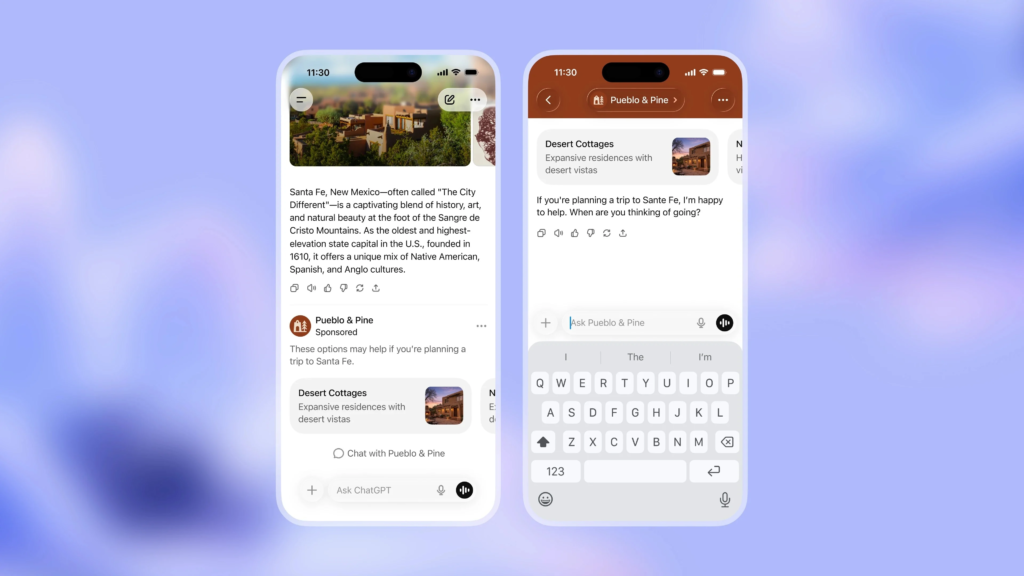
ChatGPT ads are sponsored placements that appear within the conversational interface, typically just below the AI’s response. They are designed to match the context of what a user is asking/want rather than relying only on the keywords or browsing history of the user.
What is ChatGPT Advertising?
ChatGPT advertising is a form of AI-driven advertising where sponsored content is shown based on the intent and context of a user’s conversation inside ChatGPT.
This is what makes it fundamentally different from traditional formats. In most digital channels, ads compete for attention. Here, they are placed within an ongoing interaction. That changes how users perceive them.
Instead of being intrusive, these ads feel more like suggestions—appearing at the exact moment someone is already exploring a topic.
Why OpenAI Introduced Ads in ChatGPT
The introduction of ads is not surprising when you look at the scale of AI usage today. Running large language models requires significant infrastructure, and offering free access to millions of users comes with real costs.
Advertising provides a way to support that ecosystem without restricting access. It also creates a new revenue stream that can fund further development.
At the same time, it positions ChatGPT as more than just an assistant. It becomes part of the broader advertising landscape, competing with search and social platforms.
How ChatGPT Advertising Works
At its core, ChatGPT advertising is built around context.
How does ChatGPT advertising work?
ChatGPT advertising works by analyzing what a user is asking and placing relevant sponsored content below the response, without influencing the answer itself.
When someone asks a question—say about buying property, choosing software, or finding a service—the system identifies the intent behind that query. Based on that, a relevant ad can appear underneath.
What’s important here is that the ad doesn’t shape the AI’s response. It sits separately, clearly labeled, and is selected because it fits the topic being discussed.
This approach is closer to intent-based targeting than traditional audience targeting. It relies less on who the user is and more on what they are trying to solve in that moment.
Who Sees Ads in ChatGPT?
Not every user will see ads, at least for now. The rollout is still controlled and limited.
Ads are primarily shown to users on free or entry-level plans, while those on paid subscriptions such as Plus, Pro, or Enterprise typically have an ad-free experience.
There are also basic conditions around age and region, since the feature is still being tested in selected markets. As the platform expands, this is likely to change.
Privacy & Data Safety in ChatGPT Ads
One of the biggest concerns around any advertising platform is how user data is handled. ChatGPT takes a different approach compared to many traditional platforms.
Do ChatGPT ads use personal data?
No, ChatGPT ads do not rely on sharing personal conversations with advertisers. Targeting is based on general context rather than individual identity.
This means advertisers are not accessing private chats. Instead, they are working with aggregated signals—essentially understanding what category of topic is being discussed.
For users, this creates a more privacy-conscious environment. For businesses, it means learning to rely on relevance and messaging rather than heavy tracking.
Benefits of ChatGPT Advertising for Businesses
The biggest advantage of ChatGPT advertising is timing. Businesses are reaching users when they are actively thinking, not passively scrolling.
When someone asks a question inside ChatGPT, they are already in a decision-making mindset. That makes the interaction more valuable than many traditional impressions.
There is also a clear advantage for early adopters. Because the platform is still new, competition is lower, and there is more room to experiment without high costs.
Another important factor is engagement. Ads placed within a conversation tend to feel more natural, which can lead to better interaction compared to formats that interrupt the user experience.
ChatGPT Ads vs Google Ads vs Meta Ads
Each platform still serves a different purpose, but the differences are becoming more interesting.
Google Ads are built around keywords. They work well when users know what they are searching for. Meta Ads, on the other hand, rely on interests and behavior, often appearing when users are not actively looking for something.
ChatGPT sits somewhere in between, but leans closer to intent. It captures users who are exploring, comparing, and asking questions in real time.
This ability to understand full conversations gives it an edge in situations where traditional keyword targeting falls short.
How Businesses Can Prepare for ChatGPT Ads
Even if full access to ChatGPT ads is still limited, the preparation can start now. The first step is to rethink how messaging is written. Traditional ad copy often focuses on short, punchy lines.
In a conversational environment, that approach feels out of place. Messaging needs to sound more natural, more helpful, and more aligned with how people actually ask questions.
Content strategy also plays a role. Businesses that already create useful, question-based content will have an advantage. This is where alignment with SEO becomes important.
If you’re already investing in structured content, this connects directly with broader strategies like ai marketing agency ontario positioning and long-term organic visibility.
At the same time, paid strategies will evolve. Businesses familiar with performance-driven campaigns—especially those working with a PPC marketing agency toronto—will find it easier to adapt once AI ad platforms become more accessible.
Use Cases: Where ChatGPT Advertising Works Best
Some industries are naturally better suited for this format.
In real estate, for example, users often ask detailed questions before making decisions. This creates an ideal environment for ads that appear during that research phase.
Local businesses can also benefit, especially when users are looking for recommendations or comparing options nearby.
SaaS companies and service providers have another advantage. Their customers tend to evaluate multiple options, and ChatGPT becomes a space where those comparisons happen naturally.
Agencies, particularly those evolving into a performance marketing agency toronto model, can use this as an opportunity to offer new capabilities to clients.
Future of AI Advertising
AI advertising is still in its early stages, but the direction is clear.
We are now moving towards a model where the conversations don’t just inform decisions—they complete them. Booking a service, purchasing a product, or comparing options could all happen within a single interaction.
This will likely change how businesses think about the entire funnel. Instead of separating awareness, consideration, and conversion, everything may happen in one continuous experience.
For agencies transitioning into a marketing agency toronto ecosystem focused on AI, this shift is not just an opportunity—it’s a necessity.
Conclusion
ChatGPT advertising is not just another channel to test. It represents a broader shift in how the users interact with information and how businesses will connect with them.
This move from keywords to conversations change the rules completely. It rewards more relevance, clarity, and timing over volume and visibility alone.
Businesses that start adapting now—whether through content, messaging, or strategy—will be in a stronger position as the platform evolves.
The early stages of any advertising platform tend to offer the greatest advantage. ChatGPT is no different. The difference is that this time, the change is not just about a new platform—it’s about a new way of thinking.
FAQs
Can businesses run ads on ChatGPT right now?
ChatGPT ads are currently in a limited testing phase and not yet fully available worldwide.
How are ChatGPT ads different from Google Ads?
They rely on the conversational context instead of catching keywords, which allows for a deeper intent targeting.
Do ChatGPT ads use my personal data?
No, they are based on general context rather than personal conversations or identity.
Will ChatGPT ads be available globally soon?
A wider rollout is expected, although the exact timelines have not been officially confirmed.
How can businesses prepare for ChatGPT advertising?
By focusing on conversational content, improving messaging, and aligning with AI-driven strategies.
Are ChatGPT ads better than Meta ads?
ChatGPT have a different purpose which is focusing more on intent rather than discovery.
Which industries benefit the most from ChatGPT ads?
Real estate, SaaS, local services, and consulting-based businesses tend to benefit the most.
Is AI advertising the future of digital marketing?
Yes, it is becoming a central part of how businesses reach and convert users in an AI-driven environment.