











Google Ads can be a great way to get quality real estate leads — but only if you go into it with a plan. Many of the agents that you work with waste money on broad terms and send traffic to weak pages and expect quick wins. A better approach is to focus on buyer intent, select the right campaign type, and drive people to a page built to convert.
If you do it well, Google Ads can become a steady source of new business rather than a constant expense.
At a Glance
Here are the main points to know:
- The average cost per lead in real estate is $100.48
- In 2025, real estate Search ads saw an average: Click-through rate: 8.43%, Cost per click: $2.53, Conversion rate: 3.28%
- Local Services Ads work well for trust and quick lead generation
- Search campaigns give you the most control over keywords and intent
- Performance Max works best for larger brokerages with enough conversion data.
- Remarketing helps you stay visible during a long buying cycle.
Why Google Ads Works for Real Estate?
Some agents treat Google Ads like a gamble. They set a small budget, choose broad terms like “homes for sale,” and hope the phone rings. Most of the time, that leads to poor traffic and wasted spend.
That is why Google Ads still matters. It reaches buyers and sellers when they are already looking for help.
The difference between losing money and building a profitable pipeline usually comes down to three things:
- campaign strategy
- account structure
- ongoing optimization
Let’s start with the numbers that shape expectations.
What Are the Current Google Ads Benchmarks for Real Estate?
Benchmarks help you judge whether your campaigns are healthy. Without them, it is hard to know if you are paying too much or converting too little.
According to WordStream data from 2025, the average real estate Search campaign has:
- Click-through rate: 8.43%
- Cost per click: $2.53
- Conversion rate: 3.28%
- Cost per lead: $100.48
Digital Applied data from 2026 shows a similar pattern. Search ad costs are still rising across industries because of inflation and stronger competition. At the same time, conversion rates are improving because automated bidding tools are getting better at finding people who are likely to act.
That means one thing for agents: do not judge campaigns by click cost alone.
A $5 click may look expensive at first. But if that click turns into a closed deal on a high-value property, it was worth it. What matters most is not just traffic. It is lead quality and return on investment.
Which Google Ads Campaign Types Work Best for Real Estate?
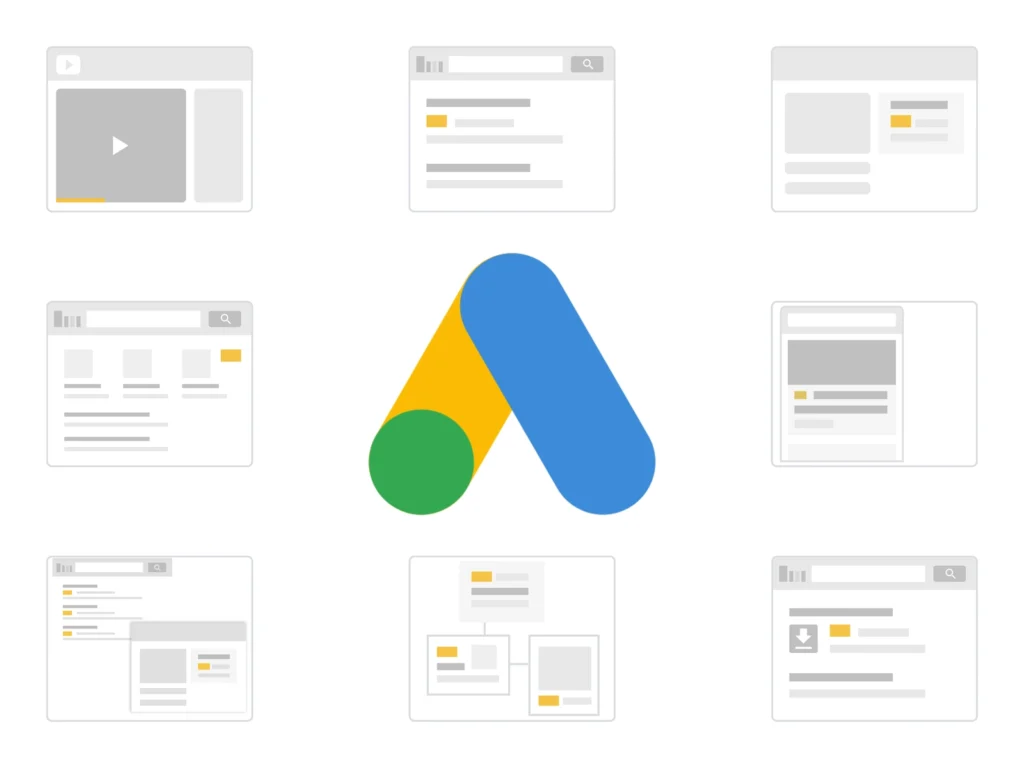
Google Ads offers several campaign types, and each one serves a different purpose. The best choice depends on your goals, your budget, and how much data your account already has.
Why Should Real Estate Agents Use Local Services Ads?
Local Services Ads are often the best place to start.
These ads appear at the very top of Google results, above regular search ads and organic listings. They show useful trust signals, such as:
- your photo
- your star rating
- the Google Screened badge
That makes LSAs a lower-risk option for agents who want fast visibility without wasting money on curious but unqualified visitors.
When Should Agents Use Standard Search Campaigns?
Search campaigns are the best option when you want control.
They let you choose the search terms that trigger your ads. That means you can target people looking for:
- certain neighborhoods.
- specific property types
- clear buying or selling intent
For example, you can target searches like:
- “three bedroom homes for sale in downtown Austin”
- “top real estate listing agents in Seattle”
This type of campaign can bring in highly qualified traffic, but only if it is managed well. You need to choose precise keywords and block unrelated searches.
For instance, if you help people buy and sell homes, you do not want your ad showing for searches about rentals, jobs, or real estate classes. Telling Google what not to show your ad for is one of the easiest ways to protect your budget.
Must Read: How Google Ads Uses AI for Ranking, Bidding & Ad Selection
Are Performance Max Campaigns Good for Property Listings?
Performance Max can work very well, but it is not the best fit for everyone.
These campaigns use automation to place ads across Google’s network, including:
- Search
- Display
- YouTube
- Discover
- Gmail
According to DigitalApplied data from 2026, Performance Max now takes up 34% of total Google Ads budgets across industries.
That sounds impressive, but there is a catch. Performance Max needs enough conversion data to learn what works. If your account gets fewer than 30 conversions a month, the system may not have enough information to optimize well.
For that reason, this campaign type is usually better for:
- established brokerages
- teams with larger listing inventories
- accounts already generating steady leads
If you are a newer agent with a smaller budget, stick with Search and Local Services Ads first.
How Does Display Remarketing Help Close Real Estate Deals?
Real estate buyers rarely make decisions right away. Some browse for weeks. Others take months.
That is where remarketing helps.
Remarketing lets you show display ads to people who already visited your site but did not fill out a form or contact you. While they browse other sites, your brand stays in front of them.
Display ads usually do not get many clicks, but that is not the main point. Their value is visibility. They help keep your name familiar until the person is ready to move forward.
How Do You Choose the Most Profitable Real Estate Keywords?
Keywords shape the kind of traffic you get. Choose the wrong ones, and your budget disappears fast.
The goal is not just more traffic. It is better traffic.
Why Are Long-Tail Keywords So Important?
In real estate, these often perform better because they show stronger intent.
Compare these two searches:
- “Texas real estate”
- “new construction homes in Plano Texas under 500k”
The first is broad and unclear. The person could want market news, rentals, jobs, or general information.
The second tells you much more. That person likely wants to buy a home and already knows the area and price range.
Long-tail keywords usually have:
- lower search volume
- less competition
- higher conversion potential
That is why they are often more profitable.
How Do Excluded Search Terms Protect Your Budget?
Google lets you tell the system which words or phrases should not trigger your ads. These are often called negative keywords, but the idea is simple: they block irrelevant traffic.
If you only handle residential home sales, you should usually exclude terms like:
- rentals
- apartments
- commercial
- jobs
- classes
- cheap
If you do not block these searches, you may end up paying for clicks from people who were never going to hire you.
This is one of the most important habits in account management. It keeps your ads focused and your spend cleaner.
How Can Real Estate Agents Improve Landing Page Conversion Rates?
Getting the click is only the first step. The landing page is what turns that click into a lead.
DigitalApplied data from 2026 found that mobile conversion rates trail desktop conversion rates by 35%. That points to a major issue: many landing pages are still not built well for mobile users.
So, what does a strong landing page look like?
What Makes a High-Converting Real Estate Landing Page?
A good landing page matches the ad.
If your ad promises “Luxury waterfront condos in Miami,” the person should land on a page about luxury waterfront condos in Miami. Not your homepage. Not a general listings page. A direct match.
Real estate landing pages follow a few simple rules:
- they load in under three seconds
- they focus on one clear action
- they remove distractions
That action be:
- Schedule a Viewing
- Get a Free Home Valuation
- Request Listing Details
Too many links, menus, or unrelated offers can pull visitors away before they convert.
Why Is Mobile Optimization Non-Negotiable?
DigitalApplied reports that 65% of all Google Ads clicks come from mobile devices. That means most people will first see your page on a phone, not a desktop.
Mobile optimization is more than shrinking a page to fit a smaller screen. A mobile-friendly page should have:
- large buttons that are easy to tap
- short forms with only a few fields
- fast-loading images
- clean spacing and easy-to-read text
It also helps to review performance by device. If mobile traffic is getting clicks but not leads, the user experience may be the problem.
What Are the Biggest Google Ads Mistakes Real Estate Agents Make?
Small mistakes in Google Ads can become expensive very quickly. Two problems show up again and again.
Why Does Ad Relevance Affect Cost?
Google gives each ad a rating based on how closely it matches the search and how useful the landing page is. This is known as Quality Score, but you can think of it as a relevance score.
The score runs from 1 to 10.
When your score is high, Google often rewards you with lower click costs. Accounts with scores of 8 or higher pay 37% less per click than the industry median. On the other hand, accounts with scores of 4 or lower often pay much more.
To improve this score:
- use keywords that match what people are searching
- write ads that clearly reflect those keywords
- send visitors to a page that matches the ad
The tighter the connection, the better.
Why Is Turning Campaigns Off Too Early a Mistake?
Many agents launch a campaign, wait two weeks, see no closed deals, and stop everything. That is usually too soon.
Google’s automated bidding tools now manage 78% of all Google Ads spend. These systems need time to learn. They test different users, placements, and signals before they settle into stronger performance.
A new campaign often needs at least two to four weeks just to get through its learning period.
As a rule, give a campaign three to six months before making big decisions, especially if you are still refining keywords and landing pages.
Next Steps to Scale Your Real Estate Lead Generation
Successful Google Ads campaigns aren’t based on luck. They come from consistent testing, sharp targeting and a clear understanding of your local market.
Here’s a practical starting plan:
Generate leads faster and build trust with Local Services Ads.
Build a Search campaign around specific high-intent keywords.
Block out irrelevant search terms so you stay on budget.
Don’t just track clicks, track lead quality.
“Allow the campaign time to get better.
Google Ads works best when you treat it as a system, not a short-term experiment.
Conclusion
Google Ads can be profitable for real estate, but only when it is focused and the follow-through is consistent. Start with the right campaign type, use specific keywords, send traffic to better landing pages, and judge success by lead quality.