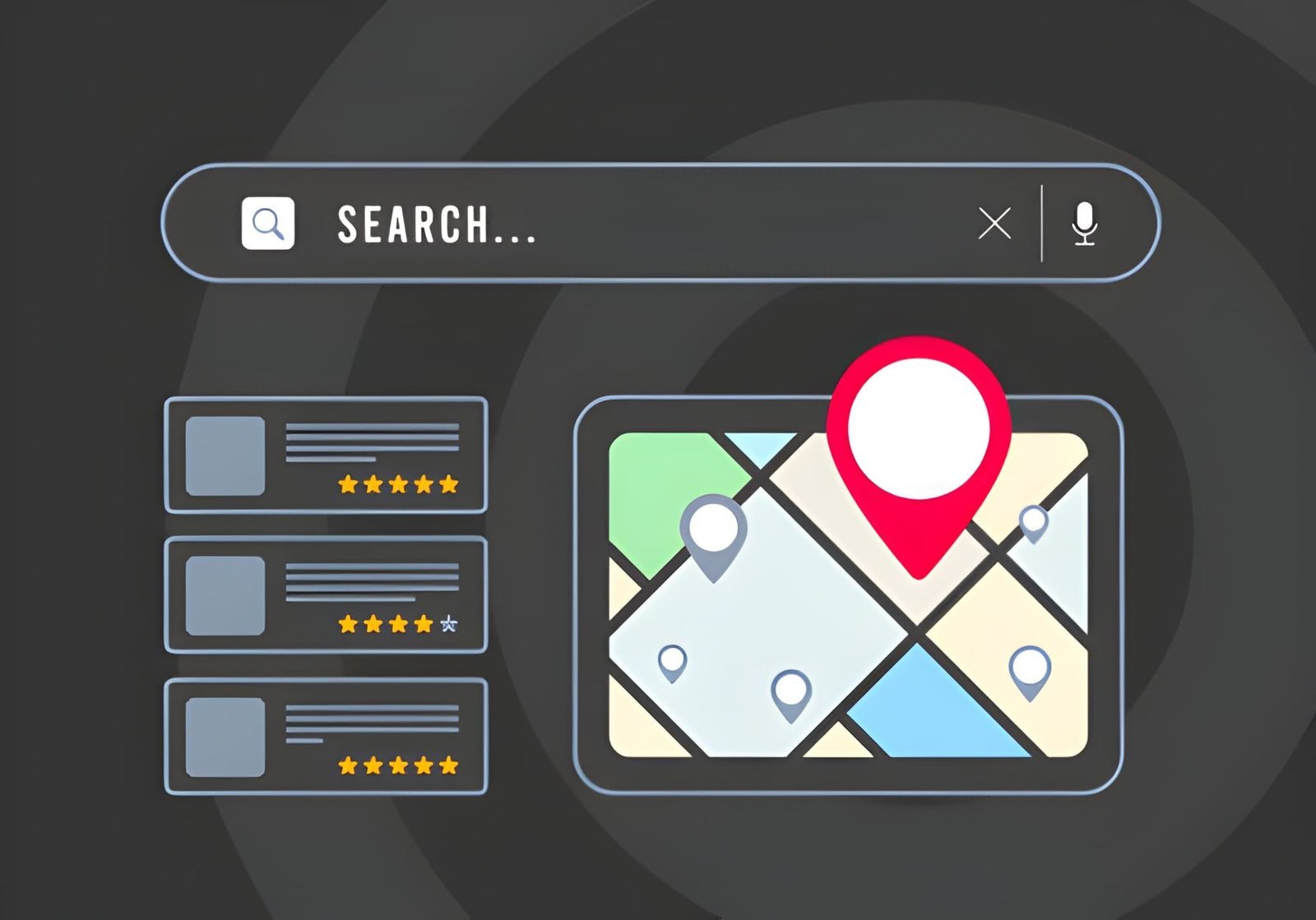











I’d been running my little business for about a year. Working my tail off. Doing everything I thought I was supposed to. Posting on Instagram, updating my website, asking customers to tell their friends about me. And yet when I’d search for my own business type on Google? I was nowhere. Page 2 nowhere. Meanwhile this one competitor who I swear does like half the work I do was sitting pretty in the top 3 of the map pack, cashing in all day.
It was driving me crazy.
So I finally sat down and actually researched Google local search ranking factors. Like properly. Read stuff. Watched way too many videos. Talked to some people who actually knew what they were doing. And what I found out? Google has this whole system, kind of a scoring thing, and once you know what it’s looking at, the whole thing clicks into place.
Here’s the deal. I’m gonna walk you through the 10 biggest ranking factors that actually moved the needle for me. Not all the fluffy theoretical stuff. The ones that, when I fixed them, made Google go ohhh okay you’re legit, come on up.
1. Google Business Profile Completeness
This is number one for a reason. If your Google Business Profile isn’t fully filled out? None of the other stuff even matters. Seriously.
I had my GBP at like 60% complete and wondering why I wasn’t ranking. That was like trying to win a race wearing flip flops. Google rewards complete profiles. Every empty field is like a tiny “this business isn’t serious” signal to Google.
Fill out EVERYTHING. Primary category. Secondary categories. All your services. All your products. Attributes (wheelchair accessible, free wifi, women-owned, all that). Your hours. Holiday hours. Business description (use all the characters, they give you 750 for a reason). Upload tons of photos. Add your logo, cover photo, interior, exterior, products, team, everything.
This is the foundation of every other local seo ranking factor. Get this wrong and you’re basically building on sand.
2. Proximity to the Searcher
This one kinda frustrated me when I first learned it cause you can’t really control it. Google heavily weights how close you are to whoever’s searching. Someone searches “coffee shop” from 2 blocks away? You have a way better shot than somebody the same quality 10 blocks away.
But here’s the trick. Even though you can’t move your physical location (unless you’re loaded I guess), you CAN make sure Google knows exactly where you are. Pin placement on the map matters more than you’d think. Mine was off by like 150 feet and I didn’t even notice until someone pointed it out.
Also if you’re a service area business (someone who goes to customers), setting up your service areas properly is everything. Too wide and Google gets suspicious. Too narrow and you’re cutting yourself off from customers. There’s a sweet spot.
Proximity is one of those local seo signals that Google uses that you can influence more than you think, just by being precise about where you actually are and who you actually serve.
3. Reviews (Quantity, Quality, AND Recency)

Reviews are everybody’s favorite topic and for good reason. They’re huge.
But here’s the thing most people don’t get. It’s not JUST about having a lot of reviews. Google looks at three things:
- How many you have (quantity)
- What your average rating is (quality)
- How recent your reviews are (recency)
You can have 500 reviews but if they’re all from 2019? Google kinda goes “hmm okay but what about NOW.” You need fresh reviews rolling in consistently. Like at least a few a month ideally.
This is why I set up an automated review request system after Maya (my GMB person from my other post, long story) told me to. Little text goes out to customers after they buy something asking if they’d leave a quick review. Took me maybe an hour to set up. Tripled my review count in like 4 months.
Also you HAVE to respond to reviews. All of them. Google’s actually confirmed that responding to reviews is a ranking signal. Not just good for PR, literally helps your ranking.
4. Keywords in Reviews
This one blew my mind when I learned it. And not many people talk about it.
Google reads the content of your reviews. It scans them for keywords. So if people in their reviews are mentioning the specific services you do and the area you’re in, Google uses that as a ranking signal for those searches.
If someone writes “amazing pizza, best in Brooklyn” you’re way more likely to show up for “pizza in Brooklyn” searches. Because the review itself confirms what you do and where you are.
I can’t ASK people to write specific things in their reviews (against Google’s rules). But I can nudge. When I thank customers at checkout I’ll say stuff like “hope you enjoy your [specific service], we love serving people in the [neighborhood] area.” That subtly plants the language in their head if they decide to leave a review. Not manipulative, just natural.
5. NAP Consistency Across the Web
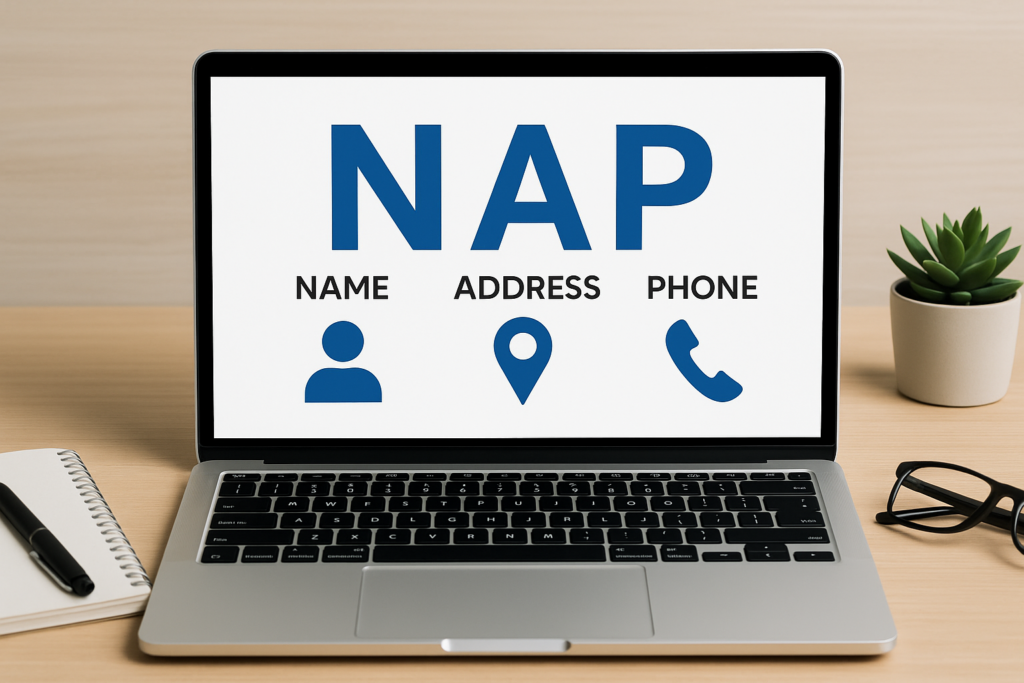
You’re gonna hear me say this one on every blog because it matters SO much. NAP = Name, Address, Phone.
Your business needs to be listed the EXACT SAME WAY everywhere online. Google, Yelp, Facebook, Apple Maps, industry directories, every little citation site. Exact same spelling. Exact same formatting. Exact same everything.
When Google sees your info match up perfectly across a bunch of different sites, it trusts you. When it sees different versions all over the place, it’s like “ehh I’m not sure about this one.” And you get buried.
I had my info wrong on like 30+ sites when I first checked. Took me a solid week to fix them all. But my rankings went up within a month.
This is probably the single most underrated google my business ranking factor nobody talks about enough. It’s boring. It’s tedious. It works.
Must Read: How Local SEO Helps Small Businesses Dominate Google Maps?
6. Website Quality and Authority
This one catches people off guard. Your actual WEBSITE matters for your Google Business Profile ranking. Which is weird cause like, they’re two different things right? But no. Google looks at your website as a signal of your business’s overall legitimacy.
Stuff they check:
- How fast does it load (mobile especially)
- Is it secure (HTTPS, not HTTP)
- Is the design modern or from like 2010
- Does it have real content about your services
- Does it have good internal linking
- Does it have schema markup (LocalBusiness schema is a big one)
When Google’s deciding who to rank in the map pack, they consider your overall web presence. A great GBP with a garbage website won’t rank as well as a great GBP with a great website. Makes sense when you think about it.
I rebuilt my website last year from scratch, focused on speed and mobile, added proper schema, and I saw my rankings tick up even though I barely touched my GBP during that time.
7. Local Backlinks
Backlinks are links from other websites pointing to yours. The more quality sites linking to you, the more Google trusts you. You probably know that.
But for LOCAL SEO specifically, you want LOCAL backlinks. Links from other businesses, organizations, news sites, blogs, and directories in your area. Those are way more valuable for local rankings than a bunch of random links from around the world.
Stuff I did:
- Got listed in the local chamber of commerce (great authority link)
- Sponsored a little league team (got a link from their site)
- Partnered with a neighboring business (mutual link)
- Got mentioned in some local blogs when I hosted an event
- Got quoted in a local news article one time (huge one)
Each local link is like Google getting a little note from someone in your community going “yeah this business is real and they’re part of the neighborhood.” That’s powerful.
8. Citations
Citations are basically any time your business info (NAP) is mentioned online, even without a link. Google uses these to verify you’re a real, established business.
Big citation sources include:
- Yelp
- Apple Maps
- Bing Places
- Yellow Pages
- Industry-specific directories (like if you’re a restaurant, TripAdvisor and OpenTable)
- Better Business Bureau
- Your local chamber’s member directory
The more reputable citations you have with consistent NAP info, the more Google believes you’re legit. It’s one of those local seo signals that quietly works in the background.
You don’t need to be on 500 citation sites. That actually hurts. You need to be on the right ones. Maybe 20-30 quality ones for your industry and area. And make sure they all say the same thing about your business.
9. Behavioral Signals
This is something Google doesn’t talk about publicly but everyone in the SEO world knows matters a lot. Behavioral signals. Which basically means how people interact with your listing.
Stuff like:
- How many people click on your listing when it shows up
- How many people call you directly from the listing
- How many people ask for directions
- How long they stay on your website after clicking through
- How many people save your business
- How many return visits you get
Google watches all of this. If your listing shows up but nobody ever clicks, Google figures your listing isn’t that useful and slowly pushes you down. If your listing shows up and tons of people click and call, Google goes “oh this must be really what people want” and pushes you up.
This is why stuff like your primary photo, your business name, and your reviews showing up in the snippet all matter. They affect whether someone clicks you. Which affects your ranking. Which affects how many people see you. Which affects how many clicks you get. Big snowball.
10. Engagement on Your Google Business Profile
Last one but important. Google wants to see that your profile is ALIVE. Not some ghost listing that got set up in 2019 and abandoned.
How you show activity:
- Posting regularly (at least weekly, more is better)
- Adding new photos (I try to add a few every month)
- Responding to reviews quickly (within a day or two, ideally)
- Answering Q&A
- Updating your hours for holidays and special events
- Adding new products/services as you offer them
- Posting offers and promos
The more active your profile, the more Google considers it a real functioning business that’s worth ranking. Dormant profiles get pushed down. Active ones get boosted.
Honestly this one’s free. It just takes consistency. Block out 15 minutes every Monday morning and handle your GBP stuff. Done.
Putting It All Together
If I had to rank these google local search ranking factors by actual impact, here’s roughly how I’d order them from my experience:
- Proximity (hard to change but huge)
- Google Business Profile completeness
- Reviews (quantity + quality + recency)
- NAP consistency
- Keywords in reviews
- Website quality
- Local backlinks
- Engagement/activity
- Citations
- Behavioral signals
Your mileage will vary. Different industries care more about different things. But if you work through this list in order, you’ll cover like 95% of what actually matters.
Also worth saying, Google updates their algorithm all the time. What ranks today might shift a bit in 6 months. But these fundamentals? They’ve been pretty consistent for years. Focus on the foundations and you’ll do okay no matter what Google changes.
What I Wish I’d Known Back Then
Real talk for a sec. If I could go back and tell myself something when I first started trying to figure out local SEO, it’d be this.
Don’t chase the algorithm. Don’t try to find loopholes. Don’t fall for the “secret hack” videos on YouTube. Just do the boring stuff well. Fill out your profile. Get your reviews. Fix your citations. Build local links. Stay active.
The people who win at local SEO aren’t doing anything magical. They’re just doing the unsexy stuff consistently. For months and months. Until one day they wake up and realize they’re crushing their market.
That’s it. That’s the whole thing. Good luck out there, genuinely. Your business deserves to be seen.