










Local SEO is changing-but not in the way most people think.
It’s not about chasing hacks or gaming Google Maps. It’s about sending the right signals consistently.
In 2026, Google’s local algorithm is less forgiving.
Local SEO helps businesses that look real, active, and genuinely useful to local customers.
If you’re not showing up in the Map Pack, it’s usually not one big mistake.
It’s a lot of small things you didn’t optimize.
And those small things add up.
This guide breaks down the local SEO ranking factors that actually matter in 2026.
Not theory. Not outdated checklists. Just the local SEO signals Google is clearly rewarding right now.
How Google Decides Local Rankings in 2026
Here are 5 clear points explaining how Google decides local rankings in 2026, based on current trends and Google’s guidance:
1. Relevance (Intent Matching
Google prioritizes how well a business matches the user’s search intent.
This includes optimized Google Business Profile (GBP) categories, services, descriptions, and on-site content aligned with local keywords and user needs.
2. Proximity (User Location Awareness)
Distance between the searcher and the business remains a major factor.
In 2026, Google uses more precise real-time location signals (mobile GPS, movement patterns) to surface the most nearby and convenient options.
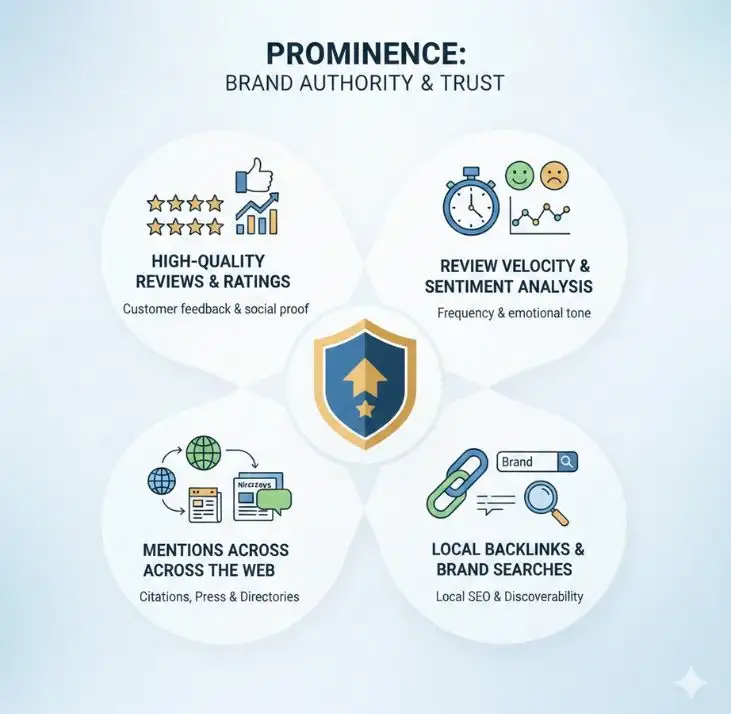
3. Prominence (Brand Authority & Trust)
Businesses with strong brand presence rank higher. This includes:
a. High-quality reviews and ratings
b. Review velocity and sentiment analysis
c. Mentions across the web (citations, press, directories)
d. Local backlinks and brand searches
4. User Engagement Signals
Google evaluates how users interact with listings:
a. Clicks, calls, direction requests
b. Photo views and uploads
c. Q&A activity and profile completeness
Consistent engagement signals indicate real-world popularity.
5. AI & Experience-Based Signals
In 2026, Google heavily uses AI to assess real customer experiences:
a. Review content quality (not just star ratings)
b. Spam detection and fake review filtering
c. Behavioral patterns showing repeat visits or long-term satisfaction
In short: Google ranks local businesses based on who is most relevant, closest, trusted, engaged with, and proven to deliver good experiences.
Core Local SEO Ranking Factors You Must Optimize
Let’s break these down in a way that actually makes sense.
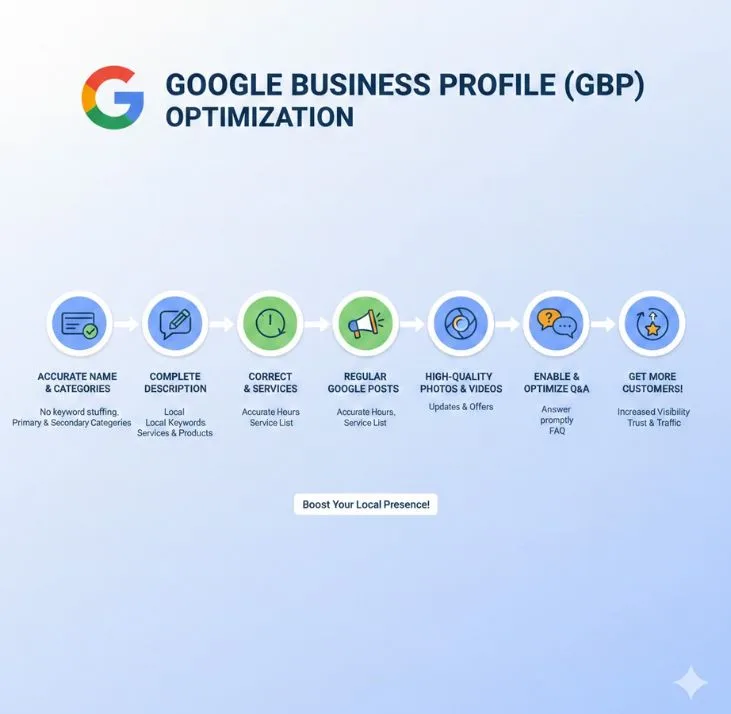
1. Google Business Profile (GBP) Optimization
Having a Google Business Profile is among the most important local SEO ranking factors.
What to optimize:
a. Accurate business name (no keyword stuffing)
b. Correct primary & secondary categories
c. Complete business description with local keywords
d. Accurate hours, services, products
e. Regular Google Posts
f. Upload high-quality photos & videos
g. Enable and optimize Q&A
Tip: Choose the most specific primary category, it carries the most weight.
2. NAP Consistency (Name, Address, Phone)
Google needs confidence that your business information is trustworthy and consistent.
Where consistency matters:
a. Google Business Profile
b. Website (footer + contact page)
c. Local citations (Yelp, Apple Maps, Bing, etc.)
d. Data aggregators
Even small differences (Suite vs. #, abbreviations) can hurt rankings.
3. Reviews (Quantity, Quality, Velocity)
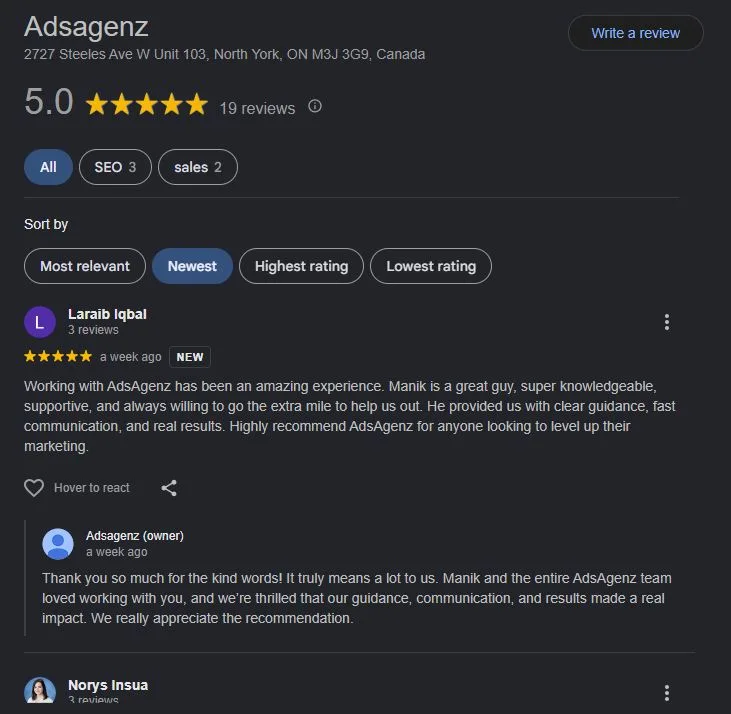
Reviews are among the most prominent local seo ranking factors and conversion drivers.
What Google looks at:
a. Number of reviews
b. Average star rating
c. Frequency (new reviews over time)
d. Review responses (especially from owner)
e. Keywords mentioned naturally in reviews
Always respond to reviews; positive and negative.
4. Local Proximity
Google gives weightage to distance of business from the searcher. Making it one of important local SEO ranking factors.
What you can do:
a. Optimize for service-area keywords
b. Create location-specific pages
c. Ensure correct pin placement on maps
You can’t fake local proximity; don’t try.
5. On-Page Local SEO Signals
Your website still plays a huge role as on-page signals from your website is among the major local seo ranking factors.
Must-have optimizations:
a. City + service keywords in Title tags, H1/H2 headers, Meta descriptions
b. Dedicated location pages
c. Embedded Google Map
d. Local schema markup
e. Clear NAP on site
Example:
a. “Emergency Plumber in Austin, TX”
NOT just “Emergency Plumbing Services”
6. Local Citations & Directories
Citations help validate business legitimacy.
Priority platforms:
a. Google, Apple Maps, Bing Places
b. Yelp, Facebook
c. Industry-specific directories
d. Local chambers of commerce
7. Local Backlinks
Links from local and relevant sources are powerful.
High-impact local link sources:
a. Local news sites
b. Sponsorships & events
c. Local blogs
d. Community organizations
e. Business associations
A few strong local links beat dozens of generic ones.
8. Behavioral Signals (User Engagement)
Google monitors how users interact with your listing.
Signals that matter:
a. Clicks from search results
b. Direction requests
c. Phone calls
d. Website visits
e. Dwell time
Strong reviews + accurate info = better engagement.
9. Spam-Free Environment
Google rewards clean markets.
Ways this impacts you:
a. Competitors using fake listings may outrank you
b. Reporting spam via Google Maps can improve your position
c. Keyword-stuffed business names skew rankings
Spam fighting is a legitimate local SEO strategy.
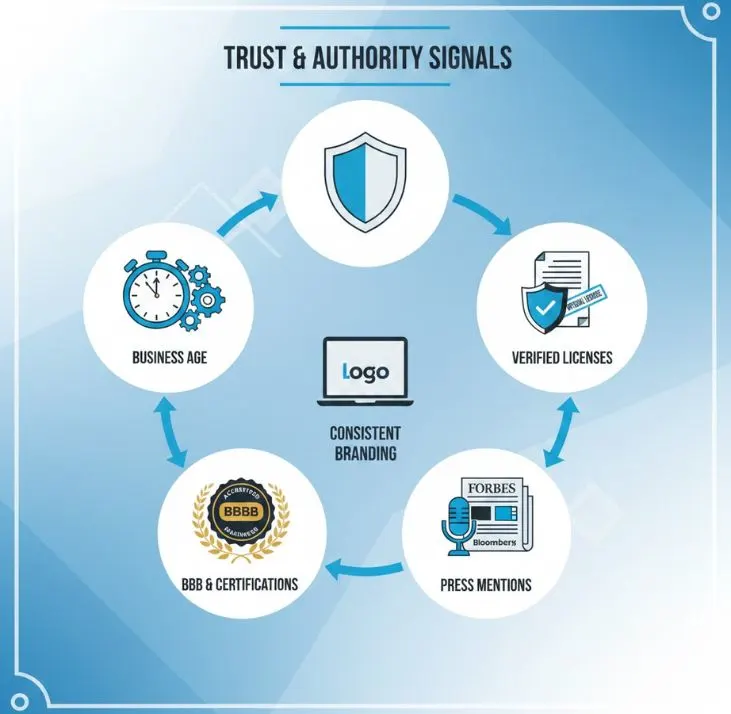
10. Trust & Authority Signals
Google favors established, credible businesses.
Trust boosters:
a. Business age
b. BBB or professional certifications
c. Consistent branding
d. Press mentions
e. Verified licenses (where applicable)
A Simple Local Search Ranking Checklist
If you want a practical way to think about optimization, use this checklist:
a. Google Business Profile fully completed
b. Correct primary category selected
c. Regular photo updates
d. Consistent NAP across directories
e. Ongoing review generation and responses
f. Website optimized for local intent
g. Mobile speed and usability checked
You don’t need to do everything at once. You need to do the basics consistently.
That’s what wins local SEO in 2026.
Conclusion
Local SEO in 2026 isn’t about chasing hacks, it’s about sending the right signals.
a. Does your business look active?
b. Does it feel credible and consistent?
c. Are real customers choosing and engaging with it?
When the answer is yes, rankings follow naturally.
At Adsagenz, the focus is on fundamentals that last: accurate listings, ongoing engagement, and genuine customer feedback. Staying visible means staying reliable, responsive, and relevant.
You don’t need to outsmart Google, You simply make it easy for Google and for people to trust your business.
FAQs
1. What are the most important local SEO ranking factors in 2026?
Google Business Profile optimization, reviews, proximity, NAP consistency, and user engagement are the strongest local SEO ranking factors.
2. Do reviews affect Google Maps rankings?
Yes. Reviews impact both trust and visibility, making them a major map pack ranking factor.
3. How important is a website for local SEO?
Your website supports local rankings by reinforcing location, relevance, and trust signals.
4. Can small businesses compete in local SEO?
Absolutely. Consistency and engagement often beat large brands with neglected listings.
5. How often should I update my Google Business Profile?
At least monthly. Photos, posts, and review responses signal activity to Google.