












Search engines do not read pages the way humans do. Instead of simply scanning keywords, algorithms interpret meaning, relationships, and intent. Understanding how AI understands content has therefore become essential for anyone trying to rank online.
Modern search systems depends mostly on machine learning models that evaluate context, entity relationships, semantic meaning, and behavioural signals. This means a page can rank even if it doesn’t repeat the same keyword dozens of times. What matters is whether the content clearly answers a user’s question.
For businesses working with digital marketing agencies across Canada, including companies seeking AI SEO services in Toronto, this shift has forced a rethink of traditional optimisation strategies. Pages that once relied on keyword density now need structure, clarity, and relevance.
In other words, AI doesn’t just read words—it interprets intent.
The Shift from Keywords to Meaning
Early search engines operated on a very simple matching rules. If a page repeated a keyword frequently enough, it ranked. That system worked in the 2000s but quickly became easy to manipulate.
Machine learning changed the equation.
Modern search systems evaluate:
- context
- topic relationships
- user engagement
- semantic meaning
- authority signals
This approach is known as semantic search optimisation.
Instead of scanning for a phrase, AI asks a deeper question:
Does this page genuinely answer the search query?
For example, someone searching for AI content optimisation services Ontario may use different phrasing such as:
- improving AI search rankings
- semantic SEO strategies
- optimising content for AI search engines
AI recognises that these queries relate to the same underlying need.
How Search Engines Actually Process Content
To understand ranking behaviour, it helps to look at how AI processes a page step-by-step.
1. Natural Language Processing (NLP)
Algorithms use NLP models to interpret language patterns. These models analyse:
- sentence structure
- contextual meaning
- entity relationships
This allows AI to determine whether the content is relevant to a query.
A company researching machine learning SEO strategy Hamilton may publish articles about semantic search, AI indexing, or entity-based SEO. NLP helps search engines connect those related topics.
2. Entity Recognition
Search engines no longer treat text as isolated keywords. Instead, they identify entities.
Entities include:
- people
- places
- organisations
- products
- concepts
When content mentions entities clearly then the AI understands the broader topic.
For example , an article discussing AI content analysis Canada might include entities such as machine learning models, natural language processing, or semantic indexing.
3. Search Intent Analysis
Intent plays a critical role in ranking.
AI categorises queries into different types:
- informational
- navigational
- transactional
- commercial investigation
Content that aligns with the correct intent has a far higher chance of ranking.
Someone searching how AI ranks websites Ontario is likely seeking an explanation rather than a service page. AI evaluates whether the page satisfies that informational intent.
4. Contextual Relevance
AI models usually compare a page with thousands of similar pages to understand the dept of a particular topic.
Pages that rank well typically include:
- related concepts
- supporting subtopics
- clear explanations
- logical structure
This is why comprehensive articles often perform better than short ones.
For companies offering AI search optimisation Toronto, building detailed educational content around AI search behaviour can improve organic visibility significantly.
The Role of Semantic SEO
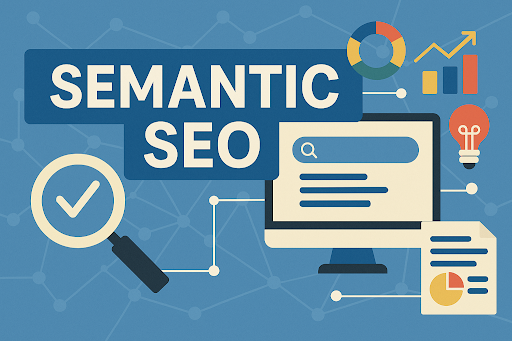
Semantic SEO focuses on topic relationships instead of individual keywords.
A strong article about AI driven content optimisation Hamilton might also discuss:
- natural language processing in the content
- entity-based SEO
- structured data
- search intent mapping
This layered approach signals expertise to search engines.
Instead of writing dozens of short posts targeting slight keyword variations, semantic SEO encourages building topical clusters.
These clusters show AI that the website has depth in a specific subject.
Why Content Structure Matters to AI
Structure often determines whether a content is easy for the algorithms to interpret or not
Search engines prefer pages which have :
- descriptive headings
- clear paragraph structure
- logical topic flow
- structured data
Well-structured content helps AI map the relationships between ideas.
A digital marketing firm working on AI friendly website content Ontario would usually organise articles using hierarchical headings such as:
H1 – main topic
H2 – subtopic
H3 – supporting points
This hierarchy mirrors how AI processes information.
Voice Search and AI Content Interpretation
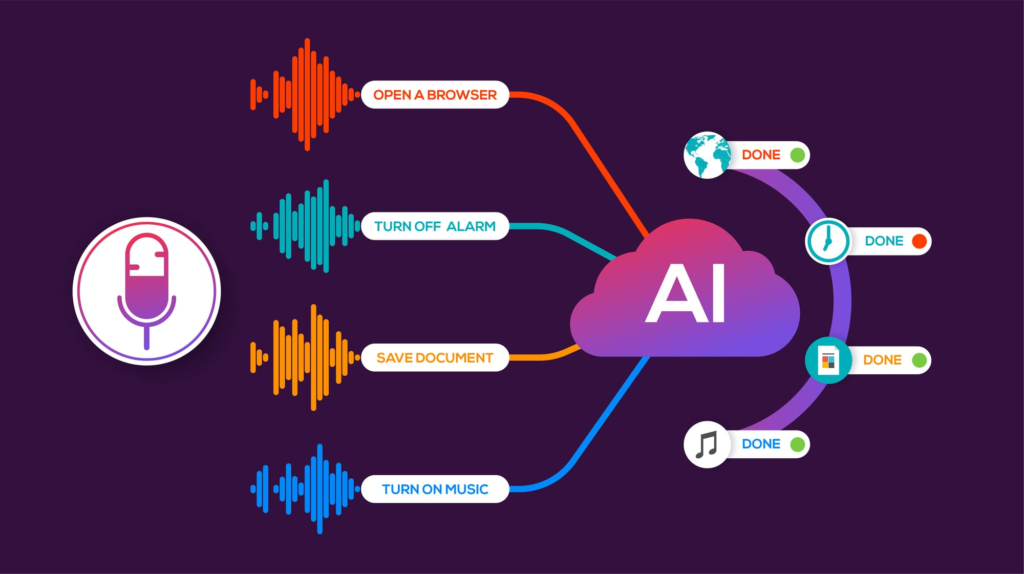
Voice search is changing how content must be written.
People speak differently than they type. Voice queries use to be kind of longer and more conversational.
For example:
Typed query
“AI SEO services”
Voice query
“How does AI understand website content?”
Because of this shift, content that includes natural language questions tends to perform better.
Businesses focusing on voice search SEO Toronto often incorporate conversational phrasing and FAQ sections within their content.
AI Overview and Answer Engine Optimisation
Search engines increasingly provide direct answers without requiring users to click through to a website.
This development has created two new optimisation approaches:
AIO (AI Overview Optimisation)
AEO (Answer Engine Optimisation)
To appear in AI-generated summaries, content must be:
- factually clear
- well structured
- authoritative
- concise where necessary
A page having AI search ranking factors Hamilton would benefit from structured explanations that AI models can easily summarise.
How AI Evaluates Content Quality
AI systems evaluate several quality indicators before ranking content.
Expertise
Pages demonstrating subject knowledge tend to rank higher.
Detailed explanations, case examples, and practical insights signal expertise.
For instance, agencies providing AI SEO consulting Ontario often publish case studies or detailed strategy discussions to demonstrate authority.
Topical Depth
Content covering multiple related angles performs better than shallow articles.
A page explaining AI content ranking algorithms Toronto may include discussions on:
- NLP models
- machine learning training data
- ranking signals
- semantic indexing
This depth shows topical authority of your shared content .
Engagement Signals
AI also considers user behaviour.
Indicators include:
- time on page
- bounce rate
- click-through rate
If users spend time reading the content, algorithms interpret this as a positive signal.
Practical Tips for Writing AI-Optimised Content
Understanding theory is helpful. Applying it is where results appear.
Here are practical guidelines shared below :
Write for Humans First
AI systems are designed to evaluate the usefulness of the content
Content written purely for algorithms usually performs poorly here,
Instead:
- answer real questions
- explain concepts clearly
- avoid unnecessary keyword repetition
This approach naturally aligns with how AI evaluates value.
Use Topic Clusters
A strong SEO strategy rarely depends on isolated articles. Instead of this build clusters around the core topics.
For example:
pillar page
“How AI Understands Content”
supporting posts
- AI ranking signals
- semantic SEO
- voice search optimisation
- entity-based SEO
Together, these posts strengthen authority.
Add Context, Not Just Keywords
Many pages fail because they mention keywords without context.
Search engines look for the relationships between ideas.
A page discussing AI search behaviour Ontario should explain:
- how algorithms process language
- how semantic indexing works
- how ranking signals interact
These contextual signals improve relevance.
Common Mistakes When Optimising for AI
Even experienced marketers sometimes misinterpret how AI evaluates content.
Here are some common issues.
Keyword Stuffing
Repeating the same keyword again and again in the content does not helps today. Semantic understanding makes this unnecessary.
Thin Content
Short pages that provide minimal explanation struggle to rank.
AI prefers depth.
Ignoring Search Intent
Publishing a sales page for an informational query usually leads to poor rankings.
Intent alignment matters.
The Future of AI-Driven Search
Search engines is now continue to evolving rapidly. Machine learning models now analyse:
- multi-modal data
- behavioural patterns
- conversational queries
As AI becomes more sophisticated, content quality will matter even more.
Websites that provide clear, structured, informative content will continue to perform well.
How does AI understand website content?
AI uses natural language processing and machine learning models to analyse text, identify entities, and determine how well the content answers a user’s search query
Why is semantic SEO important for AI search?
Semantic SEO helps search engines understand topic relationships. Instead of focusing on a single keyword, it builds context around a subject.
Does keyword density still matter?
Not in the traditional sense. AI evaluates relevance and meaning rather than simple keyword frequency.
How can content appear in AI generated search results?
Pages with clear explanations, structured headings, and strong topical authority are more likely to be included in AI summaries.
What role does voice search play in AI content optimisation?
Voice queries are conversational and often phrased as questions. Content that directly answers those questions tends to perform better.