Local SEO isn’t a nice-to-have for small businesses anymore, it’s essential.
Local SEO helps small businesses get discovered at the exact moment customers are searching nearby.
If your business doesn’t appear in Google Maps or local search results, you’re effectively invisible.
People won’t dig through pages of listings or spend time comparing options.
They’ll choose the business that shows up first, and they’ll decide quickly.
Google reports that 76% of users who search for a local business visit one within 24 hours, and nearly 28% of those searches lead to a purchase.
Local SEO shortens the gap between intent and action, putting your business in front of customers who are ready to call, visit, or buy.
It also builds trust with Google, increasing your visibility where it matters most; local search results and Maps.
This guide explains how local SEO helps small businesses.
No buzzwords. No fluff. Just clear, practical strategies to help you win Google Maps and local search.
Why Local SEO Matters for Small Businesses?
Local SEO focuses on one thing: visibility at the moment of intent.
When someone searches “near me” or includes a city name, Google prioritizes businesses that are relevant, trusted, and geographically close.
If your local search optimization is weak, you won’t appear, even if your service is better.
Small businesses don’t have the luxury of wasting traffic.
Every missed local search is a missed customer walking into a competitor’s store instead.
This is where Local SEO helps small businesses level the playing field.
You don’t need massive budgets or national authority.
You need strong local signals that tell Google your business deserves to rank.
That’s why more SMBs are shifting marketing budgets toward local SEO services for small business growth, rather than broad, expensive campaigns.
Local SEO also builds trust.
Customers rely heavily on Google Maps listings, photos, reviews, and proximity when choosing where to go.
If you’re not present- or look unreliable- you’re out of the decision.
How Local SEO Supports Google Maps Rankings
Google Maps rankings are driven by three core factors:
a. Relevance – how well your business matches the search
b. Distance – proximity to the searcher
c. Prominence – authority, reviews, and online signals
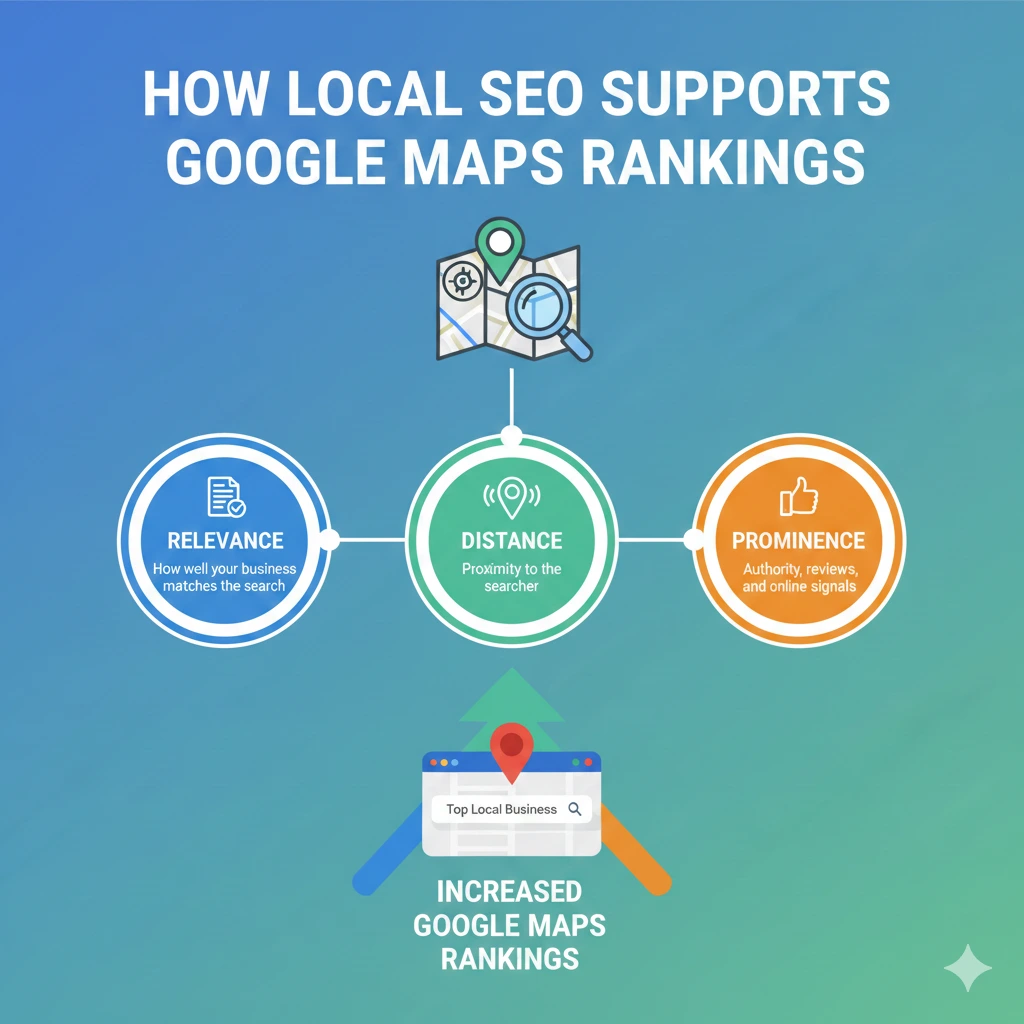
Local SEO strengthens all three.
Optimizing your website, Google Business Profile, and local citations helps Google understand exactly what you do, where you operate, and why you’re trustworthy.
When those signals align, your business appears in the Map Pack- the top three listings that capture the majority of clicks.
Local SEO doesn’t just bring traffic. It brings high-intent traffic.
Next, we’ll break down the local SEO strategies that actually move your business up the map.
Local SEO Best Practices that helps Small Businesses
The following local SEO tips for SMBs focus on consistency, clarity, and credibility- three things Google rewards heavily in local search.
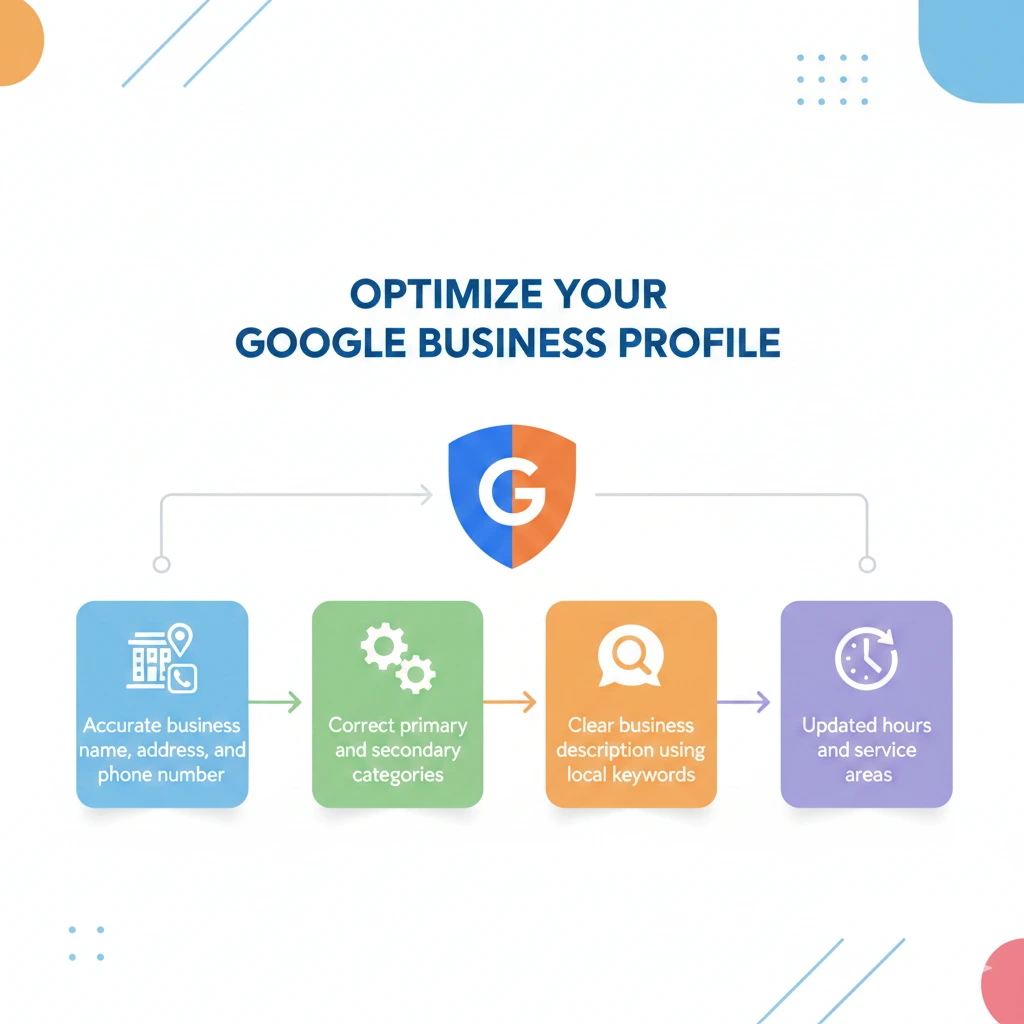
1. Optimize Your Google Business Profile
Your Google Business Profile (GBP) is the most important asset for local search optimization.
If it’s incomplete, outdated, or poorly optimized, your chances of ranking in Google Maps drop significantly.
Start with the basics:
a. Accurate business name, address, and phone number
b. Correct primary and secondary categories
c. Clear business description using local keywords
d. Updated hours and service areas
Photos matter more than most businesses realize.
Listings with high-quality images receive more clicks, more calls, and higher engagement.
Regular updates also signal activity to Google.
Think of your GBP as your digital storefront.
If it looks neglected, customers assume the business is too.
2. Focus on Local Keywords That Convert
Small business local search optimization works best when it targets intent-driven keywords, not broad terms.
Instead of chasing national phrases, focus on:
a. “local seo for small businesses”
b. “affordable local seo near me”
c. “best [service] in [city]”
Use these keywords naturally in:
a. Page titles and meta descriptions
b. Service pages
c. Google Business Profile descriptions
d. FAQs and location-based content
This helps Google connect your business to local intent while keeping your content relevant and readable.
The goal isn’t traffic volume. It’s local relevance.
3. Build Consistent Local Citations
Citations are online mentions of your business name, address, and phone number (NAP).
Google uses them to verify legitimacy.
Inconsistent listings confuse search engines and weaken trust signals.
Make sure your business details match exactly across:
a. Google
b. Yelp
c. Bing Places
d. Apple Maps
e. Industry-specific directories
Strong citations reinforce location authority and help long-term local SEO growth, especially for small businesses competing in crowded markets.
4. Generate and Manage Reviews Strategically
Reviews are one of the strongest ranking and conversion factors in local SEO.
They influence:
a. Google Maps visibility
b. Click-through rates
c. Customer trust
Encourage satisfied customers to leave reviews consistently, not all at once.
Respond to every review- positive or negative- professionally and promptly.
This small practice in your local seo helps small businesses to a large extent
Businesses with recent, authentic reviews tend to rank higher and convert faster.
A graphic showing the impact of reviews on local pack rankings.
Reviews don’t just help SEO.
They close the sale before a customer ever calls you.
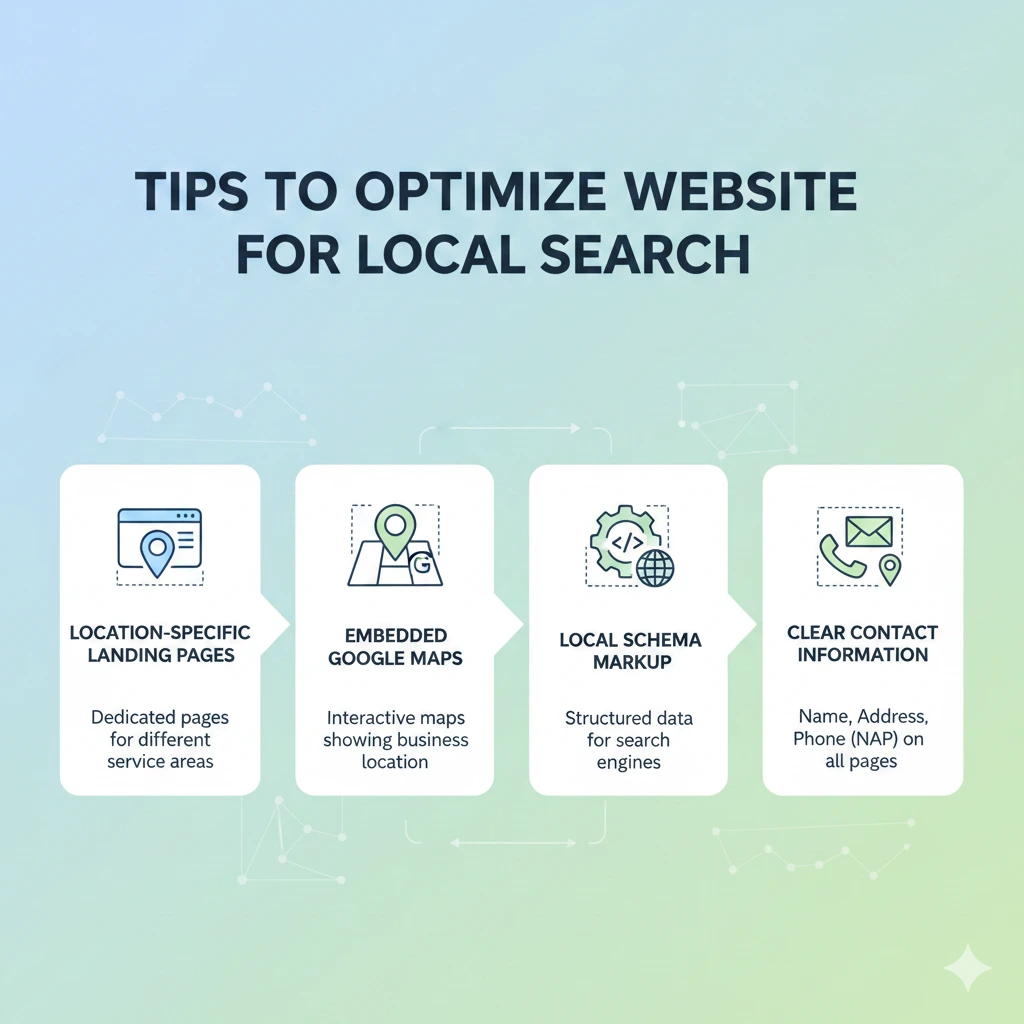
5. Optimize Your Website for Local Search
Your website still plays a critical role in local SEO strategy for small businesses.
Make sure it includes:
a. Location-specific landing pages
b. Embedded Google Maps
c. Local schema markup
d. Clear contact information on every page
Mobile optimization is essential.
Most local searches happen on phones, and slow or confusing mobile sites lose customers instantly.
A fast, locally optimized site strengthens your Google Maps presence and improves conversion rates at the same time.
6. Use Affordable Local SEO Strategies That Scale
Local SEO doesn’t require massive budgets to be effective.
Affordable local SEO focuses on:
a. High-impact optimizations
b. Consistent updates
c. Data-driven improvements
Many small businesses outperform larger competitors simply by being more accurate, more active, and more locally relevant.
This is how local SEO helps small businesses to deliver one of the highest ROIs in digital marketing.
Track Performance and Improve Continuously
Local SEO is not a one-time setup. It’s an ongoing process.
Track key metrics like:
a. Google Maps impressions
b. Calls and direction requests
c. Website visits from local searches
d. Review growth and ratings
Use Google Business Profile Insights and Google Search Console to identify what’s working and where improvements are needed.
Small refinements, like updating photos, adding FAQs, or improving response times- can lead to noticeable ranking gains.
Conclusion
Local SEO helps small businesses win where it matters most: nearby customers ready to act.
When your business appears in Google Maps, you’re no longer chasing leads.
You’re capturing them at the exact moment of intent.
1. Focus on accuracy.
2. Build trust through reviews.
3. Optimize for location, not volume.
4. And never stop improving.
Every update you make strengthens your local presence.
Every signal you refine moves you closer to the top of the map- and closer to customers who are already looking for you.
At Adsagenz, we focus on making sure your business appears in Google Maps so you’re no longer chasing leads, you’re capturing them at the exact moment of intent.
FAQs
1. What is local SEO for small businesses?
Local SEO helps small businesses appear in local search results and Google Maps when nearby customers search for products or services. It focuses on location relevance, trust signals, and visibility.
2. How does local SEO help Google Maps rankings?
Local SEO improves relevance, distance signals, and prominence. Optimized Google Business Profiles, reviews, citations, and local content all contribute to higher map rankings.
3. Is local SEO affordable for small businesses?
Yes. Affordable local SEO strategies focus on high-impact actions like profile optimization, reviews, and citations, making it cost-effective for SMBs.
4. How long does local SEO take to work?
Most small businesses see noticeable improvements within 2–3 months, depending on competition and consistency.
5. Do I need local SEO services for small business growth?
While some tasks can be handled in-house, professional local SEO services help avoid errors, save time, and accelerate results- especially in competitive areas.
About Author: