Artificial intelligence is not just a concept for the future of the marketing industry; AI in Digital Marketing 2026 is the current driving force behind smarter decision-making, more precise targeting, and accelerated growth. With tools like predictive analytics and real-time personalization, brands worldwide are transforming the way they engage with customers.Whether you are a startup exploring automation or an established enterprise searching for a strategic edge, understanding AI in digital marketing is now essential. Businesses working with an AI Marketing agency Toronto and similar innovation-driven partners are already seeing how intelligent systems can turn raw data into meaningful customer experiences.
This complete guide explores what AI in digital marketing truly means in 2026, how it works, where it delivers the most impact, and how you can leverage it to stay competitive in an increasingly intelligent digital landscape.
What is AI in Digital Marketing 2026 ?
AI in digital marketing refers to the use of artificial intelligence technologies—such as machine learning, natural language processing, computer vision, and predictive analytics—to automate, optimize, and personalize marketing efforts. Instead of relying solely on human intuition and static rules, AI systems analyze massive datasets in real time to identify patterns, predict outcomes, and recommend or execute actions.
At its core, AI-driven marketing focuses on three main goals:
- Understanding customer behavior more deeply
- Delivering highly relevant experiences at scale
- Improving efficiency and return on investment
Important components of AI in digital marketing :
- Machine Learning Algorithms that learn from historical data to improve future performance
- Predictive Analytics to forecast trends and customer actions
- Natural Language Processing (NLP) for understanding and generating human language
- Automation Engines that execute tasks with minimal manual input
Unlike traditional marketing automation, AI systems evolve nonstop . They adapt as per consumer behavior changes, making campaigns more responsive and accurate over time.
Why AI is Transforming Digital Marketing in 2026
Several factors have accelerated AI adoption in marketing:
- Explosion of customer data across platforms
- Rising demand for personalization
- Increasing competition for attention
- Pressure to prove measurable ROI
In 2026, AI is not just a tool—it is a strategic foundation. Brands are using AI to move from reactive marketing to proactive and predictive marketing. Instead of asking, “What happened?” marketers now ask, “What will happen next?”
Some of the most important advantages include:
- Faster decision-making
- More accurate targeting
- Reduced operational costs
- Enhanced customer lifetime value
How to Use AI in Digital Marketing
AI can be applied across every stage of the marketing funnel. The key is understanding where automation adds value and where human creativity remains essential.
1. Data Collection and Analysis
AI tools aggregate data from websites, social media, email campaigns, CRM systems, and advertising platforms. Advanced analytics platforms transform these data into actionable insights by identifying the trends, anomalies, and the correlations.
Benefits are :
- Real-time performance tracking
- Automated reporting
- Deeper audience insights
2. Personalization at Scale
AI enables hyper-personalized experiences by analyzing individual behavior and preferences. Content writing , product recommendations, emails, and advertisements can all be tailored to meet the preferences of each individual user.
Examples:
- Personalized email subject lines
- Dynamic website content
- AI-powered product recommendations
3. Marketing Automation
AI-driven automation goes beyond scheduling posts. It dynamically adjusts campaigns based on performance signals.
Examples:
- Automatically adjusting advertising budgets.
- Triggering personalized messages
- Adjusting bids in real time
4. Predictive Decision-Making
Predictive models forecast customer actions such as likelihood to purchase, churn probability, or optimal time to engage.
This allows marketers to prioritize high-value opportunities and intervene before problems occur.
Customer Segmentation with AI
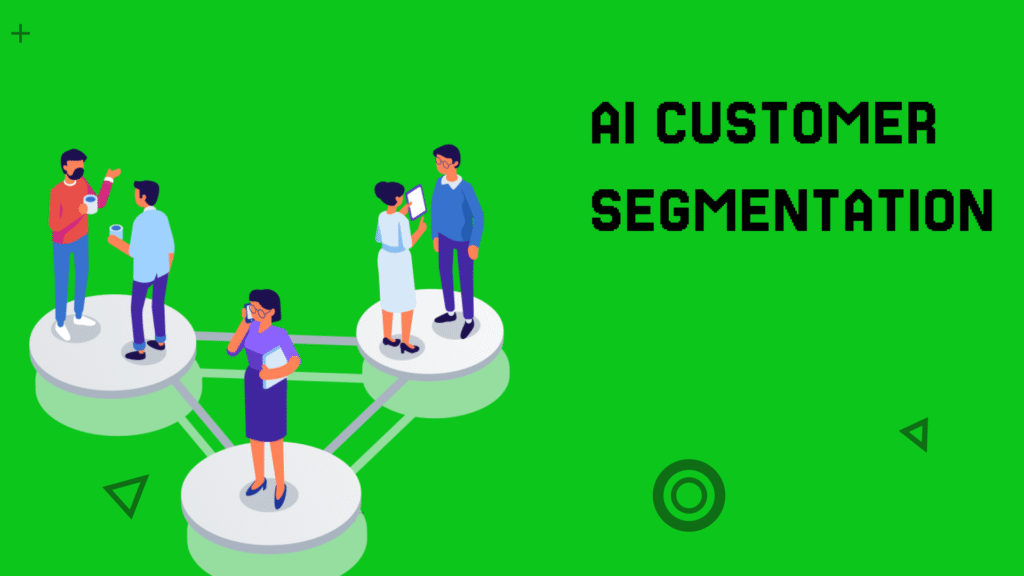
Traditional segmentation largely depends on broad categories like age, location, or income. AI-driven segmentation is far more sophisticated and perfect .
AI analyzes behavioral data, browsing history, purchase patterns, and engagement signals to create micro-segments that evolve over time.
Types of AI-Based Segmentation
- Behavioral segmentation
- Intent-based segmentation
- Predictive segmentation
- Value-based segmentation
Benefits
- Higher conversion rates
- More relevant messaging
- Better customer retention
Instead of sending the same message to thousands of people, AI ensures each segment receives content aligned with its unique needs.
AI and SEO: Smarter Search Optimization
Search engine optimization has become increasingly data-driven. AI plays a very important role in understanding search intent, optimizing content, and predicting ranking opportunities.
An experienced AI SEO Agency uses artificial intelligence to analyze search patterns, competitor strategies, and content performance at scale.
How AI Enhances SEO
- Keyword discovery based on user intent
- Content gap analysis
- Automated technical SEO audit
- Predictive ranking insights
AI tools assess thousands of ranking signals and suggest optimizations to enhance visibility .
Content Optimization
AI-powered platforms assess readability, structure, topical relevance, and semantic depth to help create content that aligns with modern search algorithms.
Voice and Conversational Search
With the rise of voice assistants in todays time , AI helps optimize content for conversational queries and long-tail phrases.
AI in Pay-Per-Click Advertising

Pay-per-click advertising has evolved into an intelligent, self-optimizing ecosystem.
AI algorithms continuously test ad variations, adjust bids, and refine targeting based on performance data.
Key Applications
- Smart bidding strategies
- Automated A/B testing
- Audience expansion
- Fraud detection
Benefits
- Lower cost per acquisition
- Higher click-through rates
- Improved ad relevance
By analyzing millions of data points, AI determines which combinations of copy, visuals, audience, and placement generate the best results.
AI for Content Marketing
Content creation and distribution are increasingly supported by AI.
Applications include :
- Giving the Idea of a Topic
- Content outlining
- Performance prediction
- Distribution timing optimization
AI does not replace human creativity—it enhances it. Marketers still shape brand voice, storytelling, and strategy.
AI in Email Marketing
AI-powered email platforms analyze recipient behavior to optimize:
- Subject lines
- Send times
- Content blocks
- Frequency of the E-marketing
This results in high open rates, improved engagement rates, and fewer unsubscribes by the customers.
AI in Social Media Marketing
AI helps brands manage complex social ecosystems by:
- Identifying trending topics
- Scheduling optimal posting times
- Analyzing sentiment
- Monitoring brand mentions
AI-driven insights ensure social strategies remain relevant and data-backed.
AI for E-commerce Marketing
E-commerce brands rely greatly on AI to personalize the shopping experiences and increase the average order value.
An AI E-commerce Marketing agency typically leverages AI for:
- Product recommendations
- Dynamic pricing
- Cart abandonment recovery
- Customer lifetime value prediction
These capabilities drive higher conversions and repeat purchases.
AI Optimization Across Channels
Genuine AI-driven marketing is omnichannel.. Data flows between platforms to create a unified view of each customer.
Businesses focusing on AI Optimisation in Canada often prioritize:
- Unified data infrastructure
- Cross-channel attribution
- Centralized dashboards
This approach ensures consistent experiences and better resource allocation.
Ethical and Privacy Considerations
As AI becomes more powerful, ethical usage is critical and important.
Best practices include:
- Transparent data collection
- Compliance with privacy regulations
- Bias mitigation
- Secure data storage
Trust is a competitive advantage in 2026.
Building an AI-Driven Marketing Strategy
- Define clear objectives
- Audit existing data
- Select the right tools
- Integrate platforms
- Train teams
- Monitor and refine
AI implementation is continious process and not a one-time project.
The Human Role in AI Marketing
AI handles analysis and execution at scale, but humans provide:
- Strategic vision
- Creative direction
- Ethical oversight
- Relationship building
The most successful brands blend human insight with machine intelligence.
Bottom-Line: Your growth, Our mission
At Adsagenz, we don’t just run the campaigns , we build partnerships. Every strategy, every design, every ad is crafted with one goal: helping your brand grow smarter, faster, and stronger.
Founded in 2025, Adsagenz was built on the principle that marketing should be accessible, actionable, and aligned with real outcomes.
Since then, we’ve helped many startups and established brands alike scale their digital presence, optimize revenue, and sharpen their competitive edge.
Marketing should be clear, accountable, and effective. We guide brands through every step, turning challenges into opportunities and strategies into measurable growth.
FAQs
What is AI in digital marketing and how does it work?
Digital marketing utilizes the AI to automate personalize and optimize the campaigns by analyzing the user behavior and predicting outcomes through machine learning and data analytics.
How does AI improve SEO rankings?
AI usually improves SEO by analyzing the search intent, identifying optimization opportunities and helps in create content aligned with the latest ranking factors.
Can small businesses use AI marketing tools?
Yes, many affordable AI tools are designed specifically for small and medium-sized businesses.
How does AI help with customer segmentation?
AI groups customers based on behavior, preferences, and predicted actions, enabling highly targeted messaging.
Is AI replacing digital marketers?
Not at all , infact AI supports marketers by automating repetitive tasks while humans focus on strategy and creativity.
How does AI improve PPC advertising performance?
AI automatically adjusts the bids, tests creatives and optimizes targeting to maximize return on ad spend.
What is the future of AI in digital marketing?
AI will become more predictive, more personalized, and more integrated across all marketing channels.
About Author: