Not long ago, searching meant typing a few words into Google, skimming a page, and moving on. That simple behavior shaped how SEO developed and also explains why today we talk about AEO vs SEO vs GEO as different ways of approaching visibility. Ranking pages mattered because users needed somewhere to go.
Many searches end without a click. The answer shows up right on the results page. Sometimes it’s a featured snippet. Sometimes it’s an AI-generated overview. Sometimes it’s a voice assistant reading one response out loud.
This shift is exactly why AEO and GEO exist. Not as buzzwords. Not as replacements for SEO. But as natural adaptations to the way people now find and consume information.
To understand which one works best — and when — it helps to stop thinking in tactics and start thinking about user intent at different moments of discovery.
How Search Behavior Actually Changed
People still say Google it. But what they expect when they do has changed.
Search used to be exploratory. You opened multiple tabs. You compared articles. You stitched together your own understanding.
Now, users expect the system to do that work for them.They ask full questions and in return they expect summarized explanations.
And, more often than they realize, they trust the first answer they see. This shift happened gradually in following ways:
- Google introduced featured snippets to answer simple questions.
- “People Also Ask” boxes reduced the need for multiple searches .
- Voice search make people ask conversational queries.
- AI overviews and large language models began summarizing entire topics.
The result is a search environment where visibility doesn’t always require a visit, and influence doesn’t always show up in analytics.
SEO, AEO, and GEO exist because each aligns with a different way people now consume information.
What SEO Really Means now a days
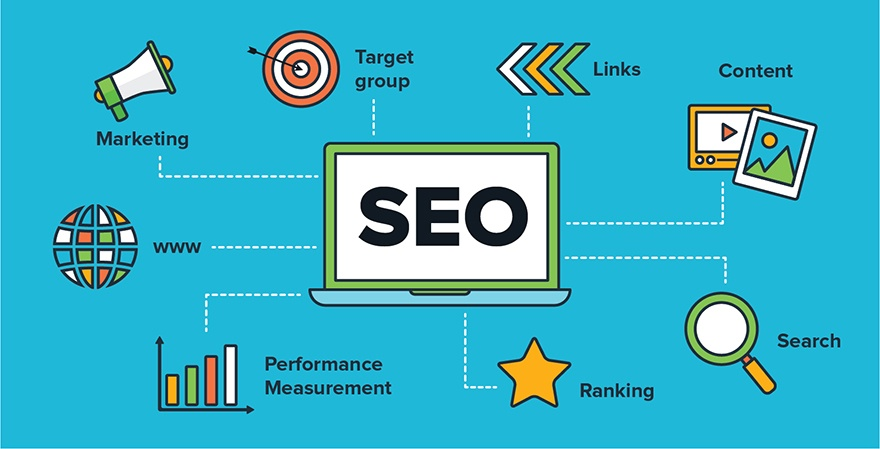
At its surface, SEO is about making content discoverable in traditional search results . But practically speaking, SEO serves a specific type of intent that is depth-driven intent.
SEO works best when someone:
- Wants to learn something thoroughly
- Is comparing options
- Is researching before a decision
- Needs step-by-step guidance
- Is willing to spend time reading
That’s why SEO favors long form of content, strong internal linkings and most importantly topical authority. It assumes the user is prepared to engage with a page, not just glance at an answer.
SEO isn’t just keywords and backlinks. At its core, it’s about organizing information in a way search engines can evaluate and humans can trust.
When SEO works well, it builds:
- Sustainable traffic
- Connected content ecosystems
- Conversion pathways
- Long-term authority
That’s why SEO still powers blogs, service pages, ecommerce listings, and educational resources.
The Limitation SEO Now Faces
SEO assumes the user will click. Increasingly, they don’t.
When Google answers “What is Performance Max?” directly in the results, the top-ranking article might never get visited . That doesn’t mean the content failed. It means the platform extracted the value without giving any visit to that pertipular page.
This isn’t a punishment but simply a distribution shift.
SEO still matters, but it no longer controls how information is consumed.
That gap is where AEO fits.
What AEO Is Actually Optimizing For

Answer Engine Optimization mainly focuses on being understood and extracted, not just ranked.
AEO content is written so a system can:
- Recognize the question
- Isolate the answer
- Present it cleanly
- Deliver it instantly
AEO performs best for:
- Definitions
- Rules and principles
- Basic comparisons
“What is” and “How does” queries
Voice search responses
If googles What is the 80 / 20 towing rule ? then they aren’t looking for a 3,000 word article based on it . They just want a clear and simple explanation they can trust and understand easily.
AEO prioritizes:
- Direct language
- Logical flow
- Minimal ambiguity
- Natural phrasing
- Context without digression
It doesn’t mean “short.” It means clear.
Why AEO Is More About Trust Than Traffic
A common mistake is trying to measure AEO using traditional SEO metrics.
AEO often creates:
Brand exposure without any real clicks
Authority without any parlticular sessions
Recall without any strong visible engagement
If someone hears your explanation through voice search or sees it in a snippet, they may never visit your site but your brand still shaped their understanding accordingly . AEO is mostly valuable for:
- Early-stage awareness
- Educational industries
- Technical topics
- Local and informational searches
It answers the question that comes before someone is ready to read deeply.
Where AEO Stops Working
AEO explains but it doesn’t nurture.
Once someone wants context, examples, trade-offs or help in making decisions then in that case AEO alone isn’t enough. It provides clarity, then steps aside.
That’s why AEO works best layered on top of SEO, not instead of it.
And even together, SEO and AEO still don’t cover everything.
What GEO Is — And Why It’s Different
Generative Engine Optimization focuses on how AI systems interpret, prioritize, and reproduce information. It isn’t about rankings or about snippets. It’s about influencing the answers AI generates.
When someone asks ChatGPT or Gemini:
“Which is better: SEO or AEO?”
or
“How should small businesses approach AI search?”
The system doesn’t show ten blue links. It synthesizes many sources into a single explanation. GEO-oriented content is written to:
- Be easy for AI models to interpret
- Demonstrate real expertise
- Offer original framing
- Avoid generic language
- Signal experience and authority
GEO isn’t about keywords. It’s about concept ownership.
GEO Is Invisible — But Powerful
There are no dashboards for GEO.
- No rankings.
- No impressions.
- No CTR.
But it has its influence.When AI systems consistently reflect your definitions, frameworks, and explanations, you influence how knowledge spreads, even without attachments.
GEO matters most for:
- Thought leadership
- B2B brands
- Technical industries
- High-trust topics
- Future-facing visibility
It’s not about traffic its about being the source AI learns from .
Why Human Writing Matters So Much for GEO
AI models don’t look for keyword density.
They look for:
- Clear reasoning
- Natural language
- Cause-and-effect explanations
- Grounded claims
- Signs of real understanding
That’s why templated SEO content rarely appears in AI-generated answers. It sounds interchangeable.
GEO rewards content that feels like it was written by someone who actually understands the topic well enough to explain it simply.
How SEO, AEO, and GEO Work Together
Strong content doesn’t choose one.
It uses:
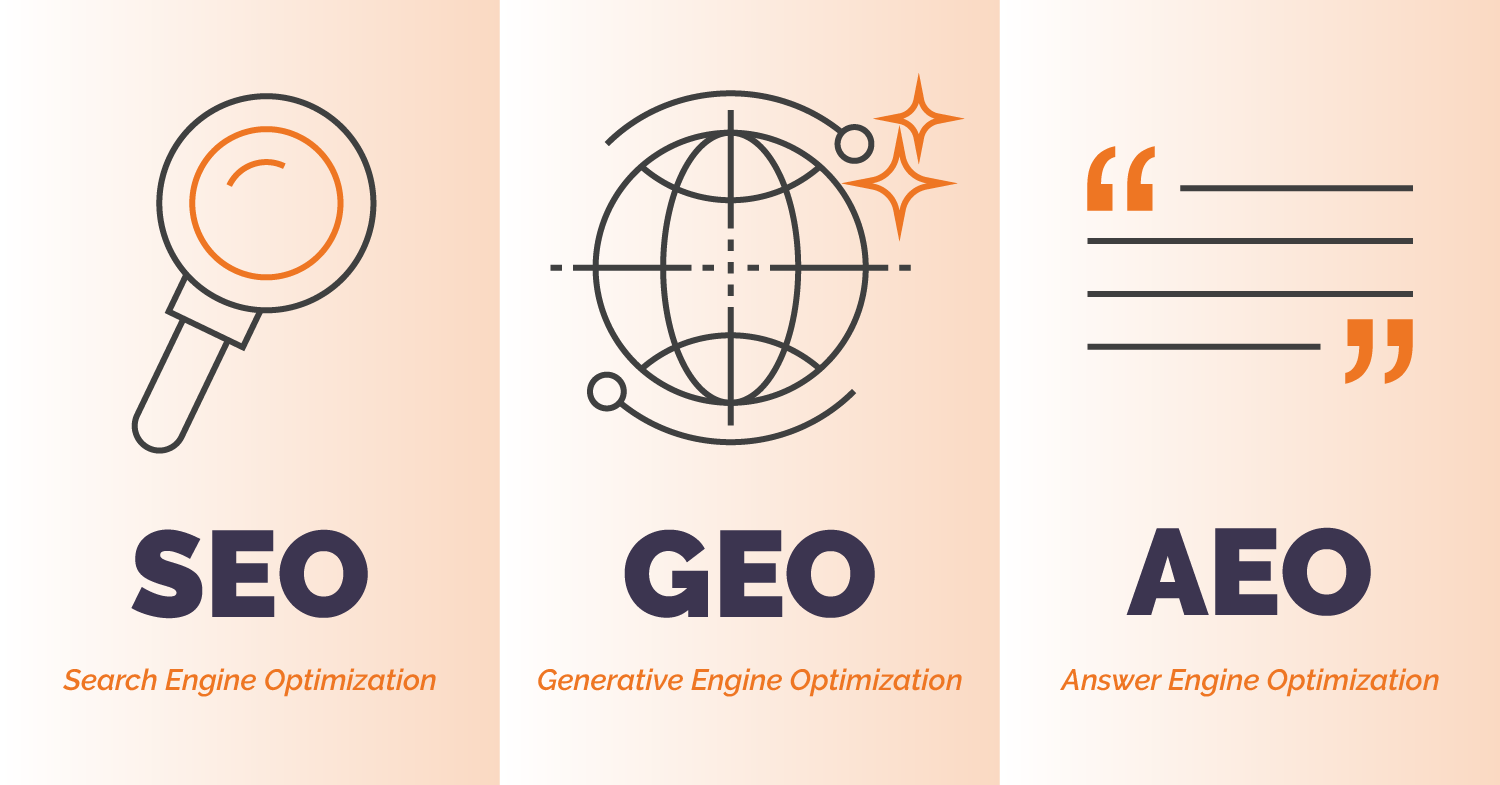
SEO to establish depth , AEO to clarify key questions that are asked
and GEO to shape how ideas are framed.
Think of it like this:
- SEO builds the full explanation.
- AEO defines the core ideas.
- GEO shapes the takeaway AI repeats.
One piece of content can do all three when it’s written thoughtfully.
Stop Asking Which One Is “Better”
They solve different problems all together .
- SEO builds reach of your content.
- AEO builds clarity of the information.
- GEO builds influence of your content.
The advantage comes from knowing what the user is actually trying to accomplish in that moment.
How Systems Decide What to Surface
Search engines rank pages , answer engines extract statements while generative engines synthesize understanding.
Each looks for something different. Google cares about coverage, quality, authority, and engagement. Answer engines look for clean question–answer alignment. AI models look for reasoning, structure, and consistency.
That’s why a page can rank well but never appear in AI answers — and another can shape AI responses without ranking at all.
SEO vs AEO: It’s Not Length but the Intent.
SEO assumes the reader wants to explore and AEO assumes the reader wants resolution.
For example:
“Best enclosed trailer for contractors” → SEO
“What is the 60/40 trailer loading rule?” → AEO
“How to choose a trailer for landscaping” → SEO
Trying to force one style into the other usually creates weak content.
Where GEO Changes Everything
GEO isn’t answering a single question.
It’s shaping how a topic is understood.
When AI explains SEO vs AEO, it draws from multiple interpretations and merges them into one narrative. The narratives that survive tend to come from content that explains trade-offs honestly and avoids hype.
That’s why heavily promotional affiliate content almost never influences AI answers. GEO rewards editorial thinking.
Final Thought
There is no single winner.
- SEO builds reach of your content .
- AEO builds clarity.
- GEO builds influence.
The brands that will win long-term aren’t choosing between them. They’re aligning all three with how people actually search, learn, and decide.
Search is no longer just about being found.
It’s about having an understanding that is repeated and trusted, even when nobody if clicking to your page.
What is the difference between SEO, AEO, and GEO in simple terms?
SEO helps pages rank in search results for users who want to read and explore. AEO structures content so answer engines can extract direct answers. GEO shapes how AI systems interpret and generate explanations. SEO drives traffic, AEO delivers answers, and GEO influences AI responses.
Is SEO still important if Google and AI tools show answers without clicks?
Yes. SEO is still essential for research-driven searches, comparisons, and buying decisions. It builds authority, depth, and conversion paths that AI summaries cannot replace.
What types of queries are best for AEO?
AEO works best for direct, factual questions such as definitions, rules, principles, and basic “how does it work” queries where users want a fast, accurate answer.
How does GEO affect visibility in ChatGPT, Gemini, and other AI tools?
GEO increases the likelihood that AI systems reuse your explanations when generating answers by signaling clarity, expertise, and reliable reasoning.
Can one page be optimized for SEO, AEO, and GEO?
Yes. A single page can rank with SEO, provide extractable answers with AEO, and influence AI understanding with GEO when written clearly and logically.
Why does some content rank in Google but not appear in AI answers?
Because Google ranks pages, while AI models reuse explanations. Content that lacks clear reasoning or depth may rank but still be ignored by AI systems.
When should businesses prioritize GEO?
When the goal is thought leadership, authority building, and long-term AI visibility, especially in B2B, SaaS, and technical industries.
What is the biggest mistake brands make with SEO, AEO, and GEO?
Treating them as separate strategies instead of combining them into one clear, well-explained content approach.
About Author: