











If you thought schema markup was just for “rich snippets” and fancy star ratings in search results, it’s time for a reality check.
With Google’s AI Overviews rolling out, schema has gone from a “nice-to-have” to a make-or-break SEO factor.
Google’s generative AI isn’t just scraping content; it’s pulling answers from pages it can understand with certainty. And how does it understand them? Through structured data – the digital equivalent of putting labels on every drawer in your office, so nobody has to rummage around.
In short: If you want AI Overviews to notice you, you need to speak its language – schema.
Let’s break down the exact schema types that can help you trigger inclusion in AI Overviews and why they matter now more than ever.
Why Schema Markup Matters More Than Ever in AI Search?
In the pre-AI days, Google’s algorithms mostly matched keywords and used ranking signals to guess what your page was about.
Now? AI models want certainty.
Schema markup is like giving Google a structured blueprint of your content – it doesn’t have to guess what your headline is, who wrote the piece, or whether your product is in stock. It just knows.
And here’s the kicker: AI Overviews are risk-averse. If Google can’t confidently verify a fact, it won’t include it in the AI summary. Schema reduces that uncertainty.
Without it, you’re just another unstructured web page in a sea of guesswork. With it, you’re a clearly defined, machine-readable source.
1. Article & BlogPosting Schema
If you’re publishing any sort of written content, you want to see the AI Overviews, Article, or BlogPosting schema markup will built your foundation.
This tells Google:
a. Your headline (`headline`)
b. The main topic (`mainEntityOfPage`)
c. The author (`author`)
d. The publish date (`datePublished`) and last update (`dateModified`)
e. A description (`description`)
f. Featured images (`image`)
Why it matters?
AI Overviews need clean, verifiable context before summarizing your article. If your piece says “Updated July 2025” but Google’s crawl data says 2024, that’s a red flag. Article schema markup locks in the metadata so AI trusts it.
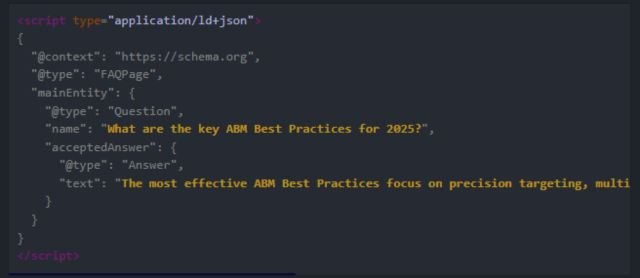
2. FAQPage Schema Markup
Ever notice how AI Overviews love to show “short, direct answers” in their summaries?
That’s essentially the FAQPage schema markup in action.
How it works?
Each question and answer pair is wrapped in `Question` and`Answer` markup.
Answers are short, factual, and easy to lift.
Example:
If you run a skincare site and have a FAQ question, “What’s the best SPF for daily use?”, AI can pull your structured answer verbatim into the Overview.
Tip:
Don’t bury FAQs at the bottom with fluff. Keep answers under 40–50 words and fact-based.
3. How To Schema Markup?
AI Overviews often break down processes into neat steps. Guess what? HowTo schema markup was built for that.
Perfect for:
– Recipes
– DIY guides
– Tutorials
– Step-by-step workflows
How it works:
Each step (`HowTo Step`) has text and optionally an image or video.
You can include tools and materials (`HowToTool`,`HowToSupply`).
Example:
“How to change a bike tire” in the HowTo schema markup lets AI lift your process exactly as written – step-by-step – into the Overview, making you the chosen source.
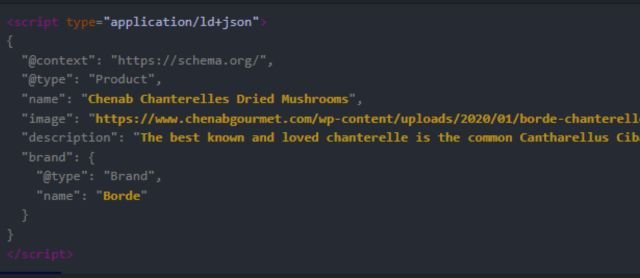
4. Product Schema
For eCommerce sites, this is your ticket to AI product mentions.
Product schema markup includes:
– Name
– Description
– Brand
– Images
– Price
– Availability
– Aggregate rating and reviews
Why it matters?
If AI Overviews are suggesting “Top 3 blenders under \$100” and your product has a well-structured schema, it’s much easier for Google to confidently list it – with specs and even ratings.
5. Local Business Schema Markup
Local SEO is also evolving in the AI Overview era. If someone searches “best coffee shop near me,” the AI Overview will often pull local listings.
Local Business schema includes:
– Business name
– Address
– Phone
– Opening hours
– Geo-coordinates
– SameAs links (social media, directory listings)
Pro tip:
Pair Local Business schema with consistent NAP (Name, Address, Phone) data across your Google Business Profile and citations to boost trust.
6. Event Schema
Hosting events? Schema makes them AI-friendly.
Event schema can include:
– Event name
– Date/time
– Location (physical or virtual)
– Ticket availability
– Performer/organizer info
AI Overviews can list your event in “Upcoming events” summaries if the markup is clean and the dates are accurate.
7. Organization & Person Schema
E-E-A-T (Experience, Expertise, Authoritativeness, Trustworthiness) matters more than ever for AI inclusion.
Organization and Person schema help:
– Verify who’s behind the content
– Link to credible sources like LinkedIn, company websites, and Wikipedia pages
– Show connections to other trusted entities
Example:
If your medical blog has a Person schema for the author with `sameAs` linking to their verified medical license, AI is far more likely to trust (and use) your answer.
8. Same As & About Properties
This is the secret sauce for building entity connections.
`sameAs` links your page to other known, authoritative sources about the same entity.
`about` clarifies the exact topic your page covers.
Example:
If your page is about the Tesla Model 3, `sameAs` might link to Tesla’s official site, Wikipedia, and relevant reviews. AI now knows it’s looking at the Tesla Model 3, not some unrelated “Model 3” term.
How to Implement Schema Without Breaking Your Site
Schema sounds intimidating, but it’s manageable:
a. WordPress: Use plugins like Rank Math, Yoast, or Schema Pro.
b. Shopify: Apps like JSON-LD for SEO or manual code injection.
c. Custom Sites: Add JSON-LD directly into the `<head>`.
Keep it lightweight and avoid bloating your pages with unnecessary markup – relevance beats quantity.
Testing Your Schema for AI Overview Readiness
Don’t just “add schema and hope.”
Test it:
a. Google’s Rich Results Test: See if your markup is valid.
b. Schema.org Validator: Checks syntax and structure.
c. URL Inspection in Search Console: Confirms Google can crawl and index it.
If the AI Overview isn’t picking up your content, revisit the schema, tighten the copy, and ensure your answers are concise.
Conclusion
The days of hoping Google “figures it out” are over. In the era of AI Overviews, structured schema is no longer a ranking booster—it’s the foundational language your brand must speak to even be considered.
If your data is clear, complete, and connected, you earn your entry ticket to the AI conversation; if not, you’re invisible. Don’t risk fading out of search entirely.
Adsagenz specializes in structuring your data perfectly for this new reality. Contact Adsagenz now to map your AI visibility strategy.