










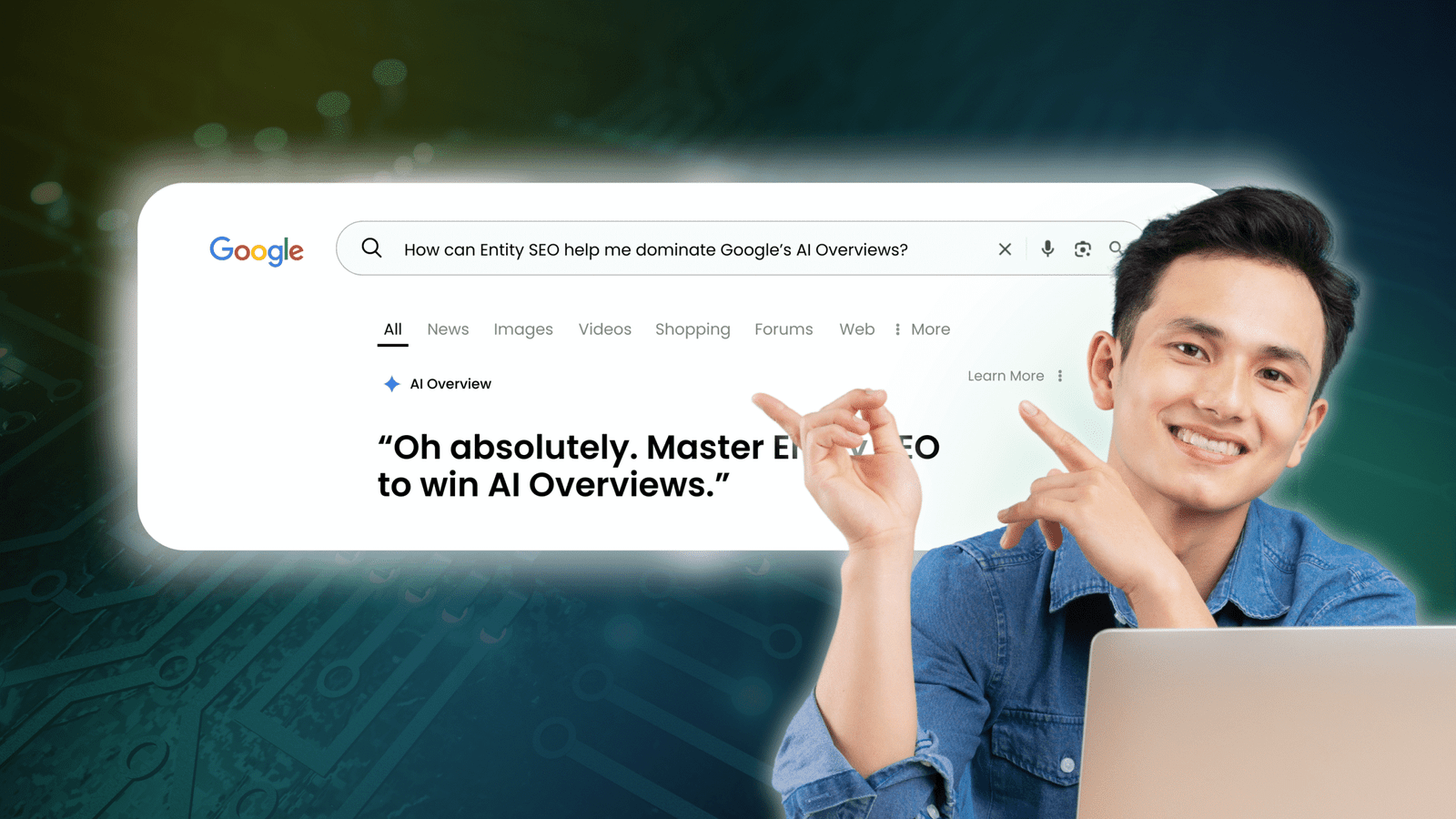
Search is changing significantly, and this change goes beyond simple aesthetic improvements. The old tactic of “target the right keywords and you’ll rank” is rapidly going out of style now that Google’s AI Overviews are online.
Today, entity SEO is the main focus. Google is producing AI-driven responses based on entities—people, locations, ideas, and relationships—instead of just matching text to queries.
Google is no longer solely a keyword-based search engine, which is why your once-top-ranking post has suddenly fallen below a huge AI block that appears to “know” the answer – frequently citing sources you’ve never heard of.
It has developed into a knowledge system driven by entities. You must change your approach and use entity SEO if you want to remain competitive.
What Is Entity SEO, Really?
Let’s strip away the jargon. An entity is just a clearly defined “thing” that Google can identify and store in its brain. It can be:
a. A person (Marie Curie, Elon Musk, Beyoncé)
b. A place (New York City, Mount Everest)
c. A product (iPhone 16, Tesla Model 3)
d. A concept (quantum physics, veganism, inflation)
Google doesn’t see “entities” as just words — it sees them as nodes in a massive web of meaning called the Knowledge Graph. Each node is connected to other nodes: Einstein → physics → theory of relativity → speed of light.
Entity SEO is about making sure you — or your content, brand, or product — becomes a recognized node in that web. Once you’re there, Google can confidently feature you in AI Overviews, knowledge panels, and even voice answers.
Why Entities Beat Keywords in Google’s AI World?
Old-school SEO was like:
> “If I put ‘best hiking boots’ in my title, headings, and URL, I’ll rank for ‘best hiking boots.’”
But AI Overviews aren’t ranking pages the same way. They’re understanding intent.
If someone searches “best boots for mountain hiking in snow”, AI won’t just look for exact keyword matches — it’s thinking:
The entity “hiking boots”
Related entities like “mountain hiking,” “snow gear,” “insulation”
Trusted entities that have authority in outdoor gear reviews
If your content isn’t tied to those entities in a way Google can verify, you’re invisible — even if you wrote a masterpiece.
How AI Overviews Pull from Entity-Based Sources?
When you look at AI Overviews, the linked sources often have three things in common:
1. They’re recognized authorities in the topic’s entity space.
2. They have structured data (schema) that reinforces entity relationships.
3. They’ve built external trust signals — Wikipedia pages, mentions in credible sites, consistent branding across platforms.
Google doesn’t have time to “guess” who you are. It relies on pre-verified entities from its Knowledge Graph. That’s why a brand-new blog with perfect keywords often loses to a five-year-old site that Google knows is an expert on the subject.
The Authority Advantage
If Google recognizes you as the entity for a given niche, you can show up in AI Overviews even without being 1 in organic search.
Example: Suppose your site is the definitive source on “artisan coffee roasting.” You’ve:
a. Been cited by coffee industry blogs
b. Spoken at coffee trade shows (covered online)
c. Appeared on podcasts linked in transcripts
Now, when someone searches “how to roast coffee beans at home”, AI Overview might pull your answer directly, because in Google’s eyes, you are the authority entity.
Schema Markup: Your Entity Blueprint
Think of schema markup like a set of instructions telling Google exactly who or what your content is about — in a format it understands instantly.
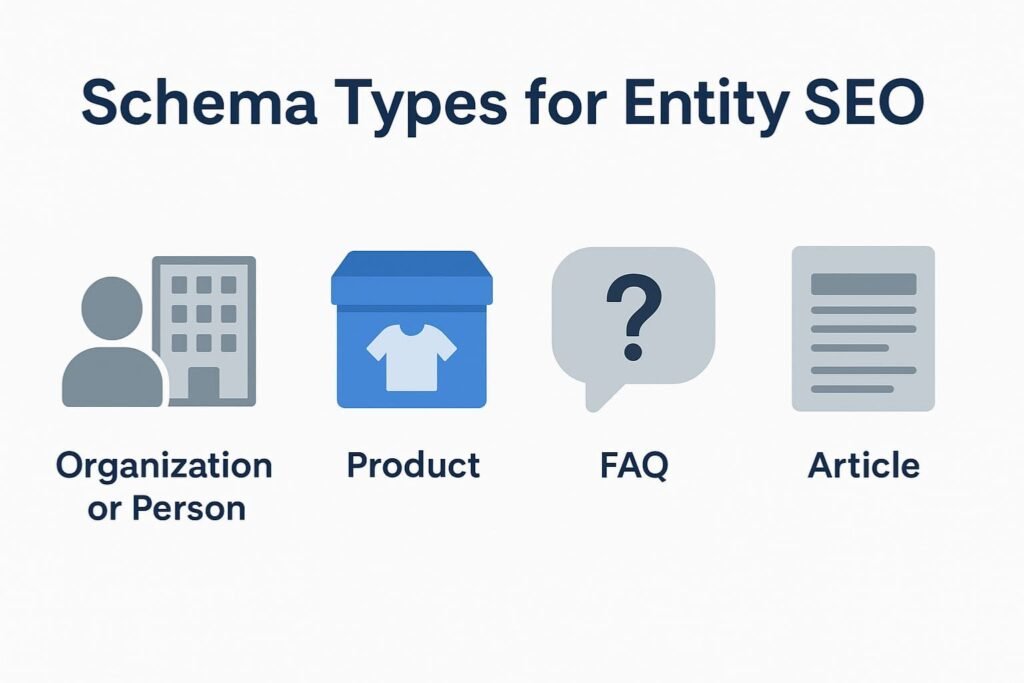
Key schema types for Entity SEO:
a. Organization or Person — Defines your brand or author entity.
b. Product — Defines your products as entities and links them to reviews.
c. FAQ — Connects common questions to your entity.
d. Article — Adds author info, publishing date, and links to related entities.
Use JSON-LD (Google’s preferred format) and make sure your schema data matches your real-world info — no “creative embellishments.” If your About page says you launched in 2018, your schema should say 2018, not 2015 because it “sounds more authoritative.”
Build Your Entity Web Across the Internet
Google doesn’t just learn from your site — it cross-checks you everywhere.
Ways to strengthen your entity presence:
a. Consistent NAP (Name, Address, Phone) across all directories
b. Create and maintain a Wikidata entry if possible
c. Secure a knowledge panel by building credible citations
d. Guest post on reputable, related-topic sites
Make sure all social profiles link back to your site and use consistent branding
If your brand’s name appears in trusted contexts across the web, Google sees you as more “real” and more “connected” in its entity map.
Content That Defines, Not Just Describes
Most content explains a topic. Entity SEO content defines it.
Instead of just “10 Tips for Baking Sourdough Bread” you:
a. Trace the history of sourdough
b. Link to notable bakers
c. Explain the microbiology of wild yeast
d. Provide references to academic or culinary sources
This makes your content the hub for that entity. AI Overviews love hub content because it’s semantically rich — it connects multiple related entities in one place.
E-E-A-T and Entities Go Hand in Hand
Google’s Experience, Expertise, Authoritativeness, Trustworthiness (E-E-A-T) guidelines aren’t just for human reviewers — they’re baked into entity recognition.
If your site shows:
a. Experience (first-hand stories, original research)
b. Expertise (credentials, author bios)
c. Authoritativeness (citations, mentions from trusted sources)
d. Trustworthiness (clear contact info, privacy policies)

…then your entity’s reputation score improves, making you more likely to be featured.
Use Entity-Based Keyword Research
Instead of obsessing over exact match phrases, look for topic clusters.
Example: If your main entity is “electric bicycles,” related entities might be:
a. Battery range
b. Pedal-assist technology
c. E-bike safety regulations
d. Urban commuting
By covering these thoroughly, you’re building an entity neighborhood that tells Google, “I’m not just about one keyword — I own this entire space.”
Track and Strengthen Your Entity Presence
Tools that can help:
a. Google’s Knowledge Graph Search API — See if your entity is recognized.
b. Kalicube Pro — Specialized in entity SEO monitoring.
c. Brand mentions tools like Brand24 or Mention — Find where you’re being cited.
If you’re not recognized yet, focus on building high-quality citations, improving schema markup, and earning links from authority sources in your niche.
Final Thoughts
Entity SEO isn’t some passing trend — it’s the foundation of how Google (and other AI-driven search systems) are going to operate moving forward.
In the AI Overview era, Google doesn’t just want pages — it wants facts from known entities. The sooner you position yourself as one, the sooner you stop worrying about being buried under that giant AI box at the top of the search results.
If keywords got you to the party, entities are what get you past the velvet rope. And once you’re in, AI Overviews might just start quoting you.