Search behaviour keeps changing. What people type into Google today looks very different from what they searched three years ago. Queries are longer, more conversational, and often tied to very specific problems. Because of that shift, traditional keyword tools that only show volume and difficulty are no longer enough.
This is exactly why many marketers now rely on the best AI tools for keyword research in 2026. These tools analyse search intent, topic clusters, competitor gaps, and user questions at a depth that manual research simply cannot match.
From my own work managing SEO campaigns, one thing has become obvious: keyword research is no longer about building a list of phrases. It is about identifying topics that align with how people actually search.
Businesses competing in regional markets such as SEO services Toronto businesses search for or service queries related to digital marketing Hamilton companies rely on often benefit the most from AI-driven research. AI tools help uncover hyper-specific queries that typical keyword tools ignore
Let’s look at how AI is reshaping keyword research and which platforms are currently leading the space.
Why AI Keyword Research Matters Now
Traditional keyword tools still rely heavily on historical search data. That data is useful, but it doesn’t always reveal emerging search patterns.
AI changes this process by analysing the following things :
• Semantic relationships between the topics
• Question-based searches by the user
• Competitor ranking patterns
• Content gaps within an industry
• Evolving search intent
Instead of suggesting a handful of the keywords, modern platforms create clusters built around SEO keyword research strategies, making it easier to plan entire content ecosystems.
For agencies working with businesses targeting Ontario local SEO services, this ability to uncover niche searches often produces quicker ranking opportunities.
Another major benefit is efficiency. A research process that once took several hours can now be completed in minutes using AI powered keyword research tools.
What Makes an AI Keyword Research Tool Effective
Not every tool labelled “AI powered” actually offers meaningful insights. Some simply layer automation on top of basic keyword databases.
The tools worth using usually provide three capabilities.
1. Intent Analysis
They interpret why a user searches a phrase. This helps identify informational, transactional, or navigational queries.
2. Topic Clustering
Instead of presenting random keywords, they group related searches into structured content opportunities.
3. Competitor Intelligence
They analyse ranking pages and highlight gaps where new content can compete.
Platforms that combine these features often become the backbone of AI driven SEO strategies.
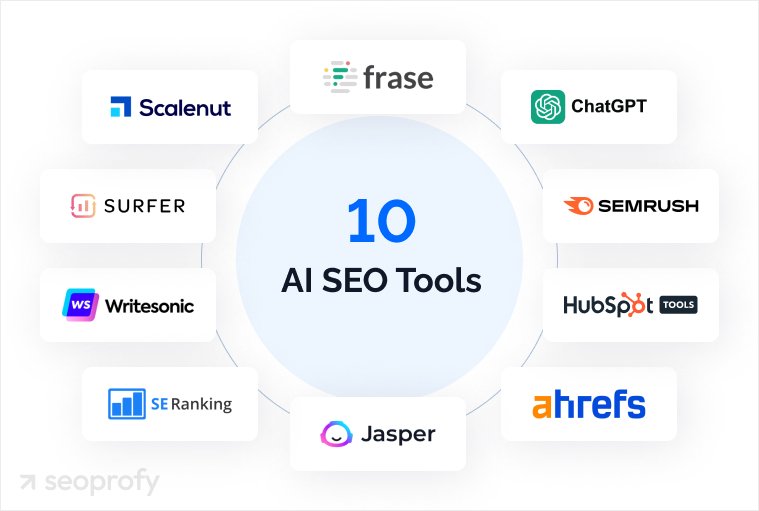
Best AI Tools for Keyword Research in 2026
Below are tools widely used by SEO teams and agencies. Each offers a slightly different approach to discovering opportunities.
Surfer SEO
Surfer SEO has grown from a content optimisation platform into a powerful research tool.
Its AI-driven keyword discovery identifies semantic phrases that frequently appear together across ranking pages. When researching topics, the tool builds clusters that can support entire blog categories rather than isolated articles.
Surfer is particularly useful when creating long-form pillar content supported by related articles.
Key strengths includethe following things :
• semantic keyword clustering
• NLP-based keyword suggestions
• competitor page analysis
• content gap insights
Many SEO teams combine Surfer with other AI SEO keyword research tools to refine strategy further.
SEMrush AI Keyword Tools
SEMrush has integrated AI features throughout its research workflow.
Its keyword platform identifies not only search volume but also emerging queries based on user behaviour and competitor trends.
For agencies managing multiple clients, the platform is valuable because it provides:
• keyword difficulty forecasting
• intent analysis
• competitor keyword gap reports
• local search data insights
These capabilities make it one of the strongest platforms for AI powered SEO keyword research.
Ahrefs Keyword Explorer with AI Insights
Ahrefs remains one of the most reliable data sources in SEO. Over the past few years, the platform has introduced AI features that improve its research workflow.
One particularly useful feature identifies parent topics. Instead of targeting dozens of minor variations, you can identify the central topic capable of ranking for multiple queries.
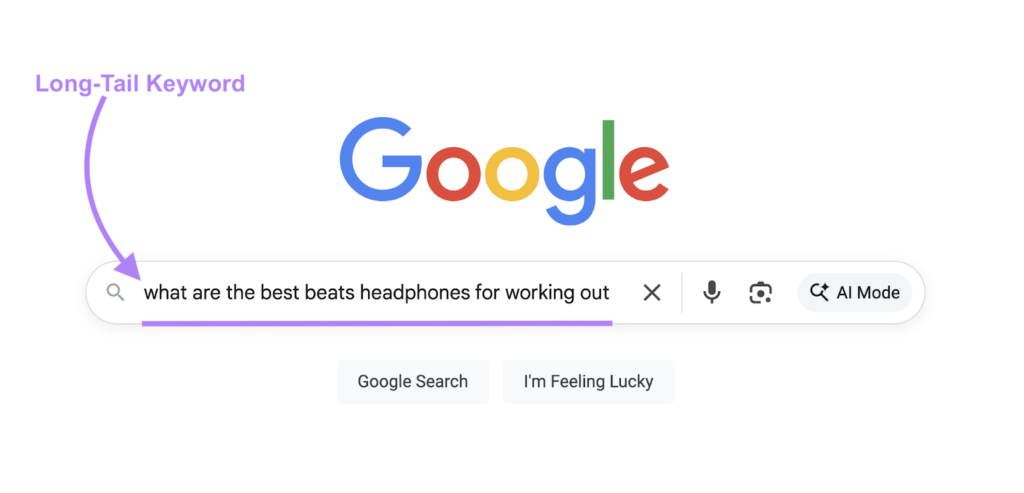
Ahrefs also helps uncover long tail keyword research opportunities, which often convert better than high-volume terms.
For marketers focused on content strategy, this perspective is extremely useful.
Frase
Frase focuses on understanding how users phrase their questions. This makes it particularly effective for voice-search driven research.
The platform analyses search results and extracts questions, subtopics, and conversational phrases that frequently appear in real searches.
Because of that capability, Frase is widely used for AI content research and keyword discovery.
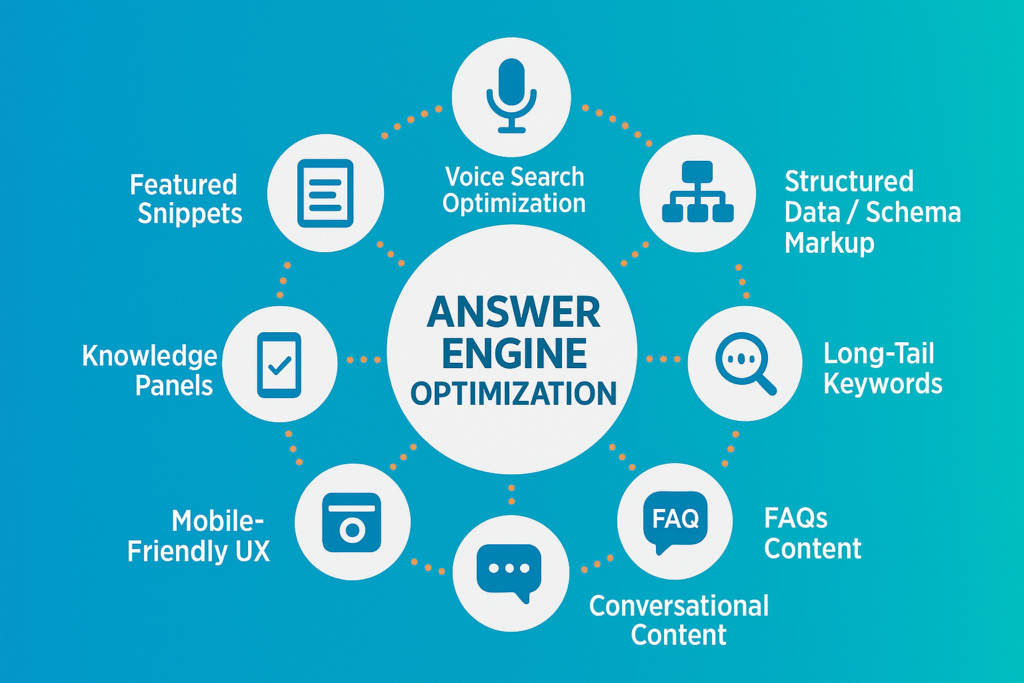
Many writers also rely on Frase when creating FAQ sections designed to rank in featured snippets.
MarketMuse
MarketMuse approaches keyword research differently.
Rather than simply suggesting keywords, it evaluates topical authority. The platform scans a website and identifies missing content areas that competitors have already covered.
For businesses building authority in competitive industries, MarketMuse helps create structured topic cluster SEO strategies.
It is particularly helpful for identifying:
• content gaps
• topic authority scores
• competitive keyword coverage
This approach makes it ideal for long-term AI driven SEO planning.
How to Use AI Tools for Smarter Keyword Research
Owning a tool does not automatically produce results. The strategy behind the research still matters.
A simple process often works best.
Step 1: Identify Core Topics
Start with broad topics related to your industry. AI tools will expand those into clusters of related queries.
Step 2: Study Search Intent
Look at the type of content already ranking. This reveals what search engines believe users want.
Step 3: Find Content Gaps
Competitor analysis can uncover keywords that competitors rank for but your site does not.
Step 4: Build Topic Clusters
Instead of publishing isolated blog posts, organise content into clusters connected to a central pillar article.
This structure supports AI SEO content strategies that search engines increasingly favour.
The Role of Long-Tail Keywords in AI SEO
Short keywords are competitive. They attract massive search volume but often require significant authority to rank. Long-tail keywords work differently .
They use to reflect specific intent and frequently convert better. AI tools excel at identifying these opportunities because they analyse conversational search patterns.
Examples often include phrases tied to real problems, such as:
• how to improve local SEO visibility
• tools for technical SEO analysis
• keyword research for small business websites
Targeting these queries supports advanced keyword research strategies that build traffic gradually but consistently.
How AI Helps Predict Search Trends
Another advantage of AI-based keyword research is predictive analysis.
Instead of only analysing existing data, AI models detect patterns within growing search behaviour.
For example, rising interest in voice search has dramatically increased question-based queries. AI tools detect these shifts early, allowing marketers to create content before competition increases.
This proactive approach helps build future-focused SEO keyword strategies rather than reacting after trends peak.
Common Mistakes When Using AI Keyword Tools
Even experienced marketers sometimes misuse the application of these tools. One common mistake is chasing only high-volume keywords. Volume alone rarely determines value.
Another issue is ignoring search intent. A keyword may attract traffic but still fail to convert if the content does not match the user’s goal.
Finally, some teams publish too many similar articles. AI clustering features exist specifically to prevent that problem.
Effective SEO relies on structured keyword research frameworks, not scattered blog posts.
The Future of AI Keyword Research
Search engines increasingly rely on machine learning to interpret context and meaning. Because of that shift, keyword research will continue moving toward topic analysis rather than isolated phrases.
AI tools will likely expand their capabilities to include:
• predictive search modelling
• automated content gap detection
• real-time ranking probability estimates
For marketers, this means keyword research will become less about spreadsheets and more about strategy.
Understanding the user’s intent behind a query will matter far more than simply identifying the phrase itself.
What is the best AI tool for keyword research in 2026?
Several platforms are widely used, including Surfer SEO, SEMrush, Ahrefs, Frase, and MarketMuse. Each tool offers unique insights such as intent analysis, topic clustering, and competitor keyword discovery.
Can AI tools replace manual keyword research?
AI tools helps to accelerate research and uncover hidden opportunities, but human analysis still remains essential. Marketers still need to evaluate search intent, competition, and content relevance.
Are AI keyword tools useful for local SEO?
Yes. Many platforms analyse location-specific queries and reveal niche searches businesses can target, especially for regional markets and service-based industries.
How do AI tools find long-tail keywords?
AI analyses large datasets of search queries and identifies patterns in how people phrase questions. This helps uncover conversational queries that traditional keyword tools often overlook.
Do AI keyword tools improve SEO rankings?
They help identify better opportunities, but rankings still depend on content quality, site authority, and technical optimisation.
Choosing the best AI SEO tools is no longer just about saving time . For agencies and business owners, it has become a practical way to manage complex search engine strategies without expanding the team every quarter.
Search engines now process intent, context, and user behaviour far better than they did a few years ago. Because of this shift, traditional keyword stuffing and manual research simply cannot keep up. AI-assisted platforms analyze massive data sets quickly and help marketers understand what actually works.
But not every tool delivers meaningful value. Some generate generic suggestions. Others genuinely help you uncover opportunities competitors haven’t seen yet.
This article looks at the best AI SEO tools that professionals actually rely on for keyword research, content improvement, and technical optimization. The focus is not just on features but on how these tools fit into real workflows
Why AI SEO Tools Are Becoming Essential
Search engine optimization used to be mostly a manual work. You researched keywords, wrote content, built backlinks, and hoped rankings would improve over time.
Today the landscape is different.
Algorithms analyze user behavior, search patterns, and content structure. AI tools help marketers process that complexity much faster.
For example, many digital marketing teams working with local businesses in Toronto now rely on AI SEO tools to analyze thousands of keyword variations within minutes. Tasks that once took several hours can now be completed during a single strategy meeting.
More importantly, these platforms do more than suggest keywords. They evaluate:
Content gaps
Competitor rankings
Search intent patterns
On-page optimization signals
Internal linking structures
Instead of guessing what might work, marketers can work with real data.
How AI Improves Keyword Research
Keyword research used to be fairly straightforward. You would look at search volume, competition level, and then decide whether a keyword was worth targeting.
AI changes that process completely.
Modern AI keyword research tools analyze user intent and group keywords into topical clusters. This helps content teams build structured content rather than isolated blog posts.
For instance, when an agency manages a campaign targeting businesses in Hamilton, the tool might identify not just high-volume keywords but also questions users frequently ask before making a purchase decision.
These insights help shape entire content strategies instead of single articles.
Another advantage is predictive analysis. Some tools estimate which keywords are gaining momentum before search volume spikes. That allows websites to publish content early and gain rankings before competitors notice the opportunity.
AI Content Optimization: Beyond Basic Keyword Placement
Writing SEO content used to revolve around placing keywords a certain number of times.
Search engines no longer work that way.
AI tools now analyze top-ranking pages and identify semantic relationships between words. They recommend supporting phrases that help search engines understand context.
AI suggestions should guide writing, not control it. Content that blindly follows automated recommendations often sounds unnatural. Experienced SEO professionals treat AI insights as reference points while still writing content in their own voice.
Technical SEO and AI Analysis
Technical SEO is where AI tools quietly provide enormous value.
A website may look perfectly fine to users while still having issues that prevent search engines from crawling pages effectively.
Many SEO teams handling projects across Ontario rely on automated technical audits to identify issues before they affect rankings.
Without these tools, auditing large websites would take days. AI reduces the process to minutes while still highlighting the most critical issues first.
Best AI SEO Tools Used by Professionals
Below are several platforms widely considered among the best AI SEO tools available today. Each one focuses on a different part of the optimization process.
Surfer SEO
Surfer SEO is known for its content analysis capabilities. It compares your article with top-ranking pages and recommends structural improvements.
The tool analyzes elements such as:
Heading distribution
Keyword usage patterns
Content length
NLP phrases used by competitors
For writers producing large volumes of SEO content, this type of analysis helps ensure each article aligns with ranking factors.
Clearscope
Clearscope focuses on semantic optimization. Instead of simply counting keywords, it identifies related terms that help search engines understand the topic.
Many professional content teams prefer this approach because it improves readability while still strengthening SEO signals.
SEMrush AI Features
SEMrush has expanded its platform with several AI-driven features including:
Content topic generation
Keyword clustering
Automated site audits
Competitor analysis
The platform remains one of the most comprehensive tools for agencies managing multiple websites.
Ahrefs AI Insights
Ahrefs is primarily known for backlink data, but its AI capabilities now assist with keyword grouping and content analysis.
SEO professionals often combine Ahrefs with other AI SEO tools to understand both ranking opportunities and link-building strategies.
MarketMuse
MarketMuse is particularly useful for large websites with extensive content libraries.
It analyzes existing articles and recommends:
Content updates
Topic expansion
Internal linking opportunities
This makes it ideal for companies that want to strengthen topical authority rather than simply publish more posts.
How Agencies Use AI SEO Tools in Real Campaigns
Most agencies do not depend on any single platform . Instead, they build a workflow that combines several tools.
A typical process might look like this:
AI keyword research tools identify potential opportunities.
This layered approach allows marketers to make better decisions without guessing.
From experience, the biggest improvement usually comes from combining AI insights with human judgement. Tools identify patterns, but strategy still requires interpretation.
Common Mistakes When Using AI SEO Tools
While these platforms are powerful, they are not foolproof.
One common mistake is relying entirely on automated recommendations. SEO tools often suggest similar keyword sets because they analyze the same data sources .
Publishing identical content strategies rarely leads to strong rankings.
Another issue is ignoring search intent. Just because a keyword has high volume does not mean it matches the audience’s needs.
Experienced marketers treat AI tools as assistants rather than decision makers.
Choosing the Best AI SEO Tools for Your Workflow
Selecting the best AI SEO tools depends largely on how you plan to use them.
Content teams often prioritize optimization platforms like Surfer or Clearscope. Technical SEO specialists lean toward tools with advanced site auditing features.
For agencies managing multiple clients, all-in-one platforms such as SEMrush or Ahrefs usually make more sense.
The key factor is integration. Tools that work well together reduce workflow friction and help teams move faster.
The Future of AI in Search Engine Optimization
AI will continue shaping SEO in the coming years, but not in the way many people expect.
The goal is not replacing marketers. Instead, AI will likely handle repetitive analysis tasks while humans focus on strategy and storytelling.
Search engines themselves are also becoming more AI-driven. Understanding user intent, behavior patterns, and content quality will matter far more than mechanical optimization techniques.
Businesses that combine human expertise with AI-powered insights will likely have the strongest advantage.
What are the best AI SEO tools for beginners?
Some of the most widely recommended options include Surfer SEO, SEMrush, Clearscope, and Ahrefs. These platforms help with keyword research, content optimization, and technical SEO analysis.
Do AI SEO tools replace human writers?
No. AI tools assist with research and optimization suggestions. High-quality SEO content still requires human expertise, industry knowledge, and natural writing.
How do AI SEO tools help with keyword research?
They analyze search data, identify related queries, group keywords by intent, and highlight opportunities competitors may have missed.
Can AI tools improve website rankings?
AI tools do not directly improve rankings, but they help marketers identify optimization opportunities faster. When used correctly, they can significantly improve keyword targeting, content quality, and site structure.
Are AI SEO tools worth the cost?
For agencies and businesses that publish content regularly, AI SEO tools often save dozens of hours every month. The time saved on research and analysis usually justifies the subscription cost.
What is the biggest benefit of using AI for SEO?
The biggest advantage is speed. AI tools process massive amounts of search data quickly, allowing marketers to make informed decisions without spending hours on manual research.
Gemini isn’t a separate search engine. It’s Google’s reasoning layer.
That distinction matters because Gemini doesn’t replace Google Search; it sits on top of it, interpreting information, summarizing intent, and deciding what deserves to be surfaced inside AI-generated answers.
If you approach Gemini the way you approached traditional SEO, you’ll miss what’s actually happening.
This guide explains SEO for Gemini from a practical point of view: how Gemini chooses information, why some brands appear inside AI answers, and what signals matter when rankings alone no longer guarantee visibility.
How Gemini Fits Into Google Search
Gemini does not operate independently.
It pulls from:
Google’s index
Google’s knowledge graph
Google’s understanding of entities
High-confidence web sources
Context from the user’s query history
Think of Gemini as the layer that decides how Google explains things, not just where pages rank.
That means your goal isn’t just to rank. It’s to be explainable.
Gemini Is Not Looking for Pages – It’s Looking for Understanding
Traditional Google Search asked:
Which page best matches this query?
Gemini asks:
Which information best answers this question clearly and safely?
That shift changes what gets surfaced.
Gemini values:
clarity over cleverness
consistency over novelty
explanations over optimization
If your content helps Gemini think through a topic, it becomes usable.
An entity is something Google understands as a real, distinct concept:
a company
a product
a person
a location
a defined service
When Gemini includes a brand in an answer, it’s not guessing. It’s drawing from existing entity relationships.
Your visibility depends on whether Google can confidently associate your brand with:
a specific topic
a specific expertise
a stable definition
Vague positioning creates uncertainty. Uncertainty leads to exclusion.
Why Gemini Trusts Some Brands and Ignores Others
Gemini is conservative by design.
It avoids:
unclear claims
inconsistent positioning
promotional framing
speculative language
Trust is inferred when:
your content aligns with how others describe you
your explanations remain stable over time
your pages don’t contradict each other
Third-party mentions reinforce your role
Gemini doesn’t need you to be the loudest voice. It needs you to be the clearest.
Keywords Still Matter – But Only as Language Signals
Gemini still reads words. But it doesn’t reward repetition.
Keywords help Gemini:
understand topic boundaries
identify intent
connect related concepts
They do not function as ranking levers.
Over-optimization creates noise. Natural language creates understanding.
Write the way a professional explains something to another professional, not the way SEO tools suggest.
Content Depth Beats Content Volume
Gemini prefers fewer, stronger references over many shallow ones.
A single page that:
defines a concept properly
explains how it works
addresses edge cases
acknowledges tradeoffs
is far more useful than ten short posts covering fragments.
This is why thin content strategies struggle inside Gemini answers, even if they rank traditionally.
Structure Helps Gemini Reason
Gemini reads structure as logic.
Clear headings, clean sections, and orderly progression help the model understand:
what matters most
how ideas connect
where nuance belongs
Use structure to guide reasoning, not to insert keywords.
A well-structured page is easier for Gemini to summarize without distortion.
The Importance of Consistent Positioning
Gemini watches for drift.
If your brand:
changes focus frequently
shifts terminology
redefines its role across pages
it becomes difficult to place confidently.
Consistency builds recognition.
Recognition builds trust.
This applies across:
blog content
service pages
about pages
external references
Gemini connects all of it.
Why Promotional Language Backfires
Gemini avoids persuasion.
Phrases like:
“industry-leading”
“best-in-class”
“top solution”
don’t help Gemini explain anything.
In fact, they increase uncertainty.
Clear statements of what you do, how you do it, and when it applies are far more valuable than praise, especially when that praise comes from yourself.
Gemini and Freshness: What Actually Matters
Gemini cares about accuracy, not novelty.
Freshness matters when:
regulations change
products update
facts evolve
It doesn’t matter when content is rewritten without adding clarity.
A well-explained article that’s two years old can still appear if it remains accurate and useful.
Stability is a signal of confidence.
How Gemini Interprets Expertise
Expertise shows up in how you explain limits.
Gemini notices when content:
acknowledges exceptions
explains tradeoffs
avoids absolutes
answers follow-up questions implicitly
These are signals of real-world understanding.
Content that oversimplifies is easier to read-but harder to trust.
1. Is SEO for Gemini different from traditional Google SEO?
Yes, but it builds on the same foundation. Traditional SEO helps your content get indexed and understood, while Gemini evaluates whether that information is clear, consistent, and safe to use inside an AI-generated explanation. Ranking alone is no longer enough.
2. Does Gemini only show results from high-authority websites?
Not necessarily. Gemini favors sources that explain a topic clearly and consistently. Well-structured content from smaller or niche sites can appear if it reduces uncertainty better than broader, high-authority pages.
3. How important are keywords for Gemini SEO?
Keywords still matter as natural language signals, but repetition and density do not help. Gemini responds better to content that uses terminology naturally while explaining concepts in a clear, logical way.
4. How long does it take to appear in Gemini AI answers?
There’s no fixed timeline. Visibility grows as Google develops confidence in your content and entity positioning over time. Consistency across pages and external references plays a larger role than frequent updates.
5. Can promotional or sales-focused content rank inside Gemini answers?
Rarely. Gemini avoids content that feels persuasive or self-promotional. Educational, factual writing that explains how something works-without exaggeration-has a much higher chance of being surfaced.
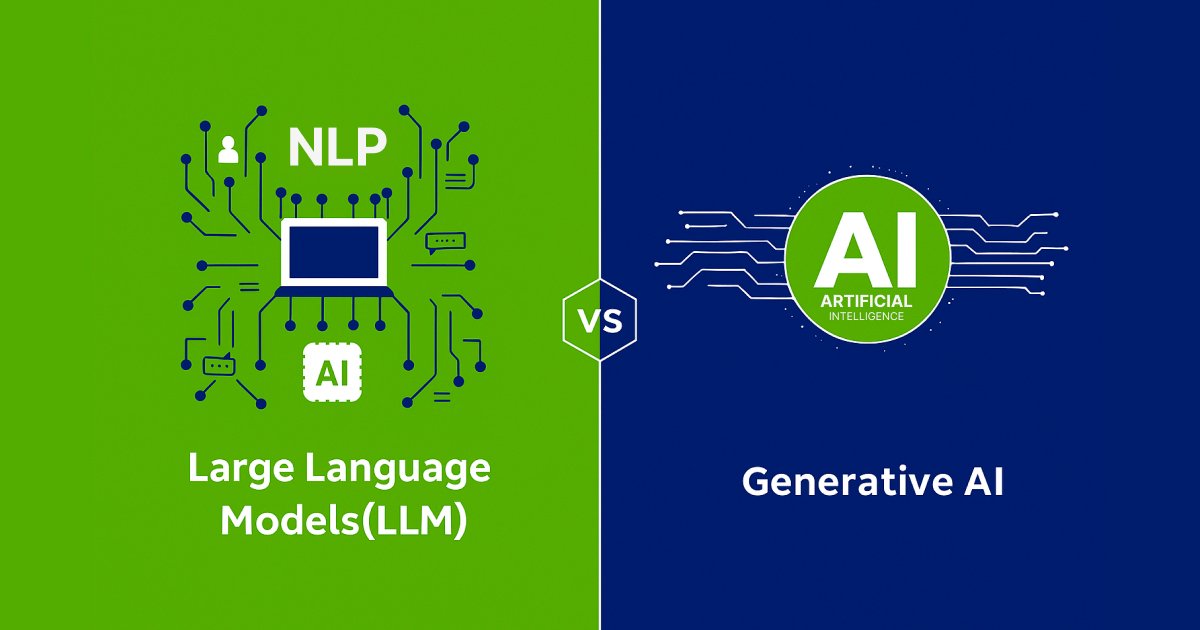
Artificial intelligence systems powered by large language models are now embedded in everyday tools—search engines, chatbots, writing assistants, and enterprise automation platforms. Yet the conversation around AI often focuses only on what these models can do, not where they struggle.
Understanding LLM limitations and hallucinations is critical for organizations that rely on AI to produce content, automate support, or analyse information. Even the most advanced models can generate incorrect facts, fabricate sources, or misinterpret context.
For companies exploring AI adoption in Toronto, this issue is more than theoretical. When a model produces inaccurate information in customer-facing environments, the consequences can affect trust, compliance, and brand credibility.
To work responsibly with AI, businesses must understand why these limitations occur and how they can be managed.
What Are LLM Hallucinations?
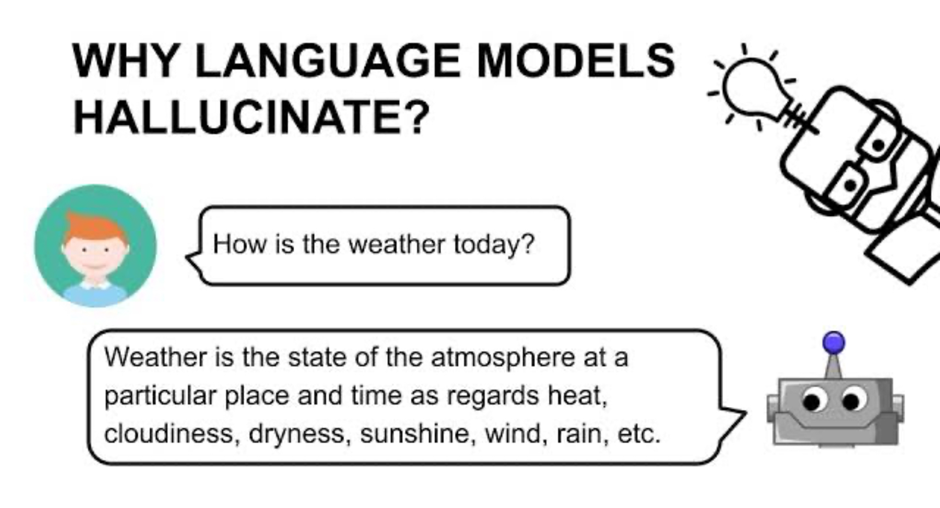
To work with LLM limitations, it’s important to define hallucinations. A hallucination is when a large language model generates plausible information that is not true or even made up. The model isn’t “lying.” It’s just outputting the most probable words based on what it has learned.
This is why hallucinated answers often appear confident and detailed. The model has learned patterns of language, not verified knowledge.
Some Common hallucination examples have been shared below :
• Fabricated academic citations
• Incorrect statistics
• Imaginary product features
• Wrong historical facts
• Misinterpreted technical explanations
These errors become especially noticeable when users rely on AI-generated content for decision-making or research.
Why Large Language Models Hallucinate
Many people assume hallucinations occur because the AI system is broken or poorly trained. In reality, hallucinations are a natural consequence of how large language models operate.
These models work by predicting the next word in a sequence. They do not “know” information in the same way a human expert does. Instead, they identify statistical relationships in enormous datasets.
Several factors contribute to hallucinations:
Predictive nature of language models
An LLM predicts likely words rather than verifying truth. If a question resembles patterns from its training data, it will generate a response—even when certainty is low.
Incomplete training data
No dataset contains every fact. When information is missing, the model fills the gap with patterns that resemble existing knowledge.
Ambiguous prompts
When a question lacks context, the model may interpret it incorrectly and generate a confident but wrong response.
Over-generalization
If a model learns a rule that works in many situations, it may apply that rule even when it should not.
For companies adopting enterprise AI solutions in Hamilton, these factors highlight why human review remains essential.
7 Real Limitations of Large Language Models
LLMs are powerful tools, but they have boundaries. Understanding those boundaries prevents unrealistic expectations.
Below are several limitations that appear consistently across AI systems.
1. Lack of Real Understanding
Despite impressive output, LLMs do not truly understand language. They recognise patterns.
This difference becomes clear when the model encounters complex reasoning or unfamiliar scenarios. The system can generate a convincing explanation while misunderstanding the underlying concept.
For businesses experimenting with AI automation in Ontario, this limitation often appears when models handle nuanced customer questions.
2. Fabricated References and Citations
Academic users frequently notice this issue first. When asked for references, a model may generate realistic-looking journal articles that do not exist.
The titles appear credible. Author names may even resemble real researchers.
However, the sources are invented.
This happens because the model has learned how citations are structured but cannot verify whether a specific paper actually exists.
3. Weakness in Numerical Accuracy
Large language models are not designed for complex mathematics or financial calculations.
While simple arithmetic often works, multi-step calculations can produce inconsistent results.
In many workflows, combining AI language models with deterministic systems such as calculators or databases produces more reliable outcomes.
4. Outdated Knowledge
Most LLMs are trained on data collected during a specific time period. Unless connected to real-time information sources, their knowledge eventually becomes outdated.
For example, policy changes, market data, or product updates may not appear in the model’s responses.
Companies using AI tools for digital marketing in Toronto sometimes notice this when the system references outdated search algorithms or platform features.
5. Sensitivity to Prompt Wording
Small changes in a prompt can produce dramatically different responses.
A vague question may generate speculation, while a structured prompt produces a clear answer.
This behaviour has led to the rise of prompt engineering, where users design prompts carefully to guide the model’s reasoning.
6. Context Window Constraints
Language models have a limit to how much information they can process at once. This is known as the context window.
When conversations become long, earlier information may drop out of memory. The model might then repeat questions or contradict previous statements.
For customer support chatbots built with AI conversational systems in Hamilton, managing context effectively becomes important.
7. Overconfidence in Uncertain Answers
One of the most challenging aspects of AI output is confidence.
LLMs often deliver responses with the same tone regardless of certainty. A guess may appear as confident as a verified fact.
Without external validation, users may assume the information is accurate.
This is why companies deploying AI knowledge assistants in Ontario frequently combine them with curated internal databases.
How Businesses Can Reduce LLM Hallucinations
While hallucinations can’t be completely prevented, there are ways to minimise their impact. Companies that use AI at work tend to have a multi-faceted approach. 1.Retrieval-augmented generation: This method links the language model to a trusted source of information. Rather than generating responses from the training data, the model consults trusted sources and then generates responses from that. 2. Structured Prompts: Clear prompts improve accuracy. Context, examples, or restrictions help to keep the model in check. 3. Human Review Systems: Human review is still needed for high-stakes uses, such as legal documents, financial reports or technical reports. 4. Model Fine-Tuning: Some businesses fine-tune models using their own data. This fine-tunes the responses in line with corporate knowledge.
How Marketers Should Approach LLM Limitations
Nowadays, teams produce content and conduct research using AI. Hallucinations can subtly add errors to content. Google is improving how it identifies unreliable information. Reliability signals and rankings can be influenced by inaccuracies presenting multiple times. Content production teams using AI-supported SEO in Toronto create authoring workflows with steps to review and fact check. Likewise, marketing agencies that offer AI content optimisation services in Hamilton prioritise human oversight of AI processes. This approach is generally most effective.
The Future of AI Reliability
AI systems are improving rapidly. Emerging model designs hallucinate less and reason better. There are also experiments with :
Hybrid symbolic-neural models These approaches attempt to merge the statistical language model with knowledge. Firms that are investing in AI adoption in Ontario are monitoring these developments with interest as dependability will decide the extent to which AI can be trusted in determining critical functions.
Final Thoughts
Large language models are a new milestone in the evolution of human interactions with computers. They generate text, articles, summaries, explanations, translations and more in no time. But they have limitations and hallucinations. Knowing LLM limitations and hallucinations means companies must be cautious with AI. By pairing these with human checks, consistent data and processes, they become much more reliable. Businesses that use AI as a guide, rather than an oracle, typically get the most benefit from the technology.
FAQs
What are LLM hallucinations?
LLM hallucinations occur when a large language model generates information that sounds convincing but is incorrect or fabricated. The model predicts language patterns rather than verifying facts.
Why do AI language models hallucinate?
Hallucinations happen because AI language models rely on statistical predictions. If the model lacks reliable information about a topic, it may generate a plausible answer instead of admitting uncertainty.
Can hallucinations in AI be prevented?
Hallucinations cannot be removed entirely, but techniques like retrieval-augmented generation, better prompts, and human review significantly reduce them.
Are LLM hallucinations dangerous for businesses?
They might be to some extent. If an AI systems provide inaccurate information in customer support, legal documentation, or financial reports, the errors may affect credibility or compliance.
How can companies use AI safely?
Businesses often combine AI language models with verified databases, internal knowledge systems, and human oversight to ensure accuracy.
Search engines do not read pages the way humans do. Instead of simply scanning keywords, algorithms interpret meaning, relationships, and intent. Understanding howAI understands content has therefore become essential for anyone trying to rank online.
Modern search systems depends mostly on machine learning models that evaluate context, entity relationships, semantic meaning, and behavioural signals. This means a page can rank even if it doesn’t repeat the same keyword dozens of times. What matters is whether the content clearly answers a user’s question.
For businesses working with digital marketing agencies across Canada, including companies seeking AI SEO services in Toronto, this shift has forced a rethink of traditional optimisation strategies. Pages that once relied on keyword density now need structure, clarity, and relevance.
In other words, AI doesn’t just read words—it interprets intent.
The Shift from Keywords to Meaning
Early search engines operated on a very simple matching rules. If a page repeated a keyword frequently enough, it ranked. That system worked in the 2000s but quickly became easy to manipulate.
Machine learning changed the equation.
Modern search systems evaluate:
context
topic relationships
user engagement
semantic meaning
authority signals
This approach is known as semantic search optimisation.
Instead of scanning for a phrase, AI asks a deeper question:
AI recognises that these queries relate to the same underlying need.
How Search Engines Actually Process Content
To understand ranking behaviour, it helps to look at how AI processes a page step-by-step.
1. Natural Language Processing (NLP)
Algorithms use NLP models to interpret language patterns. These models analyse:
sentence structure
contextual meaning
entity relationships
This allows AI to determine whether the content is relevant to a query.
A company researching machine learning SEO strategy Hamilton may publish articles about semantic search, AI indexing, or entity-based SEO. NLP helps search engines connect those related topics.
2. Entity Recognition
Search engines no longer treat text as isolated keywords. Instead, they identify entities.
Entities include:
people
places
organisations
products
concepts
When content mentions entities clearly then the AI understands the broader topic.
For example , an article discussing AI content analysis Canada might include entities such as machine learning models, natural language processing, or semantic indexing.
3. Search Intent Analysis
Intent plays a critical role in ranking.
AI categorises queries into different types:
informational
navigational
transactional
commercial investigation
Content that aligns with the correct intent has a far higher chance of ranking.
Someone searching how AI ranks websites Ontario is likely seeking an explanation rather than a service page. AI evaluates whether the page satisfies that informational intent.
4. Contextual Relevance
AI models usually compare a page with thousands of similar pages to understand the dept of a particular topic.
Pages that rank well typically include:
related concepts
supporting subtopics
clear explanations
logical structure
This is why comprehensive articles often perform better than short ones.
For companies offering AI search optimisation Toronto, building detailed educational content around AI search behaviour can improve organic visibility significantly.
The Role of Semantic SEO
Semantic SEO focuses on topic relationships instead of individual keywords.
A strong article about AI driven content optimisation Hamilton might also discuss:
natural language processing in the content
entity-based SEO
structured data
search intent mapping
This layered approach signals expertise to search engines.
Instead of writing dozens of short posts targeting slight keyword variations, semantic SEO encourages building topical clusters.
These clusters show AI that the website has depth in a specific subject.
Why Content Structure Matters to AI
Structure often determines whether a content is easy for the algorithms to interpret or not
Search engines prefer pages which have :
descriptive headings
clear paragraph structure
logical topic flow
structured data
Well-structured content helps AI map the relationships between ideas.
A digital marketing firm working on AI friendly website content Ontario would usually organise articles using hierarchical headings such as:
H1 – main topic
H2 – subtopic
H3 – supporting points
This hierarchy mirrors how AI processes information.
Voice Search and AI Content Interpretation
Voice search is changing how content must be written.
People speak differently than they type. Voice queries use to be kind of longer and more conversational.
For example:
Typed query
“AI SEO services”
Voice query
“How does AI understand website content?”
Because of this shift, content that includes natural language questions tends to perform better.
Businesses focusing on voice search SEO Toronto often incorporate conversational phrasing and FAQ sections within their content.
AI Overview and Answer Engine Optimisation
Search engines increasingly provide direct answers without requiring users to click through to a website.
This development has created two new optimisation approaches:
AIO (AI Overview Optimisation)
AEO (Answer Engine Optimisation)
To appear in AI-generated summaries, content must be:
factually clear
well structured
authoritative
concise where necessary
A page having AI search ranking factors Hamilton would benefit from structured explanations that AI models can easily summarise.
How AI Evaluates Content Quality
AI systems evaluate several quality indicators before ranking content.
Expertise
Pages demonstrating subject knowledge tend to rank higher.
Detailed explanations, case examples, and practical insights signal expertise.
For instance, agencies providing AI SEO consulting Ontario often publish case studies or detailed strategy discussions to demonstrate authority.
Topical Depth
Content covering multiple related angles performs better than shallow articles.
A page explaining AI content ranking algorithms Toronto may include discussions on:
NLP models
machine learning training data
ranking signals
semantic indexing
This depth shows topical authority of your shared content .
Engagement Signals
AI also considers user behaviour.
Indicators include:
time on page
bounce rate
click-through rate
If users spend time reading the content, algorithms interpret this as a positive signal.
Practical Tips for Writing AI-Optimised Content
Understanding theory is helpful. Applying it is where results appear.
Here are practical guidelines shared below :
Write for Humans First
AI systems are designed to evaluate the usefulness of the content
Content written purely for algorithms usually performs poorly here,
Instead:
answer real questions
explain concepts clearly
avoid unnecessary keyword repetition
This approach naturally aligns with how AI evaluates value.
Use Topic Clusters
A strong SEO strategy rarely depends on isolated articles. Instead of this build clusters around the core topics.
For example:
pillar page
“How AI Understands Content”
supporting posts
AI ranking signals
semantic SEO
voice search optimisation
entity-based SEO
Together, these posts strengthen authority.
Add Context, Not Just Keywords
Many pages fail because they mention keywords without context.
Search engines look for the relationships between ideas.
A page discussing AI search behaviour Ontario should explain:
how algorithms process language
how semantic indexing works
how ranking signals interact
These contextual signals improve relevance.
Common Mistakes When Optimising for AI
Even experienced marketers sometimes misinterpret how AI evaluates content.
Here are some common issues.
Keyword Stuffing
Repeating the same keyword again and again in the content does not helps today. Semantic understanding makes this unnecessary.
Thin Content
Short pages that provide minimal explanation struggle to rank.
AI prefers depth.
Ignoring Search Intent
Publishing a sales page for an informational query usually leads to poor rankings.
Intent alignment matters.
The Future of AI-Driven Search
Search engines is now continue to evolving rapidly. Machine learning models now analyse:
multi-modal data
behavioural patterns
conversational queries
As AI becomes more sophisticated, content quality will matter even more.
Websites that provide clear, structured, informative content will continue to perform well.
How does AI understand website content?
AI uses natural language processing and machine learning models to analyse text, identify entities, and determine how well the content answers a user’s search query
Why is semantic SEO important for AI search?
Semantic SEO helps search engines understand topic relationships. Instead of focusing on a single keyword, it builds context around a subject.
Does keyword density still matter?
Not in the traditional sense. AI evaluates relevance and meaning rather than simple keyword frequency.
How can content appear in AI generated search results?
Pages with clear explanations, structured headings, and strong topical authority are more likely to be included in AI summaries.
What role does voice search play in AI content optimisation?
Voice queries are conversational and often phrased as questions. Content that directly answers those questions tends to perform better.
For years, manipulation worked because search engines were mechanical.
If you repeated a keyword enough times, built enough links, or dressed thin content in polished language, you could manufacture authority. Not permanently -but long enough to extract traffic, leads, or revenue before the system caught up.
AI-driven search has changed that equation entirely.
Modern AI systems -whether powering Google’s generative results, ChatGPT, Gemini, or Perplexity – don’t just evaluate what content says. They evaluate how it thinks, how it connects ideas, and whether its authority feels earned or staged.
And that’s why manipulation fails faster now than ever before.
This article explains how AI detects spam, fake authority, and content manipulation -not at a surface level, but at a structural one.
The Fundamental Change: From Ranking Signals to Reasoning Patterns
Traditional SEO was built on signals. AI search is built on patterns of thought.
Earlier systems asked questions like:
Does this page match the query?
Do other sites link to it?
Does user behavior suggest relevance?
Modern AI systems ask something far more complex:
Does this explanation behave as if it comes from someone who understands the subject?
Are ideas introduced, developed, and resolved in a way that reflects real reasoning?
Does the content maintain internal consistency across related topics?
This is not a cosmetic difference. It’s a philosophical one.
Instead of ranking pages, AI systems build internal mental models of topics. They learn how ideas relate to each other, how experts typically explain them, where disagreements exist, and which claims require caution. Content is evaluated not as a document, but as a contribution to that model.
Manipulation fails because it produces language without understanding, and AI is exceptionally good at detecting that gap.
What “Manipulation” Means in an AI Context
Manipulation today is not limited to keyword stuffing or obvious spam. In fact, much of the content flagged by AI systems looks polished, confident, and professionally written on the surface.
The issue is not how it sounds. The issue is how it thinks.
AI considers content manipulative when it notices patterns such as:
conclusions presented without sufficient reasoning
confidence that arrives faster than understanding
persuasion that precedes explanation
Authority language that is not supported by conceptual depth
In short, manipulation is detected when content tries to borrow credibility instead of earning it.
How AI Identifies Fake Authority
Fake authority is rarely about false information. More often, it is about performative expertise -content that imitates the shape of expert writing without carrying its substance.
AI systems are trained on enormous volumes of material written by people who genuinely understand their fields: researchers, engineers, analysts, practitioners, and long-form thinkers. From that training, AI develops a sense of how real expertise behaves on the page.
When content deviates from those patterns in consistent ways, the discrepancy becomes obvious.
Signal 1: Certainty Without Intellectual Friction
One of the clearest markers of fake authority is effortless certainty.
Real experts tend to:
qualify their statements
explain trade-offs
acknowledge edge cases
avoid absolute claims unless the subject truly allows them
Manufactured authority, on the other hand, often presents conclusions as settled facts, even when the topic is complex, evolving, or context-dependent.
AI notices when:
problems appear simpler than they actually are
risks are glossed over
opposing viewpoints are absent or dismissed without explanation
Confidence is not the problem. Unexamined confidence is.
Signal 2: Familiar Language Without Original Framing
AI systems are deeply sensitive to linguistic repetition across the web.
predictable explanations that mirror competitors too closely
it begins to resemble aggregation rather than insight.
Even if the information is correct, AI can detect when ideas have not been truly processed, restructured, or internalized by the writer. Authority is not about saying the right things -it’s about saying them in a way that reflects ownership of the idea.
Originality, in this sense, is not creativity for its own sake. It is evidence of understanding.
Signal 3: Inconsistency Across a Brand’s Content
This is one of the most damaging and least visible problems.
AI systems do not evaluate content in isolation. They observe how a brand explains related topics across multiple pages, formats, and time periods.
When AI sees:
The same concept is defined differently across articles
shifting opinions depending on keyword intent
changes in positioning that feel reactive rather than evolutionary
It becomes harder for the system to place that brand within its conceptual map.
Inconsistency suggests that content decisions are driven by opportunity rather than understanding, which weakens trust at the entity level.
How AI Detects Spam Without Looking for Spam
Modern spam is rarely obvious. It doesn’t shout. It fills space.
AI flags spam when it detects semantic emptiness -content that uses many words to say very little.
Signal 4: Surface Coverage Without Development
Spam content often attempts to cover everything while explaining nothing deeply.
It introduces multiple subtopics, defines terms briefly, and moves on before any real understanding is built. Headings replace insight. Lists replace reasoning.
AI notices when:
sections could be removed without affecting the overall meaning
examples are vague or interchangeable
explanations stop at the level of definition instead of causation
Depth is measured not by length, but by whether ideas progress logically.
Signal 5: Template Thinking at Scale
When dozens or hundreds of pages follow the same structural and cognitive template, AI recognizes the pattern quickly.
Repeated introductions, identical argument arcs, and interchangeable conclusions signal that content is being produced systematically rather than thoughtfully.
Templates themselves are not harmful. Unexamined repetition is.
AI is not judging effort. It is detecting absence of original reasoning.
How AI Infers Manipulative Intent
AI does not assign motives emotionally, but it does recognize strategic behavior.
Manipulation is inferred when content consistently:
prioritizes conversion before comprehension
avoids difficult questions that would add nuance
frames topics in a way that removes uncertainty artificially
In these cases, content appears designed to extract value rather than build understanding. AI responds by minimizing its visibility.
Signal 6: Persuasion That Outpaces Explanation
Persuasive language becomes a problem when it arrives before the reasoning that would justify it.
Claims like “best,” “most effective,” or “proven” are not inherently bad, but when they are unsupported by explanation, evidence, or limitation, they weaken credibility instead of strengthening it.
AI prefers content that persuades indirectly -through clarity, logic, and completeness -rather than through assertion.
Time: The Invisible Trust Signal
One of AI’s most underestimated capabilities is memory.
AI systems observe how ideas persist over time:
whether explanations remain stable
whether updates refine understanding rather than reverse it
whether a brand’s thinking matures or constantly pivots
Manipulative content often appears suddenly, changes direction frequently, or gets aggressively rewritten when it fails to perform. That volatility erodes trust.
Consistency, even imperfect consistency, builds it.
Why AI Detects Fake Authority Faster Than Humans
Humans are influenced by tone, confidence, and presentation. AI is influenced by structure, logic, and coherence.
A well-written but shallow article may persuade a human reader temporarily. It does not persuade an AI system trained to compare that article against millions of others explaining the same concept.
You can impress humans with polish. You convince AI with reasoning.
What Real Authority Looks Like to AI
Content that earns trust tends to share certain traits:
ideas are explained from first principles
terminology is used consistently and correctly
limitations are acknowledged naturally
conclusions feel earned, not declared
Authority is detected through how ideas are built, not how loudly they are stated.
Optimization vs Substitution
AI does not reject optimization. It rejects substitution.
When optimization enhances clarity, it helps. When optimization replaces understanding, it hurts.
The problem begins when formatting, keywords, and persuasion attempt to stand in for reasoning.
AI can tell the difference.
Why Fake Authority Backfires Long-Term
In AI-driven systems, weak authority doesn’t just fail to rank -it can suppress future visibility.
Once a brand is associated with:
shallow explanations
inconsistent thinking
manipulative framing
AI becomes cautious about surfacing that brand even when individual pieces improve.
Trust compounds. Distrust does too.
Building Content AI Actually Trusts
The safest approach is also the simplest:
write only what you understand
explain ideas fully, even when it slows conversion
resist exaggeration
allow complexity to exist
AI rewards intellectual honesty more than rhetorical confidence.
Final Reflection
AI is not trying to punish creators or eliminate marketing.
It is trying to separate understanding from noise.
Manipulation fails because it imitates expertise without embodying it. Spam fails because it produces volume without meaning. Fake authority fails because confidence cannot replace coherence.
In an AI-driven search world, the most durable advantage is not cleverness.
1. Can AI really tell the difference between genuine expertise and content that only sounds authoritative?
Yes, because AI systems don’t rely on tone, formatting, or confidence alone; they evaluate how ideas are developed, whether explanations show internal logic, and how consistently a brand handles the same concepts across multiple pieces of content, which makes performative expertise stand out very quickly.
2. Does using SEO best practices automatically put content at risk of being flagged as manipulative?
No, SEO best practices are not a problem on their own, but they become an issue when they replace clear thinking, honest explanation, or conceptual depth, at which point optimization stops supporting understanding and starts masking its absence.
3. Is AI-generated content more likely to be treated as spam or fake authority?
Not inherently, because AI systems are not judging authorship but quality; content written by humans or machines is evaluated the same way, and shallow reasoning, inconsistency, or recycled explanations will be flagged regardless of who or what produced them.
4. How quickly can AI systems lose trust in a brand’s content?
Trust can erode surprisingly fast when manipulative patterns appear repeatedly, especially if a brand publishes inconsistent explanations or aggressively shifts positioning, whereas rebuilding that trust usually takes far longer and requires sustained clarity over time.
5. What is the most reliable way to avoid being seen as manipulative in AI-driven search?
The safest approach is to write from actual understanding, explain ideas thoroughly without overselling them, acknowledge limitations naturally, and maintain consistent thinking across all content, because AI rewards intellectual coherence far more than rhetorical persuasion.
SEO for LLMs is not an experimental concept anymore. It is a necessary shift in how we approach visibility online. Traditional ranking tactics were designed for search engines that displayed ten blue links. AI search systems now interpret, summarise, and recommend information before users even click.
That shift changes how content must be written, structured, and distributed.
If your website is still optimised only for classic search engine optimisation, you may rank on Google — but remain invisible inside AI-generated responses. That’s the gap businesses are beginning to notice.
This guide breaks down how AI search optimisation, Answer Engine Optimisation, and structured authority building work together, especially for companies targeting Canadian markets.
Why SEO for LLMs Is Different From Traditional SEO
Traditional SEO mostly focused on keywords, backlinks, and technical signals. While those still matter, large language models evaluate the content differently in it own way .
They assess:
Contextual depth
Clarity of explanation
Authority signals
Structured formatting
Entity relationships
An LLM does not “rank” content the same way Google does. Instead, it analyses patterns across its training data and retrieval sources to determine which content is reliable enough to summarise.
This is where AI SEO strategy begins to differ from conventional optimisation.
You are no longer trying only to rank a page. You are trying to become a reference.
Understanding How AI Search Engines Select Content
AI-driven platforms interpret the user queries in a very conversational way. Instead of matching the keywords exactly, they evaluate intent and the context.
For example, when someone searches:
“Who provides AI search optimisation services near me?”
The system does not simply list websites with that phrase. It attempts to extract clear answers from structured content that demonstrate topical authority.
If your content is vague or overly promotional, it will not be referenced.
Businesses offering AI SEO services in Toronto often assume adding location keywords is enough. It isn’t. AI systems need contextual depth explaining:
What the service involves
How it works
Who it helps
Why it is credible
Without those layers, you won’t appear in AI-generated summaries.
The Real Meaning of Answer Engine Optimisation (AEO)
Answer Engine Optimisation is about formatting your content so AI systems can directly extract answers from it.
This requires more than adding FAQs at the bottom of a page. It involves writing clearly structured sections where each heading is followed by a concise explanation.
For instance, instead of writing a very long paragraph and explaining the concept of thr shared information indirectly, you should define it in the first two sentences and then expand it eventually .
AI tools scan for definitional clarity. They prefer content that:
States what something is immediately
Explains how it works
Provides context or examples
Avoids unnecessary filler
When implemented correctly, AEO strategy increases your chances of appearing in AI summaries, featured snippets, and voice assistant responses.
How AI Optimisation (AIO) Builds Long-Term Authority
AI Optimisation is not about quick ranking wins. It is about building consistent authority signals across your domain and external ecosystem.
From experience, AI systems favour brands that:
Publish multiple in-depth resources on related topics
Maintain consistent terminology
Build structured internal linking
Receive relevant mentions across authoritative platforms
If you write one blog about LLM optimisation strategy and nothing else connected to it, AI will not treat you as an authority. But if you create a structured cluster around:
AI content indexing
voice search SEO
entity-based SEO
structured data SEO
AI-driven search optimisation
You create contextual reinforcement.
This layered approach signals expertise.
Structuring Content So AI Can Interpret It Correctly
One mistake I frequently see is long-form content without structural discipline. Walls of text may look detailed but are difficult for machines to interpret.
Content designed for the AI search optimisation should follow a very logical flow as follows :
Firstly, defining the concept clearly.
Second, explain why it matters.
Third, describe implementation.
Fourth, provide examples or scenarios.
Finally, address common questions.
This format mirrors how AI systems parse and summarise information.
When working with companies targeting AI search optimisation services in Hamilton, restructuring content alone significantly improved their visibility in AI summaries — even before backlink growth.
Structure matters more than people think.
The Role of Semantic SEO and Entity Relationships
Repeating a keyword ten times no longer strengthens content. In fact, it reduces credibility.
AI systems understand the topic relationships through a semantic signals. That means instead of repeating one phrase, your content should naturally include related concepts.
For example, a strong page on SEO for LLMs may include terms like:
AI content strategy
semantic SEO
schema markup for AI
voice search optimisation
machine-readable content
These terms reinforce the context without forcing any sort of repetition.
AI evaluates relationships between concepts, not just frequency.
Voice Search and Conversational Queries
Voice queries are longer and more conversational than typed searches. Optimising for voice search SEO means anticipating how people speak.
Someone may ask:
“Who offers reliable LLM optimisation for my business?”
“What is the best way to optimise my website for the AI search?”
Your content should mirror natural phrasing and provide direct answers.
Avoid robotic transitions. Write as if you are explaining something clearly to a client sitting across the table.
When done correctly, conversational formatting increases visibility in both AI assistants and traditional search.
Technical Foundations That Support AI Visibility
Even the best content usually fails without a proper technical infrastructure. For effective AI-driven search optimisation, your website must have following things :
Loading quickly across all the devices.
Maintain a clean URL structure.
Avoid duplicate content issues.
Use canonical tags correctly.
Implement structured schema markup.
Structured data such as FAQ schema and the Article schema helps machines to interpret your content confidently , hence technical clarity builds machine trust.
Building Authority Through Content Depth
Surface-level articles rarely get referenced. AI systems prefer content that demonstrates layered understanding.
Depth does not mean writing filler. It means covering :
One frequent mistake is to treat AI search like a new keyword opportunity rather than a structural shift. Another issue is the publishing of thin blogs and then targeting high-volume terms without any topical depth in the content.
Some companies add FAQs randomly without aligning them to the actual user intent. And many ignore schema completely. Ractifying these issues often produces a very measurable improvements within months but not overnight, but steadily.
Measuring Success in AI Search
Traditional metrics still matter: rankings, traffic, and conversions.
But for AI SEO strategy, additional signals are important:
AI-generated brand mentions
Inclusion in featured snippets
Increased branded search queries
Knowledge panel improvements
AI visibility for a website is subtle at the begnning but compounds along with time.
Closing Perspective
The shift toward AI search is not about abandoning traditional SEO. It is about refining it.
The brands that win in this space are not chasing keywords blindly. They are building structured authority, publishing clear explanations, and reinforcing expertise across interconnected topics.
SEO for LLMs rewards clarity, depth, and discipline.
And unlike short-term ranking tactics, this approach compounds over time.
Frequently Asked Questions
What is SEO for LLMs?
SEO for LLMs is the process of structuring and optimising content so large language models can interpret, summarise, and recommend your information in AI-generated responses.
How does AI search optimisation work?
AI search optimisation focuses on semantic clarity, structured answers, authority signals, and machine-readable formatting rather than just keyword rankings.
What is the key difference between AEO and traditional SEO?
Answer Engine Optimisation prioritises providing direct, extractable answers for AI systems, while traditional SEO focuses more on ranking webpages in search results.
Does schema markup improve AI visibility?
Yes. Implementing schema markup for AI improves content interpretation and it also increases the chnaces of being referenced in an AI summaries.
How important is voice search SEO?
Voice search SEO is now increasingly important because the conversational queries are now growing across smart assistants and AI platforms.
Can local businesses rank in AI-generated answers?
Yes. With structured content and a strong local AI SEO strategy, regional businesses can appear in AI-driven responses.
If you published more frequently than competitors, covered more keywords, and filled more surface-level gaps across your site, you could often outrank brands that were slower, more careful, or more deliberate in how they explained things. Volume acted as a proxy for relevance, and relevance, combined with links, was often enough.
That logic is breaking down.
AI-driven ranking and retrieval models do not reward content the way traditional search engines did, because they are not trying to assemble a list of pages; they are trying to assemble understanding. And when understanding becomes the goal, the balance between depth and volume shifts dramatically.
This blog breaks down how modern AI ranking models evaluate content depth versus content volume, why publishing more no longer guarantees more visibility, and what kind of content actually compounds trust over time.
Why Volume Used to Work And Why It Doesn’t Anymore
In traditional SEO systems, content volume worked because it increased surface area.
More pages meant:
more keyword coverage
more chances to match a query
more internal links
more opportunities for backlinks
Search engines largely evaluated pages independently, which meant a thin article could still perform well if it aligned closely with a specific query and was surrounded by enough supporting signals.
AI models don’t operate that way.
They don’t just retrieve pages; they synthesize answers. And to do that, they need content that contributes meaningfully to a topic, not just content that occupies space around it.
Volume without depth creates noise. Noise does not help AI models reason.
How AI Ranking Models Actually “Read” Content
AI ranking models do not read content line by line the way humans do, nor do they scan for keywords in the way early search engines did. Instead, they build internal representations of topics by observing how ideas are introduced, developed, connected, and resolved across large datasets.
When AI evaluates content, it is looking for signals such as:
whether explanations progress logically
whether claims are supported by reasoning
whether terminology is used consistently
whether related ideas reinforce or contradict each other
This means AI doesn’t just ask, “Is this relevant?” It asks, “Does this add understanding?”
Content that adds understanding strengthens the model’s confidence. Content that repeats existing ideas without developing them weakens it.
What “Content Depth” Means to AI (And What It Doesn’t)
Content depth is often misunderstood as length.
In reality, AI does not reward long content for being long, and it does not punish short content for being concise. What it evaluates is cognitive depth, the extent to which an idea is actually explored.
Depth shows up when content:
explains causes, not just outcomes
addresses edge cases or limitations
anticipates reasonable follow-up questions
connects ideas rather than listing them
A short piece can be deep if it resolves confusion efficiently. A long piece can be shallow if it circles the same point without advancing it.
AI models are trained to recognize that difference.
Why High-Volume Content Starts to Plateau
Many brands reach a point where publishing more content produces diminishing returns, even though they are technically covering more keywords than ever before.
From an AI perspective, this happens when:
new content does not introduce new understanding
articles cannibalize each other conceptually
explanations become repetitive across pages
At that point, volume stops signaling relevance and starts signaling redundancy.
AI models become less likely to surface content from a source that consistently says the same thing in slightly different ways, because repetition without development does not help answer new questions.
The Hidden Cost of Thin Content at Scale
Thin content is not just ineffective, it can actively dilute authority.
When AI models observe a site producing large amounts of surface-level material, they infer that:
the brand prioritizes coverage over clarity
expertise may be shallow or fragmented
content decisions are driven by keywords rather than understanding
This doesn’t mean every piece must be exhaustive. It means that thinness as a pattern weakens trust.
AI systems evaluate patterns, not exceptions.
How Depth Compounds While Volume Decays
Content volume is linear. Content depth is cumulative.
A deep explanation strengthens every future explanation that builds on it, because AI systems can reference a stable conceptual base. Over time, this creates compounding visibility, even if publishing frequency is relatively low.
Volume-driven strategies often decay because:
older content becomes outdated or contradictory
newer content doesn’t meaningfully expand the topic
internal consistency erodes
Depth-driven strategies age better because:
foundational ideas remain useful
updates refine rather than replace understanding
AI models gain confidence over time
This is why some brands publish less yet appear more often in AI-generated answers.
Why AI Prefers Fewer Strong Explanations Over Many Weak Ones
AI models are not limited by page count. They are limited by clarity.
When selecting sources to inform an answer, AI systems prefer:
a small number of coherent explanations
sources that consistently handle nuance
brands that maintain stable terminology
Flooding the system with dozens of shallow pages does not increase your chances of being selected. It often does the opposite by introducing uncertainty about what you actually stand for.
Content Volume Still Matters, but Differently
This is not an argument for publishing rarely or abandoning coverage entirely.
Volume still matters when:
each piece adds a distinct layer of understanding
content builds progressively rather than redundantly
new articles answer questions that genuinely follow from earlier ones
The problem is not volume itself. The problem is unearned volume.
AI models reward breadth only when it is supported by depth.
How AI Detects Depth Across Multiple Pages
AI does not evaluate depth only within a single article. It evaluates depth across a body of content.
It observes whether:
related articles reference similar principles
explanations align rather than conflict
complexity increases logically as topics advance
This means depth can be distributed across multiple pieces, as long as they collectively build a coherent understanding.
Random depth does not help. Structured depth does.
The Role of Internal Consistency
One of the strongest depth signals for AI is internal consistency over time.
When a brand:
explains concepts the same way across articles
uses stable definitions
evolves ideas gradually rather than abruptly
AI models develop confidence in that source.
Volume strategies often undermine this by encouraging rapid publishing without sufficient alignment, leading to subtle contradictions that humans may miss but AI does not.
Why AI Ranking Models Penalize Overproduction Quietly
AI rarely “penalizes” content in obvious ways. Instead, it quietly deprioritizes sources that add little marginal value.
This is why many sites don’t see dramatic drops, they just stop seeing growth.
From the outside, it feels like stagnation. From the inside, it’s a loss of relevance.
AI models are constantly choosing which explanations to reuse. When your content stops contributing new understanding, it stops being chosen.
What a Depth-First Content Strategy Looks Like
A depth-first strategy usually involves:
fewer total articles
longer content lifespans
more deliberate topic selection
higher conceptual overlap with intention
Instead of asking, “What else can we publish?” It asks, “What does our audience still not fully understand?”
That question leads to content that AI finds genuinely useful.
Why Depth Feels Slower But Wins Long-Term
Depth takes longer because it requires thinking before writing.
It often feels slower because:
fewer keywords are targeted per month
progress is less visible in traditional dashboards
early traffic gains are modest
But over time, depth-driven content:
attracts higher-intent users
produces more stable visibility
earns trust-based mentions in AI answers
The payoff is delayed, but durable.
The Shift AI Is Forcing on Content Teams
AI ranking models are quietly forcing a strategic shift: from production to interpretation.
The winning teams are no longer the ones who publish the most. They are the ones who explain the clearest.
And clarity, unlike volume, cannot be automated at scale without understanding.
Final Reflection
Content volume helped brands get discovered in a list-based search world.
Content depth helps brands get remembered in an answer-based AI world.
AI ranking models reward explanations that resolve confusion, not pages that occupy space. They reward coherence over coverage, and understanding over output.
Publishing more is easy. Explaining better is hard.
AI knows the difference.
FAQs
1. Does AI always prefer long-form content over short articles?
No, AI prefers content that fully explains an idea, regardless of length. A short article can rank well if it resolves a question clearly, while a long article can fail if it lacks depth or logical progression.
2. Can publishing too much content hurt AI visibility?
Yes, when high-volume publishing leads to repetitive, shallow, or inconsistent explanations, AI models may deprioritize the entire source rather than evaluating each page independently.
3. Is content depth more important than keyword coverage now?
For AI-driven ranking and retrieval, depth is often more important because it builds conceptual trust, while keyword coverage without understanding adds little value to AI models generating answers.
4. How can brands balance depth and volume effectively?
By ensuring that each new piece of content adds a distinct layer of understanding, builds on existing explanations, and aligns with consistent terminology and positioning.
5. How long does it take to see results from a depth-first content strategy?
Depth-first strategies typically show slower early growth but stronger compounding over 6–12 months, especially as AI systems begin to recognize and reuse a brand’s explanations consistently.
After the launch of Google AI Mode, discovery no longer works the same traditional way. Users are not just clicking links. They are getting direct answers, summaries, recommendations, and even shopping suggestions inside Google’s AI interface.
This shift changes how leads are generated. Instead of competing for blue links, brands now compete to be mentioned, referenced, or suggested by Google’s AI Mode search experience. If your business is not understood clearly by Google’s AI systems, you can lose visibility even if your website still ranks well in traditional results. This is why learning how to use Google AI Mode, how Google AI Mode search works, and how to position your brand inside this new system is no longer optional. It directly affects discovery, trust, and lead generation.
Google AI Mode is being tested and rolled out in different regions, including early availability in the US and gradual expansion through Google Labs AI Mode in markets like the UK and India. As more users try Google AI Mode, especially on mobile devices like Google AI Mode on iPhone and Android, the way people interact with search is becoming more conversational and less transactional. People are asking longer questions, expecting structured answers, and trusting Google AI Mode search engine outputs more than individual websites. If you want more leads in this environment, you must understand how to get discovered by Google AI Mode before your competitors do.
What Is Google AI Mode and Why Does It Change Search Behavior
Google AI Mode is not just a design update to Google Search. It is a shift in how Google presents information. Instead of showing a simple list of links, Google AI Mode search attempts to understand user intent and present synthesized answers. This includes explanations, comparisons, shopping suggestions, and contextual recommendations. When users try Google AI Mode, they often stay inside the AI experience longer because the system answers follow-up questions and offers deeper search pathways through what Google calls deep search.
This matters because Google AI Mode search engine behavior reduces direct clicks to websites for simple queries. For example, if someone searches for the best CRM software for small businesses, Google AI Mode may present a summarized comparison with recommended tools before the user even scrolls to traditional links. If your brand is not part of that summary, you may not get noticed at all. This is why understanding Google AI Mode vs Gemini also matters. While Gemini is Google’s general-purpose AI assistant, Google AI Mode is tightly integrated into search. Gemini helps users think. Google AI Mode helps users decide. That distinction affects lead generation.
As Google AI Mode launch continues, more features are being layered in. Users now see the Google AI Mode tab in some search interfaces, which allows them to switch between classic search and AI-powered responses. Some users discover Google AI Mode through Google Doodle AI Mode experiments or Google Labs AI Mode previews. Others encounter it through Google Shopping AI Mode when browsing products. Each of these surfaces creates new discovery pathways for brands, but only if Google’s AI understands who you are and when to recommend you.
How Google AI Mode Search Works Behind the Scenes
Understanding the purpose of Google AI Mode requires understanding what it does. The algorithm for Google AI Mode search differs from the standard one, ranking sites in order. It is more about identifying entities, determining relationships between ideas, and creating coherent answers to questions. In other words, you have to become a recognizable entity with a clear function. Your brand will fail to be inserted into the answers if your website’s information is chaotic and repetitive or too sales-oriented.
Deep searches in Google AI Mode extend beyond simple question asking. When the user asks for something that involves complicated issues, then the AI technology will try to find a way to synthesize various sources into one story. If your product or your company contributes in any substantial way to this story, whether through explanations, useful information, or authority, then Google AI Mode will display your name on their search results page. This is very different from conventional SEO practices, in which keyword matching was often enough.
Another major difference is the way users will engage with Google AI Mode on their smartphones. The Google AI Mode application for iPhone and Android phones is meant to be used conversationally. Users type or voice longer questions, get answers in natural language, and receive prompts to continue their search. This implies that your content should correspond to human questions rather than SEO keyword suggestions. Otherwise, Google AI Mode may find it difficult to recycle or cite your content.
How to Turn On Google AI Mode and Why Users Are Adopting It
Many users still don’t realize they are using Google AI Mode. Some encounter it through a prompt to try Google AI Mode, others through a Google AI Mode shortcut in their search interface. Depending on the region, users in the US, UK, and now gradually Google AI Mode India markets are seeing AI Mode integrated into Google Search. Some users actively ask how to enable Google AI Mode or how to get Google AI Mode because they want faster, summarized answers.
At the same time, there are users searching for how to turn off Google AI Mode or remove Google AI Mode from search bar because they prefer traditional results. This split behavior is important for brands. It means you must optimize for both classic SEO and AI-driven discovery. People will continue to use traditional search, but the number of users relying on Google Search AI Mode is growing steadily, especially for research-heavy queries, comparisons, and buying decisions.
The presence of options like Google AI Mode turn off, remove Google AI Mode, or Google search remove AI Mode does not mean AI Mode will go away. It simply means Google is still experimenting with user control. The long-term direction is clear. Google Search AI Mode is becoming a core part of how people interact with information. If your lead generation strategy depends entirely on old-school rankings, you are exposed to risk as this shift accelerates.
How Google AI Mode Suggests Brands and Why Some Get Picked
When Google AI Mode suggests a brand, it is not doing so randomly. The system looks for sources that help complete the answer. This means your brand must fit naturally into the user’s question. If someone asks about tools, Google AI Mode shopping features may suggest products. If someone asks about services, Google AI Mode search may reference companies that clearly explain their offerings and appear consistently in authoritative discussions.
One reason people search for Google AI Mode Reddit threads is because they want to understand how suggestions happen. Users often notice that some brands appear repeatedly in Google AI Mode answers while others never show up, even if they rank well in traditional search. The difference usually comes down to clarity and consistency. Brands that explain their category well, use stable terminology, and show up in multiple credible contexts are easier for Google AI Mode to trust.
Google AI Mode vs Gemini comparisons also reveal an important insight. Gemini is more conversational and open-ended. Google AI Mode is more decision-oriented. If your brand can help users make decisions, whether through clear product positioning, transparent service descriptions, or educational content that frames options properly, Google AI Mode is more likely to surface you as part of its answer.
How to Use Google AI Mode as a Marketer or Business Owner
Learning how to use Google AI Mode is not just for users. Businesses can actively use Google AI Mode search to understand how their brand is perceived. When you search your own category inside Google AI Mode, pay attention to which brands appear and how they are described. This gives you direct insight into how Google’s AI understands the market.
If your brand does not appear, the question is not “Why am I not ranking?” but “Why does Google AI Mode not see me as relevant to this conversation?” The answer usually lies in how your content is structured, how consistently your brand is positioned, and whether your explanations are genuinely helpful or just sales-focused. Google AI Mode search engine behavior rewards clarity, not hype.
Testing Google AI Mode deep search with layered queries is also useful. Ask follow-up questions. See which brands remain in the conversation and which disappear. Brands that continue to appear across multiple layers of questioning are the ones Google AI Mode trusts to hold up under scrutiny. That trust is what leads to more visibility and more leads over time.
Getting Discovered in Google AI Mode for More Leads
Discovery in Google AI Mode is not about hacking the system. It is about making your brand easier to understand, easier to place, and easier to trust. When users rely on Google AI Mode search to guide decisions, the brands mentioned in those answers gain disproportionate attention. They become defaults. They receive trust before the user even visits a website. This is powerful for lead generation because the recommendation happens upstream of the click.
If you want Google AI Mode to suggest your brand, your content must help Google explain the topic better. This means publishing content that educates, not just content that sells. It means clarifying your niche instead of trying to cover everything. It means aligning your language with how real people ask questions in Google AI Mode search. Over time, this positioning compounds. The more your brand helps Google AI Mode deliver better answers, the more often you get surfaced.
How to Structure Your Website and Content for Google AI Mode Discovery
Getting discovered by Google AI Mode is not about adding one more plugin or chasing some new technical setting inside Google Search Console. The system is not looking for tricks. It is looking for clarity. If your website makes it easy for Google to understand who you are, what you do, and when you should be suggested, your chances of appearing inside Google AI Mode search improve naturally over time.
Most websites fail here because they try to rank for too many unrelated topics. One page talks about services, another talks about trends, another talks about tools, and none of it connects into a single, coherent story. From Google AI Mode’s perspective, that creates confusion. The AI cannot confidently decide when to bring your brand into an answer because your site does not present a stable identity.
Your structure should tell one clear story. When someone asks Google AI Mode search engine about your category, the AI should already know that your brand lives inside that problem space. This means your core pages, your long-form content, and your supporting articles must reinforce the same positioning. Over time, Google AI Mode deep search learns these patterns and becomes more comfortable referencing your brand as part of its answers.
Another important factor is how your internal linking supports understanding. When your pages connect logically, Google AI Mode can follow the narrative of your expertise. This is different from old-school SEO, where internal links were mainly about passing authority. In Google Search AI Mode, internal linking helps the system understand how your ideas fit together. The clearer that structure is, the easier it becomes for Google AI Mode to reuse your explanations when answering user queries.
How Google Search AI Mode Changes Lead Generation for Businesses
The biggest shift that Google AI Mode introduces is where influence happens in the user journey. Traditional search pushed users toward websites first. Influence happened after the click. With Google Search AI Mode, influence happens before the click. The summary, the recommendation, and the framing of options all shape how the user thinks about your brand before they ever land on your site.
This matters because lead quality changes. Users who come from Google AI Mode search are often more informed, more confident in their choice, and further along in the decision-making process. They may not browse multiple competitor sites because Google AI Mode has already narrowed their options. If your brand is part of that narrowed set, your conversion rates often improve, even if raw traffic volume decreases.
This is why businesses that only track rankings and traffic may think they are losing ground, while in reality, they are missing where influence has moved. Google AI Mode search engine does not just send traffic. It shapes perception. Brands that appear in AI summaries benefit from a trust halo effect. Users assume that if Google AI Mode suggested a brand, it must be credible. That assumption changes how quickly people move toward contacting you, requesting a demo, or making a purchase.
Google AI Mode for Local Businesses and Service Providers
Google AI Mode has a huge impact on local businesses and service providers, particularly since Google Search AI Mode grows its coverage in countries like the UK and India. If you are searching for any service, whether an agency, consultant, clinic, or repair service, the Google AI Mode will offer a brief description of these services and their uniqueness to each other.
If your local business does not get properly defined in the content on your website or profiles, then it will be difficult for Google AI Mode to index it. For instance, if there is ambiguity about your services, location, or the type of problems your business solves, the AI mode will not be able to recommend it for searches related to that location.
Google AI Mode India rollout is particularly important for service businesses because many users are skipping traditional browsing and relying on summarized answers to find providers. This means that optimizing only for local pack rankings is no longer enough. You must ensure that your brand narrative is strong enough for Google AI Mode search to reuse. When the AI understands your positioning, it becomes more likely to mention you when users ask conversational questions about services in their area.
Google Shopping AI Mode and How It Changes Buying Decisions
Google Shopping AI Mode alters the manner in which products are assessed. Users used to compare ten different products manually, but with Google Shopping AI Mode, they now depend on the system to help analyze differences, classify and list characteristics.
Generic product listings will not provide Google’s AI mode with sufficient motivation to highlight your products. While AI does analyze information, it constructs explanations. If there are no clear explanations about your product regarding who would benefit from the product and what makes it unique compared to similar products on the market, then you should expect competition to get highlighted instead.
In other words, you have to write product copy that can allow Google AI Mode to develop a narrative around your product. Your description must not focus on just enumerating the features; rather, it must discuss the context – who would benefit most from it, where it works best, and who wouldn’t use it. This will enable Google AI Mode Deep Search to include your product as part of their response.
Google AI Mode vs Gemini: Why the Difference Matters for Visibility
Many people confuse Google AI Mode vs Gemini, but the difference is important for discovery. Gemini is designed as a general assistant. It helps users think, plan, and explore ideas. Google AI Mode is designed as a search experience. It helps users decide. That difference changes how brands appear.
When someone asks Gemini a broad question, the AI may explore multiple perspectives. When someone uses Google AI Mode search, the system is more likely to summarize and recommend. If your brand is positioned as a practical solution, it is more likely to appear in Google AI Mode than in Gemini, where the conversation may remain more abstract.
Understanding this difference helps you shape content correctly. Content designed to influence decisions should be optimized for Google AI Mode search. Content designed to educate broadly may appear more often in Gemini-style conversations. Both matter, but if your goal is leads, Google AI Mode is the surface where buying decisions are increasingly shaped.
Why Some Brands Appear in Google AI Mode Reddit Discussions
The reason people search for Google AI Mode Reddit threads is because they are trying to reverse-engineer visibility. They notice patterns. Certain brands keep showing up. Others never do. The difference usually comes down to whether the brand has a strong narrative presence across the web.
Brand mentions on Reddit forums and blogs are also taken into consideration by the Google AI Mode search engine. If you have people who talk about your products or services and tell why they use them, it adds up to your brand recognition, which is associated with your category. In other words, when you are frequently discussed, it raises your chances to be found by Google AI Mode among similar products and services.
Managing User Settings: Turn Off Google AI Mode and What It Means for You
Some customers search for ways to disable Google AI Mode or Google AI Mode removal and some customers seek for information regarding Google AI Mode turn on and Google AI Mode activation or access to Google AI Mode. It means that people still learn how to work with Google AI mode. From the business point of view, the situation is more clear – there are more customers that try Google Search AI Mode even if they decide to switch off afterwards.
This means your strategy cannot depend on a single interface. You must be discoverable in both traditional search and AI-powered search. However, the users who remain inside Google AI Mode search often have higher intent. They are exploring, comparing, and deciding. If your brand is absent there, you lose influence at the most critical moment.
How to Future-Proof for Google AI Mode UK, India, and Global Rollout
As Google AI Mode expands into the UK, India, and other markets, cultural and linguistic context becomes more important. Google AI Mode India queries often reflect local usage patterns, service needs, and product preferences. If your content only reflects a US-centric perspective, the AI may struggle to match you with Indian users. This is why localization is no longer just about translating keywords. It is about understanding how people in each market ask questions and what kind of answers they trust.
Similarly, Google AI Mode UK users may phrase queries differently, rely on different terminology, and value different decision criteria. Your content should reflect these nuances if you want Google AI Mode to recommend you in those regions. Over time, the brands that adapt their narratives for different markets will appear more naturally in regional AI Mode search results.
Becoming “AI-Recommendable” Instead of Just SEO-Optimized
The biggest mindset shift is moving from trying to rank to trying to be recommended. Google AI Mode search does not just surface pages. It surfaces ideas and brands that fit into those ideas. If your brand is easy to place inside a helpful explanation, you become recommendable. If not, you remain invisible even if your SEO metrics look good on paper.
In order to become AI-recommendable, your content needs to contribute to Google AI Mode’s ability to perform better. If your explanation helps Google AI Mode reduce confusion, offer more clarity on what option should be selected, and makes the process of making a decision easier, there is a chance that your perspective will be reused by the algorithm in its recommendations. This is the basis of discovery. Every time your brand gets mentioned as an answer by Google AI Mode, it increases the connection between your brand and your industry.
Final Perspective on Google AI Mode and Lead Growth
Google AI Mode is not just another feature. It is a shift in how discovery happens. Users are no longer navigating lists of results. They are interacting with summaries, recommendations, and guided answers. If you want more leads in this environment, your brand must be visible inside those answers.
This does not happen through tricks. It happens through clarity, consistency, and genuinely helpful content that aligns with how humans ask questions and how Google AI Mode search engine explains answers. The brands that adapt early will not just survive this transition. They will benefit from it, because being suggested by Google AI Mode carries a level of trust that traditional rankings alone no longer guarantee.
What is Google AI Mode and how is it different from normal Google Search?
Google AI Mode is an AI-powered layer inside Google Search AI Mode that summarizes answers instead of just showing links. Unlike the classic results page, the google ai mode search engine explains options, compares sources, and helps users decide faster. Many users now try Google AI Mode when they want direct answers instead of browsing ten websites.
How do I turn on Google AI Mode in search?
To turn on Google AI Mode, you usually need access through Google Labs AI Mode or an official google ai mode launch update in your region. Once enabled, the google ai mode tab appears inside Google Search AI Mode. If you don’t see it yet, you can try Google AI Mode from Labs when it becomes available in your country.
How can I turn off or remove Google AI Mode from search?
If you don’t want to use it, you can turn off Google AI Mode in your search settings. Many users look for how to turn off google ai mode or google remove ai mode because they prefer classic results. You can also remove google ai mode from search bar or turn off google ai mode search through your Google account preferences when the option is available.
Is Google AI Mode available on iPhone?
Yes, google ai mode iphone access is rolling out gradually, and google ai mode India availability depends on your account and region. Google often launches features in phases, so some users see google ai mode launch earlier than others. You may need to enable it from google labs ai mode to access it first.
How do I use Google AI Mode for deep research?
Google AI Mode deep search is designed for longer, complex questions where users want summarized insights instead of basic links. To use google ai mode deep search effectively, frame your queries in full sentences and ask follow-up questions inside Google Search AI Mode. This helps the system refine answers over time.
What is the difference between Google AI Mode vs Gemini?
Google AI Mode vs Gemini comes down to intent. Gemini acts more like a general AI assistant, while google ai mode search is built directly into the google ai mode search engine to support discovery and decision-making. If your goal is finding services, products, or local options, Google Search AI Mode is more practical.
Can I access Google AI Mode in the UK and other regions?
Google AI Mode UK access is part of Google’s phased rollout strategy. Some regions get google ai mode search features earlier through invite-based testing. If you don’t see the google ai mode tab yet, keep an eye on google ai mode launch announcements or enable google labs ai mode to get early access.
How do I get the Google AI Mode URL, shortcut, or direct access?
Users often look for a google ai mode url or google ai mode shortcut, but access usually appears directly inside Google Search AI Mode once enabled. You can bookmark the google ai mode tab when it appears. Some people also search for Google Doodle AI mode, but official access is managed through Google Labs and search settings.
How do I remove Google AI Mode from the search bar permanently?
To remove google ai mode from search bar, you need to adjust your Google search preferences. Many users search for google search remove ai mode or google search turn off ai mode when they want a traditional search experience. Once disabled, your Google Search AI Mode reverts to classic results for most queries.
How can businesses get discovered inside Google AI Mode search results?
To get discovered in google ai mode search, your brand needs clear topical authority, consistent content, and helpful explanations that Google Search AI Mode can reuse. Businesses that align their content with how users phrase questions in google ai mode search engine are more likely to be suggested. This is especially important as google ai mode gemini integration evolves and discovery becomes more AI-driven.
When we are evaluating LLMs vs Traditional AI Models, most of the business leaders assume they are just two versions of the same technology , but in reality they are not. The architectural differences, training methods, scalability limits and cost implications are fundamentally different.
I’ve seen companies invest in the wrong AI stack simply because “AI” sounded like one bucket. It isn’t. If you’re running operations, marketing, SaaS, analytics, or automation projects, understanding the difference can save months of misaligned implementation.
This guide breaks down the technical distinctions, practical implications, and business use cases — without hype.
What Are Traditional AI Models?
Before Large Language Models (LLMs) became mainstream, most AI systems were rule-driven or trained on narrow datasets.
Traditional AI models typically include:
Machine Learning models
Decision Trees
Support Vector Machines
Random Forest algorithms
Linear Regression models
Rule-based automation systems
These models are designed for specific tasks. Fraud detection. Demand forecasting. Email classification. Inventory optimization.
They perform extremely well — but within clearly defined boundaries.
For example:
A retail forecasting model predicts next month’s demand.
A credit scoring model evaluates loan eligibility.
A recommendation engine suggests products.
Each system is trained for one objective.
That focus is both their strength and their limitation.
What Are LLMs?
Large Language Models (LLMs) are the deep neural networks trained on massive text datasets. Unlike traditional systems, they are pre-trained on broad knowledge and then adapted for multiple tasks.
These models are built using transformer architecture, enabling them to:
Generate human-like text
Understand the context across long detailed documents
Performing reasoning tasks
Write code
Summarize reports
Answer open-ended queries
Unlike traditional AI models, LLMs are general-purpose systems.
Core Differences: LLMs vs Traditional AI Models
Let’s break this down practically.
1. Architecture
Traditional AI:
Built using statistical or shallow machine learning models
Designed for structured datasets
Limited contextual understanding
LLMs:
Based on deep neural networks
Trained on billions of parameters
Understand semantic relationships and context
A traditional fraud detection system analyzes predefined risk variables. An LLM can analyze the complaint email, the transaction history summary, and customer tone — simultaneously.
This flexibility reduces development time significantly.
3. Use Case Breadth
Traditional AI excels on the following points :
Demand forecasting
Supply chain optimization
Risk modeling
Predictive analytics
Classification problems
LLMs excel at:
Conversational AI
Knowledge retrieval
Content automation
Code assistance
Long-form document analysis
The real shift is in cognitive flexibility.
4. Data Requirements
Traditional AI requires:
Clean tabular data
Feature engineering
Domain specific pre-processing
LLMs:
Handle unstructured data
Work with documents, PDFs, chats, transcripts
Require prompt engineering instead of heavy feature engineering
Businesses dealing with large knowledge bases often prefer LLM-based systems.
For example, enterprises building AI knowledge assistants in Toronto have increasingly lean itself toward the LLM-powered retrieval systems instead of traditional keyword search models.
5. Explainability
Traditional models are easier to interpret:
Feature importance analysis
Clear mathematical relationships
More transparent decision paths
LLMs explainability power :
Operate as black-box systems
Harder to fully explain the outputs
Basically rely on the probabilistic token predictions.
If regulatory compliance is critical (like finance or healthcare), this matters.
6. Cost Structure
Traditional AI:
Lower infrastructure cost
More predictable computation requirements
One-time development focus
LLMs:
Higher token-based inference cost
API usage fees
Infrastructure for the vector databases and its embeddings
Continuous optimizations are required.
In mid-sized enterprise deployments in Hamilton, teams often underestimate long-term LLM API consumption costs.
Budget modeling is essential.
7. Scalability and Integration
Traditional AI:
Harder to repurpose
Separate model per use case
LLMs:
Single model can power multiple workflows
its has a easier API based integration system
Faster deployment cycles
This makes LLMs attractive for SaaS companies building multi-functional AI features.
When Should You Choose Traditional AI Models?
Choose traditional AI if:
Your dataset is structured and historical
You need explainability
The task is repetitive and narrow
You want lower ongoing cost
Accuracy on a defined metric is critical
Example such as :
A manufacturing company optimizing predictive maintenance across facilities in Ontario may rely on traditional time-series forecasting models rather than LLMs.
Because structured sensor data doesn’t require generative reasoning.
When Should You Choose LLMs?
Choose LLMs if:
You deal with documents, chats, or emails
You need conversational interfaces
You want knowledge automation
You are in the need of cross-domain flexibility
You want a very rapid deployment
Customer support automation, AI copilots, and enterprise search systems benefit heavily from LLM infrastructure.
Hybrid Approach: The Real-World Strategy
In practice, most serious deployments combine both.
Example architecture:
Traditional AI model predicts churn risk.
LLM generates personalized retention email.
Vector database can stores knowledge embeddings in it.
Rule-based system act as an enforcer in compliance guardrails.
That hybrid stack delivers better ROI than choosing one side blindly.
Performance Considerations
Accuracy metrics differ:
Traditional AI:
Precision
Recall
F1 Score
RMSE
ROC-AUC
LLMs:
Hallucination rate
Context retention
Token latency
Response consistency
Retrieval accuracy (RAG systems)
Performance benchmarking should align with the business goals.
Security and Data Privacy
Traditional AI:
usually hosted internally
Have a full data control.
LLMs:
Often API-based
Requires vendor evaluation
Data retention policies matter
Enterprises implementing AI must review:
Data encryption
Model hosting environment
Fine-tuning control
Compliance alignment
Long-Term Business Impact
Traditional AI is mainly used to improve the processes and to make operations more efficient. LLMs, on the other hand, support work that involves thinking, writing, and decision-making.
Because of this difference the companies often needs to adjust how teams are structured and how responsibilities are divided.
Operations teams have usually been benefited more from predictive AI systems that help with forecasting and performance tracking.
Marketing, HR, support, and product teams benefit from LLM capabilities.
This shift is why enterprises are restructuring AI budgets toward generative systems while still maintaining classical ML for analytics.
SEO-Relevant Key Terms Covered
Throughout this article, we’ve addressed:
LLMs vs Traditional AI Models
Large Language Models
Machine Learning models
Transformer architecture
Generative AI
Predictive analytics
AI cost comparison
Enterprise AI implementation
AI model scalability
AI infrastructure decisions
Final Thoughts
The debate around LLMs vs Traditional AI Models should not be framed as replacement.
Traditional AI solves the structured prediction problems with a outstanding precision. LLMs handle language, context, and reasoning at scale.
Businesses that understand where each belongs build smarter systems — and avoid expensive missteps.
If your main pillar article covers broad Large Language Models, this supporting piece clarifies decision-making criteria and captures comparison-based search intent — which is strong for SEO in 2026.
What is the main difference between LLMs and traditional AI models?
The main difference is that LLMs vs Traditional AI Models differ in scope and flexibility. Traditional models are task-specific and structured-data driven, while LLMs are general-purpose models trained on large unstructured datasets and capable of handling multiple language-based tasks.
Are LLMs more accurate than traditional AI models?
Not necessarily. Traditional AI models can often outperform LLMs in narrow, well-defined predictive tasks. LLMs perform better in contextual understanding and language generation.
Which is more cost-effective: LLMs or traditional AI?
Traditional AI models typically have lower ongoing inference costs. LLMs can become expensive due to token-based pricing and infrastructure requirements.
Can businesses combine LLMs and traditional AI?
Yes it can . A hybrid approach using a predictive AI models alongside Generative AI systems often delivers better results.
Do LLMs replace machine learning models?
No. Machine Learning models remain essential for forecasting, anomaly detection, and numerical prediction tasks. LLMs extend capabilities into language-based applications.