For years, manipulation worked because search engines were mechanical.
If you repeated a keyword enough times, built enough links, or dressed thin content in polished language, you could manufacture authority. Not permanently -but long enough to extract traffic, leads, or revenue before the system caught up.
AI-driven search has changed that equation entirely.
Modern AI systems -whether powering Google’s generative results, ChatGPT, Gemini, or Perplexity – don’t just evaluate what content says. They evaluate how it thinks, how it connects ideas, and whether its authority feels earned or staged.
And that’s why manipulation fails faster now than ever before.
This article explains how AI detects spam, fake authority, and content manipulation -not at a surface level, but at a structural one.
The Fundamental Change: From Ranking Signals to Reasoning Patterns
Traditional SEO was built on signals. AI search is built on patterns of thought.
Earlier systems asked questions like:
Does this page match the query?
Do other sites link to it?
Does user behavior suggest relevance?
Modern AI systems ask something far more complex:
Does this explanation behave as if it comes from someone who understands the subject?
Are ideas introduced, developed, and resolved in a way that reflects real reasoning?
Does the content maintain internal consistency across related topics?
This is not a cosmetic difference. It’s a philosophical one.
Instead of ranking pages, AI systems build internal mental models of topics. They learn how ideas relate to each other, how experts typically explain them, where disagreements exist, and which claims require caution. Content is evaluated not as a document, but as a contribution to that model.
Manipulation fails because it produces language without understanding, and AI is exceptionally good at detecting that gap.
What “Manipulation” Means in an AI Context
Manipulation today is not limited to keyword stuffing or obvious spam. In fact, much of the content flagged by AI systems looks polished, confident, and professionally written on the surface.
The issue is not how it sounds. The issue is how it thinks.
AI considers content manipulative when it notices patterns such as:
conclusions presented without sufficient reasoning
confidence that arrives faster than understanding
persuasion that precedes explanation
Authority language that is not supported by conceptual depth
In short, manipulation is detected when content tries to borrow credibility instead of earning it.
How AI Identifies Fake Authority
Fake authority is rarely about false information. More often, it is about performative expertise -content that imitates the shape of expert writing without carrying its substance.
AI systems are trained on enormous volumes of material written by people who genuinely understand their fields: researchers, engineers, analysts, practitioners, and long-form thinkers. From that training, AI develops a sense of how real expertise behaves on the page.
When content deviates from those patterns in consistent ways, the discrepancy becomes obvious.
Signal 1: Certainty Without Intellectual Friction
One of the clearest markers of fake authority is effortless certainty.
Real experts tend to:
qualify their statements
explain trade-offs
acknowledge edge cases
avoid absolute claims unless the subject truly allows them
Manufactured authority, on the other hand, often presents conclusions as settled facts, even when the topic is complex, evolving, or context-dependent.
AI notices when:
problems appear simpler than they actually are
risks are glossed over
opposing viewpoints are absent or dismissed without explanation
Confidence is not the problem. Unexamined confidence is.
Signal 2: Familiar Language Without Original Framing
AI systems are deeply sensitive to linguistic repetition across the web.
predictable explanations that mirror competitors too closely
it begins to resemble aggregation rather than insight.
Even if the information is correct, AI can detect when ideas have not been truly processed, restructured, or internalized by the writer. Authority is not about saying the right things -it’s about saying them in a way that reflects ownership of the idea.
Originality, in this sense, is not creativity for its own sake. It is evidence of understanding.
Signal 3: Inconsistency Across a Brand’s Content
This is one of the most damaging and least visible problems.
AI systems do not evaluate content in isolation. They observe how a brand explains related topics across multiple pages, formats, and time periods.
When AI sees:
The same concept is defined differently across articles
shifting opinions depending on keyword intent
changes in positioning that feel reactive rather than evolutionary
It becomes harder for the system to place that brand within its conceptual map.
Inconsistency suggests that content decisions are driven by opportunity rather than understanding, which weakens trust at the entity level.
How AI Detects Spam Without Looking for Spam
Modern spam is rarely obvious. It doesn’t shout. It fills space.
AI flags spam when it detects semantic emptiness -content that uses many words to say very little.
Signal 4: Surface Coverage Without Development
Spam content often attempts to cover everything while explaining nothing deeply.
It introduces multiple subtopics, defines terms briefly, and moves on before any real understanding is built. Headings replace insight. Lists replace reasoning.
AI notices when:
sections could be removed without affecting the overall meaning
examples are vague or interchangeable
explanations stop at the level of definition instead of causation
Depth is measured not by length, but by whether ideas progress logically.
Signal 5: Template Thinking at Scale
When dozens or hundreds of pages follow the same structural and cognitive template, AI recognizes the pattern quickly.
Repeated introductions, identical argument arcs, and interchangeable conclusions signal that content is being produced systematically rather than thoughtfully.
Templates themselves are not harmful. Unexamined repetition is.
AI is not judging effort. It is detecting absence of original reasoning.
How AI Infers Manipulative Intent
AI does not assign motives emotionally, but it does recognize strategic behavior.
Manipulation is inferred when content consistently:
prioritizes conversion before comprehension
avoids difficult questions that would add nuance
frames topics in a way that removes uncertainty artificially
In these cases, content appears designed to extract value rather than build understanding. AI responds by minimizing its visibility.
Signal 6: Persuasion That Outpaces Explanation
Persuasive language becomes a problem when it arrives before the reasoning that would justify it.
Claims like “best,” “most effective,” or “proven” are not inherently bad, but when they are unsupported by explanation, evidence, or limitation, they weaken credibility instead of strengthening it.
AI prefers content that persuades indirectly -through clarity, logic, and completeness -rather than through assertion.
Time: The Invisible Trust Signal
One of AI’s most underestimated capabilities is memory.
AI systems observe how ideas persist over time:
whether explanations remain stable
whether updates refine understanding rather than reverse it
whether a brand’s thinking matures or constantly pivots
Manipulative content often appears suddenly, changes direction frequently, or gets aggressively rewritten when it fails to perform. That volatility erodes trust.
Consistency, even imperfect consistency, builds it.
Why AI Detects Fake Authority Faster Than Humans
Humans are influenced by tone, confidence, and presentation. AI is influenced by structure, logic, and coherence.
A well-written but shallow article may persuade a human reader temporarily. It does not persuade an AI system trained to compare that article against millions of others explaining the same concept.
You can impress humans with polish. You convince AI with reasoning.
What Real Authority Looks Like to AI
Content that earns trust tends to share certain traits:
ideas are explained from first principles
terminology is used consistently and correctly
limitations are acknowledged naturally
conclusions feel earned, not declared
Authority is detected through how ideas are built, not how loudly they are stated.
Optimization vs Substitution
AI does not reject optimization. It rejects substitution.
When optimization enhances clarity, it helps. When optimization replaces understanding, it hurts.
The problem begins when formatting, keywords, and persuasion attempt to stand in for reasoning.
AI can tell the difference.
Why Fake Authority Backfires Long-Term
In AI-driven systems, weak authority doesn’t just fail to rank -it can suppress future visibility.
Once a brand is associated with:
shallow explanations
inconsistent thinking
manipulative framing
AI becomes cautious about surfacing that brand even when individual pieces improve.
Trust compounds. Distrust does too.
Building Content AI Actually Trusts
The safest approach is also the simplest:
write only what you understand
explain ideas fully, even when it slows conversion
resist exaggeration
allow complexity to exist
AI rewards intellectual honesty more than rhetorical confidence.
Final Reflection
AI is not trying to punish creators or eliminate marketing.
It is trying to separate understanding from noise.
Manipulation fails because it imitates expertise without embodying it. Spam fails because it produces volume without meaning. Fake authority fails because confidence cannot replace coherence.
In an AI-driven search world, the most durable advantage is not cleverness.
1. Can AI really tell the difference between genuine expertise and content that only sounds authoritative?
Yes, because AI systems don’t rely on tone, formatting, or confidence alone; they evaluate how ideas are developed, whether explanations show internal logic, and how consistently a brand handles the same concepts across multiple pieces of content, which makes performative expertise stand out very quickly.
2. Does using SEO best practices automatically put content at risk of being flagged as manipulative?
No, SEO best practices are not a problem on their own, but they become an issue when they replace clear thinking, honest explanation, or conceptual depth, at which point optimization stops supporting understanding and starts masking its absence.
3. Is AI-generated content more likely to be treated as spam or fake authority?
Not inherently, because AI systems are not judging authorship but quality; content written by humans or machines is evaluated the same way, and shallow reasoning, inconsistency, or recycled explanations will be flagged regardless of who or what produced them.
4. How quickly can AI systems lose trust in a brand’s content?
Trust can erode surprisingly fast when manipulative patterns appear repeatedly, especially if a brand publishes inconsistent explanations or aggressively shifts positioning, whereas rebuilding that trust usually takes far longer and requires sustained clarity over time.
5. What is the most reliable way to avoid being seen as manipulative in AI-driven search?
The safest approach is to write from actual understanding, explain ideas thoroughly without overselling them, acknowledge limitations naturally, and maintain consistent thinking across all content, because AI rewards intellectual coherence far more than rhetorical persuasion.
SEO for LLMs is not an experimental concept anymore. It is a necessary shift in how we approach visibility online. Traditional ranking tactics were designed for search engines that displayed ten blue links. AI search systems now interpret, summarise, and recommend information before users even click.
That shift changes how content must be written, structured, and distributed.
If your website is still optimised only for classic search engine optimisation, you may rank on Google — but remain invisible inside AI-generated responses. That’s the gap businesses are beginning to notice.
This guide breaks down how AI search optimisation, Answer Engine Optimisation, and structured authority building work together, especially for companies targeting Canadian markets.
Why SEO for LLMs Is Different From Traditional SEO
Traditional SEO mostly focused on keywords, backlinks, and technical signals. While those still matter, large language models evaluate the content differently in it own way .
They assess:
Contextual depth
Clarity of explanation
Authority signals
Structured formatting
Entity relationships
An LLM does not “rank” content the same way Google does. Instead, it analyses patterns across its training data and retrieval sources to determine which content is reliable enough to summarise.
This is where AI SEO strategy begins to differ from conventional optimisation.
You are no longer trying only to rank a page. You are trying to become a reference.
Understanding How AI Search Engines Select Content
AI-driven platforms interpret the user queries in a very conversational way. Instead of matching the keywords exactly, they evaluate intent and the context.
For example, when someone searches:
“Who provides AI search optimisation services near me?”
The system does not simply list websites with that phrase. It attempts to extract clear answers from structured content that demonstrate topical authority.
If your content is vague or overly promotional, it will not be referenced.
Businesses offering AI SEO services in Toronto often assume adding location keywords is enough. It isn’t. AI systems need contextual depth explaining:
What the service involves
How it works
Who it helps
Why it is credible
Without those layers, you won’t appear in AI-generated summaries.
The Real Meaning of Answer Engine Optimisation (AEO)
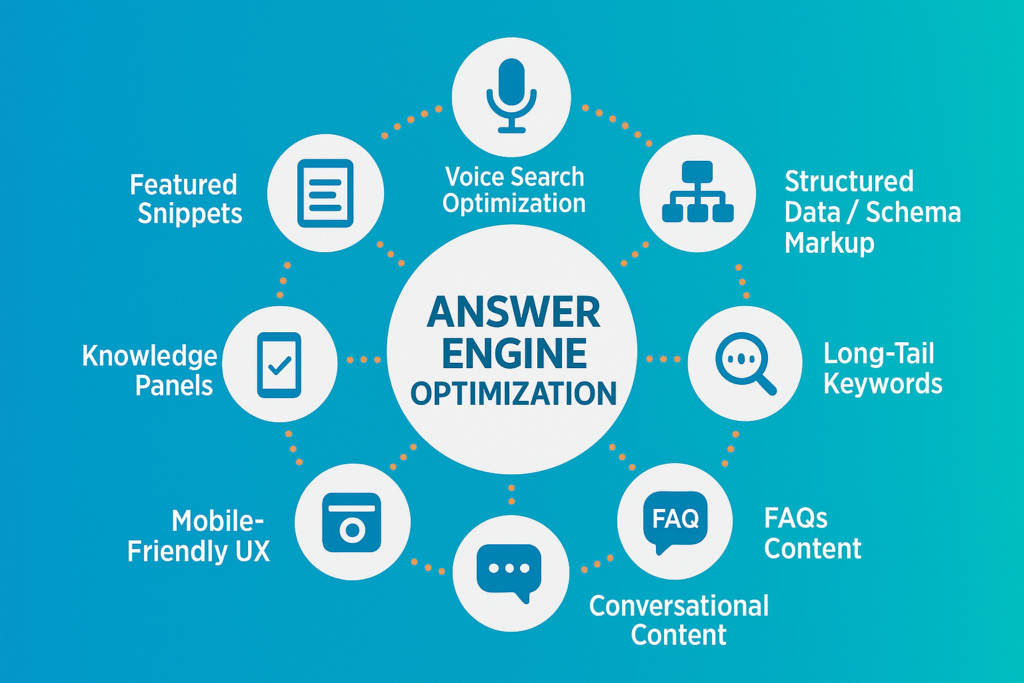
Answer Engine Optimisation is about formatting your content so AI systems can directly extract answers from it.
This requires more than adding FAQs at the bottom of a page. It involves writing clearly structured sections where each heading is followed by a concise explanation.
For instance, instead of writing a very long paragraph and explaining the concept of thr shared information indirectly, you should define it in the first two sentences and then expand it eventually .
AI tools scan for definitional clarity. They prefer content that:
States what something is immediately
Explains how it works
Provides context or examples
Avoids unnecessary filler
When implemented correctly, AEO strategy increases your chances of appearing in AI summaries, featured snippets, and voice assistant responses.
How AI Optimisation (AIO) Builds Long-Term Authority
AI Optimisation is not about quick ranking wins. It is about building consistent authority signals across your domain and external ecosystem.
From experience, AI systems favour brands that:
Publish multiple in-depth resources on related topics
Maintain consistent terminology
Build structured internal linking
Receive relevant mentions across authoritative platforms
If you write one blog about LLM optimisation strategy and nothing else connected to it, AI will not treat you as an authority. But if you create a structured cluster around:
AI content indexing
voice search SEO
entity-based SEO
structured data SEO
AI-driven search optimisation
You create contextual reinforcement.
This layered approach signals expertise.
Structuring Content So AI Can Interpret It Correctly
One mistake I frequently see is long-form content without structural discipline. Walls of text may look detailed but are difficult for machines to interpret.
Content designed for the AI search optimisation should follow a very logical flow as follows :
Firstly, defining the concept clearly.
Second, explain why it matters.
Third, describe implementation.
Fourth, provide examples or scenarios.
Finally, address common questions.
This format mirrors how AI systems parse and summarise information.
When working with companies targeting AI search optimisation services in Hamilton, restructuring content alone significantly improved their visibility in AI summaries — even before backlink growth.
Structure matters more than people think.
The Role of Semantic SEO and Entity Relationships
Repeating a keyword ten times no longer strengthens content. In fact, it reduces credibility.
AI systems understand the topic relationships through a semantic signals. That means instead of repeating one phrase, your content should naturally include related concepts.
For example, a strong page on SEO for LLMs may include terms like:
AI content strategy
semantic SEO
schema markup for AI
voice search optimisation
machine-readable content
These terms reinforce the context without forcing any sort of repetition.
AI evaluates relationships between concepts, not just frequency.
Voice Search and Conversational Queries
Voice queries are longer and more conversational than typed searches. Optimising for voice search SEO means anticipating how people speak.
Someone may ask:
“Who offers reliable LLM optimisation for my business?”
“What is the best way to optimise my website for the AI search?”
Your content should mirror natural phrasing and provide direct answers.
Avoid robotic transitions. Write as if you are explaining something clearly to a client sitting across the table.
When done correctly, conversational formatting increases visibility in both AI assistants and traditional search.
Technical Foundations That Support AI Visibility
Even the best content usually fails without a proper technical infrastructure. For effective AI-driven search optimisation, your website must have following things :
Loading quickly across all the devices.
Maintain a clean URL structure.
Avoid duplicate content issues.
Use canonical tags correctly.
Implement structured schema markup.
Structured data such as FAQ schema and the Article schema helps machines to interpret your content confidently , hence technical clarity builds machine trust.
Building Authority Through Content Depth
Surface-level articles rarely get referenced. AI systems prefer content that demonstrates layered understanding.
Depth does not mean writing filler. It means covering :
One frequent mistake is to treat AI search like a new keyword opportunity rather than a structural shift. Another issue is the publishing of thin blogs and then targeting high-volume terms without any topical depth in the content.
Some companies add FAQs randomly without aligning them to the actual user intent. And many ignore schema completely. Ractifying these issues often produces a very measurable improvements within months but not overnight, but steadily.
Measuring Success in AI Search
Traditional metrics still matter: rankings, traffic, and conversions.
But for AI SEO strategy, additional signals are important:
AI-generated brand mentions
Inclusion in featured snippets
Increased branded search queries
Knowledge panel improvements
AI visibility for a website is subtle at the begnning but compounds along with time.
Closing Perspective
The shift toward AI search is not about abandoning traditional SEO. It is about refining it.
The brands that win in this space are not chasing keywords blindly. They are building structured authority, publishing clear explanations, and reinforcing expertise across interconnected topics.
SEO for LLMs rewards clarity, depth, and discipline.
And unlike short-term ranking tactics, this approach compounds over time.
Frequently Asked Questions
What is SEO for LLMs?
SEO for LLMs is the process of structuring and optimising content so large language models can interpret, summarise, and recommend your information in AI-generated responses.
How does AI search optimisation work?
AI search optimisation focuses on semantic clarity, structured answers, authority signals, and machine-readable formatting rather than just keyword rankings.
What is the key difference between AEO and traditional SEO?
Answer Engine Optimisation prioritises providing direct, extractable answers for AI systems, while traditional SEO focuses more on ranking webpages in search results.
Does schema markup improve AI visibility?
Yes. Implementing schema markup for AI improves content interpretation and it also increases the chnaces of being referenced in an AI summaries.
How important is voice search SEO?
Voice search SEO is now increasingly important because the conversational queries are now growing across smart assistants and AI platforms.
Can local businesses rank in AI-generated answers?
Yes. With structured content and a strong local AI SEO strategy, regional businesses can appear in AI-driven responses.
If you published more frequently than competitors, covered more keywords, and filled more surface-level gaps across your site, you could often outrank brands that were slower, more careful, or more deliberate in how they explained things. Volume acted as a proxy for relevance, and relevance, combined with links, was often enough.
That logic is breaking down.
AI-driven ranking and retrieval models do not reward content the way traditional search engines did, because they are not trying to assemble a list of pages; they are trying to assemble understanding. And when understanding becomes the goal, the balance between depth and volume shifts dramatically.
This blog breaks down how modern AI ranking models evaluate content depth versus content volume, why publishing more no longer guarantees more visibility, and what kind of content actually compounds trust over time.
Why Volume Used to Work And Why It Doesn’t Anymore
In traditional SEO systems, content volume worked because it increased surface area.
More pages meant:
more keyword coverage
more chances to match a query
more internal links
more opportunities for backlinks
Search engines largely evaluated pages independently, which meant a thin article could still perform well if it aligned closely with a specific query and was surrounded by enough supporting signals.
AI models don’t operate that way.
They don’t just retrieve pages; they synthesize answers. And to do that, they need content that contributes meaningfully to a topic, not just content that occupies space around it.
Volume without depth creates noise. Noise does not help AI models reason.
How AI Ranking Models Actually “Read” Content
AI ranking models do not read content line by line the way humans do, nor do they scan for keywords in the way early search engines did. Instead, they build internal representations of topics by observing how ideas are introduced, developed, connected, and resolved across large datasets.
When AI evaluates content, it is looking for signals such as:
whether explanations progress logically
whether claims are supported by reasoning
whether terminology is used consistently
whether related ideas reinforce or contradict each other
This means AI doesn’t just ask, “Is this relevant?” It asks, “Does this add understanding?”
Content that adds understanding strengthens the model’s confidence. Content that repeats existing ideas without developing them weakens it.
What “Content Depth” Means to AI (And What It Doesn’t)
Content depth is often misunderstood as length.
In reality, AI does not reward long content for being long, and it does not punish short content for being concise. What it evaluates is cognitive depth, the extent to which an idea is actually explored.
Depth shows up when content:
explains causes, not just outcomes
addresses edge cases or limitations
anticipates reasonable follow-up questions
connects ideas rather than listing them
A short piece can be deep if it resolves confusion efficiently. A long piece can be shallow if it circles the same point without advancing it.
AI models are trained to recognize that difference.
Why High-Volume Content Starts to Plateau
Many brands reach a point where publishing more content produces diminishing returns, even though they are technically covering more keywords than ever before.
From an AI perspective, this happens when:
new content does not introduce new understanding
articles cannibalize each other conceptually
explanations become repetitive across pages
At that point, volume stops signaling relevance and starts signaling redundancy.
AI models become less likely to surface content from a source that consistently says the same thing in slightly different ways, because repetition without development does not help answer new questions.
The Hidden Cost of Thin Content at Scale
Thin content is not just ineffective, it can actively dilute authority.
When AI models observe a site producing large amounts of surface-level material, they infer that:
the brand prioritizes coverage over clarity
expertise may be shallow or fragmented
content decisions are driven by keywords rather than understanding
This doesn’t mean every piece must be exhaustive. It means that thinness as a pattern weakens trust.
AI systems evaluate patterns, not exceptions.
How Depth Compounds While Volume Decays
Content volume is linear. Content depth is cumulative.
A deep explanation strengthens every future explanation that builds on it, because AI systems can reference a stable conceptual base. Over time, this creates compounding visibility, even if publishing frequency is relatively low.
Volume-driven strategies often decay because:
older content becomes outdated or contradictory
newer content doesn’t meaningfully expand the topic
internal consistency erodes
Depth-driven strategies age better because:
foundational ideas remain useful
updates refine rather than replace understanding
AI models gain confidence over time
This is why some brands publish less yet appear more often in AI-generated answers.
Why AI Prefers Fewer Strong Explanations Over Many Weak Ones
AI models are not limited by page count. They are limited by clarity.
When selecting sources to inform an answer, AI systems prefer:
a small number of coherent explanations
sources that consistently handle nuance
brands that maintain stable terminology
Flooding the system with dozens of shallow pages does not increase your chances of being selected. It often does the opposite by introducing uncertainty about what you actually stand for.
Content Volume Still Matters, but Differently
This is not an argument for publishing rarely or abandoning coverage entirely.
Volume still matters when:
each piece adds a distinct layer of understanding
content builds progressively rather than redundantly
new articles answer questions that genuinely follow from earlier ones
The problem is not volume itself. The problem is unearned volume.
AI models reward breadth only when it is supported by depth.
How AI Detects Depth Across Multiple Pages
AI does not evaluate depth only within a single article. It evaluates depth across a body of content.
It observes whether:
related articles reference similar principles
explanations align rather than conflict
complexity increases logically as topics advance
This means depth can be distributed across multiple pieces, as long as they collectively build a coherent understanding.
Random depth does not help. Structured depth does.
The Role of Internal Consistency
One of the strongest depth signals for AI is internal consistency over time.
When a brand:
explains concepts the same way across articles
uses stable definitions
evolves ideas gradually rather than abruptly
AI models develop confidence in that source.
Volume strategies often undermine this by encouraging rapid publishing without sufficient alignment, leading to subtle contradictions that humans may miss but AI does not.
Why AI Ranking Models Penalize Overproduction Quietly
AI rarely “penalizes” content in obvious ways. Instead, it quietly deprioritizes sources that add little marginal value.
This is why many sites don’t see dramatic drops, they just stop seeing growth.
From the outside, it feels like stagnation. From the inside, it’s a loss of relevance.
AI models are constantly choosing which explanations to reuse. When your content stops contributing new understanding, it stops being chosen.
What a Depth-First Content Strategy Looks Like
A depth-first strategy usually involves:
fewer total articles
longer content lifespans
more deliberate topic selection
higher conceptual overlap with intention
Instead of asking, “What else can we publish?” It asks, “What does our audience still not fully understand?”
That question leads to content that AI finds genuinely useful.
Why Depth Feels Slower But Wins Long-Term
Depth takes longer because it requires thinking before writing.
It often feels slower because:
fewer keywords are targeted per month
progress is less visible in traditional dashboards
early traffic gains are modest
But over time, depth-driven content:
attracts higher-intent users
produces more stable visibility
earns trust-based mentions in AI answers
The payoff is delayed, but durable.
The Shift AI Is Forcing on Content Teams
AI ranking models are quietly forcing a strategic shift: from production to interpretation.
The winning teams are no longer the ones who publish the most. They are the ones who explain the clearest.
And clarity, unlike volume, cannot be automated at scale without understanding.
Final Reflection
Content volume helped brands get discovered in a list-based search world.
Content depth helps brands get remembered in an answer-based AI world.
AI ranking models reward explanations that resolve confusion, not pages that occupy space. They reward coherence over coverage, and understanding over output.
Publishing more is easy. Explaining better is hard.
AI knows the difference.
FAQs
1. Does AI always prefer long-form content over short articles?
No, AI prefers content that fully explains an idea, regardless of length. A short article can rank well if it resolves a question clearly, while a long article can fail if it lacks depth or logical progression.
2. Can publishing too much content hurt AI visibility?
Yes, when high-volume publishing leads to repetitive, shallow, or inconsistent explanations, AI models may deprioritize the entire source rather than evaluating each page independently.
3. Is content depth more important than keyword coverage now?
For AI-driven ranking and retrieval, depth is often more important because it builds conceptual trust, while keyword coverage without understanding adds little value to AI models generating answers.
4. How can brands balance depth and volume effectively?
By ensuring that each new piece of content adds a distinct layer of understanding, builds on existing explanations, and aligns with consistent terminology and positioning.
5. How long does it take to see results from a depth-first content strategy?
Depth-first strategies typically show slower early growth but stronger compounding over 6–12 months, especially as AI systems begin to recognize and reuse a brand’s explanations consistently.
After the launch of Google AI Mode, discovery no longer works the same traditional way. Users are not just clicking links. They are getting direct answers, summaries, recommendations, and even shopping suggestions inside Google’s AI interface.
This shift changes how leads are generated. Instead of competing for blue links, brands now compete to be mentioned, referenced, or suggested by Google’s AI Mode search experience. If your business is not understood clearly by Google’s AI systems, you can lose visibility even if your website still ranks well in traditional results. This is why learning how to use Google AI Mode, how Google AI Mode search works, and how to position your brand inside this new system is no longer optional. It directly affects discovery, trust, and lead generation.
Google AI Mode is being tested and rolled out in different regions, including early availability in the US and gradual expansion through Google Labs AI Mode in markets like the UK and India. As more users try Google AI Mode, especially on mobile devices like Google AI Mode on iPhone and Android, the way people interact with search is becoming more conversational and less transactional. People are asking longer questions, expecting structured answers, and trusting Google AI Mode search engine outputs more than individual websites. If you want more leads in this environment, you must understand how to get discovered by Google AI Mode before your competitors do.
What Is Google AI Mode and Why Does It Change Search Behavior
Google AI Mode is not just a design update to Google Search. It is a shift in how Google presents information. Instead of showing a simple list of links, Google AI Mode search attempts to understand user intent and present synthesized answers. This includes explanations, comparisons, shopping suggestions, and contextual recommendations. When users try Google AI Mode, they often stay inside the AI experience longer because the system answers follow-up questions and offers deeper search pathways through what Google calls deep search.
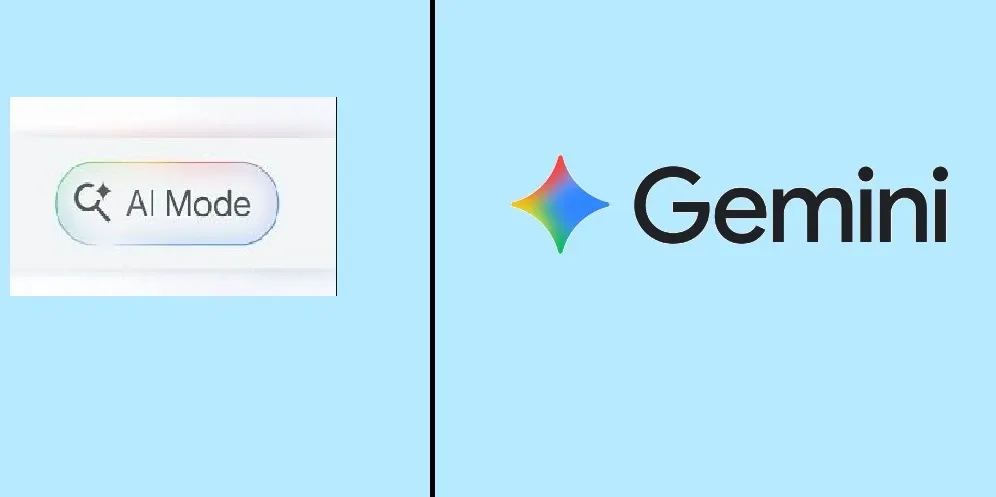
This matters because Google AI Mode search engine behavior reduces direct clicks to websites for simple queries. For example, if someone searches for the best CRM software for small businesses, Google AI Mode may present a summarized comparison with recommended tools before the user even scrolls to traditional links. If your brand is not part of that summary, you may not get noticed at all. This is why understanding Google AI Mode vs Gemini also matters. While Gemini is Google’s general-purpose AI assistant, Google AI Mode is tightly integrated into search. Gemini helps users think. Google AI Mode helps users decide. That distinction affects lead generation.
As Google AI Mode launch continues, more features are being layered in. Users now see the Google AI Mode tab in some search interfaces, which allows them to switch between classic search and AI-powered responses. Some users discover Google AI Mode through Google Doodle AI Mode experiments or Google Labs AI Mode previews. Others encounter it through Google Shopping AI Mode when browsing products. Each of these surfaces creates new discovery pathways for brands, but only if Google’s AI understands who you are and when to recommend you.
How Google AI Mode Search Works Behind the Scenes
To understand how to get discovered by Google AI Mode, you need to understand what the system is trying to do. Google AI Mode search does not rank pages in the same way traditional search does. Instead, it identifies entities, understands relationships between concepts, and then generates answers that feel complete. This means your brand must be recognized as an entity with a clear purpose. If your website content is scattered, inconsistent, or overly promotional, Google AI Mode may struggle to place you confidently inside its answers.
Google AI Mode deep search goes further than surface-level queries. When users ask complex questions, the AI system tries to combine multiple sources of information into a single narrative. If your brand contributes meaningfully to that narrative through clear explanations, practical insights, or authoritative positioning, Google AI Mode search engine is more likely to surface your name. This is different from traditional SEO, where matching keywords could sometimes be enough. In AI Mode, matching meaning matters more than matching terms.
Another important change is how users interact with Google AI Mode on mobile devices. Google AI Mode on iPhone and Android is designed for conversational use. People type or speak longer questions, expect natural language answers, and rely on follow-up prompts. This means your content must align with how humans actually ask questions, not just how SEO tools suggest keywords. If your content sounds robotic, Google AI Mode will find it harder to reuse or reference naturally.
How to Turn On Google AI Mode and Why Users Are Adopting It
Many users still don’t realize they are using Google AI Mode. Some encounter it through a prompt to try Google AI Mode, others through a Google AI Mode shortcut in their search interface. Depending on the region, users in the US, UK, and now gradually Google AI Mode India markets are seeing AI Mode integrated into Google Search. Some users actively ask how to enable Google AI Mode or how to get Google AI Mode because they want faster, summarized answers.
At the same time, there are users searching for how to turn off Google AI Mode or remove Google AI Mode from search bar because they prefer traditional results. This split behavior is important for brands. It means you must optimize for both classic SEO and AI-driven discovery. People will continue to use traditional search, but the number of users relying on Google Search AI Mode is growing steadily, especially for research-heavy queries, comparisons, and buying decisions.
The presence of options like Google AI Mode turn off, remove Google AI Mode, or Google search remove AI Mode does not mean AI Mode will go away. It simply means Google is still experimenting with user control. The long-term direction is clear. Google Search AI Mode is becoming a core part of how people interact with information. If your lead generation strategy depends entirely on old-school rankings, you are exposed to risk as this shift accelerates.
How Google AI Mode Suggests Brands and Why Some Get Picked
When Google AI Mode suggests a brand, it is not doing so randomly. The system looks for sources that help complete the answer. This means your brand must fit naturally into the user’s question. If someone asks about tools, Google AI Mode shopping features may suggest products. If someone asks about services, Google AI Mode search may reference companies that clearly explain their offerings and appear consistently in authoritative discussions.
One reason people search for Google AI Mode Reddit threads is because they want to understand how suggestions happen. Users often notice that some brands appear repeatedly in Google AI Mode answers while others never show up, even if they rank well in traditional search. The difference usually comes down to clarity and consistency. Brands that explain their category well, use stable terminology, and show up in multiple credible contexts are easier for Google AI Mode to trust.
Google AI Mode vs Gemini comparisons also reveal an important insight. Gemini is more conversational and open-ended. Google AI Mode is more decision-oriented. If your brand can help users make decisions, whether through clear product positioning, transparent service descriptions, or educational content that frames options properly, Google AI Mode is more likely to surface you as part of its answer.
How to Use Google AI Mode as a Marketer or Business Owner
Learning how to use Google AI Mode is not just for users. Businesses can actively use Google AI Mode search to understand how their brand is perceived. When you search your own category inside Google AI Mode, pay attention to which brands appear and how they are described. This gives you direct insight into how Google’s AI understands the market.
If your brand does not appear, the question is not “Why am I not ranking?” but “Why does Google AI Mode not see me as relevant to this conversation?” The answer usually lies in how your content is structured, how consistently your brand is positioned, and whether your explanations are genuinely helpful or just sales-focused. Google AI Mode search engine behavior rewards clarity, not hype.
Testing Google AI Mode deep search with layered queries is also useful. Ask follow-up questions. See which brands remain in the conversation and which disappear. Brands that continue to appear across multiple layers of questioning are the ones Google AI Mode trusts to hold up under scrutiny. That trust is what leads to more visibility and more leads over time.
Getting Discovered in Google AI Mode for More Leads
Discovery in Google AI Mode is not about hacking the system. It is about making your brand easier to understand, easier to place, and easier to trust. When users rely on Google AI Mode search to guide decisions, the brands mentioned in those answers gain disproportionate attention. They become defaults. They receive trust before the user even visits a website. This is powerful for lead generation because the recommendation happens upstream of the click.
If you want Google AI Mode to suggest your brand, your content must help Google explain the topic better. This means publishing content that educates, not just content that sells. It means clarifying your niche instead of trying to cover everything. It means aligning your language with how real people ask questions in Google AI Mode search. Over time, this positioning compounds. The more your brand helps Google AI Mode deliver better answers, the more often you get surfaced.
How to Structure Your Website and Content for Google AI Mode Discovery
Getting discovered by Google AI Mode is not about adding one more plugin or chasing some new technical setting inside Google Search Console. The system is not looking for tricks. It is looking for clarity. If your website makes it easy for Google to understand who you are, what you do, and when you should be suggested, your chances of appearing inside Google AI Mode search improve naturally over time.
Most websites fail here because they try to rank for too many unrelated topics. One page talks about services, another talks about trends, another talks about tools, and none of it connects into a single, coherent story. From Google AI Mode’s perspective, that creates confusion. The AI cannot confidently decide when to bring your brand into an answer because your site does not present a stable identity.
Your structure should tell one clear story. When someone asks Google AI Mode search engine about your category, the AI should already know that your brand lives inside that problem space. This means your core pages, your long-form content, and your supporting articles must reinforce the same positioning. Over time, Google AI Mode deep search learns these patterns and becomes more comfortable referencing your brand as part of its answers.
Another important factor is how your internal linking supports understanding. When your pages connect logically, Google AI Mode can follow the narrative of your expertise. This is different from old-school SEO, where internal links were mainly about passing authority. In Google Search AI Mode, internal linking helps the system understand how your ideas fit together. The clearer that structure is, the easier it becomes for Google AI Mode to reuse your explanations when answering user queries.
How Google Search AI Mode Changes Lead Generation for Businesses
The biggest shift that Google AI Mode introduces is where influence happens in the user journey. Traditional search pushed users toward websites first. Influence happened after the click. With Google Search AI Mode, influence happens before the click. The summary, the recommendation, and the framing of options all shape how the user thinks about your brand before they ever land on your site.
This matters because lead quality changes. Users who come from Google AI Mode search are often more informed, more confident in their choice, and further along in the decision-making process. They may not browse multiple competitor sites because Google AI Mode has already narrowed their options. If your brand is part of that narrowed set, your conversion rates often improve, even if raw traffic volume decreases.
This is why businesses that only track rankings and traffic may think they are losing ground, while in reality, they are missing where influence has moved. Google AI Mode search engine does not just send traffic. It shapes perception. Brands that appear in AI summaries benefit from a trust halo effect. Users assume that if Google AI Mode suggested a brand, it must be credible. That assumption changes how quickly people move toward contacting you, requesting a demo, or making a purchase.
Google AI Mode for Local Businesses and Service Providers
Local businesses and service providers are deeply affected by Google AI Mode, especially as Google Search AI Mode expands in regions like the UK and India. When users search for services such as agencies, consultants, clinics, or repair services, Google AI Mode often summarizes options and highlights what differentiates them. This summary becomes the first impression.
If your local business is not clearly described across your website and profiles, Google AI Mode may struggle to include you. For example, if your service offerings are vague, or your location details are inconsistent, the AI cannot confidently recommend you for location-based queries. This is why clarity around who you serve, where you serve, and what problem you solve matters more than ever.
Google AI Mode India rollout is particularly important for service businesses because many users are skipping traditional browsing and relying on summarized answers to find providers. This means that optimizing only for local pack rankings is no longer enough. You must ensure that your brand narrative is strong enough for Google AI Mode search to reuse. When the AI understands your positioning, it becomes more likely to mention you when users ask conversational questions about services in their area.
Google Shopping AI Mode and How It Changes Buying Decisions
Google Shopping AI Mode changes how people evaluate products. Instead of comparing ten product pages manually, users often rely on Google AI Mode to summarize differences, suggest categories, and highlight features that matter. This shifts product discovery from a browsing experience to a guided decision flow.
If your product listings are generic, Google AI Mode may not see a strong reason to feature them. The AI is not just pulling product data; it is constructing explanations. If your product descriptions do not explain who the product is for, what problem it solves, and how it differs meaningfully from alternatives, the AI summary may favor competitors with clearer narratives.
For eCommerce brands, this means your product content must be written in a way that helps Google AI Mode tell a story. Instead of listing features in isolation, your descriptions should explain context. Who benefits from this product? In what situations does it perform best? What kind of buyer is it not for? These explanations help Google AI Mode deep search present your product naturally inside its answers.
Google AI Mode vs Gemini: Why the Difference Matters for Visibility
Many people confuse Google AI Mode vs Gemini, but the difference is important for discovery. Gemini is designed as a general assistant. It helps users think, plan, and explore ideas. Google AI Mode is designed as a search experience. It helps users decide. That difference changes how brands appear.
When someone asks Gemini a broad question, the AI may explore multiple perspectives. When someone uses Google AI Mode search, the system is more likely to summarize and recommend. If your brand is positioned as a practical solution, it is more likely to appear in Google AI Mode than in Gemini, where the conversation may remain more abstract.
Understanding this difference helps you shape content correctly. Content designed to influence decisions should be optimized for Google AI Mode search. Content designed to educate broadly may appear more often in Gemini-style conversations. Both matter, but if your goal is leads, Google AI Mode is the surface where buying decisions are increasingly shaped.
Why Some Brands Appear in Google AI Mode Reddit Discussions
The reason people search for Google AI Mode Reddit threads is because they are trying to reverse-engineer visibility. They notice patterns. Certain brands keep showing up. Others never do. The difference usually comes down to whether the brand has a strong narrative presence across the web.
Reddit discussions, forums, and long-form blogs all contribute to how Google AI Mode search engine perceives brands. If your brand is mentioned in thoughtful discussions where people explain why they use your product or service, that context feeds into how AI systems learn. Over time, this creates a stronger association between your brand and your category. That association increases the likelihood that Google AI Mode will surface your brand when users ask relevant questions.
Managing User Settings: Turn Off Google AI Mode and What It Means for You
Some users actively look for how to turn off Google AI Mode, remove Google AI Mode, or remove Google AI Mode from search bar. Others search for how to turn on Google AI Mode, how to enable Google AI Mode, or how to get Google AI Mode access. This split behavior shows that the user base is still adjusting. But from a business perspective, the trend is clear. More users are experimenting with Google Search AI Mode, even if they later switch back for certain queries.
This means your strategy cannot depend on a single interface. You must be discoverable in both traditional search and AI-powered search. However, the users who remain inside Google AI Mode search often have higher intent. They are exploring, comparing, and deciding. If your brand is absent there, you lose influence at the most critical moment.
How to Future-Proof for Google AI Mode UK, India, and Global Rollout
As Google AI Mode expands into the UK, India, and other markets, cultural and linguistic context becomes more important. Google AI Mode India queries often reflect local usage patterns, service needs, and product preferences. If your content only reflects a US-centric perspective, the AI may struggle to match you with Indian users. This is why localization is no longer just about translating keywords. It is about understanding how people in each market ask questions and what kind of answers they trust.
Similarly, Google AI Mode UK users may phrase queries differently, rely on different terminology, and value different decision criteria. Your content should reflect these nuances if you want Google AI Mode to recommend you in those regions. Over time, the brands that adapt their narratives for different markets will appear more naturally in regional AI Mode search results.
Becoming “AI-Recommendable” Instead of Just SEO-Optimized
The biggest mindset shift is moving from trying to rank to trying to be recommended. Google AI Mode search does not just surface pages. It surfaces ideas and brands that fit into those ideas. If your brand is easy to place inside a helpful explanation, you become recommendable. If not, you remain invisible even if your SEO metrics look good on paper.
Becoming AI-recommendable means your content must help Google AI Mode do its job better. When your explanations reduce confusion, clarify options, and guide decisions responsibly, the AI system is more likely to reuse your perspective. This is how discovery compounds. Each time your brand appears in a Google AI Mode answer, it strengthens the association between your brand and your category. Over time, this association becomes the default.
Final Perspective on Google AI Mode and Lead Growth
Google AI Mode is not just another feature. It is a shift in how discovery happens. Users are no longer navigating lists of results. They are interacting with summaries, recommendations, and guided answers. If you want more leads in this environment, your brand must be visible inside those answers.
This does not happen through tricks. It happens through clarity, consistency, and genuinely helpful content that aligns with how humans ask questions and how Google AI Mode search engine explains answers. The brands that adapt early will not just survive this transition. They will benefit from it, because being suggested by Google AI Mode carries a level of trust that traditional rankings alone no longer guarantee.
What is Google AI Mode and how is it different from normal Google Search?
Google AI Mode is an AI-powered layer inside Google Search AI Mode that summarizes answers instead of just showing links. Unlike the classic results page, the google ai mode search engine explains options, compares sources, and helps users decide faster. Many users now try Google AI Mode when they want direct answers instead of browsing ten websites.
How do I turn on Google AI Mode in search?
To turn on Google AI Mode, you usually need access through Google Labs AI Mode or an official google ai mode launch update in your region. Once enabled, the google ai mode tab appears inside Google Search AI Mode. If you don’t see it yet, you can try Google AI Mode from Labs when it becomes available in your country.
How can I turn off or remove Google AI Mode from search?
If you don’t want to use it, you can turn off Google AI Mode in your search settings. Many users look for how to turn off google ai mode or google remove ai mode because they prefer classic results. You can also remove google ai mode from search bar or turn off google ai mode search through your Google account preferences when the option is available.
Is Google AI Mode available on iPhone?
Yes, google ai mode iphone access is rolling out gradually, and google ai mode India availability depends on your account and region. Google often launches features in phases, so some users see google ai mode launch earlier than others. You may need to enable it from google labs ai mode to access it first.
How do I use Google AI Mode for deep research?
Google AI Mode deep search is designed for longer, complex questions where users want summarized insights instead of basic links. To use google ai mode deep search effectively, frame your queries in full sentences and ask follow-up questions inside Google Search AI Mode. This helps the system refine answers over time.
What is the difference between Google AI Mode vs Gemini?
Google AI Mode vs Gemini comes down to intent. Gemini acts more like a general AI assistant, while google ai mode search is built directly into the google ai mode search engine to support discovery and decision-making. If your goal is finding services, products, or local options, Google Search AI Mode is more practical.
Can I access Google AI Mode in the UK and other regions?
Google AI Mode UK access is part of Google’s phased rollout strategy. Some regions get google ai mode search features earlier through invite-based testing. If you don’t see the google ai mode tab yet, keep an eye on google ai mode launch announcements or enable google labs ai mode to get early access.
How do I get the Google AI Mode URL, shortcut, or direct access?
Users often look for a google ai mode url or google ai mode shortcut, but access usually appears directly inside Google Search AI Mode once enabled. You can bookmark the google ai mode tab when it appears. Some people also search for Google Doodle AI mode, but official access is managed through Google Labs and search settings.
How do I remove Google AI Mode from the search bar permanently?
To remove google ai mode from search bar, you need to adjust your Google search preferences. Many users search for google search remove ai mode or google search turn off ai mode when they want a traditional search experience. Once disabled, your Google Search AI Mode reverts to classic results for most queries.
How can businesses get discovered inside Google AI Mode search results?
To get discovered in google ai mode search, your brand needs clear topical authority, consistent content, and helpful explanations that Google Search AI Mode can reuse. Businesses that align their content with how users phrase questions in google ai mode search engine are more likely to be suggested. This is especially important as google ai mode gemini integration evolves and discovery becomes more AI-driven.
When we are evaluating LLMs vs Traditional AI Models, most of the business leaders assume they are just two versions of the same technology , but in reality they are not. The architectural differences, training methods, scalability limits and cost implications are fundamentally different.
I’ve seen companies invest in the wrong AI stack simply because “AI” sounded like one bucket. It isn’t. If you’re running operations, marketing, SaaS, analytics, or automation projects, understanding the difference can save months of misaligned implementation.
This guide breaks down the technical distinctions, practical implications, and business use cases — without hype.
What Are Traditional AI Models?
Before Large Language Models (LLMs) became mainstream, most AI systems were rule-driven or trained on narrow datasets.
Traditional AI models typically include:
Machine Learning models
Decision Trees
Support Vector Machines
Random Forest algorithms
Linear Regression models
Rule-based automation systems
These models are designed for specific tasks. Fraud detection. Demand forecasting. Email classification. Inventory optimization.
They perform extremely well — but within clearly defined boundaries.
For example:
A retail forecasting model predicts next month’s demand.
A credit scoring model evaluates loan eligibility.
A recommendation engine suggests products.
Each system is trained for one objective.
That focus is both their strength and their limitation.
What Are LLMs?
Large Language Models (LLMs) are the deep neural networks trained on massive text datasets. Unlike traditional systems, they are pre-trained on broad knowledge and then adapted for multiple tasks.
These models are built using transformer architecture, enabling them to:
Generate human-like text
Understand the context across long detailed documents
Performing reasoning tasks
Write code
Summarize reports
Answer open-ended queries
Unlike traditional AI models, LLMs are general-purpose systems.
Core Differences: LLMs vs Traditional AI Models
Let’s break this down practically.
1. Architecture
Traditional AI:
Built using statistical or shallow machine learning models
Designed for structured datasets
Limited contextual understanding
LLMs:
Based on deep neural networks
Trained on billions of parameters
Understand semantic relationships and context
A traditional fraud detection system analyzes predefined risk variables. An LLM can analyze the complaint email, the transaction history summary, and customer tone — simultaneously.
This flexibility reduces development time significantly.
3. Use Case Breadth
Traditional AI excels on the following points :
Demand forecasting
Supply chain optimization
Risk modeling
Predictive analytics
Classification problems
LLMs excel at:
Conversational AI
Knowledge retrieval
Content automation
Code assistance
Long-form document analysis
The real shift is in cognitive flexibility.
4. Data Requirements
Traditional AI requires:
Clean tabular data
Feature engineering
Domain specific pre-processing
LLMs:
Handle unstructured data
Work with documents, PDFs, chats, transcripts
Require prompt engineering instead of heavy feature engineering
Businesses dealing with large knowledge bases often prefer LLM-based systems.
For example, enterprises building AI knowledge assistants in Toronto have increasingly lean itself toward the LLM-powered retrieval systems instead of traditional keyword search models.
5. Explainability
Traditional models are easier to interpret:
Feature importance analysis
Clear mathematical relationships
More transparent decision paths
LLMs explainability power :
Operate as black-box systems
Harder to fully explain the outputs
Basically rely on the probabilistic token predictions.
If regulatory compliance is critical (like finance or healthcare), this matters.
6. Cost Structure
Traditional AI:
Lower infrastructure cost
More predictable computation requirements
One-time development focus
LLMs:
Higher token-based inference cost
API usage fees
Infrastructure for the vector databases and its embeddings
Continuous optimizations are required.
In mid-sized enterprise deployments in Hamilton, teams often underestimate long-term LLM API consumption costs.
Budget modeling is essential.
7. Scalability and Integration
Traditional AI:
Harder to repurpose
Separate model per use case
LLMs:
Single model can power multiple workflows
its has a easier API based integration system
Faster deployment cycles
This makes LLMs attractive for SaaS companies building multi-functional AI features.
When Should You Choose Traditional AI Models?
Choose traditional AI if:
Your dataset is structured and historical
You need explainability
The task is repetitive and narrow
You want lower ongoing cost
Accuracy on a defined metric is critical
Example such as :
A manufacturing company optimizing predictive maintenance across facilities in Ontario may rely on traditional time-series forecasting models rather than LLMs.
Because structured sensor data doesn’t require generative reasoning.
When Should You Choose LLMs?
Choose LLMs if:
You deal with documents, chats, or emails
You need conversational interfaces
You want knowledge automation
You are in the need of cross-domain flexibility
You want a very rapid deployment
Customer support automation, AI copilots, and enterprise search systems benefit heavily from LLM infrastructure.
Hybrid Approach: The Real-World Strategy
In practice, most serious deployments combine both.
Example architecture:
Traditional AI model predicts churn risk.
LLM generates personalized retention email.
Vector database can stores knowledge embeddings in it.
Rule-based system act as an enforcer in compliance guardrails.
That hybrid stack delivers better ROI than choosing one side blindly.
Performance Considerations
Accuracy metrics differ:
Traditional AI:
Precision
Recall
F1 Score
RMSE
ROC-AUC
LLMs:
Hallucination rate
Context retention
Token latency
Response consistency
Retrieval accuracy (RAG systems)
Performance benchmarking should align with the business goals.
Security and Data Privacy
Traditional AI:
usually hosted internally
Have a full data control.
LLMs:
Often API-based
Requires vendor evaluation
Data retention policies matter
Enterprises implementing AI must review:
Data encryption
Model hosting environment
Fine-tuning control
Compliance alignment
Long-Term Business Impact
Traditional AI is mainly used to improve the processes and to make operations more efficient. LLMs, on the other hand, support work that involves thinking, writing, and decision-making.
Because of this difference the companies often needs to adjust how teams are structured and how responsibilities are divided.
Operations teams have usually been benefited more from predictive AI systems that help with forecasting and performance tracking.
Marketing, HR, support, and product teams benefit from LLM capabilities.
This shift is why enterprises are restructuring AI budgets toward generative systems while still maintaining classical ML for analytics.
SEO-Relevant Key Terms Covered
Throughout this article, we’ve addressed:
LLMs vs Traditional AI Models
Large Language Models
Machine Learning models
Transformer architecture
Generative AI
Predictive analytics
AI cost comparison
Enterprise AI implementation
AI model scalability
AI infrastructure decisions
Final Thoughts
The debate around LLMs vs Traditional AI Models should not be framed as replacement.
Traditional AI solves the structured prediction problems with a outstanding precision. LLMs handle language, context, and reasoning at scale.
Businesses that understand where each belongs build smarter systems — and avoid expensive missteps.
If your main pillar article covers broad Large Language Models, this supporting piece clarifies decision-making criteria and captures comparison-based search intent — which is strong for SEO in 2026.
What is the main difference between LLMs and traditional AI models?
The main difference is that LLMs vs Traditional AI Models differ in scope and flexibility. Traditional models are task-specific and structured-data driven, while LLMs are general-purpose models trained on large unstructured datasets and capable of handling multiple language-based tasks.
Are LLMs more accurate than traditional AI models?
Not necessarily. Traditional AI models can often outperform LLMs in narrow, well-defined predictive tasks. LLMs perform better in contextual understanding and language generation.
Which is more cost-effective: LLMs or traditional AI?
Traditional AI models typically have lower ongoing inference costs. LLMs can become expensive due to token-based pricing and infrastructure requirements.
Can businesses combine LLMs and traditional AI?
Yes it can . A hybrid approach using a predictive AI models alongside Generative AI systems often delivers better results.
Do LLMs replace machine learning models?
No. Machine Learning models remain essential for forecasting, anomaly detection, and numerical prediction tasks. LLMs extend capabilities into language-based applications.
The search landscape has changed overnight, and if you’re still running Google Ads the same way you did two years ago, your metrics are probably showing it.
The culprit? AI Overviews. Google’s AI-generated summaries now appear at the very top of search results, answering user questions before they ever see your ad. This isn’t just another algorithm tweak. It’s a fundamental shift in how people search, and it demands a complete rethinking of paid search strategy.
Let’s break down exactly what’s happening, why it’s hurting traditional campaigns, and the specific changes you need to make right now.
What Are AI Overviews and Why Do They Matter for Advertisers?
The End of the “Ten Blue Links” Era
Remember when search was simple? User types a query → sees ten blue links → maybe clicks an ad. That experience is rapidly disappearing.
AI Overviews (formerly Search Generative Experience/SGE) are AI-generated summaries that appear above organic results and, often, above paid ads. They pull from multiple sources to answer a query comprehensively, right on the results page.
How AI Overviews Are Changing User Behavior
Users get complete answers without clicking anything
Clicks happen later in the journey, when intent is much higher
Research-phase queries are increasingly “zero-click” searches
AI Overviews are most common for informational, how-to, and comparison queries
The Impact on Ad Visibility
Early data tells a stark story. AI Overviews can reduce clicks to traditional results by 20–40% for certain query types. Your ads aren’t gone, but they’re now competing with rich, AI-generated content that’s purpose-built to satisfy user intent before they scroll.
Bottom line: If you’re not adapting, you’re losing ground to advertisers who are.
Why Traditional Search Ad Strategies Are Failing
The Old Model: Interrupt and Redirect
For years, the paid search playbook was simple:
Bid on high-volume keywords
Write compelling ad copy
Measure success by CTR and CPC
Drive as many clicks as possible
It worked because the search was transactional, and the click was the goal.
What’s Broken Now
1. User Behavior Has Shifted
People are no longer clicking to research. They’re reading AI-generated overviews, absorbing information from multiple sources, and only clicking when they’re already deep in their decision process. Fewer clicks, but higher-intent ones.
2. Ad Positioning Has Changed
AI Overviews frequently push ads below the fold, that dreaded real estate where visibility and CTR collapse. Ads above the overview are now competing with content that answers the user’s question completely.
3. Traditional Metrics Are Misleading You
A lower CTR doesn’t always mean your ads are failing. It might mean AI Overviews are doing the research work, and your ads are capturing only the most qualified traffic. That’s actually a different kind of win, but only if you know how to measure it.
5 Critical Changes Advertisers Must Make Now
Change 1: Shift From Traffic Volume to Traffic Quality
Stop Chasing Clicks
This is hard to accept in performance marketing, but hear me out: fewer clicks can be better for your bottom line.
Users who scroll past an AI Overview and still click your ad are demonstrating real, high-stakes intent. They want what the AI couldn’t give them: a purchase, a demo, a specific tool.
What to Do Instead
Switch to Target ROAS or Maximize Conversion Value bidding
Use aggressive negative keywords to filter out informational queries
Reallocate budget toward commercial and transactional intent keywords
Measure success by revenue and conversion quality, not click volume
Change 2: Go All-In on Bottom-Funnel and Branded Keywords
Top-of-Funnel Is Now AI Territory
AI Overviews are designed to answer broad, informational queries. Those high-volume, low-intent keywords you’ve been bidding on? The AI is now handling them for free.
Where Your Budget Should Go
Keyword Type
Priority in AI Overview Era
Branded terms (your company name)
Protect aggressively
Competitor comparison (“X vs Y”)
High priority
Purchase intent (“buy”, “pricing”, “demo”)
High priority
Informational (“what is”, “how to”)
Reduce spend
Broad awareness terms
Minimize or cut
Why Branded Keywords Are Now Non-Negotiable
When someone searches your brand name, they don’t want a general AI Overview; they want you. These are your highest-converting, most efficient clicks. Bid on your own brand terms to stay visible above AI Overviews, even if it feels redundant.
Change 3: Rewrite Your Ad Copy for AI-Aware Audiences
Your Users Have Already Been Educated
Here’s the new reality: by the time someone sees your ad, they’ve likely just read an AI-generated overview of your entire category. They know the basics. They’ve seen the comparison.
Your ad copy cannot afford to be generic anymore.
What Works Now
Lead with differentiation, not explanation. Skip “We’re a CRM platform.” Go with “The only CRM built for field sales teams.”
Create urgency, AI Overviews are evergreen. Your ad can have “Sale ends Sunday” or “Only 3 spots left.”
Use social proof, Star ratings, awards, and customer counts build trust AI can’t replicate
Leverage ad extensions, Sitelinks, callouts, and structured snippets add depth that separates you from the AI’s generic summary
What to Avoid
Long explanations of what your product does
Generic value props that your competitors also claim
Copy that reads like a feature list, users already have that from the AI
Change 4: Redesign Your Landing Pages for High-Intent Visitors
The Sophistication Gap
Users clicking through AI Overviews arrive more informed than ever. If your landing page starts with a basic explainer or a homepage hero, you’re wasting their time and your budget.
Landing Page Rules for the AI Overview Era
Match Intent Precisely
A search for “project management software for remote teams pricing” should land on a pricing page specifically for remote teams, not a general features page.
Skip the 101 Content
They’ve already read the basics. Jump straight to:
Dynamic landing pages that adapt to the search query or ad group are no longer a luxury. In the AI Overview era, personalization is a conversion necessity.
Change 5: Build a Smarter Measurement Framework
CTR and CPC Are Not Enough Anymore
These metrics made sense when clicks were the goal. Now, they’re incomplete at best, and misleading at worst.
New Metrics to Track
Assisted conversion: Was your ad part of the journey, even if it wasn’t the last touch?
Conversion rate by query type: Are bottom-funnel clicks converting at the rates they should?
Revenue per click, are fewer, higher-quality clicks generating more value?
Brand lift: Are users seeing your brand in AI Overviews and converting later through direct or social channels?
Customer lifetime value (LTV): Are the users you’re now capturing better long-term customers?
Shift to Multi-Touch Attribution
AI Overviews are introducing users to your brand who may convert through completely different channels later. Last-click attribution will make your search campaigns look worse than they are. Switch to data-driven attribution or a proper multi-touch model to see the full picture.
The Role of Automation in This New Landscape
Smart Bidding Is Your Friend, If Fed the Right Data
Google’s AI-powered bidding strategies can adapt to the new click and conversion patterns caused by AI Overviews faster than manual management ever could. Smart Bidding and Performance Max campaigns are designed to find converting traffic across Google’s ecosystem, even as search behavior shifts.
The Catch: Garbage In, Garbage Out
Automation is only as smart as your conversion signals. If you’re optimizing for clicks or micro-conversions rather than revenue:
Your campaigns will optimize for the wrong outcomes
You’ll attract low-quality traffic that doesn’t convert to real business value
Your ROAS will look fine while your actual revenue suffers
Set up proper conversion tracking. Assign real values. Give the algorithm what it needs to win.
What You Still Control
Even with automation, strategic direction is yours:
Which audiences to prioritize
Which value propositions to test
Which conversion actions actually indicate business value
When to override the machine based on business context
The Opportunity Hiding in the Disruption
It’s Not All Bad News
Yes, AI Overviews have changed the game. But disruption always creates a window for smart advertisers.
The brands that win in this era won’t be the ones with the biggest budgets, recycling old tactics. They’ll be the ones who understand that search is no longer about intercepting queries; it’s about being the logical next step after AI has educated the user.
The Leveling Effect
Smaller brands with strong value propositions can now compete more effectively. Why? Because when users arrive already educated about your category, the conversation shifts from “what is this?” to “which one is best for me?”, and that’s where genuine differentiation wins over ad spend.
Your Action Plan: What to Do This Week, Month, and Quarter
This Week
Audit your keyword list and tag which queries are generating AI Overviews
Separate informational keywords into their own campaign to monitor and manage separately
Review your bidding strategy. Are you optimizing for clicks or actual revenue?
This Month
Rewrite ad copy for your top 5 campaigns using differentiation-first messaging
A/B test urgency-driven copy vs. value-proposition copy
Set up or audit your conversion tracking and attribution model
This Quarter
Rebuild landing pages for your highest-value keyword groups
Implement dynamic landing pages for priority campaigns
Create a new reporting dashboard that tracks revenue, LTV, and assisted conversions, not just CTR
Your competitors are still running the old playbook. The window to pull ahead is open right now.
No. Google shows them mainly for informational, how-to, and comparison queries. Transactional searches like “buy [product]” or brand-name searches are less likely to trigger them.
Should I stop bidding on informational keywords?
Not entirely, but reduce spending significantly. Redirect that budget to commercial and transactional terms where the user intent to convert is much stronger.
How do I know if AI Overviews are hurting my campaigns?
Watch for: declining CTR without position changes, falling click volume with stable conversions, and a shift toward more specific query terms in your converting traffic.
Can my ads show inside AI Overviews?
No. Paid ads appear in separate slots above or below AI Overviews. However, strong organic content can get cited inside them, boosting brand visibility indirectly.
Is search advertising dying because of AI?
No , it’s evolving. High-intent, bottom-funnel search traffic remains valuable. Advertisers who focus on quality over volume and adapt their strategy will continue to see strong ROI.
If you are evaluating Popular LLMs Compared for real business use, this detailed breakdown will help you understand which Large Language Models actually deliver measurable value — and which ones are simply popular due to hype.
Businesses investing in AI adoption today are no longer impressed by demo outputs. They care about the cost per token, latency, hallucination rates, data privacy, fine-tuning flexibility and integration readiness.
Whether you are building SaaS products, automating support along with improving internal workflows or launching AI-driven platforms then choosing the right LLM model directly impacts ROI.
This blog compares the most widely used Large Language Models in 2026, explains where each one excels, and outlines real-world business implications — especially for companies exploring AI solutions in Toronto.
What Makes an LLM “Popular” in 2026?
LLM “Popular” in 2026
Popularity in 2026 isn’t about social buzz. It comes down to five measurable factors:
Model accuracy & reasoning depth
Context window size
Inference speed
Fine-tuning capabilities
Enterprise data security compliance
The strongest Generative AI models today balance performance with operational efficiency. Enterprises care about output consistency and governance more than creativity.
1. OpenAI GPT-4o and GPT-4 Series
OpenAI GPT-4o
Strengths
It has a very strong reasoning capability
Multimodal support (text, vision, structured input)
it has a mature API ecosystem
Stable enterprise deployment options
Weaknesses
Its premium pricing tiers
Occasional hallucinations under a complex reasoning chains
OpenAI models remain dominant for businesses building AI SaaS, legal drafting tools, and automation systems. Their AI API integration ecosystem is robust, documentation is reliable, and enterprise security standards meet strict compliance needs.
For the companies that are building AI products in regulated industries, GPT-4 variants are still a safe bet.
2. Google DeepMind Gemini 1.5 & Gemini Ultra
Strengths
Extremely large context window
Strong multimodal reasoning
Deep integration with Google Cloud
Weaknesses
Performance varies across tasks
Pricing tiers can be complex
Gemini models shine in large document processing. If your work revolves around reviewing thousands of pages on daily basis or large internal company documents, Gemini can handle it smoothly because it can process a lot of information at once.
Organizations running on Google Cloud infrastructure may prefer this stack for seamless deployment.
3. Anthropic Claude 3 Series
Strengths
Strong long-form reasoning
Reduced hallucination rates
Ethical guardrails
Weaknesses
It has a slower output power compared to other lighter models
Slightly conservative behaviour while generating responses
Claude is often preffered for a legal rreview work along with with compliance documentation and enterprise content generation. Its outputs feel measured rather than flashy.
Businesses prioritizing accuracy over creativity tend to favor Claude.
4. Meta LLaMA 3
Strengths
Open-source flexibility
On-premise deployment options
Custom fine-tuning friendly
Weaknesses
It requires ML level expertise
another weakness is infrastructure management overhead
LLaMA models are preferred for private deployments where data sovereignty is critical. For organizations concerned about data exposure, open-source LLMs allow full control.
However, they demand technical depth.
5. Mistral AI Mixtral & Mistral Large
Strengths
Efficient Mixture-of-Experts architecture
Competitive pricing
Fast inference
Weaknesses
Slightly weaker reasoning in edge cases
Mistral’s models are attractive for startups managing tight budgets while still needing scalable AI automation tools.
Real-World Business Impact
Choosing the right Enterprise AI solutions model influences:
Customer support automation quality
Sales chatbot accuracy
Content production scale
Internal workflow efficiency
Software development assistance
In Hamilton AI consulting services, companies are increasingly requesting hybrid setups — combining closed API models for reasoning and open-source models for internal operations.
Similarly, organizations that are adopting AI development in Ontarioare focusing on governance frameworks alongside performance benchmarks.
Cost Considerations
LLM pricing is no longer simple “per request.” It involves:
Token usage
Context window size
Model tier
Fine-tuning cost
Hosting infrastructure
Smaller businesses often underestimate inference costs. A chatbot that is serving 50,000 monthly users can scale up the costs quickly if prompt engineering isn’t optimized well enough.
Which LLM Should You Choose?
Here’s a practical decision framework:
Choose GPT-4 Series if :
You need strong reasoning, structured output, and reliable APIs.
Choose Gemini if :
You process large knowledge bases or internal documentation.
Choose Claude if :
Your domain demands a higher factual reliability.
Choose LLaMA if :
Data privacy and control outweigh convenience.
Choose Mistral if :
Cost efficiency is critical during early growth.
Future of Large Language Models in 2026
Trends shaping the future of AI models as follows :
Smaller specialized models outperforming general models
Retrieval-augmented generation (RAG) becoming standard
Increased regulatory compliance requirements
AI governance frameworks maturing
We’re moving from experimentation to accountability.
FAQs
Which is the best Large Language Model in 2026 for businesses?
The best Large Language Model depends on the use case. GPT-4 performs well for the reasoning while Gemini handles large document analysis and Claude is preferred for compliance heavy industries.
What is the difference between open-source and closed LLM models?
Open-source models are like LLaMA that allows private deployment along with customization, while closed models are known to provide managed infrastructure and faster integration.
Are Large Language Models safe for enterprise data?
They can be, if deployed with secure APIs, encryption standards, and compliance policies. Many providers are now offering enterprise grade security.
How much does it cost to implement an LLM in a business?
Costs may vary based on the token usage, context size, infrastructure, and fine-tuning requirements. Small implementations may cost a few hundred dollars monthly, while enterprise setups scale significantly.
Which LLM is best for chatbot development?
GPT-4 and Claude are considered perfect for conversational agents, while the Mistral offers a very budget friendly alternative.
Can LLMs be customized for specific industries?
Yes. Through fine-tuning or retrieval-based systems, models can adapt to legal, healthcare, finance, or e-commerce needs.
How do I choose the right LLM for my company?
Start by defining your use case, compliance needs, expected user volume, and budget. Then test two models under real workload conditions before final selection.
Here’s a scenario that’s playing out in marketing departments across every industry right now: Your sales team is closing deals. When they ask, “How did you hear about us?” — an increasing number of prospects are saying “ChatGPT recommended you” or “I asked Gemini for options and your name came up.”
Your marketing director looks at Google Analytics. Nothing. Your attribution dashboard shows Google Ads, organic search, and social — but no line item for AI-sourced leads. Your CRM tags are from 2019. And suddenly you’re faced with a very uncomfortable reality: you have no idea how much revenue is actually coming from AI platforms, which ones are driving it, or how to optimize for more of it.
This isn’t a hypothetical problem. AI-referred visitors convert at 15.9% compared to just 1.76% for Google organic search, according to a 2025 Seer Interactive study. AI-referred traffic grew 527% year-over-year between January and May 2025 — while most analytics platforms still misattribute it as “direct” traffic.
If you’re not tracking this channel properly, you’re flying blind on what may be the highest-quality traffic source your website has ever received.
This guide walks you through exactly how to track leads coming from ChatGPT, Gemini, Perplexity, Claude, and other AI platforms — from the basics of Google Analytics setup to advanced attribution models and the specialized tools built specifically for AI visibility tracking.
Why Tracking AI-Sourced Leads Is Non-Negotiable in 2026
Let’s ground this in numbers before we get into the how-to, because the urgency is real.
89% of B2B buyers now use generative AI during their purchasing journey — yet most marketers have zero visibility into whether AI systems mention their brand at all. Google’s AI Overviews now appear in over 11% of queries with a 22% increase since launch, fundamentally changing brand discovery patterns. And over 70% of searches now end without a click — users get their answer straight from the AI.
Here’s what that means practically: your prospective customers are asking AI systems questions like “What’s the best marketing automation platform for B2B SaaS?” or “Compare the top three project management tools under $50/month.” The AI gives them a definitive answer — synthesized, cited, recommended — without requiring a single click to your website.
If your brand isn’t being mentioned in those answers, you don’t exist in that buyer’s consideration set. And if you don’t have tracking in place for the leads that do come through, you have no way to measure the ROI of your efforts to improve AI visibility or justify further investment in Generative Engine Optimization (GEO).
The Attribution Challenge: Why Standard Analytics Misses AI Traffic
Before we solve the problem, it’s worth understanding why this traffic is invisible in the first place.
The Three Layers of AI Traffic Invisibility
Layer 1: Referral Data Isn’t Always Passed
ChatGPT now appends utm_source=chatgpt.com to citation links since June 2025, making some attribution automatic. Perplexity and Copilot also pass referral data in most cases. But Google AI Overviews and AI Mode — which together now appear in roughly 18% of Google searches, according to Ahrefs — blend into your normal organic traffic with no separate label.
The result: what your analytics shows as AI traffic is likely just the tip of the iceberg.
Layer 2: Mobile App Traffic Goes Dark
When users click citations from ChatGPT’s mobile app or Gemini’s app, that traffic often arrives without clear referral data. Your analytics categorizes it as “Direct” traffic — indistinguishable from someone typing your URL directly into their browser.
According to industry analysis from Seer Interactive, true AI influence on your traffic is likely 2–3x what analytics reports, because mobile app visits, zero-click AI interactions, and AI Overviews don’t pass AI-specific attribution.
Research shows that in ChatGPT, only 2 in 10 mentions include citation links, while Perplexity averages over 5 citations per answer, but mentions brands less frequently — only 1 in 5 answers include brand references.
That means the majority of AI brand exposure never generates a trackable click at all. Someone asks ChatGPT, “What’s the best CRM for freelancers?” — it mentions your brand positively — and three weeks later, that person types your URL directly into their browser and converts. Your analytics attributes that to “Direct” traffic. The AI mentioned that seeded the entire journey? Invisible.
How to Track AI Traffic in Google Analytics 4 (The Free Method)
If you’re working with a limited budget and need baseline visibility into AI-sourced traffic, Google Analytics 4’s custom channel grouping feature gets you 80% of the way there.
Step 1: Create a Custom Channel Group for AI Traffic
Navigate to Admin → Data Display → Channel Groups in GA4. Create a new custom channel group called “AI Platforms” or “AI Search.”
Add a new channel with these conditions using regex matching:
This regex pattern captures traffic from all major AI platforms in a single channel. Place this channel above your “Referral” channel in the priority order — otherwise, AI traffic gets bucketed into generic referrals before your custom rule can catch it.
Step 2: Filter and Segment AI Traffic in Reports
Go to Reports → Lifecycle → Traffic Acquisition. Change the dropdown from “Session primary channel group” to your newly created custom channel group. You’ll now see “AI Platforms” as a distinct traffic source alongside Organic Search, Direct, and Paid.
To see which specific AI platform is driving traffic, change the dimension to “Session source” and filter for your AI platform names. Type “chatgpt” into the search box right above the results to filter all sources of new sessions to your website, only to referrals from ChatGPT.
Step 3: Track Landing Pages by AI Source
Stay in the same Traffic Acquisition report. Click the blue plus symbol next to “Session source” and add “Landing page + query string” as a secondary dimension. This shows you exactly which pages AI platforms are linking to — critical data for understanding what content is performing well in AI citations.
The Limitations of This Method
This approach is free and applies retroactively to all your historical GA4 data — which is huge. But it has real limitations:
Manual maintenance required — every time a new AI platform launches, you need to update your regex pattern
No visibility into brand mentions without clicks — you only see traffic that actually reached your site
No competitive intelligence — you have no idea if competitors are being mentioned more frequently
No sentiment tracking — a mention could be positive, neutral, or negative; GA4 can’t tell the difference
For basic tracking, it works. For strategic AI visibility management, you’ll need more sophisticated tools.
Advanced AI Lead Tracking: Specialized GEO Tools
The AI visibility tracking tool market has exploded. More than 35 AI search monitoring tools were launched in 2024-2025. Here’s how the leading options compare for different use cases.
Otterly.AI: Best for Comprehensive Multi-Platform Monitoring
With Otterly.AI, you can automatically track brand mentions and website citations on Google AI Overviews, ChatGPT, Perplexity, Google AI Mode, Gemini, and Copilot. The platform monitors how often your brand appears, tracks share of voice against competitors, and identifies which content gets cited across AI platforms.
Users report “up to 80% time savings” on manual checks, and the platform offers strong reporting exports for client and stakeholder presentations. The limitation: higher tiers get expensive for high-volume tracking, and name confusion with Otter.ai (the transcription tool) can complicate research.
Best for: Marketing teams wanting comprehensive AI search monitoring with strong visualization and reporting.
Pricing: Plans start at $99/month for basic monitoring; enterprise pricing available for high-volume tracking.
Peec AI: Best for Enterprise-Scale Prompt Tracking
Peec AI is a leading tool focused on measuring how AI assistants such as Gemini, ChatGPT, Perplexity, Google AI Mode, AI Overviews, DeepSeek, Microsoft Copilot, Llama, Grok and Claude mention, rank, and describe brands.
The platform captures daily visibility, position, and sentiment metrics across large prompt sets. It offers granular prompt-level analytics, citation and source intelligence, and multi-country tracking. With unlimited seats and robust integration options, Peec AI is considered one of the best tools for enterprises.
Best for: Enterprise marketing teams managing large-scale AI visibility campaigns across multiple brands or markets.
Pricing: Custom enterprise pricing; typically starts around $500/month for comprehensive access.
Siftly: Best for Direct ROI Measurement
Customers using Siftly’s GEO approach report a 340% average increase in AI mentions within six months, alongside 31% shorter sales cycles and 23% higher lead quality.
Siftly connects AI visibility metrics directly to business outcomes — tracking how mention frequency, positioning, and sentiment correlate with sales cycle length and lead quality improvements. This makes it particularly valuable for teams that need to prove ROI from AI optimization efforts.
Best for: Growth teams and marketing ops focused on connecting AI visibility to revenue outcomes.
Pricing: Plans start at $199/month; higher tiers include advanced attribution modeling.
AIclicks: Best for Competitive Intelligence
AIclicks offers full-stack AI visibility monitoring across ChatGPT, Perplexity, Google Gemini, and more — all in one dashboard. The platform includes prompt library management, geo and model audits, and competitor benchmarking that ranks your brand against rivals and tracks their citations.
Best for: Competitive marketing teams that need to monitor both their own visibility and their competitors’ AI presence simultaneously.
Pricing: Plans start at $149/month; an affordable entry point with a full refund guarantee.
Geoptie: Best Free Starting Point
For brands looking to get started fast, Geoptie’s free GEO Rank Tracker offers an easy entry point. Add your domain, target country, and keyword, and the tool shows your rankings across Gemini, ChatGPT, Claude, and Perplexity — giving you an instant snapshot of your AI search presence.
The free tier is limited in query volume. It doesn’t include advanced features like sentiment analysis or historical tracking, but it’s an excellent way to understand the problem space before investing in a paid solution.
Best for: Small businesses and solo marketers validating whether AI visibility is worth investing in.
Pricing: Free tier available; paid plans start at $25/month.
The Five Metrics That Actually Matter for AI Lead Tracking
Traditional analytics focuses on clicks, sessions, and conversions. AI lead tracking requires a different measurement framework entirely.
1. Citation Frequency
How often does your brand get cited or mentioned when AI platforms answer queries in your category? This is your baseline visibility metric. Operating in ChatGPT search without monitoring is like running paid campaigns with no attribution, or publishing SEO content without analytics.
Track this across multiple prompt types — brand queries (“what is [your company]?”), category queries (“best CRM for small business”), and comparison queries (“Salesforce vs HubSpot vs [your product]”).
2. Brand Visibility Score
Your overall share of voice across all AI platforms for your target query set. If there are 100 relevant prompts and your brand appears in 40 of them, your visibility score is 40%. Competitors with higher scores are winning mindshare in AI-driven discovery.
3. AI Share of Voice vs. Competitors
Of all the times brands in your category get mentioned, what percentage include your brand? This competitive context is critical. A 30% mention rate sounds good until you discover your main competitor has 60%.
4. Sentiment Analysis
Are the mentions positive, neutral, or negative? If AI platforms often mention your brand but rarely cite your site, your content may not have the structured, authoritative format AI engines prefer. Negative sentiment in AI answers can be even more damaging than no mention at all.
5. LLM Conversion Rate
Of the users who arrive at your site from AI platforms, what percentage convert to leads or customers? AI-referred visitors convert at 15.9% — compared to just 1.76% for Google organic search. If your conversion rate is meaningfully lower than this benchmark, it suggests a disconnect between what AI platforms are saying about you and what visitors find on your site.
Building an AI Lead Attribution System That Actually Works
Tracking is the starting point. Attribution is where this gets strategic.
Tag AI Traffic Sources in Your CRM
When a lead converts, you need to know if they came from AI — and which platform. Add a “Lead Source” field in your CRM with specific AI platform options: ChatGPT, Gemini, Perplexity, Claude, AI Overview, etc.
Use hidden form fields to automatically capture UTM parameters when present, and train your sales team to ask discovery questions during qualification calls: “How did you first hear about us?” and “Did you use any AI tools during your research?”
Implement Multi-Touch Attribution
AI influence often happens early in the buyer journey — awareness and consideration stages — while the final conversion comes through a different channel. Your conversion data doesn’t attribute the sale that happened because ChatGPT mentioned you three weeks before the “direct” website visit.
Implement a multi-touch attribution model — first-touch, linear, or time-decay — that gives credit to AI touchpoints even when they’re not the last click before conversion. This is the only way to measure AI’s contribution to the pipeline accurately.
Create AI-Specific Landing Pages
Consider creating dedicated landing pages for AI-sourced traffic with URLs like yoursite.com/ai or yoursite.com/recommended. Promote these URLs in your GEO strategy, and when AI platforms cite them, you’ll have clean, unambiguous attribution in your analytics.
What to Do With This Data Once You Have It
Identify Your Top AI Landing Pages
First, identify your top AI landing pages — the pages ChatGPT and Perplexity already cite. These are your AI-friendly content. Create more like them.
What do these pages have in common? Clear structure? Specific use cases? Data and statistics? Expert quotes? Replicate those patterns across other content.
Compare Engagement by Channel
Second, compare engagement metrics between AI visitors and other channels. If AI visitors spend longer and view more pages, that validates investing in AI visibility.
If AI visitors bounce quickly despite high conversion rates, they may be arriving with a very specific intent, which suggests an opportunity to streamline your conversion paths for this audience.
Monitor Monthly Trends
Third, check monthly. AI traffic is growing rapidly — according to Similarweb data reported by Digiday, ChatGPT referrals grew 52% year-over-year in late 2025, and Gemini referral traffic grew 388% in the same period.
If your AI traffic isn’t growing in parallel with the market, competitors are winning share of voice at your expense.
Frequently Asked Questions
Can I track AI traffic in Google Analytics 4 for free?
Yes. GA4’s custom channel group feature is free and applies retroactively to historical data. You create a regex pattern matching AI referral domains (ChatGPT, Perplexity, Claude, Gemini, Copilot) and add it as a custom channel above the Referral channel. However, this only tracks clicks that reach your site — it doesn’t capture brand mentions without links or competitive intelligence.
How do I know if ChatGPT is recommending my brand?
You need an AI visibility monitoring tool like Otterly.AI, Peec AI, Siftly, or AIclicks that actively queries ChatGPT with your target prompts and tracks whether your brand appears in responses. Standard analytics can’t tell you this because the mention happens inside ChatGPT before any potential click occurs.
What’s the difference between AI traffic tracking and AI visibility monitoring?
AI traffic tracking (via GA4 or specialized tools) measures visitors who clicked from AI platforms to your website. AI visibility monitoring measures how often your brand gets mentioned or cited in AI responses across all queries — including the majority of mentions that never result in a click. Both are important; they measure different parts of the funnel.
How much does AI lead tracking cost?
Free options exist (GA4 custom channels, Geoptie’s free tier) that provide basic traffic visibility. Paid AI monitoring tools range from $25–$99/month for small business plans to $200–$500+/month for enterprise platforms with full competitive intelligence, sentiment analysis, and historical tracking.
Why is AI traffic converting better than Google organic traffic?
AI platforms pre-qualify leads through their conversation. By the time someone clicks through from a ChatGPT citation, they’ve already had their questions answered, compared options, and identified your brand as relevant. They arrive at your site much further along in their decision process than someone clicking a Google search result — hence the dramatically higher conversion rate.
Artificial intelligence has been shifted from acting like an experimental to becoming essential digital infrastructure. To truly understand their impact, businesses must first understand howLLMs work internally.
Large Language Models are not any magic systems that are generating instant answers, they are complex neural architectures trained on enormous datasets to predict, interpret, and generate language with high contextual accuracy.
In 2026, organizations across Toronto and broader Canada are now integrating LLMs into marketing automation , in search optimization even in healthcare documentation and financial analysis. But before implementing them, leaders need clarity on what happens behind the interface.
This pillar guide explains the internal mechanics of Large Language Models, their architecture, training lifecycle, reasoning processes, deployment models, and why understanding their structure is critical for responsible AI adoption.
Understanding the Core of Large Language Models
Core of Large Language Models
At their foundation, Large Language Models are deep learning systems built using neural networks. These networks attempt to simulate how patterns in human language relate to one another.
An LLM does not “know” facts the way humans do. Instead, it calculates probabilities. When you type a sentence, the model predicts the most statistically relevant next word based on patterns learned during training.
That prediction process happens at scale — across billions (sometimes trillions) of parameters.
The Transformer Architecture: The Engine Behind Modern LLMs
Nearly all advanced language models in 2026 rely on transformer architecture. This innovation fundamentally changed AI performance.
Why Transformers Matter
Traditional models processed text sequentially. Transformers analyze the relationships between all the words simultaneously using the attention mechanisms.
This allows:
Deep contextual understanding
Long-form coherence
Semantic precision
Improved reasoning over extended text
Self-Attention Mechanism Explained
Self-attention helps the model determine which words in a sentence are most important relative to others.
For example:
In the sentence:
“The startup in Toronto secured funding because it showed rapid growth.”
The word “it” refers to “startup.” Self-attention identifies that relationship instantly.
Without attention mechanisms, maintaining long-range context would be nearly impossible.
Tokenization: How LLMs Read Language
Before text is processed, it must be broken down into smaller pieces called tokens.
Tokens can be:
Whole words
Sub-words
Characters
For example:
“Artificial Intelligence” might become:
Artificial
Intelligence
Or even smaller segments depending on the tokenizer.
Tokenization allows the model to:
Handle multiple languages
Manage unknown words
Improve computational efficiency
This process is foundational to how LLMs work internally because prediction happens token by token.
Pretraining Phase: Learning From Massive Data
Pretraining is the most computationally intensive stage.
Data Sources Used
LLMs are trained on diverse data such as:
Books
Academic research
Websites
Code repositories
Publicly available articles
The goal during pretraining is simple:
Predict the next token in a sequence.
By repeating this process billions of times, the model learns and understand the grammar, structure, tone, reasoning patterns, and contextual relationships.
Why Scale Matters
The larger the dataset and parameter count, the more nuanced the model becomes. However, scale also increases:
Infrastructure costs
Energy consumption
Hardware requirements
This is why many companies in Ontario and Toronto rely on cloud providers rather than building foundational models from scratch.
Fine-Tuning and Alignment
After pretraining, models are not yet ready for enterprise use.
Fine-tuning adapts them to specific tasks.
Types of Fine-Tuning
Domain-specific training (healthcare, finance, legal)
Instruction tuning
Reinforcement Learning with a Human Feedback (RLHF)
RLHF actually improves the response quality by incorporating human preferences.
This step reduces hallucinations and aligns outputs with business requirements.
Organizations across Canada adopting AI solutions increasingly invest in custom fine-tuning to ensure compliance with Canadian data protection standards.
Model Parameters: What Do Billions of Parameters Mean?
Parameters are the internal weights that influences how input transforms into an output.
Think of parameters as an adjustable dials inside a neural network. During training, these dials are optimized to minimize prediction errors.
More parameters generally mean:
Better contextual understanding
More nuanced generation
Higher computational demand
However, 2026 trends show that efficiency is now more important than size. Smaller, optimized models are becoming competitive alternatives.
Inference: What Happens When You Ask a Question?
Once trained, the model enters inference mode.
When a user inputs text:
The text is tokenized
Tokens are converted into numerical embeddings
The transformer layers process relationships
The model predicts the most likely next token
The process repeats until completion
This happens within a fraction of seconds. Behind the scenes, probability distributions determine each word.
Embeddings: Representing Meaning Numerically
Embeddings convert language into high-dimensional vectors.
Words with a similar meanings appear closer together in vector space.
For example:
“Doctor” and “Physician” will have closely aligned embeddings.
Embeddings power:
Semantic search
Recommendation engines
AI-driven marketing targeting
Conversational search systems
Businesses in Hamilton’s growing tech ecosystem increasingly use embeddings for intelligent data retrieval.
Memory and Context Windows
Modern LLMs can process the extended context windows, which means they can remember earlier parts of a conversation.
Context windows determine how much text the model can consider at once.
Longer context windows improve:
Legal document summarization
Research analysis
Multi-step reasoning
For enterprise users in Toronto and Ontario, this capability is critical for document-heavy workflows.
Multimodal Expansion
Large Language Models (LLMs) are evolving beyond just processing text. Multimodal systems can handle different types of data , such as :
Images
Audio
Video
Text simultaneously
This expansion also allows to :
Medical imaging interpretation
Visual search
AI-powered tutoring platforms
Voice-enabled enterprise systems
Across Canada’s AI innovation hubs, multimodal AI is one of the fastest-growing sectors.
Deployment Models: Cloud vs On-Premise
Understanding how LLMs work internally also requires understanding deployment.
Cloud-Based APIs
Pros:
Lower infrastructure cost
Faster implementation
Scalability
Cons:
Data control limitations
On-Premise LLMs
Pros:
Higher security
Regulatory compliance
Full customization
Cons:
Requires very higher infrastructure investment
Canadian enterprises operating under strict privacy regulations often like to prefer hybrid models.
Businesses that are implementing AI adoption strategies in Canada must ensure compliance with evolving AI governance frameworks.
Why Understanding Internal Mechanics Matters for SEO
Search engines are increasingly influenced by language models.
LLMs impact:
Conversational search
Featured snippet generation
Semantic ranking
Answer engine optimization
Brands in Toronto investing in digital marketing AI services are restructuring content to answer intent-based queries rather than targeting isolated keywords.
Real-World Applications Across Canadian Markets
Healthcare (Ontario)
Hospitals use LLM-powered documentation systems to summarize patient records.
Finance (Toronto)
Banks are deploying language models for the analysis of compliance documents and automate client communication.
Education (Hamilton)
Adaptive tutoring platforms now integrating personalize learning pathways using AI-driven content generation.
Marketing (Across Canada)
Agencies are using LLMs to generate:
Content briefs
Email sequences
SEO outlines
Market research summaries
Few Limitations of LLMs are as follows :
Limitations of LLMs
Despite their capabilities, LLMs are not flawless.
Hallucinations
Bias in training data
High computational requirements
Data privacy risks
Understanding how LLMs work internally helps organizations design mitigation strategies.
Efficiency Trends in 2026
Emerging improvements include:
Parameter-efficient fine-tuning
Retrieval-augmented generation (RAG)
Smaller specialized models
Energy-efficient training
Canada’s AI ecosystem is actively investing in responsible scaling practices.
The Strategic Advantage of Internal Knowledge
Businesses that understand internal architecture can:
Choose the right model size
Reduce deployment risk
Optimize integration costs
Improve compliance readiness
Instead of blindly adopting AI technology, well informed organizations create scalable frameworks.
The Future of Internal LLM Development
Looking ahead:
Models will become more explainable
Factual grounding will improve
Industry-specific micro-models will dominate
Real-time personalization will become standard
Ontario’s innovation clusters are driving enterprise AI transformation through research partnerships and startup incubators.
Conclusion
How LLMs work internally is no longer an option for forward-thinking organizations . From transformer architecture and tokenization to embeddings and fine-tuning, each layer plays a role in shaping output quality, reliability, and scalability.
Those who understand the technicality of Large Language Models will deploy them more strategically, securely and profitably.
As AI becomes foundational digital infrastructure, the competitive edge will belong to companies that combine technological literacy with practical application.
How do LLMs actually work behind the scenes?
Large Language Models work by breaking your text into a smaller units known as tokens and then predicting the most likely next word based on patterns they learned during training. Internally, they use transformer architecture and attention mechanisms to understand context and generate accurate responses.
What happens inside an LLM when I ask it a question?
When you ask a question, the model converts your words into numerical representations, analyzes relationships between them, and predicts a response token by token. This process happens in milliseconds using billions of trained parameters.
Are LLMs thinking like humans when they generate answers?
No, LLMs do not think or understand the way humans do. They can calculate the probabilities based upon the patterns present in data. While their responses may sound intelligent, they are generated through statistical prediction rather than true comprehension.
Why are transformer models important for LLMs?
Transformers allow LLMs to analyze entire sentences at once instead of processing word by word. This actually help them to understand long-form context, relationships between words and help in maintaining coherence in detailed responses.
How do businesses in Canada use LLMs internally?
Companies across Toronto, Hamilton, and Ontario use LLMs to automate customer service, summarize documents, generate marketing content, and enhance search visibility . Many organizations are now customizing the models for industry-specific tasks while ensuring data security compliance.
What is fine-tuning in Large Language Models?
Fine-tuning is the process of training a prebuilt language model on specialized data so it performs better in specific industries like healthcare, finance, or legal services . It improves the accuracy, safety, and also aligns with business goals.
Are LLMs secure enough for handling sensitive business data?
Security depends on the deployment. Cloud-based APIs are offering scalability, while on-premise or hybrid models are providing stronger data control . Businesses that are handling sensitive data often implement strict governance and compliance frameworks.
How will LLMs evolve in the next few years?
Future of LLMs is expected to become more even more efficient, accurate and better at reasoning. We’ll also see growth in multimodal capabilities, real-time personalization, and smaller industry-specific models across Canada’s expanding AI ecosystem.
For a long time, lead generation followed a very familiar rhythm that most businesses learned to rely on, budget for, and mentally accept as the cost of growth.
You ran ads to stay visible. You optimized landing pages to convert clicks. You watched spend, leads, and ROAS like a hawk.
And the moment ad spend paused- or competition pushed costs higher- lead flow slowed down or disappeared entirely.
What’s changing now isn’t just marketing strategy or channel preference. It’s how people arrive at decisions in the first place.
Instead of searching broadly, comparing multiple sites, and clicking through results one by one, buyers are increasingly asking AI tools a single, direct, high-intent question:
“Who should I go with?”
Tools like ChatGPT, Gemini, and Perplexity don’t respond with ads, banners, or lists of sponsored links. They respond with explanations- and often, within those explanations, they mention specific businesses as examples that make sense in context.
And some companies are quietly benefiting from this shift, generating consistent inbound leads without running ads at all.
This isn’t organic traffic in the traditional sense. It’s AI search visibility, and it’s quickly becoming one of the most stable, low-pressure sources of high-intent leads available today.
The Shift: From Clicks to Conclusions
Traditional search was built to encourage exploration.
Users searched, skimmed headlines, opened multiple tabs, compared opinions, and slowly moved toward a decision. Visibility was about getting the click and keeping attention long enough to convert.
AI search works differently.
It’s designed to move users toward a conclusion.
When someone asks:
“Which agency focuses on ROI-driven performance marketing?”
“What type of food trailer is more profitable long-term?”
They’re not looking to browse. They’re trying to make a decision with confidence.
AI tools summarize tradeoffs, explain reasoning, and often frame certain businesses as logical fits- sometimes without the user ever visiting a website first.
If your brand appears inside that explanation, the decision process is already halfway complete before contact is made.
Why AI Search Produces Higher-Intent Leads
Leads influenced by AI search behave very differently from ad-driven leads.
They usually:
understand the problem more clearly
know why certain options are better than others
recognize your brand’s relevance before reaching out
ask fewer surface-level questions
move through sales conversations faster
That’s because AI search doesn’t spark curiosity- it resolves uncertainty.
By the time someone contacts your business, they’re often not asking if you can help. They’re asking how to move forward.
This is why many businesses report:
fewer inbound leads overall
but significantly higher close rates
shorter sales cycles
reduced price sensitivity
It’s not louder demand. It’s more decisive demand.
How AI Tools Decide Which Businesses to Mention
AI tools don’t rank businesses the way Google traditionally does.
They recall them.
When generating an answer, models implicitly evaluate:
which brands are consistently associated with this topic
which names help explain the solution clearly
which businesses feel safe to mention without caveats
This isn’t influenced by ad budgets or bidding strategies.
AI visibility shows up in how conversations start, not where traffic comes from.
What This Means for the Future of Lead Generation
Paid ads still have a place.
But they’re no longer the only- or even the strongest- path to trust-driven demand.
AI search visibility creates:
passive lead flow
lower acquisition costs
stronger positioning
long-term leverage
The businesses winning here aren’t louder.
They’re clearer.
Final Thought
The companies getting leads without ads didn’t uncover a secret tactic.
They did something simpler- and harder.
They explained their world so clearly that AI tools felt comfortable explaining it with them included.
And once that happens, lead generation stops feeling like a constant chase.
It starts feeling earned.
FAQs
1. How are businesses actually getting leads from AI search without paying for ads?
They earn visibility by consistently explaining their niche clearly and accurately across high-quality content, which allows AI tools like ChatGPT, Gemini, and Perplexity to confidently reference them when answering buyer-intent questions. Instead of paying for placement, these businesses become part of the explanation itself.
2. Is AI search visibility a replacement for SEO or paid advertising?
No- it’s a shift in how trust and demand are formed. Traditional SEO and paid ads still play a role, especially for discovery and scale, but AI search visibility works alongside them by influencing decisions earlier, often before users click on anything at all.
3. What types of businesses benefit most from AI-driven lead generation?
Businesses that sell trust-based services or higher-consideration products see the strongest results. This includes agencies, consultants, B2B service providers, manufacturers, and niche product companies where buyers want reassurance and clarity before reaching out.
4. How long does it take to start seeing leads influenced by AI search visibility?
There’s no fixed timeline. Visibility grows gradually as AI systems become familiar with your explanations, positioning, and consistency over time. Many businesses notice the impact indirectly at first- through warmer inquiries and prospects referencing AI tools in conversations.
5. How can a business tell if AI search is influencing their leads?
The clearest signal shows up in conversation quality. Prospects arrive more informed, ask fewer introductory questions, and often mention that an AI tool helped them understand the problem or identify your business as a fit- even if analytics don’t show a clear referral source.