Search behavior has changed more in the last three years than it did in the previous 10 years . People no longer rely only on the blue links. They ask questions inside AI chatbots, browse AI-generated summaries, and expect instant answers without clicking ten pages, which is why AEO vs GEO vs LLMO SEO has become central to how modern content is discovered and ranked.
This shift has created three new optimization approaches that marketers are actively discussing:
Understanding how these models work — and how they connect — is now essential for brands that want visibility in Canada, especially in competitive regions like Toronto, Hamilton, and across Ontario.
This guide explains what each framework means, how they differ, and how to build one practical system that supports all three without wasting time or budget.
What Is Answer Engine Optimization (AEO)?
Answer Engine Optimization
Answer Engine Optimization (AEO) primarily aims to help search engines retrieve direct and concise answers from the content you provide .
Instead of only ranking pages, Google and other platforms now aim to present immediate responses through featured snippets, People Also Ask boxes, and voice assistants.
AEO is about:
Clear definitions
Short explanatory paragraphs
Structured questions and answers
Easy-to-scan formatting
When done correctly, AEO allows your content to become the “answer source” for common questions.
Businesses that benefit heavily from AEO include service providers, local businesses, and companies targeting high-intent informational queries.
What Is Generative Engine Optimization (GEO)?
Generative Engine Optimization
Generative Engine Optimization (GEO) examines how AI chooses content for summarization along with reference and citation in AI summaries and generative search results across the Search engine .
Instead of pulling one short answer, these systems analyze multiple sources and combine insights.
GEO prioritizes:
Depth of content
Demonstrated expertise
Topic coverage
Freshness and accuracy
Strong GEO content often appears as part of AI-generated summaries rather than just traditional rankings.
What Is Large Language Model Optimization (LLMO)?
Large Language Model Optimization
Large Language Model Optimization is about influencing how conversational AI tools understand and reference your brand, services, and expertise.
Rather than optimizing pages alone, LLMO focuses on:
Entity clarity
Consistent terminology
Mentioning the brands various authoritative platforms
Original insights and frameworks
When LLMO is done well, AI systems confidently describe your business and include you in long-form responses.
Why These Three Are Still SEO (Not Replacements)
AEO, GEO, and LLMO do not replace SEO.
They extend it.
Technical SEO, on-page optimization, internal linking, and site performance still matter. These latest approaches simply ensure that your content perform well across modern discovery channels , including AI-driven surfaces.
Think of them as layers:
SEO → Foundation
AEO → Structure
GEO → Authority
LLMO → Semantic Understanding
Together, they create durable visibility.
AEO vs GEO vs LLMO: Quick Comparison Table
Factor
AEO
GEO
LLMO
Primary Goal
Become direct answer
Become trusted source
Shape AI understanding
Best For
Question-based queries
Broad informational searches
Conversational AI
Content Length
Short to medium
Medium to long
Long-form
Main Focus
Structure
Depth
Entity clarity
Where Content Appears
Snippets, PAA
AI summaries
Chatbot responses
Optimization Style
Formatting
Research & coverage
Consistency
The 7 Key Differences Between AEO, GEO, and LLMO
1. Search Intent They Target
AEO focuses on direct questions.
GEO focuses mostly on exploration and learning .
LLMO focuses on open-ended conversation.
Each aligns with different stages of the user journey.
2. How Content Is Selected
AEO systems extract.
GEO systems evaluate and summarize.
LLMO systems interpret and generate.
Understanding this difference helps shape writing style.
3. Ideal Content Format
AEO usually like short paragraphs even bullet points and short definitions having to the point answers.
GEO is more effective with comprehensive guides and topical clusters.
LLMO favors well-organized long-form content with consistent language.
4. Trust Signals Required
AEO needs clarity.
GEO needs credibility.
LLMO needs authority and recognition.
5. Measurement Metrics
AEO: Ownership of snippets and visibility in People Also Ask (PAA) sections .
GEO: Overview of AI Appearances
LLMO: brand mentions inside the AI tools
6. Update Frequency
AEO content requires periodic formatting updates.
GEO content needs freshness and expanded depth.
LLMO content benefits from ongoing brand presence across the web.
7. Business Impact
AEO drives fast wins.
GEO builds long term authority of the content .
LLMO strengthens brand equity .
How They Work Together in a Single Strategy
Rather than choosing one framework, smart brands build content that naturally supports all three.
Here’s how:
Start with a clear definition (AEO)
Expand into a detailed explanation (GEO)
Use consistent terminology and branding (LLMO)
This layered approach prevents duplicate/plagarised content and increases the reach .
Building an Optimization System That Supports All Three
1. Strong Technical Foundation
Fast loading pages, clean URLs, mobile responsiveness, and logical site architecture remain essential.
Without technical stability, none of these frameworks perform well.
2. Structure Content for Extraction
Uses :
Question in the subheadings
Short introductory definitions
Lists and tables
This increases answer overall eligibility .
3. Expand Depth for Authority
After quick answers, provide :
Detailed Examples
Case explanations
Practical steps
Supporting context
This builds trust with generative systems.
4. Strengthen Entity Signals
Use consistent business name, service descriptions, and niche terminology across:
Overall Website
Blogs in the website
Detailed Author Bios with relevant Social media links
Social profiles of the author
This improves how models recognize your brand.
5. Use Internal Topic Clusters
Connect related articles using internal links to demonstrate topical mapping and authority of the content. This enhances the signals from both GEO and LLMO eventually.
Local Optimization Matters More Than Ever
AI systems increasingly personalize responses by location.
If you operate in Toronto, Hamilton, or across Ontario, include city-specific service pages, case studies, and testimonials by the clients .
This enhance the visibility for the searches tied to SEO services in Canada, local consulting, and regional business solutions.
Common Mistakes to Avoid
Writing only for keywords
Ignoring structure
Publishing thin content
Inconsistent branding
Overusing automation tools
Human-edited content still wins in 2026.
Future-Proofing Your Content
The platforms will change over time, but the core principles will always remain consistent no matter what.
Clear answers
Deep explanations
Trustworthy information
Brands that invest in quality content now will adapt more easily later.
Final Thoughts
AEO, GEO, and LLMO are not competing strategies. There are three perspectives aimed at the same goal: assisting people in finding accurate and helpful information wherever they search.
Brands that align structure, depth, and consistency will dominate visibility in 2026 — across search engines, generative summaries, and conversational AI.
If you build for humans first and machines second, you will win across all three.
FAQs
Are AEO, GEO, and LLMO different types of SEO?
AEO, GEO, and LLMO are not distinct alternatives to SEO.They are the modern extensions that help content perform across answer engines, generative search experiences and conversational AI tools while still relying on core SEO principles like relevance, authority and usability.
Which optimization approach should businesses start with in 2026?
Most businesses should begin with AEO since it improves content structure and clarity overall. Once strong formatting is in its place, GEO adds topical depth to the content and LLMO strengthens how AI systems interpret your brand and expertise across the platforms.
Does traditional keyword research still matter with AI-driven search?
Yes, keyword research still matters, but intent-based research matters the most . Instead of focusing only on exact matches, businesses should understand user questions, problems, and contexts that AI systems associate with broader search topics.
Can one webpage rank for AEO, GEO, and LLMO simultaneously?
Yes, a single well-structured page can support all three aspects when it provides concise answers that have simple yet clear explanations, and consistent terminology that helps both search engines and large language models understand and reuse the content.
How long should blog content be for effective GEO and LLMO performance?
The length of the content is less important than ensuring it is complete.. Pages should be long enough to fully explain the topic, address related subtopics, and demonstrate expertise without unnecessary filler or repetitive sections.
Are backlinks still important in AEO, GEO, and LLMO strategies?
Backlinks remain valuable, but quality and topical relevance matter more than volume. Links from authoritative, niche-related websites help AI systems assess trustworthiness and improve how your content is perceived.
Will AI chatbots replace traditional search engines completely?
AI chatbots will continue to grow, but traditional search engines are not disappearing. Instead, both systems are merging all together , creating a hybrid experiences that combine search results with generative AI responses.
How often should content be updated to stay competitive in 2026?
Most evergreen content should be reviewed every six to twelve months. Updates should focus on accuracy, freshness, expanded insights, and improved structure rather than simply changing dates.
Does local SEO influence AI-generated search results?
Yes, local SEO plays a strong role here . AI systems uses location signals, business profiles and even regional content to personalize answers for users searching within specific cities or service areas.
Lead generation used to be slow, manual, and expensive. You either bought cold lists that barely converted, or you spent weeks scraping LinkedIn profiles and guessing email formats. Tools like Apollo AI for lead generation changed that- but the real shift happened when Apollo started integrating AI into its platform.
Today, people aren’t just asking what Apollo software is or what the Apollo app is. They’re asking something more specific and practical: how to use Apollo AI for unlimited leads, and more importantly, how to use Apollo AI for free or at the lowest possible cost.
This guide answers exactly that, no fake “unlimited” promises- just a clear breakdown of how Apollo actually works, where AI fits in, and how to stretch it as far as realistically possible.
What Is Apollo AI and Why It’s Everywhere Right Now
What is Apollo.io
Apollo.io (often searched as Apollo AI, Apollo app, or Apollo software) is a sales intelligence and lead generation platform. At its core, it combines:
A massive B2B contact database
Email and phone enrichment
Outreach sequencing
AI-assisted targeting and messaging
People sometimes ask does Apollo.io use AI or does Apollo use AI– the answer is yes, but not in the “ChatGPT replacement” sense. Apollo’s AI is used for:
Lead filtering and scoring
Smart recommendations
Email personalization
Outreach optimization
Apollo is not just a database anymore. It’s an AI-assisted lead generation system.
1. Apollo AI Login, App, and Extension: How the Ecosystem Works Together
Before talking about leads, you need to understand how Apollo is structured.
Apollo Login
Everything starts at the Apollo login (web dashboard). This is where you:
Search leads
Build lists
Run sequences
Track performance
Apollo.io App
The Apollo io appis essentially the web platform- Apollo doesn’t rely heavily on mobile apps. Most users operate from a desktop for data-heavy workflows.
Apollo Extension (Apollo.ai Extension)
The Apollo extension (also referred to as Apollo AI extension or Apollo.ai extension) is where the magic happens for free users.
The extension allows you to:
Pull verified emails from LinkedIn profiles
Enrich company data while browsing
Save leads directly to Apollo
This extension is key if you’re trying to figure out how to use Apollo AI for free.
2 . Is Apollo.io Free? The Honest Answer
Is Apollo.io free
One of the most common questions is: Is Apollo.io free?
Short answer: Yes- but with limits.
Apollo offers a free plan that includes:
Limited email credits per month
Limited contact exports
Access to the extension
Basic filtering
This is why people search:
how to use Apollo io for free
how to use Apollo AI for unlimited leads for free
Important reality check:
There is no truly unlimited free plan, but there are ways to generate far more leads than expected without paying.
3 . How Apollo Lead Generation Actually Works (Step by Step)
Step 1: Define Your ICP Clearly, This Is Where Most Fail
Apollo AI performs optimally when you provide specific instructions. If you search “marketing managers” in Apollo with no filters, you will be burning your credits fast.
Instead, narrow by:
Job title + seniority
Company size
Industry
Geography
Technology stack
The tighter your filters, the less waste you create.
This is where Apollo lead generation outperforms manual scraping.
Step 2: Use Apollo AI Filters Instead of Manual Guessing
Apollo’s AI-driven recommendations help you:
Identify similar companies
Find decision-makers faster
Prioritize higher-intent leads
This is the “AI” part people ask about when they say how do I use Apollo AI.
You’re not chatting with AI- you’re letting it reduce bad leads.
Step 3: Use the Apollo Extension for Free Lead Capture
If your goal is to learn about how to use Apollo AI for free ? then its free extension is your best friend.
Here’s how people stretch the free plan:
Search prospects on LinkedIn manually.
Open profiles one by one
Use the Apollo extension to reveal emails
Save only high-quality leads
This avoids bulk exports and preserves credits.
Many users quietly generate hundreds of leads per month this way- without upgrading.
4 . Does Apollo Use AI for Email Writing?
Apollo includes AI-assisted email writing inside sequences. It helps with:
Subject line suggestions
Personalization tokens
Tone adjustments
However, it’s not meant to replace human judgment. The best-performing campaigns still involve editing.
If you’re comparing AI tools for customer service with your sales outreach then Apollo’s AI is focused on outbound efficiency and not on support automation.
5 . How to Use Apollo AI for Unlimited Leads
Apollo AI for Unlimited Leads
Let’s be honest: “unlimited” doesn’t mean infinite exports. It means not being blocked by cost.
Here’s the sustainable method professionals use:
1. Manual Targeting + Extension
Rather than conducting mass searches , one should focus on manually qualifying leads using Linkednn or even Google Maps.
2. Credit Conservation
Only unlock emails when:
Job title is correct
Company matches your ICP
You intend to contact them
3. Recycle Accounts (Ethically)
Many teams rotate:
Team member logins
Time-based usage
Outreach pacing
This is common in bootstrapped sales teams.
4. AI is for Prioritization and not for Volume
Apollo AI is best used to reduce bad leads, not chase quantity.
That’s how “unlimited” actually works in practice.
6 . Apollo AI Pricing: When Does It Make Sense to Pay?
Apollo AI Pricing
Apollo AI pricing scales based on:
Export limits
Email credits
Advanced sequencing
Data accuracy
You should upgrade only if:
Outreach is core to your revenue
You run daily ad campaigns
Time is more valuable than the expense of subscriptions.
If you are just testing the markets, the free plan + extension is enough.
7 . Buying Apollo Leads vs Generating Them Yourself
Some people search for Apollo leads hoping for shortcuts.
Here’s the truth:
Bought lists decay fast
Personalization disappears
Deliverability suffers
Apollo works best when you control targeting and timing.
If you’re already using Apollo then in that case buying leads make little sense.
8. Apollo Twin vs Apollo Solo And Why People Get Confused
This keyword often comes from audio hardware confusion, but in the sales context, people mean:
Solo users → freelancers, founders
Team users (Twin-like workflows) → shared pipelines, CRM sync
Apollo supports both, but pricing and setup differ.
9. Apollo AI Login Issues and their Common Fixes !
People often search Apollo AI login when facing:
Session timeouts
Extension not syncing
Browser conflicts
Fixes include:
Logging out of all sessions
Reinstalling the Apollo.ai extension
Using Chrome (best compatibility)
10 . Does Apollo.io Use AI Better Than Alternatives?
Compared to tools like:
ZoomInfo
Lusha
Seamless
Apollo stands out because:
AI is integrated, not bolted on
Free plan is usable
Extension is powerful
It’s not perfect- but it’s practical.
Apollo AI Extension vs Other Scraping Tools
The Apollo extension is cleaner than most scrapers because:
Emails are verified
Data is enriched
CRM sync is built-in
It’s not aggressive scraping- it’s controlled enrichment.
Common Mistakes People Make With Apollo AI
Chasing volume over relevance of the lead
Burning credits at a very early stage
Using AI emails without editing
Exporting before validating leads
Expecting “push-button” results
Apollo rewards intent, not shortcuts.
Final Thoughts: Is Apollo AI Worth It?
Apollo AI – Lead Generation Platform
If you’re asking:
what is Apollo app
does Apollo use AI
how to use Apollo AI for unlimited leads
The answer is simple:
Apollo is not magic. It’s leverage.
Used correctly, it:
Saves hours
Improves targeting
Reduces cost per lead
Used poorly, it becomes just another SaaS expense. The difference isn’t the tool- it’s how deliberately you use it.
FAQs
How to use Apollo AI for unlimited leads without paying?
You can’t truly get unlimited exports but you can generate a steady flow of leads without upgrading by using the Apollo extension smartly. The key is manually qualifying prospects on LinkedIn and using the Apollo.ai extension only when you’re confident the lead fits your ICP. This approach allows many users to treat Apollo as “unlimited” in practice while staying on the free plan .
How to use Apollo AI for unlimited leads for free?
If your goal is how to use Apollo AI for unlimited leads for free then focus on the free plan plus the Apollo io extension. Instead of bulk searching inside Apollo, find prospects externally and unlock emails selectively. This preserves free credits and makes Apollo lead generation sustainable without upgrading.
Is Apollo.io free or does it require a paid plan?
Yes, Apollo.io is free, but with limitations. The free plan includes a limited number of email credits, access to the Apollo login dashboard, and full use of the Apollo extension. Paid plans increase limits, but many solo founders and freelancers successfully use Apollo.io for free.
Does Apollo.io use AI or is it just a database?
Yes, Apollo.io uses AI. The platform applies AI for lead recommendations, filtering, email personalization, and outreach optimization. While it’s not a conversational AI tool, Apollo AI improves targeting accuracy and helps reduce wasted outreach efforts.
How do I use Apollo AI for free as a beginner?
To learn how do I use Apollo AI for free, start with the Apollo login, install the Apollo.ai extension, and manually build lead lists through LinkedIn. Avoid mass exports early on. This lets you understand Apollo lead generation while staying within free usage limits.
What is Apollo software and what is Apollo app used for?
Apollo software is a B2B sales intelligence and lead generation platform. The Apollo app (web-based) is used for finding leads, enriching contact data, running email sequences, and managing outreach. It’s widely used by startups, agencies, and sales teams.
What is the Apollo extension and why is it important?
The Apollo extension (also called the Apollo AI extension) allows users to pull verified emails and company data directly from LinkedIn profiles. For anyone trying to figure out how to use Apollo AI for free, the extension is the most important feature.
Can you buy Apollo leads instead of generating them?
You can technically buy Apollo leads, but it’s not usually suggested. Buying leads removes personalization and als increases bounce rates. Apollo works best when you control filtering, targeting, and outreach timing through its AI-powered lead generation system.
What is Apollo AI pricing and when should I upgrade?
Apollo AI pricing depends on email credits, exports, and automation features. Upgrading makes sense if lead generation is a core revenue channel or if you run daily outbound campaigns. For light usage or testing, the free plan is usually enough.
Does Apollo use AI tools similar to AI tools for customer service?
No. While Apollo does use AI, it’s focused on sales and lead generation, not customer support. Unlike AI tools for customer service that handle tickets or chatbots, Apollo AI helps with prospect discovery, email personalization, and outbound efficiency.
Not long ago, searching meant typing a few words into Google, skimming a page, and moving on. That simple behavior shaped how SEO developed and also explains why today we talk about AEO vs SEO vs GEO as different ways of approaching visibility. Ranking pages mattered because users needed somewhere to go.
Many searches end without a click. The answer shows up right on the results page. Sometimes it’s a featured snippet. Sometimes it’s an AI-generated overview. Sometimes it’s a voice assistant reading one response out loud.
This shift is exactly why AEO and GEO exist. Not as buzzwords. Not as replacements for SEO. But as natural adaptations to the way people now find and consume information.
To understand which one works best — and when — it helps to stop thinking in tactics and start thinking about user intent at different moments of discovery.
How Search Behavior Actually Changed
People still say Google it. But what they expect when they do has changed.
Search used to be exploratory. You opened multiple tabs. You compared articles. You stitched together your own understanding.
Now, users expect the system to do that work for them.They ask full questions and in return they expect summarized explanations.
And, more often than they realize, they trust the first answer they see. This shift happened gradually in following ways:
Google introduced featured snippets to answer simple questions.
“People Also Ask” boxes reduced the need for multiple searches .
Voice search make people ask conversational queries.
AI overviews and large language models began summarizing entire topics.
The result is a search environment where visibility doesn’t always require a visit, and influence doesn’t always show up in analytics.
SEO, AEO, and GEO exist because each aligns with a different way people now consume information.
What SEO Really Means now a days
SEO is about making content discoverable
At its surface, SEO is about making content discoverable in traditional search results . But practically speaking, SEO serves a specific type of intent that is depth-driven intent.
SEO works best when someone:
Wants to learn something thoroughly
Is comparing options
Is researching before a decision
Needs step-by-step guidance
Is willing to spend time reading
That’s why SEO favors long form of content, strong internal linkings and most importantly topical authority. It assumes the user is prepared to engage with a page, not just glance at an answer.
SEO isn’t just keywords and backlinks. At its core, it’s about organizing information in a way search engines can evaluate and humans can trust.
When SEO works well, it builds:
Sustainable traffic
Connected content ecosystems
Conversion pathways
Long-term authority
That’s why SEO still powers blogs, service pages, ecommerce listings, and educational resources.
The Limitation SEO Now Faces
SEO assumes the user will click. Increasingly, they don’t.
When Google answers “What is Performance Max?” directly in the results, the top-ranking article might never get visited . That doesn’t mean the content failed. It means the platform extracted the value without giving any visit to that pertipular page.
This isn’t a punishment but simply a distribution shift.
SEO still matters, but it no longer controls how information is consumed.
That gap is where AEO fits.
What AEO Is Actually Optimizing For
AEO Is More About Trust
Answer Engine Optimization mainly focuses on being understood and extracted, not just ranked.
AEO content is written so a system can:
Recognize the question
Isolate the answer
Present it cleanly
Deliver it instantly
AEO performs best for:
Definitions
Rules and principles
Basic comparisons
“What is” and “How does” queries
Voice search responses
If googles What is the 80 / 20 towing rule ? then they aren’t looking for a 3,000 word article based on it . They just want a clear and simple explanation they can trust and understand easily.
AEO prioritizes:
Direct language
Logical flow
Minimal ambiguity
Natural phrasing
Context without digression
It doesn’t mean “short.” It means clear.
Why AEO Is More About Trust Than Traffic
A common mistake is trying to measure AEO using traditional SEO metrics.
AEO often creates:
Brand exposure without any real clicks
Authority without any parlticular sessions
Recall without any strong visible engagement
If someone hears your explanation through voice search or sees it in a snippet, they may never visit your site but your brand still shaped their understanding accordingly . AEO is mostly valuable for:
Early-stage awareness
Educational industries
Technical topics
Local and informational searches
It answers the question that comes before someone is ready to read deeply.
Where AEO Stops Working
AEO explains but it doesn’t nurture.
Once someone wants context, examples, trade-offs or help in making decisions then in that case AEO alone isn’t enough. It provides clarity, then steps aside.
That’s why AEO works best layered on top of SEO, not instead of it.
And even together, SEO and AEO still don’t cover everything.
What GEO Is — And Why It’s Different
Generative Engine Optimization
Generative Engine Optimization focuses on how AI systems interpret, prioritize, and reproduce information. It isn’t about rankings or about snippets. It’s about influencing the answers AI generates.
When someone asks ChatGPT or Gemini:
“Which is better: SEO or AEO?”
or
“How should small businesses approach AI search?”
The system doesn’t show ten blue links. It synthesizes many sources into a single explanation. GEO-oriented content is written to:
Be easy for AI models to interpret
Demonstrate real expertise
Offer original framing
Avoid generic language
Signal experience and authority
GEO isn’t about keywords. It’s about concept ownership.
GEO Is Invisible — But Powerful
There are no dashboards for GEO.
No rankings.
No impressions.
No CTR.
But it has its influence.When AI systems consistently reflect your definitions, frameworks, and explanations, you influence how knowledge spreads, even without attachments.
GEO matters most for:
Thought leadership
B2B brands
Technical industries
High-trust topics
Future-facing visibility
It’s not about traffic its about being the source AI learns from .
Why Human Writing Matters So Much for GEO
AI models don’t look for keyword density.
They look for:
Clear reasoning
Natural language
Cause-and-effect explanations
Grounded claims
Signs of real understanding
That’s why templated SEO content rarely appears in AI-generated answers. It sounds interchangeable.
GEO rewards content that feels like it was written by someone who actually understands the topic well enough to explain it simply.
How SEO, AEO, and GEO Work Together
SEO, AEO, and GEO Work Together
Strong content doesn’t choose one.
It uses:
SEO to establish depth , AEO to clarify key questions that are asked
and GEO to shape how ideas are framed.
Think of it like this:
SEO builds the full explanation.
AEO defines the core ideas.
GEO shapes the takeaway AI repeats.
One piece of content can do all three when it’s written thoughtfully.
Stop Asking Which One Is “Better”
They solve different problems all together .
SEO builds reach of your content.
AEO builds clarity of the information.
GEO builds influence of your content.
The advantage comes from knowing what the user is actually trying to accomplish in that moment.
Each looks for something different. Google cares about coverage, quality, authority, and engagement. Answer engines look for clean question–answer alignment. AI models look for reasoning, structure, and consistency.
That’s why a page can rank well but never appear in AI answers — and another can shape AI responses without ranking at all.
SEO vs AEO: It’s Not Length but the Intent.
SEO assumes the reader wants to explore and AEO assumes the reader wants resolution.
For example:
“Best enclosed trailer for contractors” → SEO
“What is the 60/40 trailer loading rule?” → AEO
“How to choose a trailer for landscaping” → SEO
Trying to force one style into the other usually creates weak content.
Where GEO Changes Everything
GEO isn’t answering a single question.
It’s shaping how a topic is understood.
When AI explains SEO vs AEO, it draws from multiple interpretations and merges them into one narrative. The narratives that survive tend to come from content that explains trade-offs honestly and avoids hype.
That’s why heavily promotional affiliate content almost never influences AI answers. GEO rewards editorial thinking.
Final Thought
There is no single winner.
SEO builds reach of your content .
AEO builds clarity.
GEO builds influence.
The brands that will win long-term aren’t choosing between them. They’re aligning all three with how people actually search, learn, and decide.
Search is no longer just about being found.
It’s about having an understanding that is repeated and trusted, even when nobody if clicking to your page.
What is the difference between SEO, AEO, and GEO in simple terms?
SEO helps pages rank in search results for users who want to read and explore. AEO structures content so answer engines can extract direct answers. GEO shapes how AI systems interpret and generate explanations. SEO drives traffic, AEO delivers answers, and GEO influences AI responses.
Is SEO still important if Google and AI tools show answers without clicks?
Yes. SEO is still essential for research-driven searches, comparisons, and buying decisions. It builds authority, depth, and conversion paths that AI summaries cannot replace.
What types of queries are best for AEO?
AEO works best for direct, factual questions such as definitions, rules, principles, and basic “how does it work” queries where users want a fast, accurate answer.
How does GEO affect visibility in ChatGPT, Gemini, and other AI tools?
GEO increases the likelihood that AI systems reuse your explanations when generating answers by signaling clarity, expertise, and reliable reasoning.
Can one page be optimized for SEO, AEO, and GEO?
Yes. A single page can rank with SEO, provide extractable answers with AEO, and influence AI understanding with GEO when written clearly and logically.
Why does some content rank in Google but not appear in AI answers?
Because Google ranks pages, while AI models reuse explanations. Content that lacks clear reasoning or depth may rank but still be ignored by AI systems.
When should businesses prioritize GEO?
When the goal is thought leadership, authority building, and long-term AI visibility, especially in B2B, SaaS, and technical industries.
What is the biggest mistake brands make with SEO, AEO, and GEO?
Treating them as separate strategies instead of combining them into one clear, well-explained content approach.
Artificial intelligence is not just a concept for the future of the marketing industry; AI in Digital Marketing 2026 is the current driving force behind smarter decision-making, more precise targeting, and accelerated growth. With tools like predictive analytics and real-time personalization, brands worldwide are transforming the way they engage with customers.Whether you are a startup exploring automation or an established enterprise searching for a strategic edge, understanding AI in digital marketing is now essential. Businesses working with an AI Marketing agency Toronto and similar innovation-driven partners are already seeing how intelligent systems can turn raw data into meaningful customer experiences.
This complete guide explores what AI in digital marketing truly means in 2026, how it works, where it delivers the most impact, and how you can leverage it to stay competitive in an increasingly intelligent digital landscape.
What is AI in Digital Marketing 2026 ?
AI is Transforming Digital Marketing in 2026
AI in digital marketing refers to the use of artificial intelligence technologies—such as machine learning, natural language processing, computer vision, and predictive analytics—to automate, optimize, and personalize marketing efforts. Instead of relying solely on human intuition and static rules, AI systems analyze massive datasets in real time to identify patterns, predict outcomes, and recommend or execute actions.
At its core, AI-driven marketing focuses on three main goals:
Understanding customer behavior more deeply
Delivering highly relevant experiences at scale
Improving efficiency and return on investment
Important components of AI in digital marketing :
Machine Learning Algorithms that learn from historical data to improve future performance
Predictive Analytics to forecast trends and customer actions
Natural Language Processing (NLP) for understanding and generating human language
Automation Engines that execute tasks with minimal manual input
Unlike traditional marketing automation, AI systems evolve nonstop . They adapt as per consumer behavior changes, making campaigns more responsive and accurate over time.
Why AI is Transforming Digital Marketing in 2026
Several factors have accelerated AI adoption in marketing:
Explosion of customer data across platforms
Rising demand for personalization
Increasing competition for attention
Pressure to prove measurable ROI
In 2026, AI is not just a tool—it is a strategic foundation. Brands are using AI to move from reactive marketing to proactive and predictive marketing. Instead of asking, “What happened?” marketers now ask, “What will happen next?”
Some of the most important advantages include:
Faster decision-making
More accurate targeting
Reduced operational costs
Enhanced customer lifetime value
How to Use AI in Digital Marketing
Use AI in Digital Marketing
AI can be applied across every stage of the marketing funnel. The key is understanding where automation adds value and where human creativity remains essential.
1. Data Collection and Analysis
AI tools aggregate data from websites, social media, email campaigns, CRM systems, and advertising platforms. Advanced analytics platforms transform these data into actionable insights by identifying the trends, anomalies, and the correlations.
Benefits are :
Real-time performance tracking
Automated reporting
Deeper audience insights
2. Personalization at Scale
AI enables hyper-personalized experiences by analyzing individual behavior and preferences. Content writing , product recommendations, emails, and advertisements can all be tailored to meet the preferences of each individual user.
Examples:
Personalized email subject lines
Dynamic website content
AI-powered product recommendations
3. Marketing Automation
AI-driven automation goes beyond scheduling posts. It dynamically adjusts campaigns based on performance signals.
Examples:
Automatically adjusting advertising budgets.
Triggering personalized messages
Adjusting bids in real time
4. Predictive Decision-Making
Predictive models forecast customer actions such as likelihood to purchase, churn probability, or optimal time to engage.
This allows marketers to prioritize high-value opportunities and intervene before problems occur.
Customer Segmentation with AI
AI-driven Customer segmentation
Traditional segmentation largely depends on broad categories like age, location, or income. AI-driven segmentation is far more sophisticated and perfect .
AI analyzes behavioral data, browsing history, purchase patterns, and engagement signals to create micro-segments that evolve over time.
Types of AI-Based Segmentation
Behavioral segmentation
Intent-based segmentation
Predictive segmentation
Value-based segmentation
Benefits
Higher conversion rates
More relevant messaging
Better customer retention
Instead of sending the same message to thousands of people, AI ensures each segment receives content aligned with its unique needs.
AI and SEO: Smarter Search Optimization
AI Enhances SEO
Search engine optimization has become increasingly data-driven. AI plays a very important role in understanding search intent, optimizing content, and predicting ranking opportunities.
An experienced AI SEO Agency uses artificial intelligence to analyze search patterns, competitor strategies, and content performance at scale.
How AI Enhances SEO
Keyword discovery based on user intent
Content gap analysis
Automated technical SEO audit
Predictive ranking insights
AI tools assess thousands of ranking signals and suggest optimizations to enhance visibility .
Content Optimization
AI-powered platforms assess readability, structure, topical relevance, and semantic depth to help create content that aligns with modern search algorithms.
Voice and Conversational Search
With the rise of voice assistants in todays time , AI helps optimize content for conversational queries and long-tail phrases.
AI in Pay-Per-Click Advertising
Pay-per-click advertising
Pay-per-click advertising has evolved into an intelligent, self-optimizing ecosystem.
AI algorithms continuously test ad variations, adjust bids, and refine targeting based on performance data.
Key Applications
Smart bidding strategies
Automated A/B testing
Audience expansion
Fraud detection
Benefits
Lower cost per acquisition
Higher click-through rates
Improved ad relevance
By analyzing millions of data points, AI determines which combinations of copy, visuals, audience, and placement generate the best results.
AI for Content Marketing
Content creation and distribution are increasingly supported by AI.
Applications include :
Giving the Idea of a Topic
Content outlining
Performance prediction
Distribution timing optimization
AI does not replace human creativity—it enhances it. Marketers still shape brand voice, storytelling, and strategy.
AI in Email Marketing
AI-powered email platforms analyze recipient behavior to optimize:
Subject lines
Send times
Content blocks
Frequency of the E-marketing
This results in high open rates, improved engagement rates, and fewer unsubscribes by the customers.
AI in Social Media Marketing
AI-driven methods for Social Media Marketing
AI helps brands manage complex social ecosystems by:
Identifying trending topics
Scheduling optimal posting times
Analyzing sentiment
Monitoring brand mentions
AI-driven insights ensure social strategies remain relevant and data-backed.
These capabilities drive higher conversions and repeat purchases.
AI Optimization Across Channels
Genuine AI-driven marketing is omnichannel.. Data flows between platforms to create a unified view of each customer.
Businesses focusing on AI Optimisation in Canada often prioritize:
Unified data infrastructure
Cross-channel attribution
Centralized dashboards
This approach ensures consistent experiences and better resource allocation.
Ethical and Privacy Considerations
As AI becomes more powerful, ethical usage is critical and important.
Best practices include:
Transparent data collection
Compliance with privacy regulations
Bias mitigation
Secure data storage
Trust is a competitive advantage in 2026.
Building an AI-Driven Marketing Strategy
Define clear objectives
Audit existing data
Select the right tools
Integrate platforms
Train teams
Monitor and refine
AI implementation is continious process and not a one-time project.
The Human Role in AI Marketing
AI handles analysis and execution at scale, but humans provide:
Strategic vision
Creative direction
Ethical oversight
Relationship building
The most successful brands blend human insight with machine intelligence.
Bottom-Line: Your growth, Our mission
At Adsagenz, we don’t just run the campaigns , we build partnerships. Every strategy, every design, every ad is crafted with one goal: helping your brand grow smarter, faster, and stronger.
Founded in 2025, Adsagenz was built on the principle that marketing should be accessible, actionable, and aligned with real outcomes.
Since then, we’ve helped many startups and established brands alike scale their digital presence, optimize revenue, and sharpen their competitive edge.
Marketing should be clear, accountable, and effective. We guide brands through every step, turning challenges into opportunities and strategies into measurable growth.
FAQs
What is AI in digital marketing and how does it work?
Digital marketing utilizes the AI to automate personalize and optimize the campaigns by analyzing the user behavior and predicting outcomes through machine learning and data analytics.
How does AI improve SEO rankings?
AI usually improves SEO by analyzing the search intent, identifying optimization opportunities and helps in create content aligned with the latest ranking factors.
Can small businesses use AI marketing tools?
Yes, many affordable AI tools are designed specifically for small and medium-sized businesses.
How does AI help with customer segmentation?
AI groups customers based on behavior, preferences, and predicted actions, enabling highly targeted messaging.
Is AI replacing digital marketers?
Not at all , infact AI supports marketers by automating repetitive tasks while humans focus on strategy and creativity.
How does AI improve PPC advertising performance?
AI automatically adjusts the bids, tests creatives and optimizes targeting to maximize return on ad spend.
What is the future of AI in digital marketing?
AI will become more predictive, more personalized, and more integrated across all marketing channels.
For any Digital Marketing Agency in Hamilton , businesses trust to deliver results and the reality is undeniable how answering question keywords helps SEO defines modern search behavior, because users search with intent, questions, and problems, not marketing jargon.
Most small and mid-sized businesses still approach SEO with a narrow mindset. They usually choose one or two high search volume keywords and invest majorly in ranking for them, and hope traffic magically turns into revenue. When that doesn’t happen, frustration sets in and SEO gets blamed.
What’s often overlooked is a much larger, more reliable opportunity: answering question-based keywords.
Search behavior has evolved. Now a days users are no longer just typing short phrases but they are actually asking detailed long questions. They want clear explanations, a comparison table to have a quick understanding , costs, timelines, and solutions for their problems in as easy words as possible . And businesses that consistently answer those questions are the ones winning visibility, trust, and conversions.
This strategy is not about gaining traffic for vanity metrics . It’s about attracting the right visitors and users who are actively looking for clarity and are closer for making a decision.
Why Question Keywords Are a Hidden SEO Advantage
how answering question keywords helps SEO
While many companies compete aggressively for keywords like “SEO services” or “marketing agency,” customers are searching for things such as :
What is the correct SEO strategy and method for local businesses?
How much time does SEO takes to show the results?
Is hiring an SEO agency actually worth it?
These searches may show lower monthly volume, but the intent behind them is extremely strong. Someone asking a detailed question isn’t browsing—they’re researching, evaluating, and preparing to act.
That’s exactly why question-based keywords often convert better than the generic ones . They attract visitors who already know what they’re looking for and are actively seeking guidance or solutions—not just casually browsing for information.
What Are Question Keywords (And Why They Work So Well)?
Question Keywords and its impact in SEO
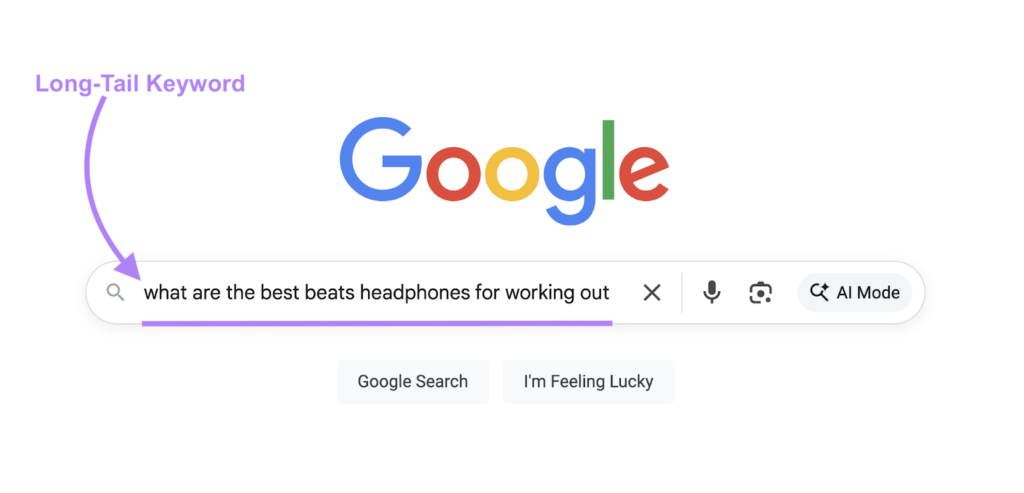
A traditional keyword is usually short and competitive—something like an SEO agency in Toronto. These keywords show commercial intent, but they’re crowded and expensive to rank in Google or any other search engine.
Question keywords, on the other hand, are longer and more conversational . They often begin with:
Who
What
Where
When
Why
How
For example:
How does local SEO help small businesses?
Why is my website traffic dropping?
What SEO strategy works best for service businesses?
These are considered long-tail keywords, and while each one may only receive a small number of searches per month, they attract visitors who are highly qualified.
Fifty people searching a specific question are often far more valuable than 5,000 people browsing a generic term.
Google’s Shift From Search Engine to Answer Engine
Search Engine to Answer Engine
Google’s goal has never changed : keeping users satisfied so they can continue using the platform and to do that, Google now focuses heavily on user intent—the reason behind a search, not just the words used.
When someone types a question, Google assumes they want a clear, direct answer. Websites that deliver that answer efficiently are rewarded with better visibility.
That’s why you now see:
Featured snippets
People Also Ask boxes in search results
Instant answers at the top of search results
Google wants to show answers immediately. If your content aligns with that goal, your chances of ranking improve dramatically even if your website isn’t the biggest or oldest.
Featured Snippets: The Real SEO Shortcut
Featured snippets as usually referred to as Position Zero , appear above the standard organic search results. They draw a concise, direct answer from a webpage and display it prominently, making the information instantly visible to searchers.
Here’s the key insight:
You don’t need to rank #1 to win a featured snippet.
If your page provides the clearest, most structured answer to a specific question , Google may select it even if your site is ranking lower than others.
For small and medium-size businesses in cities like Hamilton and Toronto, this levels the playing field . Instead of competing with massive brands on broad keywords, you can dominate focused questions that larger companies often ignore.
Voice Search Is Making Question Keywords Essential
Voice Search importance in todays SEO
Search is no longer limited to typing. Voice assistants like Google Assistant and Siri have changed how people look for information.
Voice searches are conversational by nature.They fully depends upon the natural language and complete questions. Content that answers these queries clearly is far more likely to be selected by Google or any other trustworthy voice assistants .
Optimizing for question keywords isn’t just good SEO—it’s future-proofing your visibility.
How to Find the Right Question Keywords
You don’t need advanced tools to discover valuable questions. Some of the best insights come directly from Google itself.
Google Auto-Suggest
Start typing a phrase related to your service and watch what Google suggests. These suggestions are based on real user searches.
“People Also Ask” Section
Search any core keyword and explore the questions Google shows. Clicking one reveals even more related questions, making it easy to map out months of content ideas .
Customer Conversations
Listen to how customers explain their problems and issues . The language they use most of the time differs from industry jargon—and that language is exactly what they type into search engines.
How to Structure Content for Question-Based SEO
Answering questions doesn’t mean dumping everything into a long FAQ page that no one reads.
Instead:
Use clear H2 or H3 headings with the actual question that you are putting
Provide a concise and short answer immediately in the very 1st line
Expand with explanation, examples, and context
This approach reduces bounce rates and improves engagement—two signals Google strongly values.
A good rule to follow is the inverted pyramid:
Answer first, explain second.
Why Question Keywords Build Trust (Not Just Traffic)
Traffic alone doesn’t grow a business . When someone lands on your site and finds a helpful answer instead of a sales pitch, their guard drops immediately . You are not just selling but actully helping at a very initial stage thus increases the trust of the first time crawler.
That shift in perception is powerful and very convincing.
People don’t remember ads but they remember who solved their problem or answer their question .
This is especially important for service businesses. Whether someone is looking for an SEO agency in toronto or evaluating marketing options in Hamilton, they’re far more likely to contact the company that educated them first.
Measuring the Real Impact of Answer-Based SEO
Success isn’t just about total traffic numbers. To evaluate this strategy properly, look at:
Organic traffic to question-based pages
Total time spent on those pages overall.
Rankings for long-tail keywords
Conversion actions (calls, forms, emails)
Google Search Console (GSC) is particularly valuable here. It often shows that your website is ranking for questions you never deliberately targeted, which is a clear sign that Google views your content as credible, informative and authoritative .
Over time, these pages also become an excellent internal linking opportunities to your core service pages.
Why This Strategy Works Long-Term
SEO tactics come and go. Algorithms change. Shortcuts stop working.
But one thing remains constant: people always have questions.
Businesses that consistently answer those questions earn:
Higher trust
Good engagement
Stronger brand authority
That’s why answering question keywords has remained one of the most reliable SEO strategies for decades.
Final Thoughts on Question Keywords and SEO
SEO doesn’t need to be complicated and tricky . Your audience is already telling you what they want by the questions they search and ask every day. Your job is simply to answer in as easy words as possible that too better than anyone else.
If you want to explore more practical SEO strategies like this, visit ourblog page and keep learning what actually works.
FAQs
How does answering question keywords help SEO performance?
Answering question keywords helps SEO by aligning your content with real user intent. When users search detailed questions, Google prioritizes pages that provide clear, direct answers. This improves rankings, increases visibility in featured snippets, and attracts visitors who are closer to making a decision—leading to higher engagement and conversions.
Why are question-based keywords better than high-volume SEO keywords?
Question-based keywords may have lower search volume, but they attract highly qualified traffic. Users asking specific questions are usually researching solutions, costs, or timelines, making them more likely to convert compared to users searching broad, competitive keywords.
How do question keywords help small businesses rank on Google faster?
Question keywords face less competition than generic keywords. Small and mid-sized businesses can rank faster by answering focused questions clearly and directly, even without high domain authority. This makes question-based SEO ideal for local businesses competing against larger brands.
Can answering questions help my website appear in featured snippets?
Yes. Google selects featured snippets from content that provides the clearest, most structured answer to a specific question. Using question-style headings, concise first-line answers, and simple explanations significantly increases your chances of appearing in “Position Zero.
Is answering customer questions good for voice search and AI search results?
Absolutely. Voice search and AI-driven results rely on natural language and complete questions. Content that directly answers “how,” “why,” and “what” questions is more likely to be selected by voice assistants and AI search engines, making this strategy future-proof for evolving search behavior.
Ontario’s digital marketing scene has exploded in the last few years. With competition getting tougher and online audiences shifting faster than ever, businesses now need agencies that are not just creative- but strategic, data-driven, and deeply committed to outcomes.
To make things easier, here’s a curated, trustworthy list of 10 digital marketing agencies in Ontario worth considering in 2025. These agencies have strong reputations, transparent processes, and consistent client satisfaction.
What to Look for in a Digital Marketing Agency?
Choosing the right digital marketing agency can make or break your online success. Before you commit, it’s important to know what separates a reliable, high-performing agency from one that overpromises and underdelivers. Here are the key factors to look for:
1. Proven Track Record & Case Studies
A trustworthy agency should be able to show real results—case studies, testimonials, and examples of past campaigns. Look for measurable improvements in traffic, leads, and ROI.
2. Transparency in Strategy & Reporting
The agency should clearly explain what they plan to do and how they will measure success. Regular reports, analytics access, and open communication are crucial.
3. Specialized Expertise
Digital marketing covers many areas—SEO, PPC, social media, email marketing, content creation, CRO, and more. Choose an agency that specializes in the services that matter most to your business.
4. Customized Marketing Plans
Avoid agencies that push one-size-fits-all packages. A reliable partner will take time to understand your industry, competition, and goals before building a tailored strategy.
5. Up-to-Date Knowledge & Tools
Digital trends change fast. Make sure the agency uses modern tools, follows best practices, and keeps up with Google algorithm updates, platform changes, and emerging marketing technologies.
6. Strong Communication & Support
A good agency should feel like an extension of your team. Look for clear communication channels, fast response times, and a dedicated account manager if possible.
7. Fair Pricing & Clear Contracts
Trustworthy agencies provide transparent pricing, clear deliverables, and flexible contract terms. Be cautious of extremely cheap offers—they often signal low quality or outdated tactics.
Adsagenz is a results-driven digital marketing partner built on the belief that effective marketing should be accessible, transparent, and directly tied to real business growth.
Founded in 2025, the agency was created to help brands move beyond generic strategies and embrace tailored, data-backed solutions that fuel smarter and faster scaling.
Whether working with emerging startups or established companies, Adsagenz focuses on strengthening digital presence, optimizing revenue opportunities, and enhancing long-term competitiveness.
As one of the top Digital Marketing Agencies in Ontario, Adsagenz stands out for its commitment to true partnership.
Every campaign, creative asset, and strategic decision is crafted with the client’s goals at the center; ensuring every dollar spent contributes to measurable progress.
The team stays aligned with the latest industry trends, backed by trusted certifications and continuous learning, so clients benefit from cutting-edge expertise rather than outdated tactics.
Among all digital marketing agencies in Ontario, Adsagenz is recognized for guiding businesses through every stage of their marketing journey.
From solving complex challenges to executing targeted strategies, the agency is dedicated to turning insights into action and action into meaningful, trackable results.
With a philosophy rooted in clarity and accountability, Adsagenz continues to deliver measurable growth and a competitive edge.
Services Offered:
1. Ads Management 2. SEO (AEO & GEO) 3. Website Designing & Development 4. Designing Services
Website: https://adsagenz.com/ Contact: +1 866-624-0030 Location: 2727 Steeles Ave W Unit 103, North York, ON M3J 3G9, Canada
2. BrandLume Inc.
BrandLume is a global one-stop online shop offering comprehensive digital marketing, branding, and website development services; all designed to help businesses stand out without the hassle of dealing with multiple agencies.
Among the top Digital Marketing Agencies in Ontario, BrandLume helps clients manage everything from SEO, SEM, PR, and social media to hosting, domains, and web design in one place, at a fraction of traditional costs.
A key part of BrandLume’s appeal is its transparent, upfront pricing. Every service is priced based on the effort required, not the size or profit of the client’s business.
With clear product descriptions and no hidden fees, businesses can easily compare options and choose only what they need.
Their à la carte model means clients pay strictly for the services they want, avoiding unnecessary bundles.
Whether you’re searching for reliable web solutions or full-scale digital campaigns, BrandLume stands out among digital marketing agencies for its streamlined approach, removing the need for quotes or back-and-forth proposals, just select a service, provide guidelines, and their team handles the rest.
They also offer unmatched flexibility with no long-term contracts, relying instead on quality results that drive a 96% client retention rate.
Supported by a friendly, non-sales-driven team and backed by a complete transparency policy, BrandLume positions itself as a trustworthy partner, making it one of the most reliable digital marketing agency for businesses seeking honest communication and measurable results.
Services Offered:
1. SEO 2. Content Marketing 3. PPC Marketing 4. Social Media Marketing 5. Video Marketing 6. Website Design & Development
Major Tom is a strategic digital agency that goes beyond simply solving the challenges clients bring to them. Instead of offering surface-level solutions, the team works closely with businesses to uncover the root causes limiting growth.
Their signature four-phased approach allows them to gain a deep understanding of an organization from top to bottom.
With this holistic view, they can craft the right strategy, determine the most effective tactics, and outline how clients can continue improving long after the initial success.
As one of the well-known Digital Marketing Agencies in Ontario, Major Tom emphasizes that a consistent, seamless brand experience drives trust, loyalty, and measurable results.
To achieve this, the agency brings together in-house experts across Strategy, Creative, Development, and Marketing. This unified structure ensures that every touchpoint; from messaging and design to technology and campaign execution—works together to support the brand’s goals.
Whether a business needs a long-term strategic partner or targeted assistance for a single initiative, Major Tom offers flexible engagement options.
Their services are designed to deliver tailored solutions that align with each client’s unique objectives, helping brands grow with clarity, confidence, and consistency.
Services Offered:
1. Digital & Brand Strategy 2. SEO, GEO, & AEO 3. Content Marketing 4. Social Media Marketing 5. eCommerce Development 6. Web Design & Development 7. HubSpot Consulting
Founded in 2011 and headquartered in Toronto, Brand & Mortar is on the list of top digital marketing agencies in Ontario as a full-service marketing and website design agency serving clients across Canada and the United States.
With a team of over 20 marketing and advertising professionals, the agency supports both small and medium-sized businesses as well as large enterprises across diverse industries, including eCommerce, technology, SaaS, CPG, beauty and fitness, healthcare, tourism, automotive, insurance, professional services, and more.
Brand & Mortar offers a comprehensive suite of services designed to elevate brand presence and drive measurable business growth.
Their capabilities span branding, website design and development, social media management, content marketing, SEO, PPC advertising, video production, and custom technology development.
By combining modern technology, streamlined workflows, industry best practices, and extensive experience, the agency focuses on delivering tailored strategies that generate meaningful results.
Driven by a mission to help businesses grow, Brand & Mortar is committed to improving marketing performance and maximizing ROI for clients.
Their broader vision is to become a leading agency recognized for significantly enhancing marketing and advertising outcomes for organizations in major cities across North America.
Services offered:
1. Brand Marketing & Marketing Strategy 2. Content Marketing & Public Relations 3. Social Media & Pay Per Click (PPC) Advertising 4. Mobile Application Development 5. Website Design & Website Development 6. Creative, Graphic Design & Communication 7. Video Production & Video Marketing 8. Search Engine Optimization (SEO) & Content Marketing
Social Media 55 is a full-service, award-winning digital marketing agency based in downtown Toronto, known for delivering highly effective and innovative online marketing solutions.
The agency specializes in a wide range of services designed to help businesses strengthen their digital presence and achieve measurable growth.
Their expertise spans social media marketing, social media advertising, PPC management, and comprehensive website design and development, ensuring clients receive strategic support across every major digital channel.
As one of the notable Digital Marketing Agencies in Ontario, Social Media 55 particularly excels in influencer marketing.
Recognized as a top provider of influencer services in Canada, they connect brands with the right voices to expand reach, build credibility, and engage target audiences authentically.
Their team focuses on personalized strategies tailored to each client’s unique goals, industry, and competitive landscape.
Whether a business needs stronger brand visibility, more targeted advertising campaigns, or a complete digital overhaul, Social Media 55 positions itself as a reliable partner capable of delivering results.
With a commitment to staying ahead of industry trends and providing high-quality service, they offer the expertise and tools needed to support businesses of all sizes in navigating the ever-evolving digital marketing landscape.
Services offered:
1. Instagram Engagement Campaign 2. Email Marketing 3. Search Engine Optimization (SEO) 4. Pay Per Click (PPC) Management 5. Content Marketing Services 6. Social Media Paid Advertising 7. Branding & Media 8. Social Media Management 9. Web Design & Development
dNOVO Group began in 2010 as an SEO company with over a decade of industry experience and a diverse client base.
The company’s evolution began when it partnered closely with a prominent lawyer seeking to expand their firm’s digital footprint.
This collaboration required a comprehensive online strategy—including social media growth, video marketing, online reputation management, and lead generation; which pushed the team to broaden its expertise.
Through this multifaceted campaign, dNOVO gained deep industry insight and transformed into a full-service digital marketing agency, now recognized among digital marketing agencies in Ontario for providing turnkey internet marketing solutions.
Over the years, dNOVO has built strong strategic relationships across the legal, medical, and other professional sectors.
Much of this success stems from the agency’s skilled and creative marketing team, each member handpicked for their unique professional strengths and ability to think outside the box.
Today, dNOVO continues to deliver tailored marketing solutions that help businesses enhance their online presence, strengthen their reputation, and generate consistent, high-quality leads.
Services Offered:
1. SEO (AI SEO) 2. Paid Advertising 3. Website Design & Development
King Digital is a team of dedicated digital marketers committed to building strong, measurable, and lasting connections between businesses and their customers.
With diverse backgrounds and expertise across multiple channels, they offer a versatile and innovative approach to enhancing brand presence, increasing engagement, and driving meaningful online growth.
As one of the trusted digital marketing agencies in Ontario, King Digital focuses on creating tailored strategies that align with each client’s unique goals.
Their collaborative approach ensures that every campaign is data-driven, results-oriented, and designed to foster long-term success for businesses in an ever-evolving digital landscape.
Services Offered:
1. Search Engine Optimization 2. Lead Generation 3. YouTube Marketing 4. Search Engine Marketing 5. Web Design & Development
Clever Digital Marketing is one of the country’s fastest-growing agencies, specializing in lead generation through Facebook, Instagram, and Google advertising.
With a strong focus on service-based industries, the team has consistently delivered impressive returns on investment over the past several years.
Among digital marketing agencies in Ontario, they stand out for their selective approach, taking time to audit accounts and understand long-term goals before onboarding any client.
This careful approach ensures that every partnership is set up for success—evidenced by their perfect client retention over the last year.
Their omnichannel strategy helps businesses attract a steady stream of new customers, allowing owners to focus on growth, sales, and operations without worrying about where their next leads will come from.
What sets Clever Digital Marketing apart is its commitment to data-driven decision-making. Using advanced tracking tools like Hyros, the team monitors performance closely to maintain a consistent net ROI.
With attention to detail and a results-first mindset, they position themselves not just as a marketing provider but as a true growth partner.
Stryvers is a digital-first agency that has been supporting enterprise marketing teams and growing companies since 2008.
They help brands strengthen their digital capabilities by taking a holistic, consultative approach to every project—ensuring each tactic aligns with the bigger marketing picture.
With experience across multiple industries and disciplines, Stryvers’ team can cross-pollinate ideas, uncover new opportunities, and move quickly in fast-changing digital environments.
As one of the trusted digital marketing agencies in Ontario, they focus on delivering strategies that are both innovative and measurable.
Digital marketing demands a balance of creativity and analytics, and Stryvers focuses on developing both skill sets across all roles.
This versatility allows them to tailor teams and strategies to each client’s specific needs. Rather than promoting any particular marketing technology, they remain fully platform-agnostic, choosing tools based solely on what fits the client’s situation.
And when a project requires additional expertise, Stryvers taps into its trusted network; handling all vetting to ensure seamless, high-quality execution.
This flexible, integrity-driven approach positions Stryvers as a reliable partner for businesses aiming to scale their digital marketing efforts.
Services Offered:
1. Branding & Strategy 2. Content marketing 3. Design 4. Digital advertising 5. Logo design 6. Website design & development 7. WebOps
Founded in 2016, Preeminent Marketing began with a clear mission: to empower businesses through smart, innovative, and personalized marketing strategies.
What started as a small consultancy has grown into a full-service digital marketing agency recognized for its commitment to excellence and client-focused approach.
Among the notable digital marketing agencies in Ontario, the agency stands out for its emphasis on understanding each client’s unique goals, challenges, and industry landscape—an approach that continues to shape its success today.
Over the years, Preeminent Marketing has expanded its expertise across key digital areas, including PPC, SEO, web development, eCommerce solutions, social media marketing, and application development.
Their team of seasoned professionals stays ahead of industry trends and emerging technologies to ensure every client benefits from cutting-edge strategies and measurable results.
As the agency looks toward the future, its mission remains unwavering: to deliver preeminent marketing solutions that fuel meaningful business growth.
Whether a brand needs stronger online visibility, better customer engagement, or a complete digital transformation, Preeminent Marketing provides the tools, creativity, and expertise to make it happen.
Services Offered:
1. PPC 2. E-commerce 3. LinkedIn Marketing 4. Website Design & Development 5. Social Media Marketing 6. YouTube Ads 7. SEO
Final Thoughts: Finding Your Ideal Ontario Marketing Partner in 2025
Ontario is home to a diverse and rapidly evolving digital marketing landscape, offering businesses plenty of strong options to choose from. The right agency for you ultimately depends on your unique goals, whether you’re focused on boosting search visibility, running high-converting ad campaigns, enhancing your brand presence, or building a complete digital strategy from the ground up.
Consider what matters most—your budget, your timeline, and how closely you want an agency involved in your day-to-day marketing efforts. The best partnership is one that aligns with your business values, communicates clearly, and delivers measurable growth.
No matter your industry or size, the right Ontario agency can help you navigate the digital world with confidence and stay competitive in 2025 and beyond. Focus on finding a team that understands your vision, adapts to your needs, and is committed to helping your business thrive.
FAQs
1. How do I choose the best digital marketing agency for my business in Ontario?
Look for an agency that aligns with your goals, offers transparent reporting, has proven case studies, and specializes in the services you need; whether that’s SEO, PPC, social media, branding, or full-service digital growth. Also consider your budget, expected timeline, and how involved you want the agency to be in the process.
2. What services do Ontario digital marketing agencies typically offer?
Most agencies provide SEO, PPC advertising, social media marketing, website design and development, branding, content marketing, eCommerce solutions, and analytics. Some also offer specialized services like influencer marketing, AI-driven SEO, and application development.
3. How long does it take to see results from digital marketing?
Timelines vary depending on the service. SEO typically takes 3–6 months, PPC can deliver results within days or weeks, and website design projects can take 4–12 weeks. Long-term growth often requires sustained effort and ongoing optimization.
4. Are boutique agencies better than large full-service agencies?
Boutique agencies often provide more personalized attention, faster communication, and flexible pricing. Larger agencies typically offer broader resources and larger specialist teams. The best choice depends on your business size, goals, and preferred working style.
5. How much do digital marketing services cost in Ontario?
Costs depend on the scope of work, service type, and experience level of the agency. SEO retainers may range from $800–$5,000/month, PPC can run on a flat fee or percentage model, and website projects can range from $1,500 to $20,000+. Always look for transparent pricing and clear deliverables.