


Artificial Intelligence has evolved rapidly over the past few years, but nothing has transformed the digital ecosystem quite like Large Language Models. In 2026 businesses, marketers developers and even enterprises across industries are leveraging LLMs in 2026 to automate communication, generate insights, improve customer experiences, and optimize search visibility.
If you’ve been hearing terms like AI language models, Generative AI systems, and enterprise LLM solutions but still feel unclear about what they truly are, this in-depth guide will break everything down in simple, practical terms.
This blog covers how LLMs work, why they matter, their architecture, use cases, limitations, future trends, and how businesses across Canada AI adoption trends are integrating them into daily operations.
What Are Large Language Models?

Large Language Models are advanced artificial intelligence systems trained on massive volumes of text data to understand, generate, and predict human-like language. These models use deep learning techniques and are built on neural network architectures capable of recognizing patterns in language at scale.
Unlike traditional rule-based systems, modern language processing AI learns context, grammar, tone, and even intent.
In simple terms:
An LLM reads billions of words, learns how language works, and then predicts the next most relevant word in a sentence with remarkable accuracy.
That prediction ability allows it to write articles, answer questions, summarize documents, translate languages, and even assist with coding.
How Do LLMs Work?
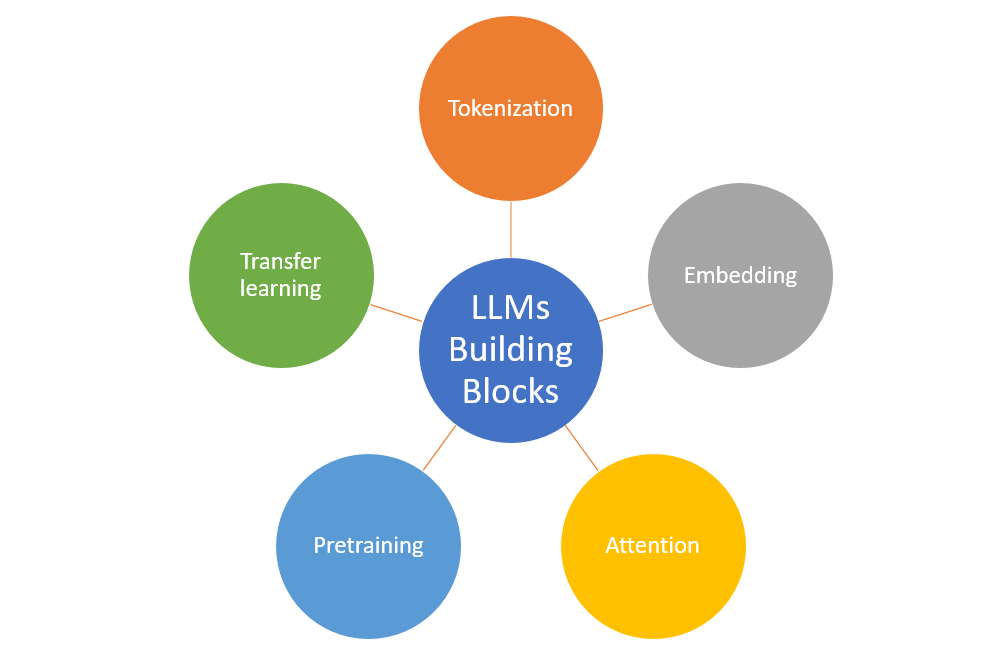
To understand how Large Language Models work, we need to explore three core components:
1. Transformer Architecture
Most advanced LLMs are built using the Transformer architecture in the AI, which depends on the attention mechanisms. Instead of processing text word-by-word in sequence, transformers analyze relationships between words simultaneously.
This allows:
- Better contextual understanding
- Long-form reasoning
- Improved semantic accuracy
2. Pretraining on Massive Data
LLMs undergo unsupervised language model training using :
- Books
- Websites
- Research papers
- Articles
- Code repositories
During training, the system predicts missing words in sentences. Over time, it learns patterns, tone, and structure.
3. Fine-Tuning & Alignment
After pretraining, models go through AI fine tuning processes where they are optimized for specific tasks such as
- Customer support
- Medical documentation
- Legal summarization
- Marketing copy generation
This improves safety, accuracy, and usability.
Types of Large Language Models in 2026
LLMs today vary based on size, specialization, and access model.
| Type | Description | Use Case |
| General Purpose LLMs | Trained on broad datasets | Chatbots, writing tools |
| Domain-Specific Models | Fine-tuned for industries | Healthcare, finance |
| Multimodal AI Models | Understand text + images + audio | Advanced assistants |
| On-Premise LLM Deployments | Hosted internally | Enterprise security |
Businesses in regions like Toronto AI technology companies are increasingly investing in customized models for secure deployment.
Key Capabilities of LLMs
1. Natural Language Understanding
LLMs greately excels at Natural Language Processing advancements, allowing them to :
- Interpret user intent
- Answer contextual questions
- Generate meaningful responses
2. Content Generation
They power:
- Blog writing
- Ad copy
- Email marketing
- Technical documentation
This is why marketing teams widely adopt AI content generation tools.
3. Semantic Search & AEO
With the rise of AI-driven search engines, LLMs help optimize for:
- Answer Engine Optimization strategies
- Featured snippets
- Conversational search
Companies that are adopting GEO targeted AI marketing approaches are leveraging this capability to improve visibility in specific regions without relying solely on traditional SEO.
4. Code Assistance
LLMs assist developers in debugging, suggesting improvements, and generating documentation through AI coding assistants.
Real-World Applications of LLMs

Healthcare
Hospitals that uses an AI powered medical documentation systems to summarize patient records and reduce administrative load.
Finance
Banks leverage financial AI language processing to analyze risk documents and customer communications.
E-commerce
Retail brands use AI product description generation to scale catalog content efficiently.
Education
Schools and universities can integrate adaptive AI tutoring systems for their personalized learning experiences .
Across Ontario artificial intelligence ecosystem, startups are building niche LLM-powered applications for industry-specific needs.
Why LLMs Matter for Businesses in 2026
Businesses are no longer asking whether to use AI — they are asking how fast can we implement it?
Here’s are the reason why:
1. The Cost Efficiency
Automation of repetitive communication reduces the overall operational costs.
2. Personalization at Scale
LLMs enable hyper personalized customer engagement AI, making each user interaction feel unique.
3. Data Insights
Through AI driven data interpretation tools, companies extract actionable insights from large datasets.
4. Competitive Advantage
An early adoption of the enterprise generative AI platforms provides measurable performance gains.
Organizations exploring innovation hubs like Hamilton tech startup growth are particularly focused on scalable LLM integration.
The Technical Backbone: LLM Architecture Explained

This layered structure allows deep learning language networks to model complex patterns across millions of parameters.
Challenges & Limitations of LLMs
While Large Language Models are very powerful but they’re not flawless. Like any technology, they come with a few important limitations businesses should keep in mind:
1. Hallucinations
Sometimes, LLMs can produce answers that sound very confident—but are actually incorrect or partially inaccurate. This usually happens because they have predicted the language patterns rather than truly “understanding” facts.
2. Bias
Since these models are trained on vast amounts of internet data, they can unintentionally reflect existing biases present in that data. Without proper monitoring and fine-tuning, this can impact fairness and neutrality.
3. Data Privacy Concerns
For many businesses, privacy will always be the most important consideration. Before integrating LLMs into the workflows, it is important to evaluate safe deployment methods along with data handling policies and compliance requirements to protect the sensitive information .
4. High Computational Costs
Developing and running an advanced LLMs usually requires a very significant computing power. This can lead to higher infrastructure costs, especially for organizations deploying models at scale.
In short, LLMs offer huge opportunities but thoughtful implementation and oversight are key to using them responsibly and effectively.
This is why many organizations in Canada digital transformation strategy initiatives are opting for hybrid AI solutions.
LLMs and the Future of Search (SEO, AEO & GEO)
Search has evolved from keyword matching to intent understanding.
LLMs are central to:
- Conversational AI search engines
- Voice-based search queries
- Predictive information retrieval
To stay competitive, brands must integrate:
- AI powered search visibility optimization
- Conversational query optimization methods
- Semantic content structuring frameworks
Businesses targeting markets like Toronto digital marketing AI services are restructuring content to answer real questions rather than just rank for phrases.

This shift from task-based systems to multi task generative AI systems marks a fundamental evolution in computing.
How Companies Are Implementing LLMs in 2026
Implementation typically follows this roadmap:
- Define business objective
- Choose model type
- Customize with domain data
- Test for bias and safety
- Deploy via API or private server
Organizations focusing on AI adoption in Canada and other location businesses are increasingly combining LLMs with automation platforms.
Ethical Considerations
Responsible AI use includes:
- Transparent disclosures
- Bias mitigation protocols
- Data protection compliance
- Human oversight
Regulators across Canadian AI governance policies are shaping standards for responsible development.
The Future of Large Language Models
By the year 2026 and beyond, we will be seeing:
- Smaller but more effective models
- Improved reasoning abilities of the models
- Better factual grounding
- Multimodal expansion
- Real-time personalization
Emerging innovation clusters in Ontario AI innovation hubs are accelerating this growth.
Final Thoughts
In the year 2026 , Large Language Models are not just only any technological innovations but they are the foundational digital infrastructure. From the marketing automation to a customer experience and even from semantic search to enterprise analytics, LLMs are now reshaping how businesses operate.
As adoption accelerates across regions like Toronto, Ontario, Hamilton, and across Canada more broadly, companies that strategically integrate language-based AI systems will gain long-term competitive advantage.
Understanding the mechanics, capabilities, and limitations of LLMs ensures smarter, safer, and more profitable implementation.
The future belongs to organizations that learn how to collaborate with intelligent systems — not compete against them.
What is a Large Language Model in simple terms?
A Large Language Model is an artificial intelligence system trained on vast text data that can understand, generate, and respond in human-like language.
How are LLMs different from traditional AI models?
Traditional models perform narrow tasks, while LLMs can handle multiple language-based tasks such as writing, summarizing, translating, and answering questions.
Are businesses in Canada using LLMs actively?
Yes, many companies across various industries are adopting language-based AI systems to automate workflows, improve customer service, and optimize digital visibility.
Can LLMs replace human writers?
LLMs are helping the writers by improving the speed and structure but human creativity, strategy, and judgment remain essential for high-quality content.
Is it expensive to implement enterprise LLM solutions?
Costs can vary depending on the infrastructure, customization level and even the deployment method. Cloud-based APIs are generally more accessible than building models from scratch.
What industries benefit most from LLM integration?
Healthcare, Finance, education, marketing and e-commerce are currently seeing the highest impact from AI-driven language systems.
How do LLMs impact SEO and search visibility?
They shift focus toward intent-based content, structured answers, and conversational query optimization.
Are LLMs secure for handling sensitive data?
Security depends on deployment model. Private hosting and strict data governance frameworks are recommended for sensitive industries.