Category: AI SEO

  • Google AI Mode 2026: Get Discovered and Suggested by Google AI Mode for More Leads

    Google AI Mode 2026: Get Discovered and Suggested by Google AI Mode for More Leads

    After the launch of Google AI Mode, discovery no longer works the same traditional way. Users are not just clicking links. They are getting direct answers, summaries, recommendations, and even shopping suggestions inside Google’s AI interface.

    This shift changes how leads are generated. Instead of competing for blue links, brands now compete to be mentioned, referenced, or suggested by Google’s AI Mode search experience. If your business is not understood clearly by Google’s AI systems, you can lose visibility even if your website still ranks well in traditional results. This is why learning how to use Google AI Mode, how Google AI Mode search works, and how to position your brand inside this new system is no longer optional. It directly affects discovery, trust, and lead generation.

    Google AI Mode is being tested and rolled out in different regions, including early availability in the US and gradual expansion through Google Labs AI Mode in markets like the UK and India. As more users try Google AI Mode, especially on mobile devices like Google AI Mode on iPhone and Android, the way people interact with search is becoming more conversational and less transactional. People are asking longer questions, expecting structured answers, and trusting Google AI Mode search engine outputs more than individual websites. If you want more leads in this environment, you must understand how to get discovered by Google AI Mode before your competitors do.

    What Is Google AI Mode and Why Does It Change Search Behavior

    Google AI Mode

    Google AI Mode is not just a design update to Google Search. It is a shift in how Google presents information. Instead of showing a simple list of links, Google AI Mode search attempts to understand user intent and present synthesized answers. This includes explanations, comparisons, shopping suggestions, and contextual recommendations. When users try Google AI Mode, they often stay inside the AI experience longer because the system answers follow-up questions and offers deeper search pathways through what Google calls deep search.

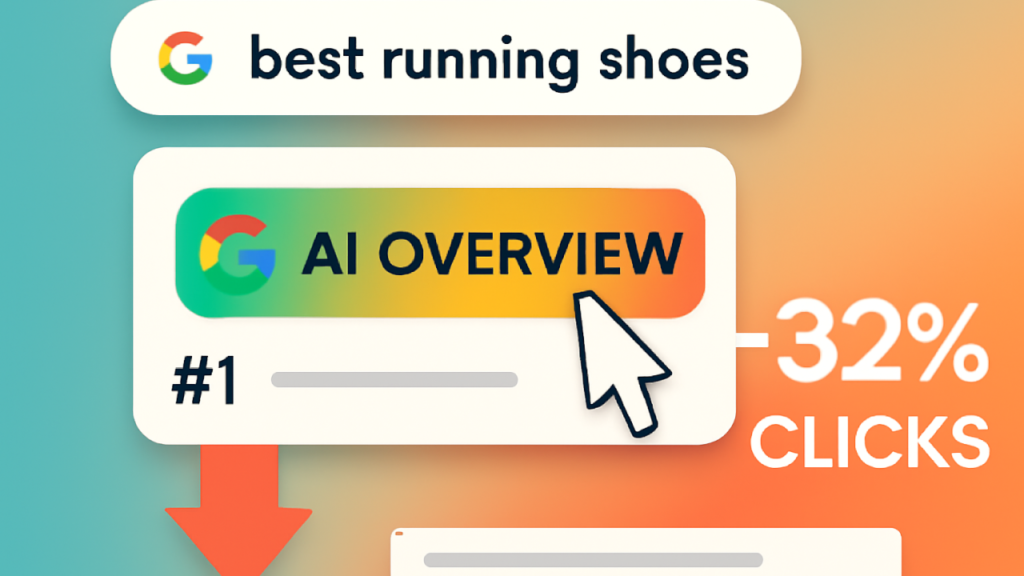
    This matters because Google AI Mode search engine behavior reduces direct clicks to websites for simple queries. For example, if someone searches for the best CRM software for small businesses, Google AI Mode may present a summarized comparison with recommended tools before the user even scrolls to traditional links. If your brand is not part of that summary, you may not get noticed at all. This is why understanding Google AI Mode vs Gemini also matters. While Gemini is Google’s general-purpose AI assistant, Google AI Mode is tightly integrated into search. Gemini helps users think. Google AI Mode helps users decide. That distinction affects lead generation.

    As Google AI Mode launch continues, more features are being layered in. Users now see the Google AI Mode tab in some search interfaces, which allows them to switch between classic search and AI-powered responses. Some users discover Google AI Mode through Google Doodle AI Mode experiments or Google Labs AI Mode previews. Others encounter it through Google Shopping AI Mode when browsing products. Each of these surfaces creates new discovery pathways for brands, but only if Google’s AI understands who you are and when to recommend you.

    How Google AI Mode Search Works Behind the Scenes

    To understand how to get discovered by Google AI Mode, you need to understand what the system is trying to do. Google AI Mode search does not rank pages in the same way traditional search does. Instead, it identifies entities, understands relationships between concepts, and then generates answers that feel complete. This means your brand must be recognized as an entity with a clear purpose. If your website content is scattered, inconsistent, or overly promotional, Google AI Mode may struggle to place you confidently inside its answers.

    Google AI Mode deep search goes further than surface-level queries. When users ask complex questions, the AI system tries to combine multiple sources of information into a single narrative. If your brand contributes meaningfully to that narrative through clear explanations, practical insights, or authoritative positioning, Google AI Mode search engine is more likely to surface your name. This is different from traditional SEO, where matching keywords could sometimes be enough. In AI Mode, matching meaning matters more than matching terms.

    Another important change is how users interact with Google AI Mode on mobile devices. Google AI Mode on iPhone and Android is designed for conversational use. People type or speak longer questions, expect natural language answers, and rely on follow-up prompts. This means your content must align with how humans actually ask questions, not just how SEO tools suggest keywords. If your content sounds robotic, Google AI Mode will find it harder to reuse or reference naturally.

    How to Turn On Google AI Mode and Why Users Are Adopting It

    Many users still don’t realize they are using Google AI Mode. Some encounter it through a prompt to try Google AI Mode, others through a Google AI Mode shortcut in their search interface. Depending on the region, users in the US, UK, and now gradually Google AI Mode India markets are seeing AI Mode integrated into Google Search. Some users actively ask how to enable Google AI Mode or how to get Google AI Mode because they want faster, summarized answers.

    At the same time, there are users searching for how to turn off Google AI Mode or remove Google AI Mode from search bar because they prefer traditional results. This split behavior is important for brands. It means you must optimize for both classic SEO and AI-driven discovery. People will continue to use traditional search, but the number of users relying on Google Search AI Mode is growing steadily, especially for research-heavy queries, comparisons, and buying decisions.

    The presence of options like Google AI Mode turn off, remove Google AI Mode, or Google search remove AI Mode does not mean AI Mode will go away. It simply means Google is still experimenting with user control. The long-term direction is clear. Google Search AI Mode is becoming a core part of how people interact with information. If your lead generation strategy depends entirely on old-school rankings, you are exposed to risk as this shift accelerates.

    How Google AI Mode Suggests Brands and Why Some Get Picked

    When Google AI Mode suggests a brand, it is not doing so randomly. The system looks for sources that help complete the answer. This means your brand must fit naturally into the user’s question. If someone asks about tools, Google AI Mode shopping features may suggest products. If someone asks about services, Google AI Mode search may reference companies that clearly explain their offerings and appear consistently in authoritative discussions.

    One reason people search for Google AI Mode Reddit threads is because they want to understand how suggestions happen. Users often notice that some brands appear repeatedly in Google AI Mode answers while others never show up, even if they rank well in traditional search. The difference usually comes down to clarity and consistency. Brands that explain their category well, use stable terminology, and show up in multiple credible contexts are easier for Google AI Mode to trust.

    Google AI Mode vs Gemini comparisons also reveal an important insight. Gemini is more conversational and open-ended. Google AI Mode is more decision-oriented. If your brand can help users make decisions, whether through clear product positioning, transparent service descriptions, or educational content that frames options properly, Google AI Mode is more likely to surface you as part of its answer.

    How to Use Google AI Mode as a Marketer or Business Owner

    Learning how to use Google AI Mode is not just for users. Businesses can actively use Google AI Mode search to understand how their brand is perceived. When you search your own category inside Google AI Mode, pay attention to which brands appear and how they are described. This gives you direct insight into how Google’s AI understands the market.

    If your brand does not appear, the question is not “Why am I not ranking?” but “Why does Google AI Mode not see me as relevant to this conversation?” The answer usually lies in how your content is structured, how consistently your brand is positioned, and whether your explanations are genuinely helpful or just sales-focused. Google AI Mode search engine behavior rewards clarity, not hype.

    Testing Google AI Mode deep search with layered queries is also useful. Ask follow-up questions. See which brands remain in the conversation and which disappear. Brands that continue to appear across multiple layers of questioning are the ones Google AI Mode trusts to hold up under scrutiny. That trust is what leads to more visibility and more leads over time.

    Getting Discovered in Google AI Mode for More Leads

    Discovery in Google AI Mode is not about hacking the system. It is about making your brand easier to understand, easier to place, and easier to trust. When users rely on Google AI Mode search to guide decisions, the brands mentioned in those answers gain disproportionate attention. They become defaults. They receive trust before the user even visits a website. This is powerful for lead generation because the recommendation happens upstream of the click.

    If you want Google AI Mode to suggest your brand, your content must help Google explain the topic better. This means publishing content that educates, not just content that sells. It means clarifying your niche instead of trying to cover everything. It means aligning your language with how real people ask questions in Google AI Mode search. Over time, this positioning compounds. The more your brand helps Google AI Mode deliver better answers, the more often you get surfaced.

    How to Structure Your Website and Content for Google AI Mode Discovery

    Getting discovered by Google AI Mode is not about adding one more plugin or chasing some new technical setting inside Google Search Console. The system is not looking for tricks. It is looking for clarity. If your website makes it easy for Google to understand who you are, what you do, and when you should be suggested, your chances of appearing inside Google AI Mode search improve naturally over time.

    Most websites fail here because they try to rank for too many unrelated topics. One page talks about services, another talks about trends, another talks about tools, and none of it connects into a single, coherent story. From Google AI Mode’s perspective, that creates confusion. The AI cannot confidently decide when to bring your brand into an answer because your site does not present a stable identity.

    Your structure should tell one clear story. When someone asks Google AI Mode search engine about your category, the AI should already know that your brand lives inside that problem space. This means your core pages, your long-form content, and your supporting articles must reinforce the same positioning. Over time, Google AI Mode deep search learns these patterns and becomes more comfortable referencing your brand as part of its answers.

    Another important factor is how your internal linking supports understanding. When your pages connect logically, Google AI Mode can follow the narrative of your expertise. This is different from old-school SEO, where internal links were mainly about passing authority. In Google Search AI Mode, internal linking helps the system understand how your ideas fit together. The clearer that structure is, the easier it becomes for Google AI Mode to reuse your explanations when answering user queries.

    How Google Search AI Mode Changes Lead Generation for Businesses

    The biggest shift that Google AI Mode introduces is where influence happens in the user journey. Traditional search pushed users toward websites first. Influence happened after the click. With Google Search AI Mode, influence happens before the click. The summary, the recommendation, and the framing of options all shape how the user thinks about your brand before they ever land on your site.

    This matters because lead quality changes. Users who come from Google AI Mode search are often more informed, more confident in their choice, and further along in the decision-making process. They may not browse multiple competitor sites because Google AI Mode has already narrowed their options. If your brand is part of that narrowed set, your conversion rates often improve, even if raw traffic volume decreases.

    This is why businesses that only track rankings and traffic may think they are losing ground, while in reality, they are missing where influence has moved. Google AI Mode search engine does not just send traffic. It shapes perception. Brands that appear in AI summaries benefit from a trust halo effect. Users assume that if Google AI Mode suggested a brand, it must be credible. That assumption changes how quickly people move toward contacting you, requesting a demo, or making a purchase.

    Google AI Mode for Local Businesses and Service Providers

    Local businesses and service providers are deeply affected by Google AI Mode, especially as Google Search AI Mode expands in regions like the UK and India. When users search for services such as agencies, consultants, clinics, or repair services, Google AI Mode often summarizes options and highlights what differentiates them. This summary becomes the first impression.

    If your local business is not clearly described across your website and profiles, Google AI Mode may struggle to include you. For example, if your service offerings are vague, or your location details are inconsistent, the AI cannot confidently recommend you for location-based queries. This is why clarity around who you serve, where you serve, and what problem you solve matters more than ever.

    Google AI Mode India rollout is particularly important for service businesses because many users are skipping traditional browsing and relying on summarized answers to find providers. This means that optimizing only for local pack rankings is no longer enough. You must ensure that your brand narrative is strong enough for Google AI Mode search to reuse. When the AI understands your positioning, it becomes more likely to mention you when users ask conversational questions about services in their area.

    Google Shopping AI Mode and How It Changes Buying Decisions

    Google Shopping AI Mode changes how people evaluate products. Instead of comparing ten product pages manually, users often rely on Google AI Mode to summarize differences, suggest categories, and highlight features that matter. This shifts product discovery from a browsing experience to a guided decision flow.

    If your product listings are generic, Google AI Mode may not see a strong reason to feature them. The AI is not just pulling product data; it is constructing explanations. If your product descriptions do not explain who the product is for, what problem it solves, and how it differs meaningfully from alternatives, the AI summary may favor competitors with clearer narratives.

    For eCommerce brands, this means your product content must be written in a way that helps Google AI Mode tell a story. Instead of listing features in isolation, your descriptions should explain context. Who benefits from this product? In what situations does it perform best? What kind of buyer is it not for? These explanations help Google AI Mode deep search present your product naturally inside its answers.

    Google AI Mode vs Gemini: Why the Difference Matters for Visibility
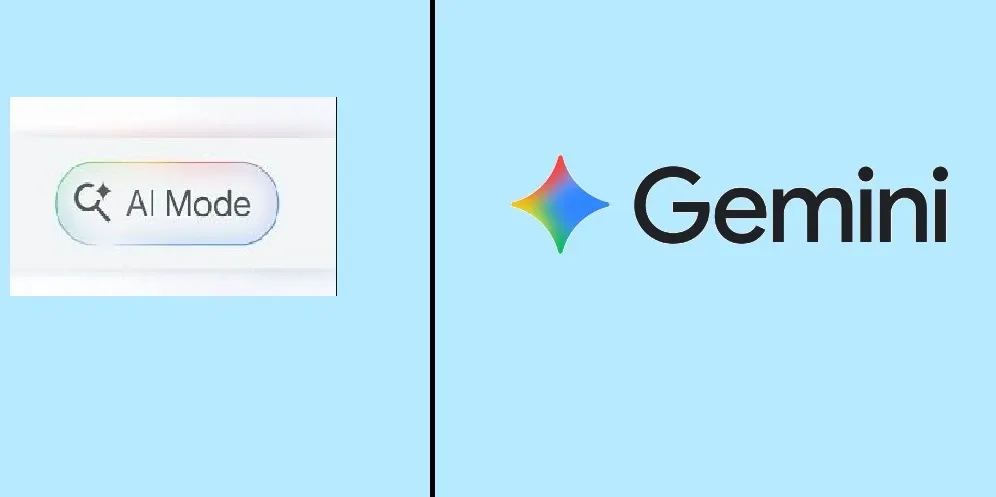
    Many people confuse Google AI Mode vs Gemini, but the difference is important for discovery. Gemini is designed as a general assistant. It helps users think, plan, and explore ideas. Google AI Mode is designed as a search experience. It helps users decide. That difference changes how brands appear.

    When someone asks Gemini a broad question, the AI may explore multiple perspectives. When someone uses Google AI Mode search, the system is more likely to summarize and recommend. If your brand is positioned as a practical solution, it is more likely to appear in Google AI Mode than in Gemini, where the conversation may remain more abstract.

    Understanding this difference helps you shape content correctly. Content designed to influence decisions should be optimized for Google AI Mode search. Content designed to educate broadly may appear more often in Gemini-style conversations. Both matter, but if your goal is leads, Google AI Mode is the surface where buying decisions are increasingly shaped.

    Why Some Brands Appear in Google AI Mode Reddit Discussions

    The reason people search for Google AI Mode Reddit threads is because they are trying to reverse-engineer visibility. They notice patterns. Certain brands keep showing up. Others never do. The difference usually comes down to whether the brand has a strong narrative presence across the web.

    Reddit discussions, forums, and long-form blogs all contribute to how Google AI Mode search engine perceives brands. If your brand is mentioned in thoughtful discussions where people explain why they use your product or service, that context feeds into how AI systems learn. Over time, this creates a stronger association between your brand and your category. That association increases the likelihood that Google AI Mode will surface your brand when users ask relevant questions.

    Managing User Settings: Turn Off Google AI Mode and What It Means for You

    Some users actively look for how to turn off Google AI Mode, remove Google AI Mode, or remove Google AI Mode from search bar. Others search for how to turn on Google AI Mode, how to enable Google AI Mode, or how to get Google AI Mode access. This split behavior shows that the user base is still adjusting. But from a business perspective, the trend is clear. More users are experimenting with Google Search AI Mode, even if they later switch back for certain queries.

    This means your strategy cannot depend on a single interface. You must be discoverable in both traditional search and AI-powered search. However, the users who remain inside Google AI Mode search often have higher intent. They are exploring, comparing, and deciding. If your brand is absent there, you lose influence at the most critical moment.

    How to Future-Proof for Google AI Mode UK, India, and Global Rollout

    As Google AI Mode expands into the UK, India, and other markets, cultural and linguistic context becomes more important. Google AI Mode India queries often reflect local usage patterns, service needs, and product preferences. If your content only reflects a US-centric perspective, the AI may struggle to match you with Indian users. This is why localization is no longer just about translating keywords. It is about understanding how people in each market ask questions and what kind of answers they trust.

    Similarly, Google AI Mode UK users may phrase queries differently, rely on different terminology, and value different decision criteria. Your content should reflect these nuances if you want Google AI Mode to recommend you in those regions. Over time, the brands that adapt their narratives for different markets will appear more naturally in regional AI Mode search results.

    Becoming “AI-Recommendable” Instead of Just SEO-Optimized

    The biggest mindset shift is moving from trying to rank to trying to be recommended. Google AI Mode search does not just surface pages. It surfaces ideas and brands that fit into those ideas. If your brand is easy to place inside a helpful explanation, you become recommendable. If not, you remain invisible even if your SEO metrics look good on paper.

    Becoming AI-recommendable means your content must help Google AI Mode do its job better. When your explanations reduce confusion, clarify options, and guide decisions responsibly, the AI system is more likely to reuse your perspective. This is how discovery compounds. Each time your brand appears in a Google AI Mode answer, it strengthens the association between your brand and your category. Over time, this association becomes the default.

    Final Perspective on Google AI Mode and Lead Growth

    Google AI Mode is not just another feature. It is a shift in how discovery happens. Users are no longer navigating lists of results. They are interacting with summaries, recommendations, and guided answers. If you want more leads in this environment, your brand must be visible inside those answers.

    This does not happen through tricks. It happens through clarity, consistency, and genuinely helpful content that aligns with how humans ask questions and how Google AI Mode search engine explains answers. The brands that adapt early will not just survive this transition. They will benefit from it, because being suggested by Google AI Mode carries a level of trust that traditional rankings alone no longer guarantee.

    What is Google AI Mode and how is it different from normal Google Search?

    Google AI Mode is an AI-powered layer inside Google Search AI Mode that summarizes answers instead of just showing links. Unlike the classic results page, the google ai mode search engine explains options, compares sources, and helps users decide faster. Many users now try Google AI Mode when they want direct answers instead of browsing ten websites.

    How do I turn on Google AI Mode in search?

    To turn on Google AI Mode, you usually need access through Google Labs AI Mode or an official google ai mode launch update in your region. Once enabled, the google ai mode tab appears inside Google Search AI Mode. If you don’t see it yet, you can try Google AI Mode from Labs when it becomes available in your country.

    How can I turn off or remove Google AI Mode from search?

    If you don’t want to use it, you can turn off Google AI Mode in your search settings. Many users look for how to turn off google ai mode or google remove ai mode because they prefer classic results. You can also remove google ai mode from search bar or turn off google ai mode search through your Google account preferences when the option is available.

    Is Google AI Mode available on iPhone?

    Yes, google ai mode iphone access is rolling out gradually, and google ai mode India availability depends on your account and region. Google often launches features in phases, so some users see google ai mode launch earlier than others. You may need to enable it from google labs ai mode to access it first.

     How do I use Google AI Mode for deep research?

    Google AI Mode deep search is designed for longer, complex questions where users want summarized insights instead of basic links. To use google ai mode deep search effectively, frame your queries in full sentences and ask follow-up questions inside Google Search AI Mode. This helps the system refine answers over time.

    What is the difference between Google AI Mode vs Gemini?

    Google AI Mode vs Gemini comes down to intent. Gemini acts more like a general AI assistant, while google ai mode search is built directly into the google ai mode search engine to support discovery and decision-making. If your goal is finding services, products, or local options, Google Search AI Mode is more practical.

    Can I access Google AI Mode in the UK and other regions?

    Google AI Mode UK access is part of Google’s phased rollout strategy. Some regions get google ai mode search features earlier through invite-based testing. If you don’t see the google ai mode tab yet, keep an eye on google ai mode launch announcements or enable google labs ai mode to get early access.

     How do I get the Google AI Mode URL, shortcut, or direct access?

    Users often look for a google ai mode url or google ai mode shortcut, but access usually appears directly inside Google Search AI Mode once enabled. You can bookmark the google ai mode tab when it appears. Some people also search for Google Doodle AI mode, but official access is managed through Google Labs and search settings.

     How do I remove Google AI Mode from the search bar permanently?

    To remove google ai mode from search bar, you need to adjust your Google search preferences. Many users search for google search remove ai mode or google search turn off ai mode when they want a traditional search experience. Once disabled, your Google Search AI Mode reverts to classic results for most queries.

     How can businesses get discovered inside Google AI Mode search results?

    To get discovered in google ai mode search, your brand needs clear topical authority, consistent content, and helpful explanations that Google Search AI Mode can reuse. Businesses that align their content with how users phrase questions in google ai mode search engine are more likely to be suggested. This is especially important as google ai mode gemini integration evolves and discovery becomes more AI-driven.

  • How LLMs Work Internally: Architecture, Training Process, and Business Applications in 2026

    How LLMs Work Internally: Architecture, Training Process, and Business Applications in 2026

    Artificial intelligence has been shifted from acting like an experimental to becoming essential digital infrastructure. To truly understand their impact, businesses must first understand how LLMs work internally.

    Large Language Models are not any magic systems that are generating instant answers, they are complex neural architectures trained on enormous datasets to predict, interpret, and generate language with high contextual accuracy.

    In 2026, organizations across Toronto and broader Canada are now integrating LLMs into marketing automation , in search optimization even in healthcare documentation and financial analysis. But before implementing them, leaders need clarity on what happens behind the interface.

    This pillar guide explains the internal mechanics of Large Language Models, their architecture, training lifecycle, reasoning processes, deployment models, and why understanding their structure is critical for responsible AI adoption.

    Understanding the Core of Large Language Models

     Core of Large Language Models
    Core of Large Language Models

    At their foundation, Large Language Models are deep learning systems built using neural networks. These networks attempt to simulate how patterns in human language relate to one another.

    An LLM does not “know” facts the way humans do. Instead, it calculates probabilities. When you type a sentence, the model predicts the most statistically relevant next word based on patterns learned during training.

    That prediction process happens at scale — across billions (sometimes trillions) of parameters.

    The Transformer Architecture: The Engine Behind Modern LLMs

    Nearly all advanced language models in 2026 rely on transformer architecture. This innovation fundamentally changed AI performance.

    Why Transformers Matter

    Traditional models processed text sequentially. Transformers analyze the relationships between all the words simultaneously using the attention mechanisms.

    This allows:

    • Deep contextual understanding
    • Long-form coherence
    • Semantic precision
    • Improved reasoning over extended text

    Self-Attention Mechanism Explained

    Self-attention helps the model determine which words in a sentence are most important relative to others.

    For example:

    In the sentence:

    “The startup in Toronto secured funding because it showed rapid growth.”

    The word “it” refers to “startup.” Self-attention identifies that relationship instantly.

    Without attention mechanisms, maintaining long-range context would be nearly impossible.

    Tokenization: How LLMs Read Language

    Before text is processed, it must be broken down into smaller pieces called tokens.

    Tokens can be:

    • Whole words
    • Sub-words
    • Characters

    For example:

    “Artificial Intelligence” might become:

    • Artificial
    • Intelligence

    Or even smaller segments depending on the tokenizer.

    Tokenization allows the model to:

    • Handle multiple languages
    • Manage unknown words
    • Improve computational efficiency

    This process is foundational to how LLMs work internally because prediction happens token by token.

    Pretraining Phase: Learning From Massive Data

    Pretraining is the most computationally intensive stage.

    Data Sources Used

    LLMs are trained on diverse data such as:

    • Books
    • Academic research
    • Websites
    • Code repositories
    • Publicly available articles

    The goal during pretraining is simple:

    Predict the next token in a sequence.

    By repeating this process billions of times, the model learns and understand the grammar, structure, tone, reasoning patterns, and contextual relationships.

    Why Scale Matters

    The larger the dataset and parameter count, the more nuanced the model becomes. However, scale also increases:

    • Infrastructure costs
    • Energy consumption
    • Hardware requirements

    This is why many companies in Ontario and Toronto rely on cloud providers rather than building foundational models from scratch.

    Fine-Tuning and Alignment

    After pretraining, models are not yet ready for enterprise use.

    Fine-tuning adapts them to specific tasks.

    Types of Fine-Tuning

    1. Domain-specific training (healthcare, finance, legal)
    2. Instruction tuning
    3. Reinforcement Learning with a Human Feedback (RLHF)

    RLHF actually improves the response quality by incorporating human preferences.

    This step reduces hallucinations and aligns outputs with business requirements.

    Organizations across Canada adopting AI solutions increasingly invest in custom fine-tuning to ensure compliance with Canadian data protection standards.

    Model Parameters: What Do Billions of Parameters Mean?

    Parameters are the internal weights that influences how input transforms into an output.

    Think of parameters as an adjustable dials inside a neural network. During training, these dials are optimized to minimize prediction errors.

    More parameters generally mean:

    • Better contextual understanding
    • More nuanced generation
    • Higher computational demand

    However, 2026 trends show that efficiency is now more important than size. Smaller, optimized models are becoming competitive alternatives.

    Inference: What Happens When You Ask a Question?

    Once trained, the model enters inference mode.

    When a user inputs text:

    1. The text is tokenized
    2. Tokens are converted into numerical embeddings
    3. The transformer layers process relationships
    4. The model predicts the most likely next token
    5. The process repeats until completion

    This happens within a fraction of seconds. Behind the scenes, probability distributions determine each word.

    Embeddings: Representing Meaning Numerically

    Embeddings convert language into high-dimensional vectors.

    Words with a similar meanings appear closer together in vector space.

    For example:

    “Doctor” and “Physician” will have closely aligned embeddings.

    Embeddings power:

    • Semantic search
    • Recommendation engines
    • AI-driven marketing targeting
    • Conversational search systems

    Businesses in Hamilton’s growing tech ecosystem increasingly use embeddings for intelligent data retrieval.

    Memory and Context Windows

    Modern LLMs can process the extended context windows, which means they can remember earlier parts of a conversation.

    Context windows determine how much text the model can consider at once.

    Longer context windows improve:

    • Legal document summarization
    • Research analysis
    • Multi-step reasoning

    For enterprise users in Toronto and Ontario, this capability is critical for document-heavy workflows.

    Multimodal Expansion

    Large Language Models (LLMs) are evolving beyond just processing text. Multimodal systems can handle different types of data , such as :

    • Images
    • Audio
    • Video
    • Text simultaneously

    This expansion also allows to :

    • Medical imaging interpretation
    • Visual search
    • AI-powered tutoring platforms
    • Voice-enabled enterprise systems

    Across Canada’s AI innovation hubs, multimodal AI is one of the fastest-growing sectors.

    Deployment Models: Cloud vs On-Premise

    Understanding how LLMs work internally also requires understanding deployment.

    Cloud-Based APIs

    Pros:

    • Lower infrastructure cost
    • Faster implementation
    • Scalability

    Cons:

    • Data control limitations

    On-Premise LLMs

    Pros:

    • Higher security
    • Regulatory compliance
    • Full customization

    Cons:

    • Requires very higher infrastructure investment

    Canadian enterprises operating under strict privacy regulations often like to prefer hybrid models.

    Security and Data Governance

    Internal architecture influences security decisions.

    Key considerations:

    • Data encryption
    • Model isolation
    • Access control
    • Monitoring outputs

    Businesses that are implementing AI adoption strategies in Canada must ensure compliance with evolving AI governance frameworks.

    Why Understanding Internal Mechanics Matters for SEO

    Search engines are increasingly influenced by language models.

    LLMs impact:

    • Conversational search
    • Featured snippet generation
    • Semantic ranking
    • Answer engine optimization

    Brands in Toronto investing in digital marketing AI services are restructuring content to answer intent-based queries rather than targeting isolated keywords.

    Real-World Applications Across Canadian Markets

    Healthcare (Ontario)

    Hospitals use LLM-powered documentation systems to summarize patient records.

    Finance (Toronto)

    Banks are deploying language models for the analysis of compliance documents and automate client communication.

    Education (Hamilton)

    Adaptive tutoring platforms now integrating personalize learning pathways using AI-driven content generation.

    Marketing (Across Canada)

    Agencies are using LLMs to generate:

    • Content briefs
    • Email sequences
    • SEO outlines
    • Market research summaries

    Few Limitations of LLMs are as follows :

    Limitations of LLMs
    Limitations of LLMs

    Despite their capabilities, LLMs are not flawless.

    1. Hallucinations
    2. Bias in training data
    3. High computational requirements
    4. Data privacy risks

    Understanding how LLMs work internally helps organizations design mitigation strategies.

    Efficiency Trends in 2026

    Emerging improvements include:

    • Parameter-efficient fine-tuning
    • Retrieval-augmented generation (RAG)
    • Smaller specialized models
    • Energy-efficient training

    Canada’s AI ecosystem is actively investing in responsible scaling practices.

    The Strategic Advantage of Internal Knowledge

    Businesses that understand internal architecture can:

    • Choose the right model size
    • Reduce deployment risk
    • Optimize integration costs
    • Improve compliance readiness

    Instead of blindly adopting AI technology, well informed organizations create scalable frameworks.

    The Future of Internal LLM Development

    Looking ahead:

    • Models will become more explainable
    • Factual grounding will improve
    • Industry-specific micro-models will dominate
    • Real-time personalization will become standard

    Ontario’s innovation clusters are driving enterprise AI transformation through research partnerships and startup incubators.

    Conclusion

    How LLMs work internally is no longer an option for forward-thinking organizations . From transformer architecture and tokenization to embeddings and fine-tuning, each layer plays a role in shaping output quality, reliability, and scalability.

    Those who understand the technicality of Large Language Models will deploy them more strategically, securely and profitably.

    As AI becomes foundational digital infrastructure, the competitive edge will belong to companies that combine technological literacy with practical application.

    How do LLMs actually work behind the scenes?

    Large Language Models work by breaking your text into a smaller units known as tokens and then predicting the most likely next word based on patterns they learned during training. Internally, they use transformer architecture and attention mechanisms to understand context and generate accurate responses.

    What happens inside an LLM when I ask it a question?

    When you ask a question, the model converts your words into numerical representations, analyzes relationships between them, and predicts a response token by token. This process happens in milliseconds using billions of trained parameters.

    Are LLMs thinking like humans when they generate answers?

    No, LLMs do not think or understand the way humans do. They can calculate the probabilities based upon the patterns present in data. While their responses may sound intelligent, they are generated through statistical prediction rather than true comprehension.

    Why are transformer models important for LLMs?

    Transformers allow LLMs to analyze entire sentences at once instead of processing word by word. This actually help them to understand long-form context, relationships between words and help in maintaining coherence in detailed responses.

    How do businesses in Canada use LLMs internally?

    Companies across Toronto, Hamilton, and Ontario use LLMs to automate customer service, summarize documents, generate marketing content, and enhance search visibility . Many organizations are now customizing the models for industry-specific tasks while ensuring data security compliance.

    What is fine-tuning in Large Language Models?

    Fine-tuning is the process of training a prebuilt language model on specialized data so it performs better in specific industries like healthcare, finance, or legal services . It improves the accuracy, safety, and also aligns with business goals.

    Are LLMs secure enough for handling sensitive business data?

    Security depends on the deployment. Cloud-based APIs are offering scalability, while on-premise or hybrid models are providing stronger data control . Businesses that are handling sensitive data often implement strict governance and compliance frameworks.

    How will LLMs evolve in the next few years?

    Future of LLMs is expected to become more even more efficient, accurate and better at reasoning. We’ll also see growth in multimodal capabilities, real-time personalization, and smaller industry-specific models across Canada’s expanding AI ecosystem.

  • Ranking Signals: What Makes AI Prefer One Brand Over Another?

    Ranking Signals: What Makes AI Prefer One Brand Over Another?

    Search visibility used to be easy to explain.

    You ranked because your page matched a query better than others. You had the right keywords, enough links, and a page Google could crawl and understand.

    That explanation still works for traditional search.

    It does not fully explain why AI systems like ChatGPT, Gemini, or Perplexity mention one brand naturally while ignoring another, even when both rank well on Google.

    This is where most people get stuck. They assume AI is “ranking” brands the same way search engines rank pages.

    It isn’t.

    AI systems don’t rank pages in a list. They decide what feels safe, useful, and relevant to mention inside an answer. That decision is based on a different set of signals, many of which aren’t obvious if you’re only thinking in classic SEO terms.

    This article breaks down those signals in plain language.

    AI Doesn’t Rank Results,  It Selects References

    Before getting into signals, it’s important to reset the mental model.

    AI systems don’t ask:
    “Who should rank #1?”

    They ask something closer to:
    “What should be mentioned to explain this clearly and correctly?”

    That shift changes everything.

    Being included in an AI-generated answer is less like winning an auction and more like being chosen as a reference in a conversation. The model is trying to reduce uncertainty while sounding helpful and confident.

    Every signal below ties back to that goal.

    1. Conceptual Association: Does the Brand Clearly Belong Here?

    Brand clarity and topic relevance as modern Ranking Signals in AI search.

    How AI Thinks About Topics

    AI models understand topics as clusters of related ideas, not as isolated keywords.

    When a question comes in, the model activates a conceptual space. Inside that space, it looks for brands that already “live there.”

    For example, if the topic is performance marketing, the model isn’t scanning pages. It’s recalling:

    • brands frequently discussed in that context
    • Companies associated with specific approaches
    • names that appear when results, measurement, or ROI are explained

    Why Some Brands Never Get Mentioned

    If a brand appears across the web as:

    • vaguely positioned
    • associated with too many unrelated topics
    • inconsistently described

    The model struggles to place it.

    Unclear associations create risk. And AI avoids risk.

    A brand that clearly stands for one thing, even if it’s narrow, has a much better chance of being recalled.

    2. Consistency of Language Across Sources

    Why Mixed Messaging Confuses AI

    Humans can tolerate inconsistency. AI systems are less forgiving.

    If your brand is described as:

    • a specialist on your website
    • a generalist in guest posts
    • a “full-service solution” in PR pieces

    the model doesn’t know which version is accurate.

    AI systems learn patterns. When patterns conflict, confidence drops. When confidence drops, brands disappear from answers.

    What Consistency Looks Like in Practice

    Consistency doesn’t mean repeating slogans. It means:

    • using the same terminology to describe what you do
    • framing your expertise the same way across platforms
    • keeping your positioning stable over time

    From the model’s perspective, consistency equals reliability.

    3. Explanatory Value: Does the Brand Help Explain the Answer?

    This is one of the most underrated signals.

    AI systems aren’t trying to promote brands. They’re trying to explain things clearly.

    When deciding whether to include a brand, the model implicitly evaluates:

    • Does this name help make the explanation clearer?
    • Can this brand be used as a concrete example?
    • Does mentioning it reduce ambiguity?

    Brands as Teaching Tools

    Brands that get mentioned often serve as examples:

    • “This company focuses on X approach.”
    • “Unlike general platforms, this brand specializes in Y.”
    • “A common example of this model is…”

    If your brand can’t be used to explain something simply, it’s less useful to the model, even if it’s technically relevant.

    4. Depth Over Coverage: Fewer Topics, Better Explained

    Clear content focus improves AI based Ranking Signals and authority.

    Why Being “Everything” Hurts AI Visibility

    Many brands try to cover every keyword in their category. That approach worked reasonably well for SEO.

    For AI, it creates noise.

    If your content jumps between topics without depth, the model struggles to understand what you’re actually good at.

    AI prefers brands that:

    • Focus on a smaller set of problems
    • explain them thoroughly
    • stick to a consistent point of view

    One Clear Lane Beats Ten Shallow Ones

    A brand that owns a narrow concept deeply is easier to recall than one that touches everything lightly.

    This isn’t about limiting ambition. It’s about clarity.

    5. Third-Party Reinforcement 

    Why Self-Claims Carry Little Weight

    AI systems don’t treat self-promotion as evidence.

    Statements like “leading,” “best,” or “top-rated” don’t add trust unless they’re reinforced elsewhere in neutral language.

    The model pays more attention to how others describe you than how you describe yourself.

    What Actually Helps

    Third-party content that matters includes:

    • independent blogs explaining your approach
    • comparisons that mention strengths and weaknesses
    • discussions where your brand is referenced naturally

    The key is tone. Calm, factual mentions are far more useful than glowing praise.

    6. Stability Over Time

    Brand stability over time strengthens long term Ranking Signals in AI systems.

    Why Frequent Repositioning Is Risky

    From a branding perspective, change can feel strategic.

    From an AI perspective, it looks like uncertainty.

    If your messaging, focus, or terminology shifts every few months, the model struggles to keep up. Older patterns conflict with newer ones.

    When in doubt, AI systems default to safer, more stable brands.

    Trust Builds Through Repetition

    Brands that appear reliably in the same context over time are easier to trust. They form a clear mental shortcut for the model.

    Stability doesn’t mean stagnation. It means evolution without contradiction.

    7. Clarity of Scope: Knowing What You Don’t Do

    This signal surprises many people.

    AI prefers brands that have boundaries.

    A company that clearly states:

    • what it focuses on
    • what it avoids
    • who it’s not a fit for

    comes across as more credible than one that claims universal applicability.

    Clear scope reduces confusion. Reduced confusion increases the likelihood of inclusion.

    8. Language That Sounds Like a Practitioner

    Why Tone Matters More Than People Think

    AI models are trained on enormous amounts of real-world language.

    They recognize the difference between:

    • someone explaining their work
    • someone marketing their work

    Content that sounds like it was written by a practitioner, measured, specific, and honest, is easier for AI to reuse.

    What That Looks Like

    Practitioner-style content tends to:

    • acknowledge trade-offs
    • avoid absolute claims
    • explain “why,” not just “what”
    • use examples instead of slogans

    This tone aligns closely with how AI tries to sound in its own answers.

    9. Structural Clarity: Easy to Parse, Easy to Learn From

    AI systems don’t just read content. They learn from structure.

    Clear headings, logical flow, and well-separated ideas help models understand how concepts relate to each other.

    This isn’t about formatting tricks. It’s about thinking clearly and organizing ideas well.

    Messy thinking leads to messy signals.

    10. Repetition Without Redundancy

    Why Repetition Still Matters

    AI systems learn through repetition.

    Seeing a brand associated with the same idea across multiple sources reinforces the connection.

    The Difference Between Repetition and Noise

    Repetition works when:

    • The idea stays the same
    • The explanation varies slightly
    • The context remains relevant

    Copy-pasting the same message everywhere doesn’t help. Re-explaining the same idea thoughtfully does.

    11. Absence of Risk Signals

    AI systems are cautious by design.

    They avoid brands that:

    • make exaggerated or unverifiable claims
    • contradict established knowledge
    • promise unrealistic outcomes
    • lack clear sourcing or explanation

    Even a small amount of uncertainty can be enough to exclude a brand from an answer.

    Silence is safer than being wrong.

    12. Keywords Still Play a Supporting Role

    Keywords haven’t disappeared.

    They help AI systems understand what a piece of content is about. They provide context.

    But they rarely decide who gets mentioned.

    In AI-driven answers:

    • keywords help with topic recognition
    • entity signals decide trust and inclusion

    This is why keyword-heavy pages with unclear positioning often fail to show up in AI responses.

    13. Why Two Similar Brands Get Treated Differently

    When AI prefers one brand over another in the same category, it’s usually because:

    • one has clearer conceptual ownership
    • one is explained more consistently across sources
    • one reduces uncertainty more effectively
    • one is easier to use as an example

    It’s rarely about size or popularity alone.

    Clarity beats scale more often than people expect.

    14. From Ranking Signals to Understanding Signals

    Classic SEO taught us to think in terms of ranking signals.

    AI search forces a different lens: understanding signals.

    The question shifts from:

    “How do we outperform competitors?”

    to:

    “How clearly are we understood?”

    That change feels subtle, but it reshapes content, branding, and strategy.

    15. The Real Test: Would a Human Mention You Naturally?

    A useful thought experiment:

    If a knowledgeable person were explaining your topic to a friend, would your brand come up naturally?

    Not because they’re selling.
    Not because they’re obligated.

    But mentioning you makes the explanation easier.

    AI systems behave in a similar way.

    The Takeaway

    AI doesn’t choose brands based on hype, volume, or aggressive tactics.

    It prefers brands that:

    • make sense in context
    • explain ideas clearly
    • Stay consistent over time
    • reduce uncertainty

    Keyword rankings still matter, but they’re no longer the deciding factor.

    In AI search, visibility follows understanding.

    And the brands that win aren’t the loudest ones.

    They’re the easiest to explain.

    FAQs

    1. Does AI actually “rank” brands the way Google ranks pages?

    Not really. AI systems don’t create a ranked list of brands. They decide which names to mention inside an answer based on clarity, relevance, and confidence. It’s closer to being cited in an explanation than ranking on a results page.

    2. Why do smaller or lesser-known brands sometimes appear in AI answers?

    Because clarity often matters more than size. If a smaller brand is clearly associated with a specific concept and explained consistently across sources, it can be easier for AI to recall than a larger but less focused brand.

    3. Can paid ads or sponsorships influence AI brand preference?

    No in any direct sense. AI models don’t see ad spend or sponsored placements. They learn from patterns in content and language, not marketing budgets or promotional campaigns.

    4. What’s the biggest mistake brands make when trying to show up in AI search?

    Trying to cover too many topics at once. When a brand lacks a clear focus or keeps changing its positioning, AI systems struggle to place it confidently and often choose not to mention it at all.

    5. How can a brand tell if it’s being “understood” by AI systems?

    A simple test is to ask AI tools open-ended questions in your category and see whether your brand appears naturally, and how it’s described. The wording of those mentions often reveals how clearly your brand is positioned.

  • Why Keyword Rankings Matter Less Than Entity Trust in AI Search?

    Why Keyword Rankings Matter Less Than Entity Trust in AI Search?

    For a long time, SEO had a clear scoreboard: keyword rankings.

    If your page ranked on page one, you were visible.
    If it didn’t, you fixed titles, adjusted content, built links, and tried again.

    That model hasn’t disappeared, but it no longer explains how visibility really works in 2026.

    People still use Google. But they also ask ChatGPT. They rely on Gemini. They use Perplexity to get a summary before clicking anything. In those environments, there is no familiar list of ten blue links.

    There is just an answer.

    And within that answer, some brands appear naturally while others don’t show up at all, even when they rank #1 in traditional search.

    That gap is where entity trust starts to matter more than keyword rankings.

    Keyword Rankings Were About Placement

    AI Search Is About Recall

    Traditional search engines rank pages.
    AI systems recall entities.

    That difference sounds minor, but it changes how visibility works.

    When an AI model generates an answer, it isn’t checking who ranks first for a keyword. Instead, it’s working through questions like:

    • Which brands are strongly associated with this topic?
    • Which names feel credible in this situation?
    • Which entities help explain the answer clearly?

    If your brand isn’t already connected to the idea being discussed, rankings alone won’t get you mentioned.

    You can rank for “best performance marketing agency” and still never appear when someone asks:

    “Which agencies focus on ROI-driven performance marketing?”

    Because the model isn’t searching pages.
    It’s recalling what it already understands.

    What “Entity” Means in Practical Terms

    An entity isn’t a page.
    It isn’t a keyword.

    An entity is a recognized thing with meaning, such as:

    • a brand
    • a company
    • a product
    • a person
    • a clearly defined concept

    Search engines and AI systems try to understand the world through relationships between these entities, not through isolated words.

    If your brand is consistently understood as:

    • a specific type of company
    • with a defined area of expertise
    • associated with a clear set of problems and solutions

    Then AI systems can include you confidently in answers.

    If that clarity doesn’t exist, you stay invisible, regardless of how well your pages rank.

    Why Ranking #1 Doesn’t Guarantee AI Visibility?

    Ranking #1 without Entity Trust shown as incomplete growth in star rating concept.

    This is where many experienced SEOs struggle.

    High rankings mean one thing:
    Google believes your page matches a query.

    Being mentioned by an AI model means something else entirely:
    The model believes your brand belongs in the explanation.

    AI systems avoid uncertainty. If your positioning is unclear, your messaging shifts often, or your presence across the web feels inconsistent, the safest option is to leave you out.

    Silence is safer than a questionable recommendation.

    Entity Trust Builds Slowly, and Can’t Be Forced

    Building trust takes time concept illustrating long term Entity Trust development.

    Keyword rankings can improve with technical fixes and targeted updates.
    Entity trust doesn’t work that way.

    It forms when:

    • Your brand is mentioned repeatedly in the same context
    • Third-party sources describe you accurately.
    • Your content explains ideas clearly and consistently.
    • Your positioning stays stable over time.

    From an AI perspective, consistency equals reliability.

    If one article frames you as a specialist, another treats you like a generalist, and a third sounds like pure marketing copy, the model has no clear place to put you.

    So it doesn’t.

    AI Favors Brands That Make Explanations Easier

    This part is often overlooked.

    AI systems are built to generate clear, low-friction answers. When deciding whether to include a brand, the model implicitly weighs:

    • Does mentioning this brand make the answer easier to understand?
    • Or does it add complexity and uncertainty?

    Brands that show up consistently in AI answers usually:

    • Focus on a specific problem
    • explain things in plain language
    • avoid exaggerated claims
    • acknowledge trade-offs and limitations

    Ironically, content that avoids sounding promotional is often the most useful to AI models.

    Keywords Still Matter, Just Not as the Final Decision

    Keyword research concept illustrating how AI values clarity and semantic relevance over repetition.

    Keywords aren’t obsolete.

    They still help systems understand what your content is about. But they no longer decide whether you’re included.

    In AI search:

    • Keywords provide context
    • entities provide trust

    A page filled with repeated terms but unclear thinking doesn’t teach the model much.
    A page that explains a topic calmly, uses the right language naturally, and sticks to a clear point of view does.

    AI learns from explanations, not repetition.

    Why Entity Trust Often Matters More Than Backlinks?

    Backlinks used to act as a shortcut for trust.

    AI systems infer trust differently.

    They don’t count links. They absorb patterns in language. They notice which brands are referenced confidently, which are debated, and which barely register.

    A single clear association, repeated across:

    • blogs
    • guides
    • comparisons
    • thoughtful discussions

    can outweigh hundreds of generic backlinks.

    The model responds to coherence, not volume.

    Mentions Matter More Than Self-Promotion

    AI doesn’t take self-praise seriously.

    Repeated claims like “leading,” “best,” or “top-rated” don’t carry much weight unless other sources support them naturally.

    What actually helps:

    • being referenced as an example
    • being used to explain a concept
    • being compared thoughtfully rather than hyped

    Entity trust grows when your brand appears naturally inside explanations written by different voices, not when you describe yourself in superlatives.

    The Shift: From Ranking Pages to Owning Ideas

    This is the real mindset change.

    SEO focused on owning keywords.
    AI search rewards brands that own ideas.

    The question is no longer:

    “How do we rank for this keyword?”

    It’s closer to:

    “When someone explains this topic, does our brand belong in that explanation?”

    If the answer is unclear, rankings won’t compensate.

    How Brands Are Adapting in Practice

    Brands doing well in AI-driven search tend to share a few habits:

    • They stick to one clear narrative
    • They publish fewer but deeper pieces.
    • They explain their space like practitioners, not advertisers.
    • They keep terminology and positioning consistent.
    • They allow nuance instead of forcing simple answers.

    They sound like people who understand their work.

    That’s exactly what AI systems respond to.

    The Quiet Reality of AI Search

    Here’s the uncomfortable truth:

    You can dominate Google rankings and still be absent from AI-generated answers.

    Because AI search doesn’t reward visibility alone, it rewards understanding.

    Entity trust is becoming the real currency.
    Keyword rankings are just one input among many.

    As AI answers replace more traditional searches, the brands that last won’t be the loudest.

    They’ll be the ones that make sense to mention.

    Also Read: Entity SEO: The Key to Dominate Google’s AI Overviews

    FAQs

    1. Is traditional SEO still useful if AI search is growing?

    Yes. Traditional SEO still helps your content get discovered and indexed. But rankings alone no longer guarantee visibility in AI-generated answers. SEO now supports AI search rather than driving it on its own.

    2. What’s the difference between keyword optimization and entity trust?

    Keyword optimization focuses on matching search terms. Entity trust is about whether a brand is clearly understood and consistently associated with a specific topic. AI systems rely more on the second when deciding what to mention.

    3. Can a brand rank well on Google but be ignored by AI tools?

    Yes, and it happens often. A page can rank highly for a keyword while the brand behind it lacks clear positioning or consistent references. In those cases, AI models may skip the brand entirely.

    4. How long does it take to build entity trust?

    There’s no quick fix. Entity trust builds over time through consistent messaging, accurate third-party mentions, and clear explanations across multiple sources. It’s closer to reputation building than technical optimization.

    5. Do backlinks still matter for AI search visibility?

    Backlinks still matter for traditional SEO, but AI systems don’t evaluate them the same way. Clear, repeated associations and meaningful mentions across trusted content often matter more than link volume.

  • How AI Ranking Works in 2026? – A Brief LLM Guide

    How AI Ranking Works in 2026? – A Brief LLM Guide

    AI ranking in 2026 doesn’t work the way most people think it does. There is no single “AI algorithm” deciding winners and losers. There is no secret prompt trick that magically pushes a brand to the top.

    And there is no shortcut where stuffing keywords or publishing more blogs suddenly makes large language models recommend you.

    Large Language Models (LLMs) like ChatGPT, Google’s AI Overviews, Gemini, Claude, and others no longer behave like search engines that rank pages.

    They behave like reasoning systems. When they recommend a brand, tool, or service, they’re not choosing who ranks first; they’re choosing who makes sense to mention at all.

    In 2026, AI ranking is less about “position” and more about inclusion. Either your brand is part of the AI’s answer, or it’s invisible.

    This guide explains how that inclusion actually happens, what LLMs look for, how they decide which brands to mention, and what businesses need to do if they want to be recommended instead of ignored.

    AI Ranking Is Not Search Ranking Anymore

    Traditional SEO trained people to think in terms of blue links, impressions, and click-through rates. AI systems don’t work like that.

    When a user asks an LLM a question, the model does not scan the web live and rank pages.

    It reconstructs an answer using patterns it has learned from trusted sources, structured knowledge, citations, and previously reinforced signals.

    This means AI ranking is closer to editorial judgment than algorithmic sorting.

    An LLM asks questions internally, like:

    • Which brands are commonly associated with this topic?
    • Which sources explain this clearly and consistently?
    • Which names appear in expert contexts, not just marketing copy?
    • Which answers have held up across multiple references?

    If your brand doesn’t appear naturally in those learned patterns, the AI has no reason to bring you up, no matter how optimized your website is.

    What “Ranking” Means to an LLM in 2026?

    LLMs don’t rank brands from best to worst. They select brands that help complete an answer.

    Think of it this way:

    When an AI explains something, it’s telling a story. Brands only appear if they belong in the story.

    In 2026, LLM ranking is driven by:

    • Relevance to the user’s intent
    • Clarity of the brand’s positioning
    • Repeated association with a specific problem or category
    • Trust signals across independent sources
    • Consistency of messaging over time

    If your brand is vague, inconsistent, or overly promotional, the AI avoids it, not because it’s “bad,” but because it adds noise to the explanation.

    How LLMs Learn Which Brands Exist?

    LLM interface visual explaining how brands gain visibility in AI ranking in 2026 through data, reviews, and trusted sources

    This is where many businesses misunderstand AI visibility.

    LLMs don’t “crawl” your site like Googlebot. They learn from:

    • Public web content
    • High-authority articles
    • Knowledge graphs
    • Forums and discussions
    • Documentation
    • Reviews and comparisons
    • Training data patterns reinforced by user interactions

    Your brand becomes visible to AI when it shows up repeatedly and consistently in meaningful contexts.

    1. One blog post won’t do it.
    2. One PR article won’t do it.
    3. One viral LinkedIn post won’t do it.

    LLMs learn through pattern density, the same ideas, explanations, and associations appearing across different trusted environments.

    The First Thing LLMs Look For: Clear Category Ownership

    In 2026, brands that get recommended are brands that are easy to place.

    If an AI can’t quickly answer:

    “What is this brand actually known for?”

    …it won’t recommend it.

    Brands that win AI visibility usually own a very specific mental slot, such as:

    1. “Best tool for outbound lead enrichment”
    2. “Reliable enclosed trailer dealer in Georgia”
    3. “Cold-pressed oil brand known for purity”
    4. “Agency specializing in performance marketing for SMBs”

    If your brand tries to be everything, AI, SEO, ads, branding, growth, automation, the AI has no clear reason to surface it.

    LLMs reward focus, not breadth.

    Content That Explains Beats Content That Promotes

    One of the biggest shifts in AI ranking is that explanatory content now matters more than sales content.

    LLMs are trained to answer questions, not repeat marketing slogans.

    That means content that:

    1. Teaches
    2. Breaks down trade-offs
    3. Explains why something works
    4. Acknowledges limitations
    5. Uses real-world language

    …gets referenced more often than content that claims to be “the best” without context.

    If your site only talks about how great your product is, the AI sees it as biased input and deprioritizes it.

    Brands that explain their category honestly, even when it doesn’t flatter them, are trusted more.

    E-E-A-T Still Matters, But Not the Way SEO Taught It

    E-E-A-T concept blocks representing trust signals influencing AI ranking in 2026 and LLM brand recommendations

    Experience, Expertise, Authority, and Trust haven’t disappeared, but LLMs interpret them differently.

    In 2026, E-E-A-T looks like:

    1. First-hand explanations, not generic summaries
    2. Language that reflects real operational experience
    3. Nuanced opinions instead of blanket claims
    4. Specific examples instead of abstract benefits
    5. Consistent tone across multiple articles

    An AI can detect when content sounds like it was written by someone who actually does the work versus someone who rewrote five competitor blogs.

    That difference heavily affects whether your brand is included in AI recommendations.

    Why Repetition Matters More Than Virality?

    Search marketing used to reward spikes. AI ranking rewards consistency.

    LLMs trust ideas that show up repeatedly over time. A brand mentioned steadily in:

    1. Guides
    2. FAQs
    3. Comparisons
    4. Industry explainers
    5. Long-form educational content

    …is far more likely to be recalled than a brand that went viral once.

    This is why “boring” educational content quietly outperforms flashy thought leadership in AI visibility.

    How LLMs Evaluate Brand Credibility?

    LLMs don’t check your testimonials page. They infer credibility from context.

    Signals that increase credibility include:

    • Being cited alongside known brands
    • Appearing in neutral comparisons
    • Mentioned by third-party blogs
    • Explained in how-to guides
    • Referenced in problem-solution contexts

    Signals that reduce credibility:

    AI prefers brands that sound useful, not impressive.

    Why Being “Technically Correct” Isn’t Enough

    One common mistake brands make is assuming accuracy alone wins AI ranking.

    Accuracy is table stakes.

    What actually matters is:

    • How clearly ideas are structured
    • Whether explanations match user intent
    • How well concepts connect logically
    • Whether content answers follow-up questions naturally

    LLMs reward content that feels like a conversation with a knowledgeable human, not a reference manual.

    How AI Decides Which Brand to Mention First

    When LLMs mention multiple brands, the order isn’t random.

    Early mentions usually go to brands that:

    • Are most closely associated with the core concept
    • Appear most frequently across sources
    • The easiest to explain in one sentence
    • Have the cleanest positioning

    This is why strong brand narratives matter more than keyword volume.

    Why Reviews and Discussions Matter More Than Ever

    In 2026, AI systems learn heavily from:

    • Reddit discussions
    • Community forums
    • Q&A platforms
    • Independent reviews
    • User-generated explanations

    Not because they’re always correct, but because they reflect real usage.

    Brands that are talked about, not just talked by, gain stronger AI recall.

    AI Ranking Is Contextual, Not Universal

    A brand may be recommended in one scenario and ignored in another.

    LLMs decide based on:

    • User intent
    • Geographic context
    • Budget assumptions
    • Use-case specificity
    • Complexity level

    This is why content must cover different angles honestly, basic, advanced, budget-focused, and enterprise-level, without forcing one message.

    Why “Optimizing for AI” Is Not About Tricks

    There is no prompt hack.
    There is no schema that guarantees recommendation.
    There is no AI keyword stuffing strategy.

    What works is:

    • Clear thinking
    • Clear writing
    • Clear positioning
    • Repeated explanation
    • Real experience

    AI ranking in 2026 is a reflection of how well you understand your own domain.

    What Brands Should Actually Do Moving Forward

    If you want LLMs to recommend your brand in 2026:

    1. Narrow your positioning until it’s unmistakable
    2. Write content that explains, not sells
    3. Use long, connected paragraphs instead of bullet lists
    4. Publish consistently, not aggressively
    5. Address real questions real people ask
    6. Show trade-offs and limitations honestly
    7. Be specific about who you’re for, and who you’re not

    AI doesn’t reward noise. It rewards clarity.

    Final Thought:

    In 2026, AI ranking is closer to reputation than ranking.

    Large Language Models recommend brands the same way humans do:

    • Because they’ve heard of them
    • Because they make sense in context
    • Because they’ve seen them explained well
    • Because they trust the explanation

    If your brand isn’t being recommended by AI, it’s not an algorithm problem.

    It’s a clarity problem.

    Also Read: AI Overview Ranking Factors

    FAQs

    1. How do LLMs decide which brands to recommend in 2026?

    LLMs recommend brands based on clarity, relevance, and repeated association with a specific topic. They don’t rank brands like search engines. Instead, they include brands that consistently appear in trusted explanations, guides, and discussions that match the user’s intent. If a brand clearly owns a category and explains it well across multiple sources, it’s more likely to be recommended.

    2. Is AI ranking the same as SEO ranking?

    No. SEO ranking focuses on ordering web pages in search results, while AI ranking focuses on whether a brand is included in an answer at all. In 2026, AI visibility is about being understood and trusted by LLMs, not just optimizing pages for keywords or backlinks.

    3. Why do some brands appear in AI answers even without ranking #1 on Google?

    Because LLMs don’t rely only on search rankings. They learn from patterns across the web, including long-form guides, forums, reviews, and expert explanations. A brand that explains a topic clearly and consistently can be recommended by AI even if it doesn’t dominate traditional SERPs.

    4. What type of content helps brands get recommended by AI?

    Content that explains concepts clearly, shows real-world understanding, and answers follow-up questions naturally performs best. LLMs prefer educational, experience-driven writing over promotional or sales-heavy content. Long, well-structured paragraphs that reflect real expertise matter more than short, optimized snippets.

    5. Can small or new brands rank in AI recommendations?

    Yes, but only if their positioning is clear and their content is genuinely useful. AI systems don’t favor brand size, they favor understanding. A smaller brand that consistently explains a narrow topic better than anyone else can earn AI visibility faster than a larger brand with vague messaging.

  • How to Optimize Content for Google AI Overview: 11 Practical Changes That Actually Improve Visibility

    How to Optimize Content for Google AI Overview: 11 Practical Changes That Actually Improve Visibility

    Previously, search optimization used to be a predictable thing. You picked a keyword, created a page around that keyword, added internal links, and waited for rankings to settle. That process still exists, but it no longer works in isolation—especially in the era of Google AI Overview optimization, where content must be structured for interpretation, not just indexing.

    Since the rollout of AI-generated summaries inside search results, content is being evaluated in a different way. Pages are no longer judged only on whether they deserve a click. They are judged on whether they deserve to be read by the search engine itself.

    When content is optimized correctly for AI Overview, it does not just rank. It becomes a reference. It gets scanned, interpreted, and reused to answer questions directly on the results page. This is where most optimization efforts either succeed quietly or fail without obvious warning signs.

    Understanding how to optimize content for Google AI Overview requires stepping away from traditional SEO habits and paying closer attention to how information is structured, framed, and supported.

    What Google AI Overview Actually Looks for in Content

    AI Overview Actually Looks for in Content
    AI Overview Actually Looks for in Content

    AI Overview does not reward the pages that try to look authoritative in the search engine. It favors useful pages.

    From repeated analysis across multiple sites, certain patterns show up consistently. Pages referenced inside AI summaries tend to:

    • Stay tightly focused on one subject
    • Explain ideas without exaggeration
    • Mostly use simple language and sentences where complexity is not required
    • Includes practical context in the content instead of generic statements.

    This explains why some technically “well-optimized” pages never appear, while others with fewer SEO signals are used repeatedly.

    The difference is not in keywords. It is clarity.

    1. Write for Understanding, Not Just for the ranking

    Traditional SEO often compels the writers toward over-explaining simple points, and AI Overview reacts badly to that.

    If a concept can be explained in three sentences, forcing it into six weakens the page. AI systems are designed to compress information, so content that is already concise and well-structured performs better.

    This is especially relevant when optimizing for AI Overview content optimization strategies, where excess wording reduces extractable value.

    A good rule: if removing a sentence does not change meaning, it probably should not be there.

    2. Focus on One Core Intent Per Page

     Focus on Core intent content
    Focus on Core intent content

    Pages that try to cover too many angles usually fail to appear inside the AI Overview.

    If a page explains what something is, how it works, why it matters, and how to buy it—all at once—it becomes harder for AI systems to determine its primary purpose.

    Successful pages tend to commit to one intent and support it thoroughly.

    That focus increases the chances of being cited for how to rank in Google AI Overview, especially for informational queries.

    3. Using Headings That Actually Mean Something

    Headings are no longer just a regular and simple layout tool. They are helping the AI to understand the structure and hierarchy of the shared content.

    Generic headings like “Introduction” or “Conclusion” add no value. Clear, descriptive headings signal relevance and make extraction easier.

    Avoid clever phrasing. Precision works better.

    This is one of the simplest changes that improves performance for SEO for AI Overview results without rewriting entire pages.

    4. Answer Questions Before Expanding on Them

    AI Overview often pulls direct answers first, then supporting details.

    Pages that bury the answer halfway down struggle to be referenced. Pages that lead with a clear response and are followed by an explanation usually perform better, but this does not mean writing in bullet-only formats. It means respecting the reader’s time. If someone asks a question, answer it early.

    5. Replace Claims With Reasoning

    Statements like “this improves rankings” or “this increases visibility” are easy to write and easy to ignore.

    AI systems favor content that explains why something happens.

    For example, instead of saying that structure matters, explain how structure helps AI interpret relevance. That reasoning gives the content weight.

    This is one of the biggest differences between generic articles and pages that earn placement for Google AI Overview optimization services in Toronto, where competition forces clarity.

    6. Avoid Writing That Sounds Like It Was Written to Impress

    Promotional language usually weakens the trust signals.

    Phrases that sound like marketing are often filtered out, especially in informational summaries. AI Overview tends to prefer neutral explanations over persuasive ones.

    If a sentence sounds like it belongs on a sales page, it does not belong in an informational article.

    7. Support Claims With Practical Observations

    AI Overview does not require any academic citation for every point , but it does value the grounded reasoning behind it.

    Content that gives the references of real situations, observed patterns, or implementation challenges feels more credible than content built entirely on theory.

    This matters when targeting AI Overview SEO solutions in Ontario, where local businesses often compare providers based on demonstrated understanding rather than promises.

    8. Keep Paragraphs Short, but Not Choppy

    Long paragraphs are difficult for both the readers and the AI system. And on the other hand, extremely short paragraphs can feel fragmented, but a mix of both works best.

    Most effective pages usually alternate between :

    • More empasis on single sentences
    • Two to three sentence explanation
    • Occasional longer clarification

    This rhythm improves readability and extraction at the same time.

    9. Use Lists Only When They Add Clarity to the

    Lists help AI summarize content, but only when they are meaningful.

    Forced lists filled with vague points dilute the overall value. Lists that clearly break down steps, traits or even the outcomes perform better.

    If a list does not simplify understanding, write it as a paragraph instead.

    10. Local Context Should Feel Earned

    AI Overview does consider geographic relevance, but it does not reward obvious location stuffing.

    Pages that naturally reference regional experience or market behavior perform better than pages that insert city names.

    For example, firms offering generative search optimization agency in Hamilton tend to perform well when local context is embedded into explanations rather than highlighted as keywords.

    11. Measure Optimization Beyond the regular Rankings

    Traditional rank tracking still has a value but it does not capture the AI Overview performance completely.

    Better indicators include:

    • Search impressions
    • Brand mentions inside summaries
    • Engagement depth
    • Assisted conversions

    This shift is particularly noticeable for teams delivering AI SERP consulting in Canada, where visibility often precedes direct traffic.

    Traditional SEO Optimisation vs AI Overview Optimisation

    AreaTraditional SEO OptimizationAI Overview Optimization
    Content GoalEarn clicksProvide clear answers
    Keyword UseRepetition-basedIntent-based
    StructurePage-focusedTopic-focused
    Success MetricRankingsVisibility + trust
    Writing StyleOptimizedNatural, explanatory

    Common Optimization Mistakes to Avoid

    Some mistakes show up repeatedly when content fails to appear in the AI Overview:

    • Overloading pages with keywords
    • Writing vague introductions
    • Repeating the same point in different words
    • Using headings that do not add meaning
    • Publishing content without a clear intent

    These issues are often invisible in traditional SEO audits but obvious to AI systems.

    Final Thoughts

    Optimizing your content for AI Overview does not require ignoring the SEO fundamentals in general . It requires applying them with more discipline , that is Clear structure, honest explanations and focused intent.

    Pages that respect the reader’s time tend to earn the search engine’s trust. That trust shows up as visibility, even when clicks do not come immediately. Optimization now rewards usefulness over cleverness.

     What is Google AI Overview in search results?

    Google AI Overview is a generated summary that appears directly on the search results page. It pulls insights from multiple sources to answer a query quickly, often reducing the need for users to click individual links.

     How is AI Overview optimization different from traditional SEO?

    Traditional SEO usually focuses on the rankings and keyword placement while the AI Overview optimization prioritizes clarity, structure and usefulness. Content must be easy for AI systems to interpret, summarize, and reference directly within search results.

    Why is clarity more important than keyword repetition now?

    AI systems evaluate meaning rather than just the frequency. Repeating keywords does not improve the extractable value of your content . Clear explanations, focused intent and structured reasoning make it easier for AI to understand and reuse content in summaries.

    Should content answer questions immediately?

    Yes. Pages that provide direct answers early are more likely to get the desired referenced in the AI Overviews . Supporting explanations can follow but the core response should appear near the beginning for better extraction and visibility.

    Does longer content perform better in AI Overview?

    Not necessarily. Concise, well-structured content performs better than the lengthy pages filled with repetition of keywords . If the additional sentences are adding clarity or depth then it reduces the page’s effectiveness for AI-based summarization.

    How do headings influence AI Overview visibility?

    Descriptive headings help AI understand the hierarchy and the structure of the topic . Clear section titles usually improves the content extraction, while vague labels like “Introduction” or “Conclusion” provide little semantic value to the search systems.

    Is promotional language harmful for the AI Overview?

    Overly persuasive or sales-heavy language weakens the informational credibility of your shared content . AI Overview tends to prefer neutral explanation driven content rather than marketing-style claims or exaggerated authority statements.

  • How Google AI Overview Impacts Organic Traffic: 9 Real Changes Websites Are Experiencing in 2026

    How Google AI Overview Impacts Organic Traffic: 9 Real Changes Websites Are Experiencing in 2026

    Organic Traffic Didn’t Disappear — It Changed Its Behavior . A few years ago, organic traffic followed a very predictable patterns. You ranked on page one, people clicked, analytics showed sessions, and decisions were made around those numbers. That model no longer tells the full story.

    With Google introducing AI-generated summaries directly inside search results, organic traffic has entered a new phase. Pages are still being read, referenced, and evaluated, but not always visited in the same way as before.

    If your reporting suddenly shows fewer clicks while impressions stay stable—or even grow—that is not a tracking error. It is a structural change in how search works.

    Understanding how Google AI Overview impacts organic traffic requires moving away from assumptions and paying attention to what actually happens after AI summaries appear.

    What Organic Traffic Means After AI Overview

    Organic traffic used to be simple. A user searched, clicked a result, and landed on a page. Now, many users get enough context before clicking anything.

    That does not make content irrelevant. It changes its role.

    Some pages are no longer destinations. They are reference points. Google reads them, extracts insight, and uses that understanding to answer the user directly. In many cases, the brand behind the content still gains visibility, even if the visit never happens.

    This is where many site owners misread the situation. They see traffic dip and assume they are losing relevance. Often, the opposite is happening.

    1. Zero-Click Searches Are Rising, but Only for Certain Queries

    Zero-Click Searches Are Rising
    Zero-Click Searches Are Rising

    Not every query behaves the same way under AI Overview.

    Short, factual questions are the most affected. Definitions, explanations, and basic “what is” searches now end directly on the results page.

    More nuanced searches still drive clicks. Comparisons, opinions even case-based questions and anything involving decision-making usually pushes users deeper.

    This is why sites built entirely on surface-level informational posts are seeing the sharpest decline. Meanwhile, structured, experience-backed pages still attract engagement.

    The organic traffic impact of AI Overview is uneven by design.

    2. Pages With Real Context Are Being Used as Sources

    AI Overview does not quote just random pages. It pulls from the content that explains a topic very clearly without any extra exaggeration .

    Pages that tend to appear as references share certain traits:

    • They stay focused on one subject
    • They explain consequences, not just definitions
    • They acknowledge limitations or trade-offs
    • They avoid exaggerated claims

    This is not accidental. AI systems are trained to filter out content that feels promotional or generic.

    That is why Google AI Overview organic traffic impact looks very different for editorial-style content versus templated blog posts.

    3. Fewer Clicks, Better Intent

    Fewer Clicks, Better Intent
    Fewer Clicks, Better Intent

    One of the less discussed changes is traffic quality.

    Users who likes to click after seeing an AI summary are already understand the basics behind it . They are not just browsing casuallyand randomly. They want a confirmation even depth and the next steps.

    In analytics, this often shows up as:

    • Lower session counts
    • Higher time spent per visit
    • Fewer bounces
    • More meaningful conversions

    If you only look at traffic volume, you miss this shift entirely.

    4. Brand Visibility Is No Longer Dependent on Clicks

    When your content is shown inside an AI Overview, then at that time your brand name appears repeatedly in front of the users who may never visit your site immediately .

    That exposure matters.

    Over time, it leads to:

    • Increased brand familiarity
    • Higher trust during later searches
    • More branded queries

    This effect is especially noticed for companies offering AI Overview SEO services , where users often compare the providers multiple times before contacting them.

    5. Content Length Without Direction Stops Working

    Long articles used to feel safe. Write more, rank better. That logic no longer holds.

    AI Overview does not reward length. It rewards clarity.

    A page that explains one idea cleanly will going to outperform a longer page that circles around the same point rback to back . Excess words dilute the relevance rather than strengthen it.

    This is why many long-form pages are being ignored while tighter, better-structured ones get cited.

    6. Informational Pages Must Support Decisions

    AI Overview handles early-stage understanding very well. That means that your content needs to go further and ahead.

    Pages that still perform tend to:

    • Explain implications
    • Highlight differences
    • Offer practical considerations
    • Prepare users for a decision

    This approach keeps the content useful even after the AI summary has answered the initial question.

    7. Local Organic Traffic Is Being Filtered More Carefully

    Local Organic Traffic
    Local Organic Traffic

    AI Overview does not remove local relevance but actually sharpens it overall.  

    Location-based signals are now interpreted in the context of the content and not isolation. Content that naturally reflects regional expertise performs better than pages that simply insert place names.

    For example , the businesses focused on Google AI Overview optimization in Ontario see stronger visibility when local insight is woven into broader explanations rather than forced into headings.

    Local relevance works best when it feels earned.

    8. Authority Pages Are Gaining More Than Isolated Blogs

    Single blog posts struggle to stand alone in an AI-driven search environment.

    Pages connected to a larger topical framework perform better because they signal subject depth. AI systems recognize when a site covers a topic consistently instead of occasionally.

    This is why agencies positioning themselves as a generative search optimization agency in Hamilton often rely on structured content clusters rather than one-off posts.

    Authority is cumulative.

    9. Traffic Loss Often Points to Content Quality Issues

    Not every decline is caused by an AI Overview. In most of the cases, traffic drops clearly reveals older problems :

    • Repetitive phrasing
    • No original viewpoint
    • Overuse of keywords
    • Content written to rank, not explain

    AI systems are less forgiving of these issues than traditional ranking algorithms.

    If a page feels like its interchangeable then it becomes invisible.

    How Organic Traffic Should Be Measured Now

    Session counts still matter, but they no longer tell the whole story.

    More useful indicators include:

    • Search impressions
    • Brand mentions
    • Engagement depth
    • Assisted conversions

    For all firms that are offering AI SERP consulting in Canada , for them these metrics now guide strategy decisions more accurately than rankings alone.

    Table: Organic Traffic Before and After AI Overview

    FactorEarlier Search ModelAI Overview Model
    User ActionClick-firstRead-first
    Content RoleDestinationReference
    Success SignalSessionsVisibility + trust
    Ranking ValuePosition-basedContext-based
    Brand ExposureAfter clickBefore click


    What This Means for Content Strategy

    The shift is not subtle, but it is manageable.

    Content needs to be written with the assumption that users may read it through Google before ever visiting the page. That changes tone, structure, and intent.

    Writing only to attract clicks is not enough anymore .

    Final Perspective

    AI Overview did not break the flow of organic traffic. It expose the weak content and elevated useful material from it .

    Websites that explain clearly, avoid exaggeration, and respect user intent are still being rewarded. Sometimes through clicks. Sometimes through visibility. Often through both, just not immediately.

    Organic traffic is no longer a straight line. Those who understand that early will benefit the most.

    FAQs

    What happens to organic traffic when AI Overview appears?

    Traffic patterns change. Some clicks disappear, but visibility and brand trust often increase.

    Does AI Overview affect all industries the same way?

    No. Informational heavy industries see more zero-click behavior than the one that follows transactional ones.

    Can content still rank even if AI Overview answers the query?

    Yes. Ranking still matters, especially for follow-up searches and deeper intent.

    Should blogs be rewritten because of AI Overview?

    Only if they lack depth, clarity, or real insight.

    Is organic traffic still valuable after AI Overview?

    Yes , but its valueshows more in quality than quantity.

    How do brands benefit without clicks?

    Repeated exposure builds recognition and trust over time.

    Does local SEO still matter?

    Yes ofcourse it does . Local context helps AI determine the overall relevance for regional searches .

    Will Google continue changing AI Overview behavior?

    Very likely. Search behavior and AI interpretation are still evolving.

  • AI SEO vs Traditional SEO: What is the Actual Difference?

    AI SEO vs Traditional SEO: What is the Actual Difference?

    AI SEO vs Traditional SEO is not about choosing one over the other, but understanding how search optimization has evolved. Traditional SEO focuses on manual keyword research, content creation, technical optimization, and link building driven by human expertise. AI SEO enhances these processes by using machine learning to analyze large datasets, understand search intent, predict trends, and optimize content faster and at scale.

    For the past few years SEO has changed and evolved faster than over the past several years.

    You might have seen, whenever we search for any query we get to see a small content that gives a brief information about our query.

    Those are actual AI snippets. These snippets are formed from a bunch of information present and presented in a well collaborated manner to users.

    These AI snippets are included in Google’s AI overview. According to recent data from SEMRush, Google’s AI overview has reached almost 2 billion monthly users.

    This is a lot of monthly users and this increase in monthly users has directly impacted traditional SEO methods resulting in zero-click searches on websites.

    Now the question comes, with AI SEO dominating search results, will traditional SEO survive?

    To answer this question we need to set a clear understanding first between ai seo vs traditional seo.

    In this guide, we will clearly explain ai seo vs traditional seo, how each works, where they differ, and whether modern businesses need both. 

    This article is written in a simple way so anyone can understand it, even without a strong technical background.

    What Is Traditional SEO?

    Traditional SEO is the process of improving website rankings through manual keyword research, on-page optimization, technical fixes, and link building.

    It relies on human analysis, SEO best practices, and search engine guidelines.

    Marketers study search volume, optimize content, improve site structure, and build authority over time to increase organic traffic.

    A conceptual illustration of traditional SEO components, showing icons for keyword research, backlink building, and technical site optimization on a digital dashboard.

    What Is AI SEO?

    AI SEO uses artificial intelligence and machine learning to automate and improve SEO tasks.

    It analyzes large amounts of data to understand search intent, predict trends, optimize content, and track rankings in real time.

    AI SEO tools help marketers make faster decisions, personalize content, and adapt quickly to search engine changes.

    Read More: AI SEO Guide

    A 3D illustration of a digital marketer at a laptop, comparing ai seo vs traditional seo strategies with floating search and idea icons.

    Core Differences Between AI SEO and Traditional SEO

    Understanding ai seo vs traditional seo becomes easier when you compare them side by side.

    AspectTraditional SEOAI SEO
    Decision MakingDecisions are made by SEO experts based on experience, research, and best practices. Results depend heavily on human skill and judgment.Decisions are supported by algorithms that analyze large datasets and suggest actions based on patterns, trends, and probabilities.
    Keyword ResearchFocuses mainly on search volume, competition, and manual intent analysis using SEO tools. Updates are done periodically.Analyzes search intent, user behavior, and keyword relationships in real time to suggest clusters and emerging opportunities.
    Content CreationContent is planned and written manually, often following fixed outlines and keyword placement rules.AI assists with topic ideas, semantic coverage, optimization gaps, and content structure based on ranking data.
    Optimization SpeedChanges are implemented slowly since analysis, execution, and testing require human effort.Optimization happens much faster because AI tools can analyze and suggest improvements instantly.
    Data ProcessingLimited to smaller datasets that humans can reasonably analyze and interpret.Processes massive amounts of SERP, competitor, and user data at once with high efficiency.
    Adaptability to UpdatesReacts after search engine updates roll out and rankings change. Adjustments take time.Predicts shifts in rankings and intent patterns earlier, allowing faster strategic changes.
    ScalabilityDifficult to scale across large websites because each page needs manual attention.Easily scales across thousands of pages using automation and pattern recognition.
    Learning Over TimeImproves mainly through human learning and experience. Growth depends on team expertise.Continuously improves as algorithms learn from new data and outcomes.

    Now that we know the difference between ai seo and traditional seo, we need to ask ourselves.

    What if we can use both for our needs? Can AI seo be integrated with traditional seo? Let’s see…

    Do You Need Both AI SEO and Traditional SEO?

    In my opinion, yes, you need both AI SEO and Traditional SEO.

    Why so?

    Because AI seo is just an evolved version of how seo used to work previously. But the core concepts of SEO still remain the same.

    You still need keyword research, you have to make content that fulfills user queries, you have to make your website optimized specially for mobiles.

    These daily tasks are not redundant yet, but yes with the introduction of AI SEO the approach of seo should be different, your strategies should be aligned with the AI development.

    For example, if you are writing a 1200 word content about any topic make sure you answer the core query behind the content in the very starting lines of the content. Why so?

    Because zero click searches are on a rise with AI overview, now your visitors will read the content directly from AI overview in spite of going to your website.

    Conclusion

    The debate around ai seo vs traditional seo is not about choosing one over the other. It is about understanding how SEO has evolved.

    Traditional SEO built the foundation of search optimization, focusing on quality content, structure, and authority.

    AI SEO adds intelligence, speed, and adaptability to that foundation.

    Search engines now rely heavily on context, intent, and user experience.

    AI helps marketers keep up with these changes, but it cannot fully replace human insight. Strategy, storytelling, trust, and experience still matter deeply in SEO.

    This is where Adsagenz can help. At Adsagenz, we combine AI-powered SEO tools with strong traditional SEO strategies to deliver real results.

    Our team focuses on smart automation, high-quality content, and long-term growth so your brand stays visible in both search engines and AI-driven discovery platforms.

    FAQs

    a. What is the main difference between AI SEO and traditional SEO?

    The main difference between ai seo vs traditional seo is how decisions are made. Traditional SEO depends on human research and manual updates, while AI SEO uses machine learning to analyze data and adjust strategies automatically. AI SEO works faster and adapts quickly, but traditional SEO offers deeper human control.

    b. Is AI SEO replacing traditional SEO?

    AI SEO is not replacing traditional SEO. Instead, it is enhancing it. While AI tools handle data analysis and automation, traditional SEO provides creativity, judgment, and strategic planning. The best results come from using both together rather than relying on only one method.

    c. Is AI SEO safe for Google rankings?

    AI SEO is safe when used correctly. Search engines value helpful and relevant content. AI tools should assist with research and optimization, not produce low-quality or copied content. Human review is important to ensure compliance with search engine guidelines.

    d. Can small businesses use AI SEO?

    Yes, small businesses can benefit from AI SEO. Many AI tools save time by automating keyword research, content suggestions, and performance tracking. When combined with traditional SEO practices, small businesses can compete more effectively without large teams.

    e. How does AI SEO help with AI search visibility?

    AI SEO improves visibility by aligning content with search intent, semantic understanding, and conversational queries. As AI-driven search experiences grow, content optimized through AI SEO becomes easier for search systems to understand, summarize, and recommend.